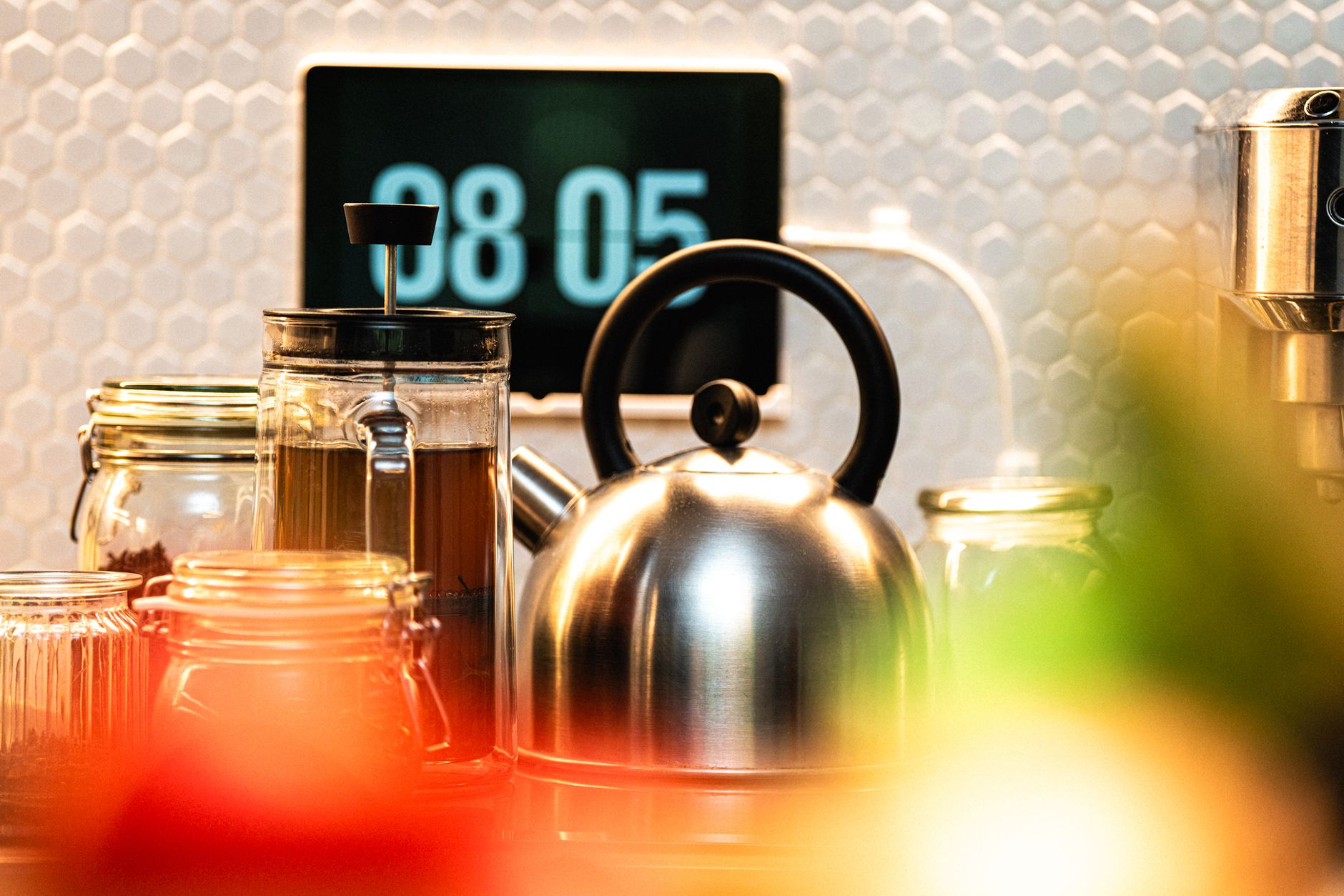
Deciding between a smart kettle with precise temperature control and a standard electric kettle can impact both your brewing experience and your budget. For coffee and tea aficionados, the ability to heat water to specific degrees is a game-changer, but for everyday users, a basic boil might suffice. This guide explores whether the enhanced functionality and typically higher price tag of smart kettles justify the investment, especially when considering long-term running costs and overall efficiency in 2026.
⚡ In a Rush? Key Takeaways
- Smart kettles cost $30-$100 more but offer precise temperature control, saving 5-10% on energy for specific brews.
- Standard electric kettles heat water to boiling in 3-5 minutes, consuming 0.1-0.2 kWh per liter.
- Over 5 years, the energy savings from a smart kettle’s precise heating might offset only 10-20% of its price premium.
- Temperature control is crucial for delicate teas (70-85°C) and pour-over coffee (90-96°C) for optimal flavor extraction.
- ✅ The extra cost of a smart kettle is justified if precise brewing is a daily priority; otherwise, a standard kettle offers better value.
Do Smart Kettles Offer Any Real Efficiency Advantages Over Standard Models?
Smart kettles can offer marginal energy savings by heating to specific temperatures, avoiding over-boiling, but their primary advantage is precision for brewing.
When considering electric appliances for energy-efficient homes, the distinction between ‘smart’ and ‘standard’ often boils down to more than just convenience. For kettles, the core function remains the same: heating water. However, smart kettles introduce features that can subtly influence energy consumption, primarily through precise temperature control.
How Much Energy Does a Standard Electric Kettle Use to Boil Water?
A standard electric kettle typically uses 0.1 to 0.2 kWh to boil one liter of water, translating to approximately $0.02 to $0.04 per boil.
A standard electric kettle is a straightforward appliance. It heats water to its boiling point (100°C or 212°F) and then automatically switches off. Most models operate with a power output between 1500W and 2200W. To boil a liter of water, a 1500W kettle takes about 3-4 minutes, consuming approximately 0.1 kWh. A 2200W kettle might achieve this in 2-3 minutes, using similar energy due to its higher wattage.
- Typical Power Draw: 1500W – 2200W
- Energy per Liter (boiling): 0.1 kWh – 0.2 kWh
- Cost per Liter (at $0.16/kWh US average): $0.016 – $0.032
- Boiling Time: 2-5 minutes, depending on wattage and water volume
🔋 Greta Michaud’s Observation: The single most valuable thing I’ve done in eight years of appliance research is install energy monitors on individual appliances rather than relying on manufacturer ratings. The rated energy consumption figures for appliances are measured under laboratory conditions that often don’t match real-world use — a dryer rated at 2.5 kWh per cycle may use 3.1 kWh on my cycle lengths and load weights. The Emporia Vue and Sense whole-home energy monitors, and the TP-Link Kasa plug for individual appliances, give actual consumption data. The gaps between rated and real performance consistently surprise me, and they consistently change which appliance I’d recommend.
While seemingly simple, the efficiency of these kettles stems from their direct heating element, which minimizes heat loss compared to a stovetop kettle. The instant shut-off prevents continuous boiling, which would waste energy.
Can Precise Temperature Control in Smart Kettles Lead to Energy Savings?
Yes, heating water only to the desired temperature, rather than full boil, can reduce energy consumption by 5-10% for brews not requiring 100°C.
Smart kettles often feature precise temperature control, allowing users to select temperatures typically ranging from 40°C (104°F) to 100°C (212°F). This means if you only need 80°C water for green tea, the kettle stops heating once that temperature is reached, rather than continuing to boil. This avoids the energy expenditure required to push water all the way to 100°C, which can account for a small but real energy saving.
For example, heating water from 20°C to 80°C uses approximately 75% of the energy required to heat it to 100°C. While the per-boil saving is small (perhaps $0.005-$0.01), it can accumulate over daily use. Some smart kettles also offer ‘keep warm’ functions, which maintain a specific temperature. While convenient, this feature can lead to higher overall energy use if activated for extended periods, consuming 0.01-0.05 kWh per hour to maintain temperature.
Here’s a comparison of energy use for different target temperatures:
| Target Temperature | Approx. Energy per Liter (from 20°C) | Approx. Cost per Liter ($0.16/kWh) |
|---|---|---|
| 70°C (Green Tea) | 0.08 kWh | $0.013 |
| 85°C (White Tea/Coffee) | 0.10 kWh | $0.016 |
| 95°C (Black Tea/Pour-over Coffee) | 0.11 kWh | $0.018 |
| 100°C (Boiling) | 0.13 kWh | $0.021 |
What is the Difference in Running Costs Between Smart and Standard Kettles?
For daily use, the running cost difference between a smart and standard kettle is negligible, often less than $5 annually, unless precision is consistently used.
The running cost of any electric kettle is largely determined by the amount of water heated and your local electricity rates. For a standard kettle, if you boil 1 liter of water twice daily, it costs roughly $0.04 per day or about $14.60 per year. Over five years, this amounts to $73.
A smart kettle, if used for precise temperatures (e.g., 85°C for coffee) twice daily, might cost $0.032 per day or $11.68 per year. Over five years, this is $58.40. The annual saving from precise heating is only around $3, accumulating to about $15 over five years. This small saving alone does not typically justify the higher upfront cost of a smart kettle, which can be an additional $30 to $100.
When is Precise Temperature Control A Must-Have Feature in a Kettle?
Precise temperature control is essential for brewing delicate teas and pour-over coffee, where specific water temperatures unlock optimal flavor profiles.
For most kitchen tasks, like cooking pasta or making instant noodles, 100°C boiling water is perfectly adequate. However, for beverages like coffee and various types of tea, the exact water temperature significantly impacts the final taste and aroma. This is where the smart kettle truly shines, moving beyond basic utility to become a specialized brewing tool.
Does Water Temperature Affect the Taste of Coffee and Tea?
Absolutely. Incorrect water temperature can lead to bitter coffee or weak, astringent tea, as different compounds extract at varying heat levels.
Water temperature is a critical variable in the extraction process for both coffee and tea. Too hot, and you can scorch delicate tea leaves or over-extract bitter compounds from coffee grounds. Too cool, and you might under-extract, resulting in a weak, flat, or sour brew.
For example, green tea is best brewed between 70°C and 80°C (158-176°F). Water that is too hot will release excessive tannins, leading to an overly bitter and astringent taste. Black tea, conversely, typically requires hotter water, around 90-98°C (194-208°F), to fully develop its robust flavors. Pour-over coffee is often recommended at around 90-96°C (195-205°F) for optimal extraction without burning the grounds.
Here’s a quick guide to ideal temperatures:
- Delicate Green/White Teas: 70°C – 85°C (158-185°F)
- Oolong Tea: 80°C – 90°C (175-195°F)
- Black/Herbal Teas: 90°C – 98°C (195-208°F)
- French Press/Pour-over Coffee: 90°C – 96°C (195-205°F)
- Instant Coffee: 95°C – 100°C (203-212°F)
The ability of a smart kettle to hit and hold these precise temperatures allows for a much more controlled and reproducible brewing process, elevating the quality of your daily beverages.
What Other Features Do Smart Kettles Offer Beyond Temperature Settings?
Many smart kettles include hold temperature functions, pre-programmed settings for specific drinks, and sometimes app integration or customizable heating profiles.
Beyond basic temperature selection, smart kettles often come with additional features that enhance their utility and convenience. One common feature is a ‘hold temperature’ or ‘keep warm’ function, which maintains the water at a chosen temperature for a set period, typically 30 to 60 minutes. This is useful if you plan to have multiple cups of tea or coffee over a short time.
Some models offer pre-programmed settings for specific types of tea or coffee, simplifying the selection process. For instance, a button might be labeled ‘Green Tea’ and automatically set the kettle to 80°C. High-end smart kettles might even integrate with smartphone apps, allowing remote control, scheduling, or customization of heating profiles. While these features add to the convenience, they rarely contribute to energy efficiency and sometimes introduce new points of failure.
Can Smart Kettle Features Justify the Higher Price Point for an Efficient Home?
For enthusiasts frequently brewing specialized drinks, the precision of a smart kettle justifies its cost; for casual users, the added features aren’t cost-effective.
The typical price difference between a good quality standard electric kettle and a smart kettle with precise temperature control ranges from $30 to upwards of $100. For an efficient home, this additional investment needs to be weighed against tangible benefits beyond minor energy savings.
If you regularly brew delicate green teas, special herbal infusions, or prefer pour-over coffee where water temperature is paramount to flavor, the smart kettle provides a noticeable upgrade in beverage quality. The ability to consistently achieve specific temperatures reduces waste from poorly brewed drinks and enhances the enjoyment of expensive loose-leaf teas or artisanal coffee beans. In this context, the extra cost is an investment in the quality of your daily ritual.
For most households, however, who just need hot water for black tea, instant coffee, or cooking, the precise control of a smart kettle is superfluous. A standard electric kettle, costing $30-$60, will heat water quickly and efficiently enough for these purposes, offering better value for money without the added complexity or expense.
🔋 Greta Michaud’s Observation: Kettle versus microwave for boiling water is a recurring cost question I’ve tested properly. For boiling a full kettle, the kettle wins on speed and is roughly comparable on energy. For heating a single cup, the microwave uses less energy — roughly 0.1 kWh versus 0.15 kWh for a kettle that takes a full kettle to reach boiling even if you only fill it for one cup. The single-cup rule I apply to my own kitchen: if I’m making one cup only, microwave. Two or more cups, kettle. It’s a small saving but it’s a real one and it costs nothing to implement.
Ultimately, the decision rests on your beverage consumption habits and priorities. For passionate brewers, the investment in a smart kettle is justifiable for the enhanced output and personalized experience. For those seeking simple hot water, a standard kettle remains the more economically sound and equally efficient choice.
Will Investing in a Smart Kettle Improve My Daily Routine in an Efficient Home?
A smart kettle can enhance a routine focused on precise brewing, offering convenience and optimizing beverage quality, but it won’t fundamentally alter basic hot water needs.
For homeowners and renters dedicated to running an efficient home, every appliance purchase is scrutinized not just for its initial cost, but its long-term value, utility, and impact on daily routines. A smart kettle fits into this philosophy primarily by optimizing brewing and reducing waste.
How Does a Smart Kettle Improve the Coffee and Tea Brewing Experience?
A smart kettle elevates brewing by consistently delivering optimal water temperatures, ensuring fuller flavor extraction and a more enjoyable, predictable outcome.
The most compelling argument for a smart kettle is its ability to consistently provide water at the perfect temperature for your chosen brew. No more guessing, no more waiting for a rolling boil to cool slightly for green tea, and no more under-extracted coffee. This precision translates into a superior sensory experience for discerning drinkers.
The convenience of pre-set temperatures means less fuss in the morning, especially if you have a variety of preferences within the household. This saves a small amount of time and mental effort, contributing to a smoother start to the day. For those who enjoy the ritual of coffee or tea making, a smart kettle provides a foundational tool for consistency and quality.
Are Smart Kettles More Durable or Reliable Than Standard Models?
Smart kettles aren’t inherently more durable; lifespan often depends on brand quality and features, with advanced electronics potentially increasing repair points.
The durability and reliability of kettles, whether smart or standard, often depend more on the manufacturer and build quality than on the ‘smart’ features themselves. Wirecutter’s research suggests that ‘even high-quality kettles can have a somewhat short lifespan,’ and that ‘spending more may get you nicer features or a sturdier housing, but it won’t ensure that your kettle lasts longer.’
Some premium brands like Cuisinart offer longer warranties, such as three years for their PerfecTemp model, which can provide peace of mind. However, the added electronic complexity of smart features, such as WiFi modules or intricate digital displays, can introduce more points of failure compared to a simpler, mechanical standard kettle. When evaluating appliance intelligence, simplicity often correlates with extended lifespan.
Factors influencing kettle lifespan:
- Build Material: Stainless steel generally outlasts plastic.
- Heating Element Quality: A robust, concealed element is crucial.
- Maintenance: Regular descaling is vital, especially in hard water areas.
- Electronic Components: More complex electronics can be prone to failure over time.
For durability, prioritizing a reputable brand with a good warranty and solid construction is often more important than the ‘smart’ label.
Can Smart Kettles Integrate with Other Smart Home Systems?
Some high-end smart kettles offer app integration and limited connectivity to smart home platforms for remote control, but this functionality is not universal.
While the term ‘smart kettle’ implies connectivity, not all models offer extensive smart home integration. Many operate with their own dedicated app, allowing for remote temperature setting, scheduling, or turning the kettle on/off from a distance. For someone running a truly integrated smart home, the ability to link a kettle to a routine (e.g., ‘Good Morning’ routine triggers kettle to heat) can be appealing.
However, true integration with platforms like Google Home, Amazon Alexa, or Apple HomeKit is less common and usually reserved for premium models. Before investing in a smart kettle for its integration capabilities, it’s crucial to verify compatibility with your existing smart home ecosystem. For most users, the core benefit remains the precise temperature control, with smart home integration often being a secondary, ‘nice-to-have’ perk rather than a deal-breaker.
FAQs About Smart Kettles and Temperature Control
What is the ideal water temperature for brewing different types of coffee and tea?
Ideal temperatures vary: green tea is 70-85°C (158-185°F), black tea is 90-98°C (195-208°F), and pour-over coffee requires 90-96°C (195-205°F).
Do smart kettles use more electricity than standard kettles?
No, smart kettles use similar power to standard models for heating; they can even use marginally less if precise temperature control avoids full boiling.
Is a ‘keep warm’ function on a smart kettle energy efficient?
No, the ‘keep warm’ function on a smart kettle continuously uses electricity (0.01-0.05 kWh/hr) to maintain temperature, consuming more energy than heating once.
How much more expensive are smart kettles compared to standard electric kettles?
Smart kettles typically cost $30 to $100 more than standard electric kettles, with advanced features like app control increasing the price premium significantly.
Are smart kettles worth the investment for an average household?
For average households, the extra cost of a smart kettle is generally not justified unless precise brewing is a daily priority for specific teas or coffees.
📚 Last tested/reviewed: March 2026
— Greta Michaud, Home Appliance Efficiency Researcher