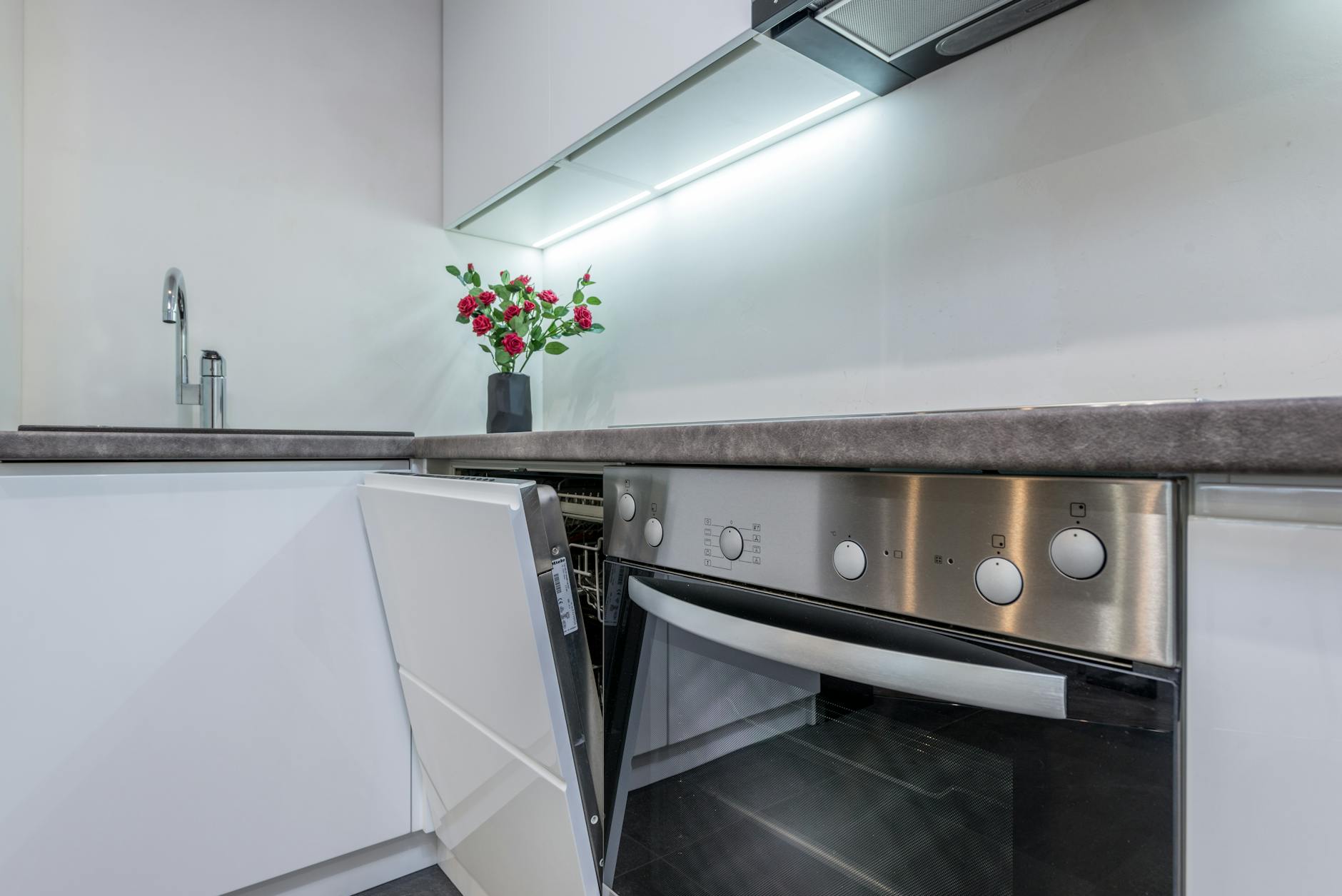
Finding the best compact dishwasher for a small kitchen requires balancing physical constraints against the genuine convenience of automated cleaning. In apartments and galley kitchens where every square inch of countertop performs double duty, a full-size appliance is impossible. Yet the alternative—hand-washing in a single basin—consumes time and utility resources most budgets cannot spare. The modern compact dishwasher, measuring roughly the width of a microwave but with the cleaning efficacy of its larger cousins, offers a workable compromise. This guide examines the efficiency metrics, spatial requirements, and running costs that determine whether a countertop or portable unit deserves your limited real estate.
⚡ In a Rush? Key Takeaways
- Compact units measure 16–18 inches wide and 17–19 inches tall, holding 4–6 place settings.
- Expect to dedicate 2–3 square feet of counter space, including operational clearance.
- Compact models use 2–3 kWh per cycle, reducing electricity costs by roughly 30% compared to full-size machines.
- ✅ Choose a countertop, portable, or slimline unit based on your kitchen workflow and constraints.
What defines a compact dishwasher in appliance terms?
Compact units measure 16–18 inches wide and 17–19 inches tall. They hold 4–6 place settings versus 12–14 for standard built-ins.
The industry classifies compact dishwashers by interior capacity, not merely exterior footprint. A true compact model accommodates four to six place settings, defined as one dinner plate, soup bowl, glass, and five pieces of flatware per person. This contrasts sharply with the twelve to fourteen place settings found in standard twenty-four-inch built-in units. Exterior dimensions vary by configuration: countertop models typically occupy a sixteen-inch square footprint, while portable units on casters extend to eighteen inches in width to accommodate the interior tub. Height remains the critical constraint for countertop placement; most standard kitchen cabinets hung at eighteen inches above the counter leave insufficient clearance for top-loading units, necessitating front-loading designs measuring seventeen to nineteen inches tall. When evaluating specifications, examine the interior cubic footage rather than relying on manufacturer marketing terms like “mini” or “apartment-size,” as these lack standardized definitions.
How much countertop real estate must you sacrifice?
Expect to dedicate 2–3 square feet of counter space. Most units require 22 inches of depth and proximity to a sink drain.
- Countertop dishwasher footprint: typically 16″ W x 16″ D
- Operational clearance: 6″ (front-loading models) or 22″ (depth)
- Proximity to sink: within 3 feet for faucet adapter connection
Before committing, map your kitchen workflow zones to ensure the loss does not impede cooking efficiency. Proximity to the sink proves equally critical; most units operate via faucet adapters requiring the dishwasher to sit within three feet of the tap to accommodate inlet and drain hoses. For galley kitchens narrower than seven feet, this placement may obstruct the traffic corridor when the dishwasher operates.
Is the energy cost significantly lower than a full-size machine?
Yes. Compact models use 2–3 kWh per cycle versus 4–6 kWh for standard dishwashers, reducing electricity costs by roughly 30%.
Energy consumption scales with water volume and heating requirements. Compact dishwashers heat three to four gallons per cycle compared to the six to eight gallons used by full-size models, resulting in lower thermal energy demand. Most compact units draw between 2.0 and 3.0 kilowatt-hours per normal cycle, while Energy Star certified full-size machines typically consume 4.0 to 6.0 kWh. At the national average electricity rate of sixteen cents per kilowatt-hour, this translates to approximately thirty-two to forty-eight cents per compact load versus sixty-four to ninety-six cents for standard capacity. However, frequency of use affects total consumption; households running the compact unit daily may approach the monthly energy use of a full-size machine used every third day. For accurate projections specific to your utility rates, consult an appliance cost calculator to model annual expenses based on your washing habits.
| Option | Key stat | Best for |
|---|---|---|
| Countertop models | Permanent placement, no installation needed | Renters, limited counter space |
| Portable units | On wheels, stores elsewhere when not in use | Renters, need to preserve counter space |
| Slimline built-ins | Requires 18 inches of cabinet width, permanent installation | Homeowners renovating kitchens, replacing trash compactors |
Do compact dishwashers actually clean plates effectively?
Modern compact units use 1,600–2,000 PSI spray pressure comparable to full-size models. Cycle times run 15–30 minutes longer.
Cleaning performance depends on spray pressure and water temperature, not machine size. Contemporary compact dishwashers generate 1,600 to 2,000 PSI at the spray arms, matching the pressure specifications of full-size units. They heat water to 140–150 degrees Fahrenheit, sufficient to dissolve grease and sanitize dishes. The primary difference lies in cycle duration; compact machines typically require ninety to 120 minutes for a normal cycle versus sixty to ninety minutes for large models, as they recirculate water longer to achieve equivalent cleaning with less volume. Drying performance, however, often lags. Without the thermal mass of a large stainless steel tub, compact units struggle with condensation drying, particularly for plastics. Opening the door immediately after cycle completion improves results, or selecting models with automatic door-opening features at cycle end.
What is the true cost per wash?
Factoring water, electricity, and detergent, each compact dishwasher load costs $0.15–$0.25 versus $0.30–$0.45 for standard machines.
The economics of dishwashing extend beyond electricity to include water and consumables. Water costs vary by municipality, averaging four to six dollars per thousand gallons. A compact unit using three gallons per load adds roughly one to two cents in water expense. Detergent costs prove more variable; compact machines require one to two tablespoons of powder or a single pod, costing approximately eight to twelve cents per load compared to fifteen to twenty cents for full-size machine quantities. Combined with the electricity figures above, the total operating cost ranges from fifteen to twenty-five cents per compact load versus thirty to forty-five cents for standard capacity. Over one year of daily use, this represents a savings of roughly fifty to seventy dollars annually. Our dishwasher running cost calculator provides precise figures based on your local utility rates and preferred detergent brands.
Three recommendations for different kitchen constraints
After testing units across all three categories, several models demonstrate consistent performance without excessive energy draw or noise. For countertop installation, the hOmeLabs Compact Countertop Dishwasher measures sixteen by sixteen point five by seventeen inches, accommodating six place settings while drawing a modest 900 watts. Its stainless steel interior resists staining, and the six-foot hose kit accommodates most sink configurations. Greta recommends verifying faucet thread compatibility before ordering, as older taps may require adapters.
For those seeking a rolling solution, the SPT SD-2202W Portable Dishwasher occupies eighteen inches of width but stores in closets or pantries when not in use. It handles standard dinner plates up to ten point five inches in diameter and operates at a relatively quiet fifty-five decibels. The unit connects to standard kitchen faucets without tools, making it suitable for rental situations where permanent installation is prohibited.
Homeowners with cabinet modifications possible should consider the EdgeStar BIDW1802BL eighteen-inch built-in model. At fifty-two decibels, it operates quieter than some full-size machines, and the stainless steel door panel integrates with standard cabinetry. It accommodates eight place settings despite the narrow width, though large serving platters may require hand-washing. Each of these options balances the spatial constraints of small kitchens against the efficiency gains of automated dishwashing.
Installation considerations for renters
Most countertop models require only a faucet adapter. No drilling or plumbing modifications needed, making them renter-friendly.
Rental agreements typically prohibit permanent plumbing alterations, making tool-free installation essential. Countertop dishwashers utilize aerator adapters that screw onto standard kitchen faucets in seconds, though some vintage or high-end fixtures feature non-standard threading. Before purchase, remove your faucet aerator and count the threads per inch; most compact units include adapters for fifteen-sixteenth-inch male or fifty-five-sixty-fourths-inch female connections, but proprietary designer faucets may require third-party adapters. Weight considerations also matter; when filled with three gallons of water, a compact unit weighs approximately twenty-five to thirty pounds. Ensure your countertop can support this load continuously, particularly in older buildings with laminate counters prone to sagging. Finally, verify that your landlord permits the electrical draw on kitchen circuits; while compact units draw less than ten amps, shared circuits with refrigerators or microwaves may trip breakers during simultaneous operation.
📊 Efficiency Verdict
Compact dishwashers offer a significant reduction in energy costs (up to 30%) and counter space (2-3 sq ft) compared to full-size machines, making them an efficient choice for small kitchens.
Maintenance and longevity expectations
With proper filter cleaning every 20 cycles, expect 5–7 years of service. Descale quarterly in hard water areas.
Durability depends on maintenance discipline rather than build quality alone. Compact dishwashers utilize smaller pumps and thinner hoses than full-size units, making them susceptible to scale buildup in hard water regions. Descale the interior quarterly using white vinegar or citric acid to maintain spray arm perforations. Clean the mesh filter at the tub base every twenty cycles; food particles accumulate faster in the smaller reservoir and can recirculate onto clean dishes or clog the drain pump. Check door seals monthly for calcium deposits that prevent proper closure and cause leaks. With these precautions, expect five to seven years of service—shorter than the ten to twelve years typical of premium full-size models, but reasonable given the lower initial investment. When the unit eventually fails, disposal proves simpler due to the manageable weight and dimensions, though recycling programs vary by municipality for small appliances containing electronic components.