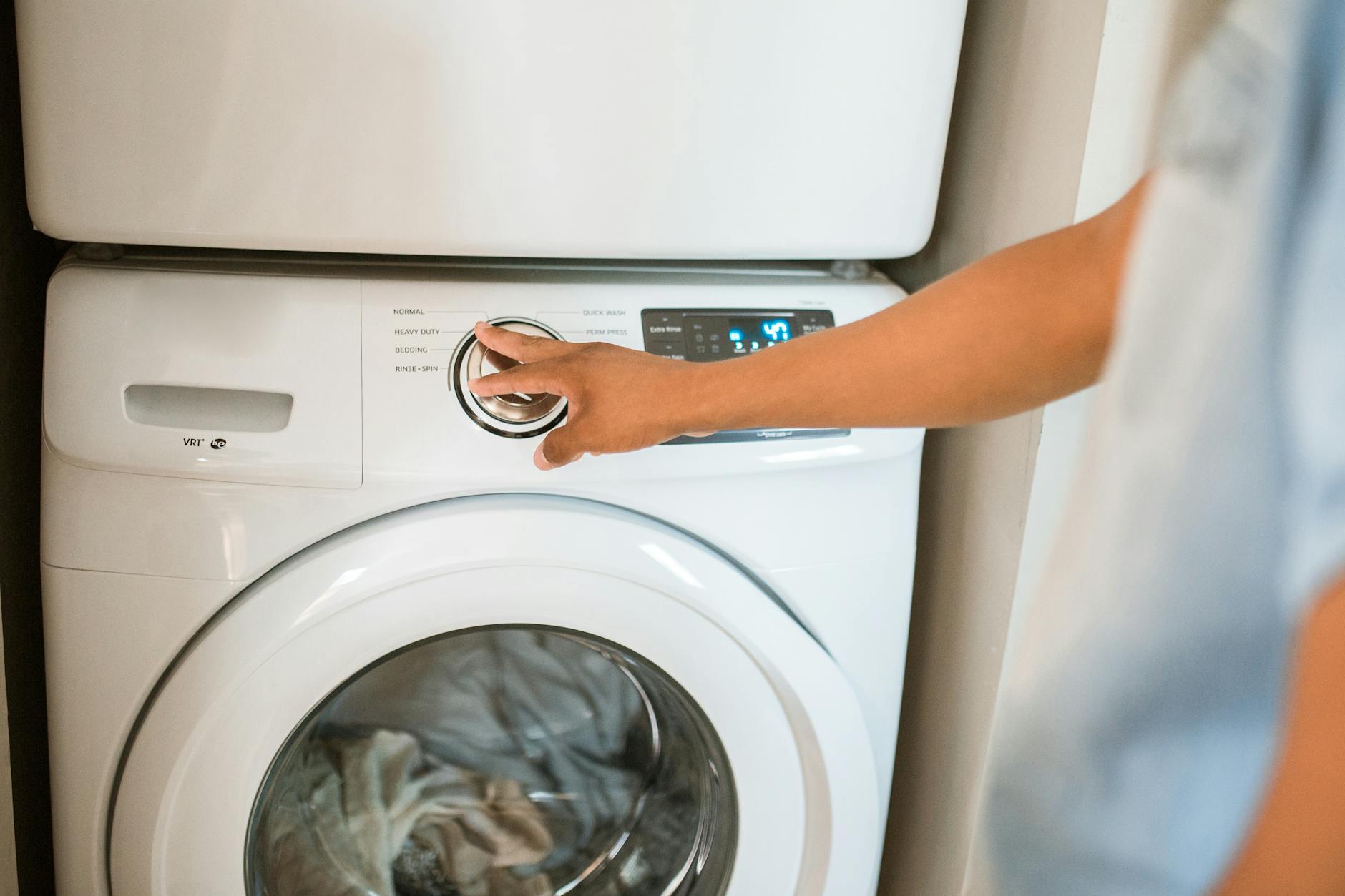
The washing machine energy rating explained on the label in front of you determines whether you will spend £35 or £85 annually on electricity. Since 2021, the EU and UK have used a rescaled A-G system that replaced the confusing A+++ grades, making comparisons simpler but requiring new math to understand true costs. This guide translates the technical specifications into practical ownership economics, helping you determine whether the premium for an A-rated model justifies itself through utility savings.
⚡ In a Rush? Key Takeaways
- An A-rated washer costs £35-£45 annually vs £65-£85 for a D-rated model.
- Savings over 7 years can exceed £200 with an A-rated machine.
- Premium for A-rated models typically pays back within 3-4 years.
- ✅ Choose A-rated for long-term savings and better resale value.
What do the new energy rating labels actually measure?
- The rescaled A-G ratings indicate kWh consumed per 100 washing cycles under eco 40-60 conditions.
- A-rated models use approximately 46 kWh annually under typical usage patterns.
- The label presents two figures: eco program usage and a weighted average across all cycles.
How much difference does an A-rated machine make to your annual bill?
An A-rated washer costs roughly £35-£45 annually to run versus £65-£85 for a D-rated model, assuming four 40°C cycles weekly at current UK electricity rates.
Calculating the differential requires multiplying the kWh per 100 cycles by your local electricity rate, then scaling to your actual usage. At the current UK price cap of approximately 34p per kWh, an A-rated machine consuming 46 kWh per 100 cycles costs £15.64 per 100 washes. Running four cycles weekly totals 208 cycles annually, resulting in roughly £32.50 in electricity costs. A D-rated unit consuming 56 kWh per 100 cycles costs £39.40 per 100 washes, or approximately £82 annually under identical usage patterns.
Is the premium for an A-rated washing machine justified by the savings?
| Option | Key stat | Best for |
|---|---|---|
| A-rated | Savings of £200+ over 7 years | Long-term use, high load frequency |
| D-rated | Lower upfront cost | Short-term use, infrequent washing |
Why does the label show two different water consumption figures?
Labels display both the eco program usage and the weighted average across all cycles. The eco 40-60 figure represents optimal efficiency, not your actual mixed usage.
What hidden costs do energy ratings fail to display?
- Standby power drain
- Water heating costs for hot fills
- Energy required to spin-dry clothes
- Boiler running costs
- Spin efficiency rating
- Detergent efficiency
How should you calculate the true ten-year cost of ownership?
Combine purchase price, estimated annual electricity at 34p/kWh, water costs if metered, and detergent efficiency. An A-rated machine typically totals £200 less over a decade.
📊 Efficiency Verdict
An A-rated machine can save you up to £200 over 10 years compared to a D-rated model.
Do energy ratings apply to washer-dryers and compact machines?
Yes, but washer-dryers display separate ratings for washing and drying cycles. Compact machines use the same scale but consume less total energy due to smaller drum capacity.
Final considerations for your purchase
Selecting an appliance based solely on the energy rating letter risks missing contextual factors that determine real-world economy. Consider your water heating source, typical load size, and whether you own a tumble dryer that might be affected by the washing machine’s spin efficiency. The rating provides a standardized baseline for comparison, but your household’s specific usage patterns ultimately determine whether the A-rated premium delivers tangible returns. Use the kWh per 100 cycles figure to calculate your exact scenario rather than trusting the letter grade alone.