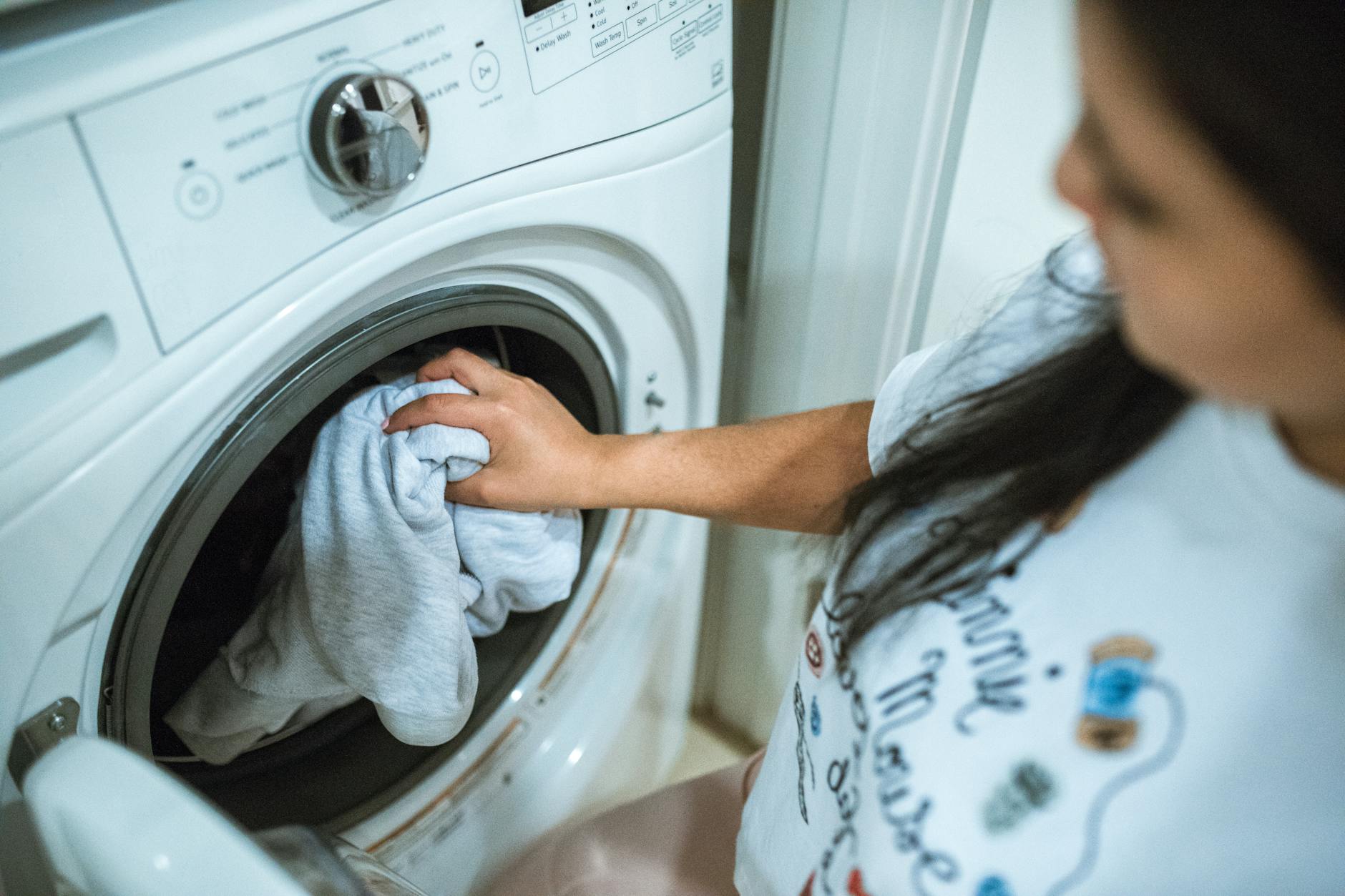
Most households underestimate their laundry expenses by nearly forty percent. We notice the price of detergent and the hum of the machine, but rarely do we calculate the precise cost per laundry load calculator guide figures suggest we should track. When you factor in heating water, electricity for the motor, municipal water charges, and the gradual wear on your appliance, the mathematics become more complex than a simple guess.
Running an efficient home requires knowing these numbers. Whether you wash daily for a large family or weekly for one, understanding the per-load economics helps you optimize timing, temperature, and technique. This guide breaks down every cost component, compares home washing against laundromats, and points you toward a weekly laundry cost calculator that removes the guesswork from your utility bills.
What factors determine your cost per laundry load?
Four primary variables control your total expenditure: electricity consumption for heating water and mechanical action, municipal water supply and wastewater processing, detergent and fabric softener dosage, and the depreciating value of your washing machine over its operational lifespan.
Electricity represents the largest fluctuating cost. A washing machine draws power for two distinct operations: heating water to your selected temperature and rotating the drum. The heating element typically consumes 1,800 to 2,500 watts, while the motor uses a modest 300 to 500 watts during spin cycles. If your local rate is £0.30 per kilowatt-hour, a hot wash can consume £0.60 in electricity alone, whereas a cold wash might use only £0.08.
Water costs vary dramatically by municipality. A standard front-loader uses approximately fifty liters per cycle, while older top-loading machines may require eighty to one hundred twenty liters. At £1.50 per cubic meter, fifty liters adds £0.075 to your load—seemingly minor, but totaling £15 annually for three loads weekly.
Detergent mathematics often surprise owners. A £12 bottle containing thirty washes costs £0.40 per load, but overdosing by twenty percent—common with imprecise measuring—adds £0.08 unnecessarily. Machine depreciation, calculated by dividing purchase price by expected wash cycles (typically ten years at four loads weekly equals two thousand cycles), adds £0.10 to £0.25 per load depending on your appliance’s initial cost.
How much does a single load of laundry cost to run?
A standard forty-degree Celsius cotton cycle costs between £0.45 and £0.90 depending on your energy tariff, machine efficiency rating, and load size, with cold water washes dropping to £0.18 to £0.28 per cycle.
To reach these figures, consider a modern A-rated front-loading machine drawing 0.8 kilowatt-hours for a warm wash. At £0.34 per kilowatt-hour—the current UK price cap average—electricity costs £0.27. Water and wastewater combined add £0.08. Detergent, measured precisely, contributes £0.35 for a quality liquid concentrate. Depreciation on a £600 machine over ten years adds £0.12. The total: £0.82.
Contrast this with a decade-old C-rated machine. The same forty-degree cycle might consume 1.4 kilowatt-hours (£0.48), use ninety liters of water (£0.14), and require more detergent due to inferior rinsing (£0.45). Depreciation is lower (£0.05) but the total reaches £1.12—thirty-six percent higher per load.
Cold washes alter the equation dramatically. Without heating water, consumption drops to 0.25 kilowatt-hours (£0.09), making the total per load approximately £0.54 even accounting for identical water and detergent costs. For households washing four loads weekly, switching two loads from warm to cold saves £29 annually.
Is it cheaper to wash clothes at home or at a laundromat?
Home washing typically costs £0.50 to £1.20 per load inclusive of all variables, while commercial laundromats charge £4.00 to £6.50 per cycle, making home washing economical after accounting for machine purchase costs within eighteen months of regular use.
The laundromat premium covers commercial-grade equipment, facility rent, and maintenance. However, their machines extract more water during spin cycles (1,400 rpm versus domestic 1,200 rpm), reducing drying time and costs. If you tumble dry at home, this efficiency gap narrows slightly.
For apartment dwellers without in-unit machines, the calculation shifts. Transport costs, time value, and the inconvenience of hauling baskets must factor against the £800 to £1,200 purchase price of a decent domestic machine. At five loads weekly saving £4.00 per load, the machine pays for itself in ten to twelve months, excluding installation and water connection fees.
One hidden cost of home washing: maintenance. A laundromat bears repair expenses; you bear the risk of £150 service calls or £300 drum replacements. Budgeting £50 annually for maintenance adds £0.10 per load to home washing economics.
How does water temperature affect the cost per load?
Heating water accounts for eighty to ninety percent of a wash cycle’s energy consumption; switching from sixty degrees Celsius to thirty degrees reduces electricity costs by approximately £0.45 per load while remaining effective for lightly soiled garments.
The physics are straightforward. Raising water temperature requires significant thermal energy. Each degree Celsius increase for fifty liters of water demands roughly 0.058 kilowatt-hours. The jump from cold (fifteen degrees) to warm (forty degrees) requires 1.45 kilowatt-hours; pushing to sixty degrees needs an additional 1.16 kilowatt-hours. At £0.34 per kilowatt-hour, that difference costs £0.39.
Modern enzyme detergents function optimally between twenty and forty degrees, breaking down protein-based stains effectively without thermal assistance. Only heavily soiled workwear, bedding during illness, or cloth diapers genuinely require sixty-degree sanitation. For daily clothing—cotton shirts, synthetic blouses, denim—the mechanical action and surfactants perform adequately in cold water.
One caveat: cold water washing in winter, when inlet temperatures drop to five degrees, slightly increases cycle duration as the machine works harder to dissolve detergents, potentially adding £0.02 to £0.03 in motor electricity. This remains negligible compared to heating savings.
What is the true cost of drying a load of laundry?
Tumble drying adds £0.75 to £1.60 per load depending on dryer technology and cycle length, while air drying costs nothing monetarily but requires eight to twenty-four hours and adequate ventilation to prevent mold.
Vented dryers, the most common type, expel hot moist air through a hose. They consume approximately 4.5 kilowatt-hours per full load—£1.53 at current rates. Condenser dryers, which collect moisture in a tank, use slightly more energy (5.0 kilowatt-hours) due to additional cooling processes. Heat pump dryers, though expensive to purchase (£600 to £900), use refrigerant technology to recycle heat, consuming only 2.1 kilowatt-hours (£0.71) per load.
The hidden cost of vented dryers: they pull conditioned air from your home, forcing your heating system to work harder in winter. This “make-up air” penalty adds an estimated £0.15 to £0.25 per load during heating season, rarely calculated in dryer economics.
Air drying, while free, carries depreciation costs for drying racks (£0.02 per load over five years) and potential humidity damage. Drying clothes indoors without ventilation raises relative humidity by fifteen to twenty percent, potentially encouraging condensation on windows and mold growth in poorly insulated spaces. Using a dehumidifier to mitigate this consumes 0.6 kilowatt-hours (£0.20), partially offsetting the savings.
How can you calculate your exact cost per load?
Input your local kilowatt-hour rate, water cost per cubic meter, detergent price per wash, and machine specifications into a dedicated weekly laundry cost calculator to generate precise per-load and monthly totals tailored to your specific habits.
Manual calculation requires gathering three utility bills. Note your electricity rate (pence per kilowatt-hour), water rate (pence per cubic meter), and wastewater charge (often 80 to 95 percent of water volume). Next, check your washing machine’s energy label or manual for kilowatt-hour consumption per cycle at various temperatures. Measure your detergent precisely—most cap lines indicate twenty-five to thirty milliliters, but verify against the bottle’s total wash count.
For depreciation, divide your machine’s purchase price by its expected cycle count. A £500 machine rated for two thousand cycles adds £0.25 per load. If you paid for extended warranties or service plans, amortize those costs across the same period.
The calculator aggregates these inputs, allowing you to compare costs between different temperatures, load sizes, and machine models. It also projects annual savings from behavioral changes—switching three weekly loads from forty degrees to twenty degrees, for instance, might save £47 annually, justifying the purchase of a washing machine thermometer to verify actual water temperatures.
When does upgrading your washer actually save money?
Replacing a decade-old D-rated machine with a modern A-rated model saves approximately £0.42 per load, meaning payback occurs within two to three years for households washing four loads weekly, faster if energy prices rise.
The calculation assumes current energy rates. An old machine consuming 1.5 kilowatt-hours per warm wash costs £0.51 in electricity alone. A new machine using 0.6 kilowatt-hours costs £0.20—a £0.31 saving per load. Add water efficiency savings (twenty liters less per cycle saves £0.03) and reduced detergent needs (better rinsing allows lower doses, saving £0.08), and the total approaches £0.42.
At four loads weekly, annual savings reach £87. A £600 machine pays for itself in 6.9 years on energy savings alone. However, factor in reduced maintenance (older machines require £80 annual service versus £20 for new), and the payback period drops to 5.5 years. If energy prices increase twenty percent, payback accelerates to 4.5 years.
The breakpoint for replacement: when repair costs exceed thirty percent of a new machine’s price. A £200 drum repair on a twelve-year-old machine rarely makes economic sense when a new A-rated model offers immediate efficiency gains and warranty protection.
Are laundry costs higher in winter?
Winter laundry costs increase by fifteen to twenty-five percent due to colder incoming water requiring more heating energy to reach target temperatures, and increased reliance on tumble dryers instead of outdoor clotheslines.
Inlet water temperature in summer might reach fifteen to eighteen degrees Celsius, while winter mains water can drop to five to eight degrees. Heating fifty liters from five degrees to forty degrees requires 2.03 kilowatt-hours versus 1.28 kilowatt-hours from fifteen degrees—a difference of £0.25 per load at current rates. Over four weekly washes, this adds £52 annually just for colder water.
Additionally, drying costs spike. Outdoor line drying becomes impractical during rain or freezing temperatures, forcing dryer usage. A household that air-dries three loads weekly in summer but tumble-dries two in winter sees their drying costs increase by £120 to £180 during the heating season.
Mitigation strategies include washing during off-peak electricity hours if your tariff supports time-of-use rates, using a washing machine thermometer to verify actual water temperatures, and investing in energy-efficient appliances to reduce overall consumption.
⚡ In a Rush? Key Takeaways
- Electricity accounts for 80-90% of wash cycle energy consumption.
- Switching from 60°C to 30°C reduces electricity costs by £0.45 per load.
- Home washing is cheaper than laundromats after 18 months of regular use.
- ✅ Upgrade to an A-rated machine to save £0.42 per load and reduce payback time.
| Option | Key stat | Best for |
|---|---|---|
| Modern A-rated machine | Saves £0.42 per load | Large families or frequent washers |
| Older C-rated machine | Costs £1.12 per load | Occasional washers or budget-conscious |
📊 Efficiency Verdict
Upgrading to an A-rated machine can save up to £0.42 per load, making it a cost-effective choice for frequent washers.