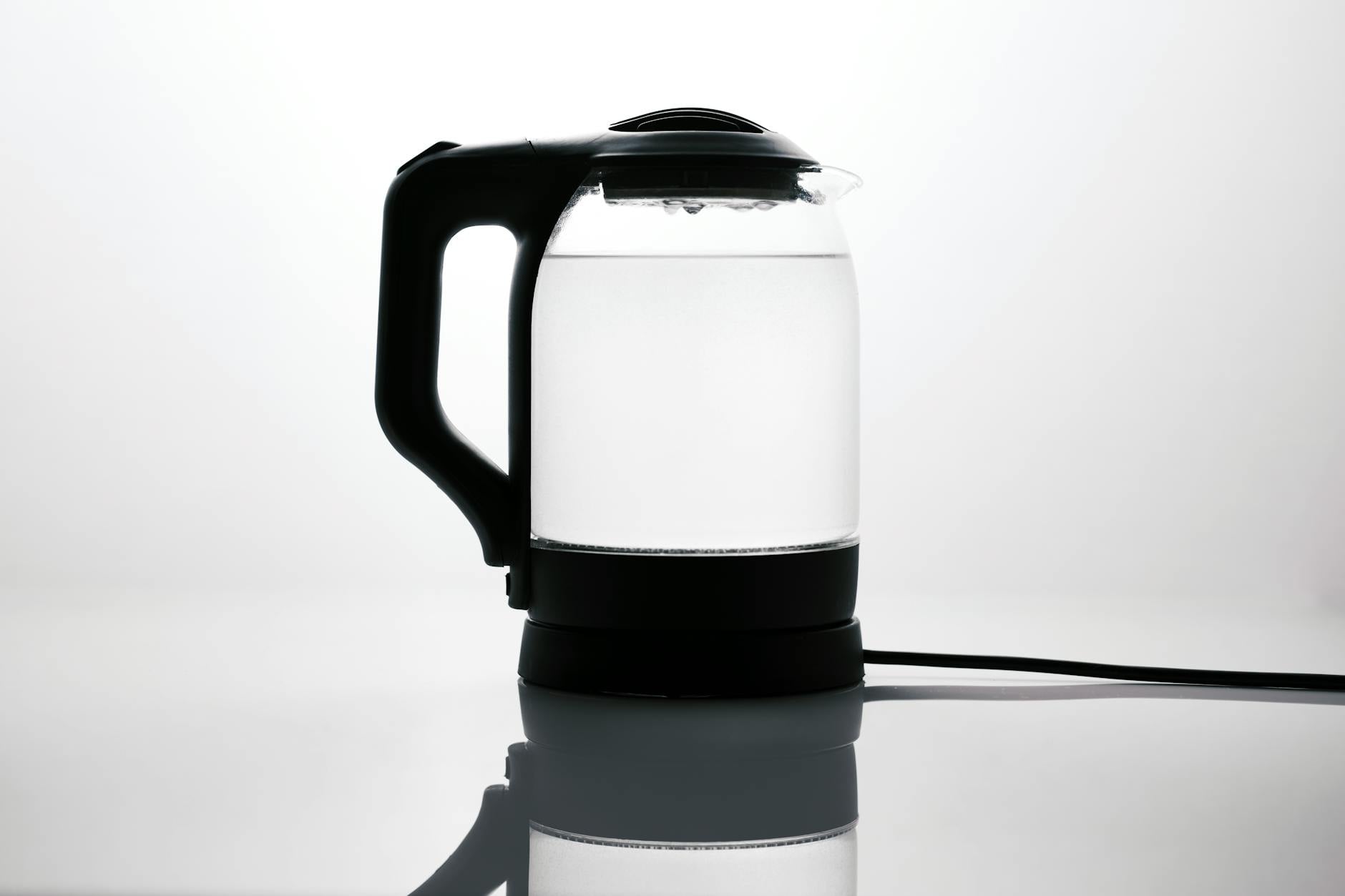
The electric kettle is likely the hardest-working small appliance in your kitchen, yet its contribution to your monthly electricity bill rarely receives scrutiny. Understanding the kettle energy usage cost per boil helps quantify whether your morning tea habit is financially trivial or a meaningful drain on your annual energy spend. Most households boil water multiple times daily without considering the precise thermal economics at play.
⚡ In a Rush? Key Takeaways
- A standard 3kW kettle uses 0.11 kWh per boil cycle.
- This costs around 3–4p at current standard variable tariffs.
- Over twelve months, this daily ritual accumulates to between £40 and £55.
- ✅ Boil only what you need to save money and energy.
A standard 3kW kettle filled to its 1.7-liter capacity consumes approximately 0.11 kilowatt-hours (kWh) per boil cycle. At current standard variable tariffs hovering near 30p per kWh, this translates to roughly 3–4p for a full kettle, or slightly over 1p for a single 300ml mug. Over twelve months, this daily ritual accumulates to between £40 and £55 in electricity costs for the average household boiling three to four times daily.
What is the exact kettle energy usage cost per boil?
A 3kW kettle uses roughly 0.1kWh to boil one liter of water, costing approximately 3–4p at standard variable rates, while a single cup requires one-third the energy.
The physics of heating water is remarkably consistent. Water requires 4.18 kilojoules of energy to raise one kilogram by one degree Celsius. To bring one liter of water from room temperature (20°C) to boiling (100°C), you need an 80-degree temperature rise, equating to 334.4 kilojoules or 0.093 kWh of thermal energy. Accounting for heat loss through the kettle body and the inefficiency of the heating element, the actual electrical draw typically reaches 0.10 to 0.12 kWh per liter.
For a single 300ml mug, the math scales linearly: approximately 0.03 to 0.04 kWh, or 1–1.5p per boil. These figures assume cold tap water starting at 20°C. If your incoming water is colder, particularly in winter months when readings might drop to 10°C, the energy requirement increases proportionally, adding roughly 0.5p to each full kettle boil. When compared to induction hob running costs for heating similar volumes, the kettle remains the more efficient vessel due to its enclosed heating element and minimal thermal mass.
Does boiling a full kettle cost twice as much as half?
| Option | Key stat | Best for |
|---|---|---|
| Full kettle (1.7L) | 180 seconds to boil | Multiple drinks or large volumes |
| Half kettle (0.85L) | 55 seconds to boil | Single drink or small volumes |
Yes. Heating two liters costs nearly double the energy of one liter due to the linear relationship between water volume and thermal mass, with minimal fixed overhead.
Unlike appliances with baseline power draws, kettles exhibit a direct correlation between water volume and energy consumption. The heating element activates fully regardless of volume, but the duration of that activation scales precisely with the amount of water present. A full 1.7-liter kettle requires approximately 180 seconds to reach boiling, while half a liter needs roughly 55 seconds. The time ratio (3.3:1) closely matches the volume ratio (3.4:1), confirming that excess water serves no purpose other than wasting electricity.
This linear relationship makes the kettle one of the most straightforward appliances to optimize. Unlike a refrigerator or freezer, which maintain temperature through intermittent cycling, the kettle’s energy use is entirely deterministic based on the thermal load you impose. The only minor fixed cost is the minimal electricity required to power the indicator light and bimetallic switch, totaling less than 0.001p per boil.
Is it cheaper to reboil water or start fresh?
No. Reboiling cooled water costs marginally less than fresh cold water, though the savings are negligible compared to simply boiling only what you need initially.
Once boiled, water retains significant thermal energy. If left for thirty minutes, a kettle might cool to 60°C, meaning the reboil only requires a 40-degree temperature rise rather than 80. This halves the energy requirement for that second boil. However, this is a false economy. The heat lost during the cooling period represents wasted energy from the initial boil. You are not saving money; you are merely paying for the convenience of not refilling the kettle.
From a pure efficiency standpoint, letting water cool and reboiling it is actually less efficient than boiling fresh cold water for immediate use, due to cumulative heat loss through the kettle walls over time. The most economical approach remains filling the kettle with only the exact volume needed for immediate consumption. For households concerned with precision, using the home appliance energy calculator can quantify these micro-decisions across your entire kitchen suite.
How much does limescale increase boiling costs?
Limescale buildup can increase boiling costs by 20–30% by forcing the heating element to work longer to achieve the same temperature rise through insulated deposits.
In hard water areas, calcium carbonate precipitates onto heating elements, creating a white, chalky insulating layer. This scale acts as a thermal barrier between the element and the water. The element must first heat the scale to sufficient temperature before effective heat transfer occurs, extending boil times significantly. A kettle that once boiled in three minutes might require four minutes once scaled, representing a 33% increase in energy consumption per cycle.
Regular descaling restores efficiency immediately. White vinegar or citric acid solutions dissolve these deposits, returning the element to direct contact with water. For kettles with concealed elements (flat base plates), scale accumulation is less visible but equally damaging. If your kettle makes noticeably more noise or takes longer to boil than when new, descaling is overdue. The cost of vinegar or commercial descaler (approximately 50p per treatment) pays for itself within two weeks of normal use in hard water regions.
Are rapid-boil kettles more energy efficient?
Rapid-boil kettles save time but not money; the 3kW power draw remains constant, though better insulation may reduce standby heat loss by marginal amounts.
Marketing often conflates speed with efficiency. A “rapid boil” kettle typically maintains the same 3kW heating element as standard models but couples it with better thermal conductivity in the base plate or improved water circulation. While this reduces the time required to reach boiling, the total energy consumed remains identical for a given volume of water, as dictated by the laws of thermodynamics.
Where premium kettles may offer savings is in insulation quality. Double-walled construction or vacuum insulation reduces heat loss during the boil cycle and keeps water hotter for longer if not immediately poured. This can reduce the temptation to reboil slightly cooled water. However, the savings are measured in fractional pence per day. When evaluating whether to upgrade, consider that a £60 kettle would need to operate for several years to recover its premium through marginal efficiency gains. For most households, replacing a heavily scaled basic kettle with a new model with a boil-dry protection and clear water window offers better value than investing in premium rapid-boil technology solely for cost savings.
Practical steps to reduce kettle running costs
While individual boils cost pennies, behavioral modifications compound into meaningful annual savings. Implement these operational changes to minimize waste without sacrificing convenience.
- Measure by cup: Fill a mug and pour it into the kettle before boiling to establish exact volume requirements. Overfilling by just 200ml per boil wastes approximately £8 annually.
- Descale quarterly: Calendarize descaling every three months in hard water areas to maintain optimal thermal transfer efficiency.
- Bulk boiling: If preparing multiple hot drinks simultaneously, boil once and use a vacuum flask to maintain temperature for subsequent cups, avoiding the 30% efficiency penalty of partial boils.
- Temperature control: For coffee or herbal teas requiring sub-boiling water (80–90°C), use kettles with variable temperature settings to avoid overheating water unnecessarily.
These measures, combined with awareness of microwave energy consumption for alternative heating tasks, allow you to allocate kitchen energy use strategically.
When does replacing an old kettle pay for itself?
If your kettle is over five years old and heavily scaled, a replacement pays for itself within 12–18 months through improved thermal efficiency and faster boil times.
Modern kettles incorporate design improvements that older models lack. Concealed elements prevent direct scale contact, maintaining efficiency longer. Improved thermostats prevent the over-boiling common in aging units, where the switch fails to activate promptly. If your current kettle exhibits rust around the element, persistent scale that resists cleaning, or requires more than five minutes to boil a liter, it has entered the zone of negative economic return.
A new basic model (£20–£30) will recover its cost through reduced energy consumption and improved reliability within the first year of service for average households. Beyond pure economics, modern safety features such as automatic shut-off and boil-dry protection provide value that transcends the utility bill. Consider replacement not merely as an appliance upgrade, but as a maintenance necessity for an efficiently running kitchen.
Understanding your kettle energy usage cost per boil transforms an invisible habit into a considered choice. At roughly 4p per full boil, the electric kettle remains one of the most cost-efficient methods for heating water, provided you resist the convenience of overfilling. By matching volume to need and maintaining the appliance properly, you ensure this daily ritual contributes minimally to your overall energy expenditure while delivering the hot water your household requires.
📊 Efficiency Verdict
Boil only what you need to minimize energy waste and save money.