Receiving your monthly electricity statement often raises more questions than it answers. Understanding your electricity bill UK households receive involves deciphering technical jargon, multiple tariff components, and usage calculations that directly impact your household budget. Unlike simplified utility summaries, British electricity statements itemize every charge from infrastructure maintenance to actual consumption, giving you the data needed to control costs.
⚡ In a Rush? Key Takeaways
- The average UK household pays £1,200-£2,000 annually for electricity.
- Standing charges range from 40p to 60p daily, regardless of usage.
- The unit rate, currently around 30p/kWh, determines variable charges.
- Heating accounts for 40% of annual consumption.
- ✅ Switch to a fixed-rate tariff for predictable payments.
The average UK household currently pays between £1,200 and £2,000 annually for electricity, depending on property size and heating type. Yet few homeowners can identify whether their bill accurately reflects their actual usage or if they are paying the optimal rate available under the current Ofgem price cap regulations. Learning to read these documents transforms them from confusing demands for payment into actionable financial intelligence.
Understanding Your Electricity Bill UK: Breaking Down the Components
Your bill shows your usage in kilowatt-hours, the standing charge, unit rate, and your meter point reference number alongside the total amount due.
Every electricity statement follows a standard format mandated by Ofgem transparency regulations. At the top, you will find your account details, the billing period dates, and your Meter Point Administration Number (MPAN), which uniquely identifies your property’s connection to the National Grid. This fourteen-digit reference proves essential when switching suppliers or querying discrepancies, particularly if you manage multiple properties.
The statement then itemizes your financial breakdown. This section separates the standing charge—a fixed daily fee for grid maintenance—from your variable consumption charges. You will also see VAT applied at the reduced domestic rate of 5%, alongside any discounts, rebates, or outstanding balances carried forward from previous billing periods. Understanding these line items prevents the common error of conflating usage charges with fixed infrastructure costs.
What Is the Standing Charge and Why Do You Pay It?
The standing charge is a fixed daily fee covering maintenance and infrastructure, typically ranging from 40p to 60p per day regardless of actual usage.
This non-negotiable component of your tariff funds the physical infrastructure delivering power to your home. The standing charge pays for maintaining cables, transformers, and metering equipment, plus administrative costs for billing systems and customer service operations. Unlike your unit rate, this charge applies even during holidays abroad or extended periods when your property sits empty, though you can minimize it by ensuring appliances remain unplugged rather than on standby.
Currently, UK standing charges vary significantly by region and supplier, oscillating between approximately 40p and 60p daily, which translates to £12 to £18 monthly before consuming a single kilowatt-hour. While you cannot eliminate this charge without disconnecting entirely, understanding its impact helps when comparing tariffs. Some suppliers offer “zero standing charge” tariffs with higher unit rates, which benefit extremely low-usage households or second properties used intermittently.
When evaluating your average UK household energy bills against national benchmarks, remember that standing charges constitute a disproportionate burden for small households or single-person dwellings. A flat-rate daily fee of 50p represents a higher percentage of total costs for someone using 100 kWh monthly compared to a family consuming 400 kWh. This regressive aspect of energy pricing makes efficiency improvements particularly valuable for larger households who spread fixed costs across greater usage volumes.
How Is Electricity Usage Measured and Billed?
Usage is measured in kilowatt-hours (kWh) by your meter, with each unit representing one hour of continuous use by a one-kilowatt appliance.
The kilowatt-hour serves as the standard energy currency for domestic billing. One kWh equates to using a 1,000-watt appliance—such as a modern kettle or microwave—for one hour, or a 100-watt LED bulb for ten hours. Your meter tracks cumulative consumption, with the difference between current and previous readings determining your billable usage for the period. This measurement system allows precise accounting regardless of whether you run high-wattage devices briefly or low-wattage equipment continuously.
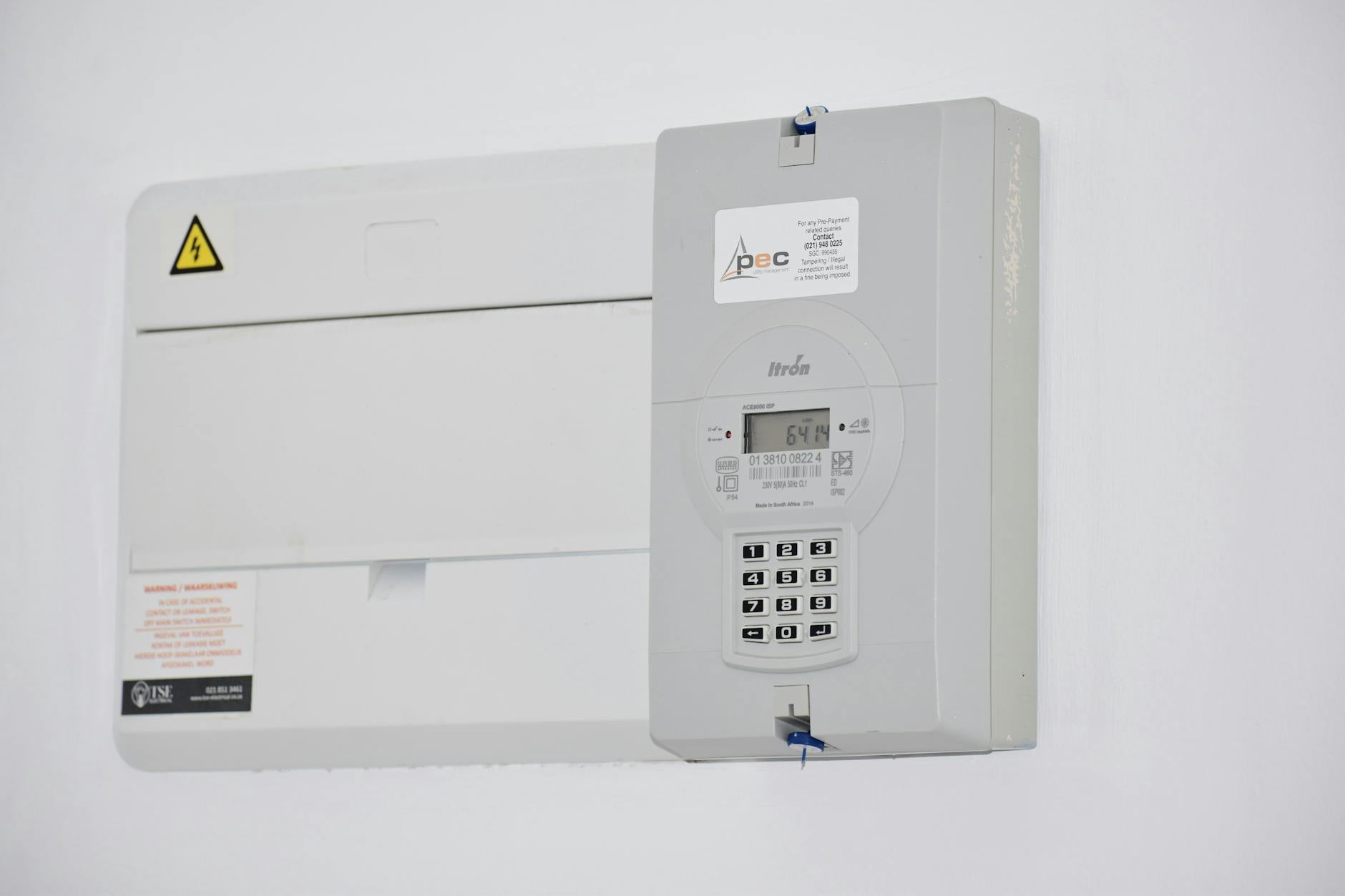
Smart meters transmit these readings automatically every half-hour, eliminating estimated bills and enabling time-of-use tariffs where rates vary by demand periods. Traditional meters require manual reading, presenting either a single digital display or mechanical dials showcasing five black digits (the kilowatt-hours) and often red digits representing decimal fractions that suppliers ignore for billing. Reading your meter monthly, even with a smart meter installed, ensures accuracy and catches transmission errors before they compound.
Understanding your consumption patterns requires tracking these figures beyond the monthly statement. Consider utilizing a monthly home cost tracker to correlate usage with specific activities. Heating typically constitutes 40% of annual consumption, while refrigeration, lighting, and laundry divide the remainder according to household habits and appliance efficiency ratings. Identifying which activities drive your kWh figures enables targeted behavioral changes rather than generic austerity measures.
What Does the Unit Rate Mean for Your Costs?
The unit rate represents the price per kilowatt-hour consumed, currently averaging around 30p per kWh, directly determining your variable charges.
This figure multiplies against your measured usage to calculate the consumption portion of your bill. If your unit rate stands at 30p and your household consumes 250 kWh during winter months, your usage charge totals £75.00, excluding standing charges and VAT. Unit rates fluctuate based on wholesale energy markets, though the Ofgem price cap currently limits what suppliers can charge per kWh, providing a ceiling that protects consumers from extreme volatility.
Tariffs structure these rates differently. Standard variable tariffs (SVTs) track the price cap, rising and falling with regulatory adjustments. Fixed-rate tariffs lock unit rates for one to three years, offering payment predictability at the risk of overpaying if market prices drop. Time-of-use tariffs, available to smart meter users, offer cheaper rates during off-peak hours—typically overnight
📊 Efficiency Verdict
The average UK household can save around £300 annually by switching to a fixed-rate tariff and improving energy efficiency.