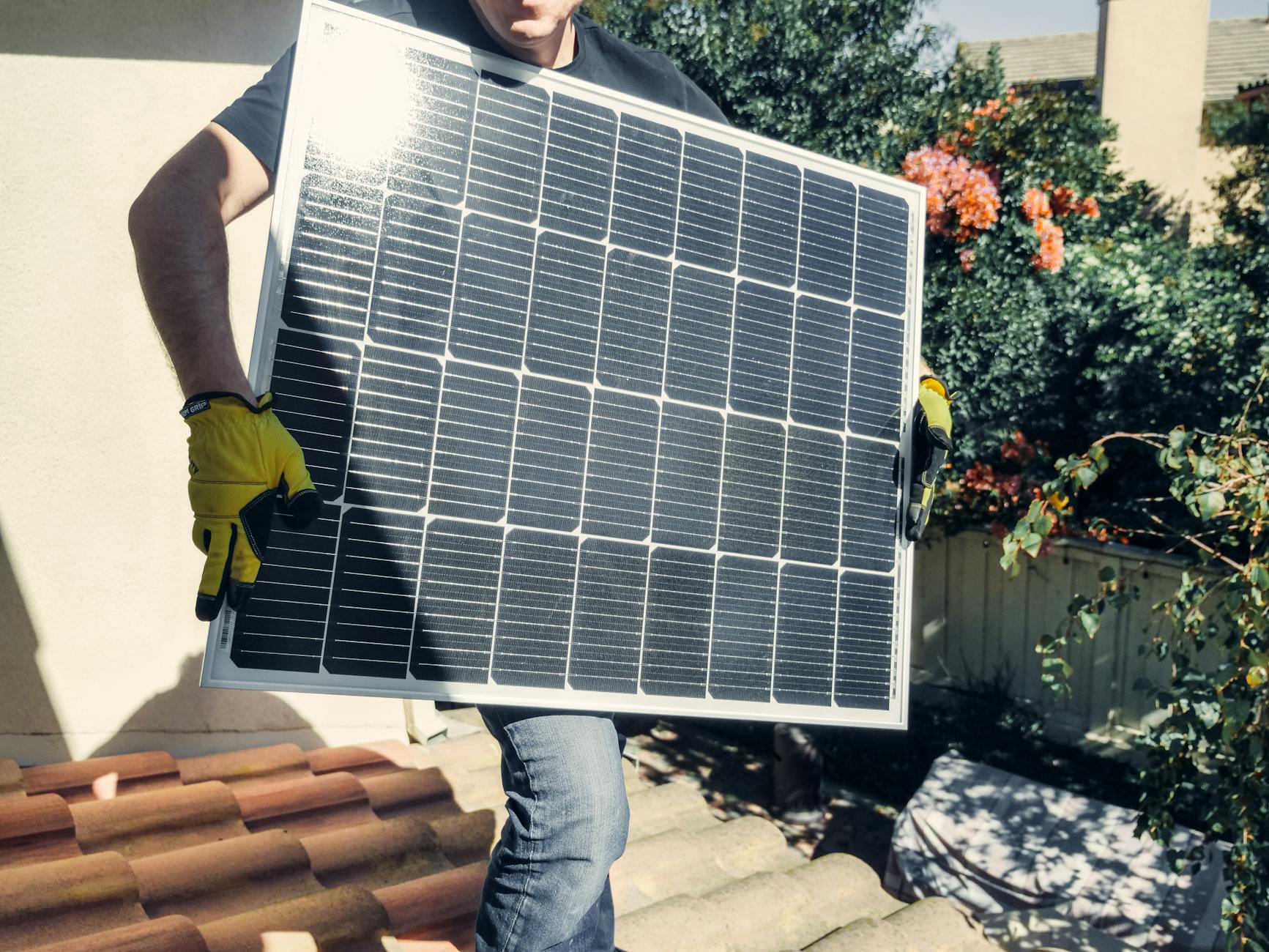
Solar panels represent a significant capital expenditure for most households, making the solar panel payback period calculation essential before committing to installation. This figure determines how long your system must operate before electricity savings recoup the initial investment, after which point you generate essentially free power for the remainder of the panels’ lifespan. While installers often quote optimistic timelines, an accurate calculation requires accounting for your specific energy consumption, roof characteristics, available grants, and the gradual degradation of panel efficiency over decades.
⚡ In a Rush? Key Takeaways
- Average payback period for UK homeowners: 8-12 years
- South-facing roofs reduce payback to 8 years, north-facing extend to 13-15 years
- Post-payback savings can exceed £15,000 in today’s money
- ✅ Consider long-term savings and regional electricity rates
What exactly is a solar panel payback period?
The payback period measures how long required for cumulative electricity savings and export payments to equal the initial system purchase and installation expenditure.
Unlike simple return-on-investment metrics, the payback calculation focuses specifically on liquidity—when you stop owing money on the system and it starts returning value. For a typical residential installation costing £6,500 and generating £700 in combined savings and export income annually, the payback period would be approximately 9.3 years. This metric matters because solar panels carry warranted lifespans of 25 to 30 years, meaning a payback under 12 years leaves you with 13 to 18 years of profit-generating operation. However, the calculation assumes stable electricity prices, which historically trend upward, potentially shortening your actual payback timeline as grid power becomes more expensive.
How do you calculate the solar payback period accurately?
Divide your net system cost after grants by total annual savings including reduced bills and Smart Export Guarantee payments to determine years to break even.
| Option | Key stat | Best for |
|---|---|---|
| String inverter | Lower upfront cost | Simple roof layouts |
| Micro-inverter | Mitigates shading losses | Complex roofs |
Begin with your quoted installation price, which for a 4kW system typically ranges between £5,000 and £8,000 depending on panel quality and installer. Subtract any available grants; while the Green Deal has closed, the ECO4 scheme may cover efficiency improvements including solar for qualifying households. Next, calculate annual savings by multiplying your expected generation (roughly 3,400kWh yearly for a 4kW south-facing array) by your current electricity rate (approximately 34p/kWh), then add your estimated Smart Export Guarantee payments for excess power fed to the grid. For example: £6,500 system cost ÷ (£680 bill savings + £120 SEG income) = 8.1 years payback. Remember to factor in the opportunity cost of capital—money spent on panels cannot earn interest elsewhere.
What is the typical payback period for UK homeowners?
Most residential 4kW systems achieve payback between eight and twelve years, depending on roof orientation, electricity rates, and whether you install battery storage.
- South-facing roofs: 8 years
- East or west orientations: 10-11 years
- North-facing installations: 13-15 years
- Battery storage: 2-3 years longer
South-facing roofs at 30-40 degree angles yield the fastest returns, often hitting payback by year eight in southern England. East or west orientations extend this to ten or eleven years, while north-facing installations may require thirteen to fifteen years unless your electricity consumption pattern perfectly matches morning or evening generation peaks. Battery storage systems, costing an additional £2,000-£4,000, typically extend payback periods by two to three years despite increasing self-consumption, as the additional capital takes longer to recover through marginal bill reductions. However, batteries provide blackout protection and buffer against time-of-use tariffs, benefits not captured in pure payback mathematics.
Which factors extend or shorten your payback timeline?
South-facing roofs generate optimal returns, while shading, north-facing arrays, or low electricity usage can extend payback by two to four additional years.
- Micro-inverters or power optimizers: £800-£1,200 additional cost, shorter payback on complex roofs
- Consumption pattern: Retirees home during daylight hours utilize 70-80% of generated power
- Regional electricity rates: Variable tariffs vs fixed-rate agreements
- Panel degradation: Approximately 0.5% annual loss, adding roughly three months to total payback period over twenty-five years
Micro-inverters or power optimizers add £800-£1,200 to system costs but can shorten payback on complex roofs by mitigating shading losses from chimneys or trees. Your consumption pattern significantly affects returns; retirees home during daylight hours utilize 70-80% of generated power versus 30-40% for households with standard nine-to-five schedules, effectively doubling the value of self-consumed electricity over exported power. Regional electricity rates also vary dramatically, with variable tariffs versus fixed-rate agreements impacting savings calculations. Additionally, panels degrade approximately 0.5% annually, meaning your 4kW system generates roughly 17kWh less each year, a marginal factor that adds roughly three months to the total payback period over twenty-five years.
Does moving house invalidate your solar investment?
Solar installations typically increase property values by approximately four percent and transfer to new owners, meaning you recover value even if you relocate sooner.
Research by the Department of Energy and Climate Change suggests buyers pay premiums for homes with existing solar arrays, particularly where warranties and maintenance records transfer cleanly. Unlike kitchen renovations that depreciate immediately, solar panels add tangible asset value to your Energy Performance Certificate rating. If you move after six years on a ten-year payback system, you effectively sell the remaining four years of debt obligation plus sixteen years of future savings to the purchaser, usually reflected in your sale price. However, leased panels or Power Purchase Agreements complicate sales, as buyers must assume your financing terms, potentially narrowing your buyer pool unless the rates beat current utility prices.
How do you account for maintenance in the calculation?
Budget for inverter replacement every ten to fifteen years at £800 to £1,200, and occasional cleaning every two years, adding roughly six months to the payback period.
Panels themselves require minimal maintenance beyond occasional cleaning in dusty or high-pollen environments, costing approximately £100-£150 per professional service. The inverter—the component converting DC power to usable AC—represents your primary maintenance liability, typically failing once during the system’s lifetime. String inverters cost less upfront but centralize failure risk, while micro-inverters distribute cost across multiple units but rarely fail simultaneously. When calculating payback, add £1,000 divided across twenty-five years (£40 annually) to your cost assumptions. Insurance increases represent another minor factor; adding £15-£25 annually to your buildings policy for solar coverage minimally impacts the overall timeline.
What happens financially after the payback period ends?
Once costs are recovered, you enjoy fifteen to twenty years of essentially free electricity plus continued export payments, representing significant long-term household savings.
Post-payback economics dramatically favor the homeowner. Assuming your system continues generating 85% of original capacity after twenty-five years, and electricity rates rise with inflation at 2.5% annually, the net present value of post-payback savings often exceeds £15,000 in today’s money. This period also coincides with peak household electricity consumption for many homeowners as children reach teenage years or retirement increases home occupancy. Tracking these savings through a monthly home cost tracker helps visualize the financial benefits accumulating after break-even. Ultimately, the payback period serves merely as the threshold; the decades following deliver the genuine financial freedom that justifies the initial capital commitment.
📊 Efficiency Verdict
With a typical payback period of 8-12 years and significant long-term savings, investing in solar panels can be a financially sound decision for UK homeowners.