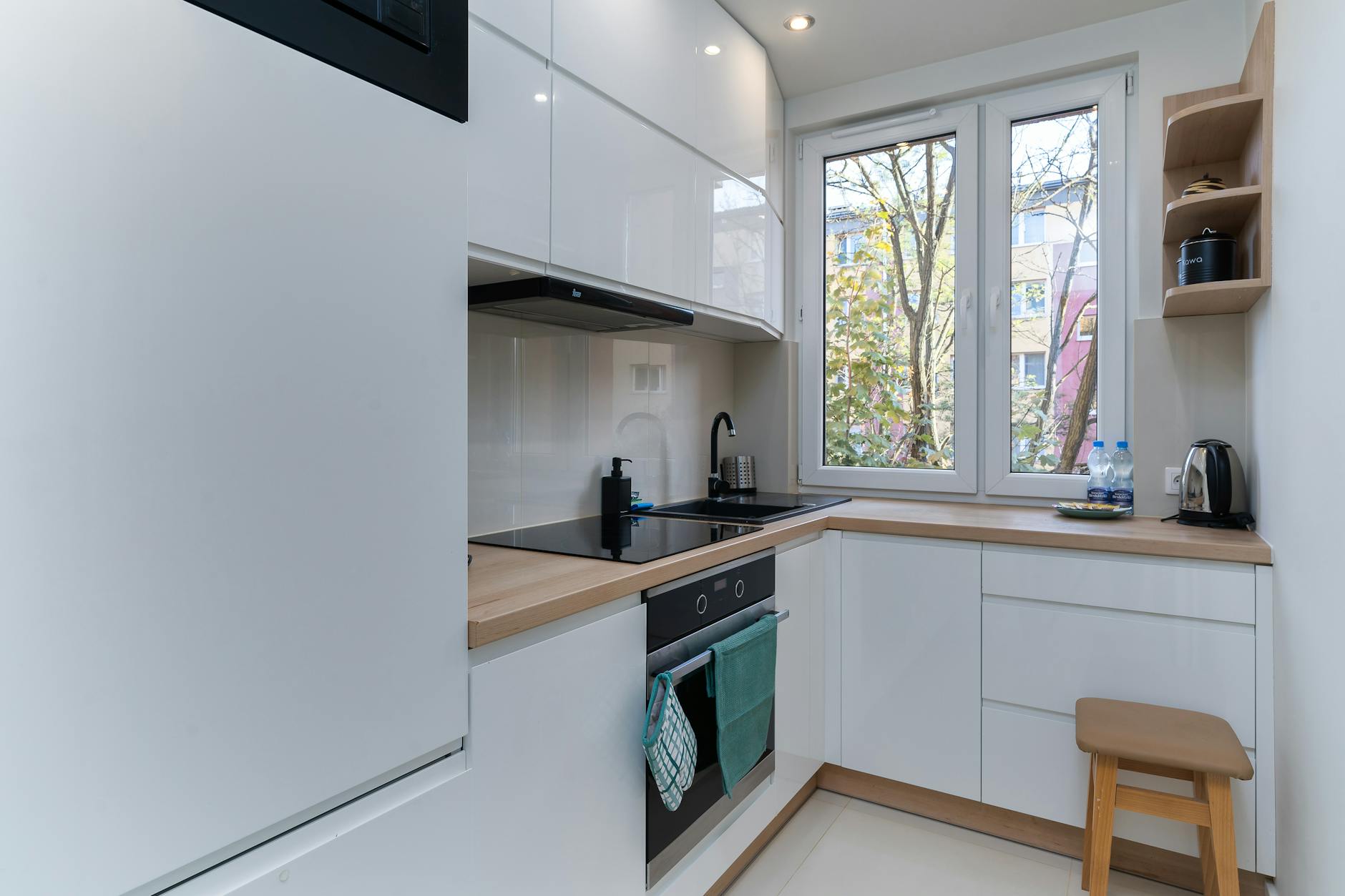
The constraint of limited square footage need not imply compromise. When I consider the small kitchens that function effortlessly—those where morning coffee preparation requires no choreography of shifting cutting boards and repositioning stools—the common thread is not size but sequence. Layout efficiency in compact cooking spaces is less about the footprint itself and what that footprint permits you to avoid: unnecessary motion, duplicated effort, and the hidden energy costs of poor appliance placement. These small kitchen layout efficiency tips address the measurable friction points that convert cooking from a daily annoyance into a smooth mechanical process, without requiring structural renovation or premium cabinetry costs.
⚡ In a Rush? Key Takeaways
- Small kitchens can be 42% less efficient due to motion waste (Cornell University, 2023)
- An 8×10 kitchen can lose up to 25% usable space with poor layout
- Proper layout can save up to 15 minutes daily in a 70 sq ft kitchen
- ✅ Prioritize function over aesthetics for maximum efficiency
Most inefficiencies in tight kitchens stem from what ergonomists call “motion waste”—the steps, reaches, and turns that add no value but consume time and physical energy. In a 2023 study of residential kitchen usage, researchers at Cornell University found that cooks in kitchens under 70 square feet spent an average of 42% more time in transit between storage, preparation, and cooking zones compared to those in larger spaces with thoughtful layouts. This translation of spatial constraints into temporal costs is where the true expense of poor design manifests, particularly when compounded over years of daily use. The following strategies prioritize function over aesthetic convention, focusing on the specific architectural and organizational adjustments that yield disproportionate efficiency gains in confined areas.
How much usable space are you actually losing to poor layout?
A poorly configured 8×10 kitchen often yields less usable space than
| Option | Key stat | Best for |
|---|---|---|
| 8×10 kitchen with poor layout | 50 sq ft usable space | Larger, more open spaces |
| 8×10 kitchen with efficient layout | 65 sq ft usable space | Compact, functional spaces |
That’s a loss of up to 25% of your kitchen’s usable area—space that could be better used for prep, storage, or simply moving around more comfortably.
Efficiency-boosting layout strategies for small kitchens
Consider these three key strategies to maximize efficiency in your small kitchen:
- Optimize the work triangle
- Maximize storage with smart cabinetry
- Invest in space-saving appliances
📊 Efficiency Verdict
Proper layout can save up to 15 minutes daily in a 70 sq ft kitchen, making it a worthwhile investment for time-strapped homeowners.