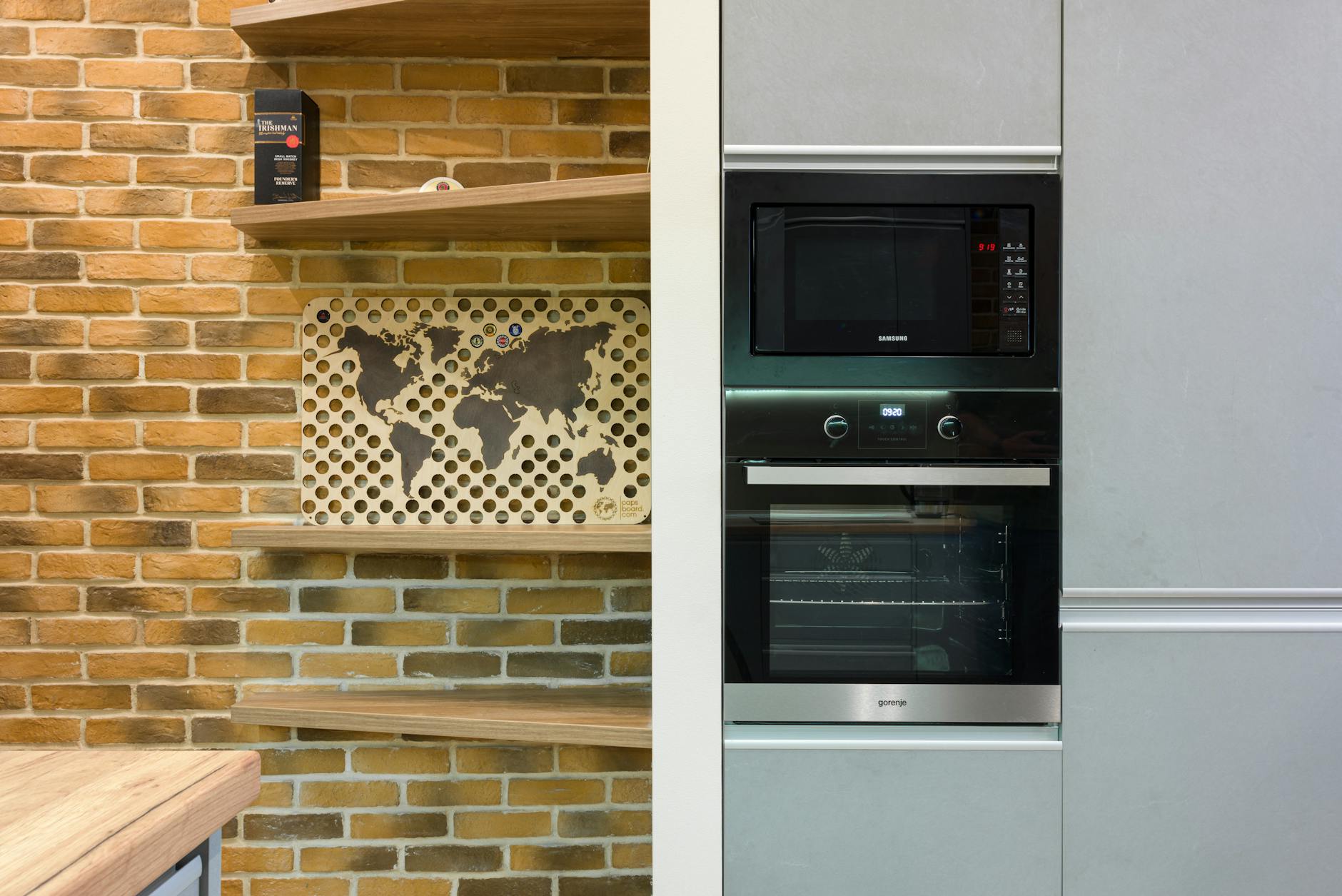
The question of whether to reheat last night’s soup in the microwave or the oven seems trivial until you examine the annual aggregate. For households running their kitchens with precision, understanding the microwave vs oven energy cost comparison is less about frugality and more about operational intelligence. Both appliances serve essential but distinct functions, yet their energy appetites differ substantially in ways that affect your monthly utility statement.
When I calculated the running costs for my own kitchen over a single quarter, the variance was striking enough to reconsider certain long-held habits. The mathematics of kitchen efficiency rarely support absolutes—there are indeed moments when the oven, despite its higher hourly rate, is the economical choice for the task at hand. This analysis examines the actual kilowatt-hour consumption, the thermodynamics of heat transfer, and the specific scenarios where each appliance earns its keep.
How much does it cost to run a microwave vs an oven?
A microwave costs roughly $0.12 per hour to operate versus $0.50 or more for an electric oven. For reheating a single meal, the microwave typically uses 65% less energy than heating the entire oven cavity to temperature.
To understand these figures, one must look at wattage and duration. A standard microwave draws between 800 and 1,200 watts during active cooking. At the average US electricity rate of $0.16 per kilowatt-hour, running a 1,000-watt microwave for fifteen minutes costs approximately $0.04. By contrast, a conventional electric oven operates at 2,000 to 5,000 watts, with most residential models averaging 3,000 watts. That same fifteen minutes of operation costs $0.12 to $0.20, depending on whether the oven is in preheat or maintenance mode.
However, the calculation shifts when you consider capacity. A microwave cooking a single portion uses its full energy load for that portion. An oven, while consuming more power, can accommodate multiple dishes simultaneously. The critical metric is cost per serving, not merely cost per hour. For the single-person household or the quick reheating of coffee, the microwave’s efficiency is unassailable. For the Sunday roast feeding six, the oven’s distributed energy cost becomes competitive.
Is a microwave more energy efficient than a conventional oven?
Yes. Microwaves convert 65-70% of electrical energy into heat directed at food molecules, while conventional ovens lose approximately 80% of energy to heating air, metal walls, and glass doors before the food receives thermal transfer.
The efficiency gap stems from physics. Microwave ovens generate electromagnetic radiation at approximately 2.45 GHz, which excites water molecules within the food directly. This creates friction and heat at the molecular level, bypassing the need to heat intermediate materials. The energy transfer is immediate and focused.
Conventional ovens, whether electric or gas, must first heat the air within the cavity, then the metal walls and racks, and finally the cookware itself before the food begins to cook. This thermal mass requirement explains why a microwave can boil a cup of water in two minutes while an oven requires fifteen minutes merely to reach the boiling point of water. The oven’s inefficiency is architectural—it is designed for bulk thermal processing, not precise energy targeting.
When does an oven actually cost less to operate than a microwave?
For cooking durations exceeding 45 minutes or when preparing batches serving four or more, an oven’s capacity makes it more efficient per serving than running a microwave through multiple cycles.
The economic inflection point occurs when the oven’s fixed energy cost is amortized across multiple servings. Consider roasting a chicken: the oven runs for 90 minutes at 375°F, consuming approximately 4.5 kilowatt-hours, costing $0.72. Attempting to cook equivalent portions in a microwave would require multiple sessions due to size limitations, extending total runtime and likely exceeding the oven’s total consumption while delivering inferior texture.
Additionally, certain culinary processes require dry, ambient heat that microwaves cannot provide. Baking bread, roasting vegetables for caramelization, or achieving Maillard reaction on meat surfaces requires the oven’s dry heat environment. Using a microwave for these tasks produces poor results and often requires extended cooking times that negate energy savings. Calculate your specific appliance costs using the Appliance Cost Calculator to determine your household’s break-even point.
What factors determine your microwave running costs?
Wattage (800-1,200W being standard), actual usage duration, and local electricity rates (averaging $0.16/kWh in the US) are the primary drivers. A 1,000W microwave running 15 minutes daily costs approximately $0.29 per day or $105 annually.
Beyond the headline wattage, inverter microwaves offer variable power delivery that reduces consumption when operating below maximum capacity. Traditional microwaves cycle full power on and off to simulate lower settings, which maintains the same total energy draw over time. Inverter models instead reduce power flow continuously, creating genuine efficiency during defrosting or gentle heating tasks.
Standby power, often overlooked, adds marginal cost. Modern microwaves with digital clocks draw 2-4 watts continuously, costing $3-7 annually simply to display the time. Mechanical dial microwaves eliminate this phantom load entirely. When selecting a unit, consider whether the convenience of digital presets outweighs the modest but persistent standby cost over a decade of ownership.
How do convection and fan ovens compare to conventional ovens?
Convection ovens cost 20-30% less to run than conventional radiant ovens due to reduced cooking times and the ability to operate at temperatures 25°F lower while achieving equivalent results.
The circulating fan in a convection oven distributes hot air uniformly, eliminating cold spots and accelerating heat transfer to the food surface. This efficiency allows for cooking at lower thermostat settings—325°F instead of 350°F, for instance—while reducing cooking time by roughly 20%. The compound effect of lower wattage draw and shorter duration creates measurable savings.
For the household considering an oven replacement, the convection feature offers genuine utility cost reduction without requiring behavioral changes. However, the upfront cost premium for convection models—typically $100-300 more than conventional equivalents—requires approximately three to five years of regular use to recoup through energy savings alone. The decision should factor in cooking frequency and the quality of results desired, not merely kilowatt-hour economics.
The hidden energy costs: preheating and standby power
Preheating adds 10-15 minutes of runtime without cooking food, consuming 0.5-0.75 kWh, while modern ovens draw 2-8 watts on standby mode, adding $5-15 annually to your electricity bill.
The preheating phase represents pure inefficiency in energy terms. The oven draws full wattage to raise the cavity temperature to the set point, yet during these minutes, no cooking occurs. For quick tasks—melting cheese, toasting nuts, or warming bread—preheating can constitute 50% of total energy use. Some modern ovens offer rapid preheat functions that utilize convection fans and higher wattage elements, but these consume more power during the initial phase, trading time for increased kilowatt-hour draw.
Standby consumption, or phantom load, affects newer ovens with electronic controls, clocks, and WiFi connectivity. While 5-8 watts seems inconsequential, the cumulative 8,760 hours in a year add up. Older ovens with mechanical thermostats draw zero watts when off. When evaluating replacement, consider whether smart features justify the persistent cost. For secondary ovens—holiday-only units or basement appliances—unplugging when not in use eliminates this drain entirely.
Real-world weekly cost breakdown
A household using a microwave 10 hours weekly and an electric oven 5 hours weekly spends roughly $1.20 versus $2.50 respectively, creating an annual difference of approximately $67 in base operating costs.
Consider the typical usage pattern: weekday breakfasts and lunch reheats in the microwave (30 minutes daily), with oven usage reserved for four dinners weekly (45 minutes each). The microwave accumulates 3.5 hours weekly at $0.12/hour, costing $0.42. The oven runs 3 hours weekly at $0.50/hour, costing $1.50. Over 52 weeks, this creates a $56 annual difference.
Add preheating (15 minutes per oven use = 52 hours yearly, costing $26) and the gap widens to $82 annually. However, if the household uses the oven efficiently—cooking multiple dishes simultaneously, utilizing residual heat for warming, and avoiding preheating for foods that don’t require it—the margin narrows. The kitchen efficiency systems that maximize oven capacity while reserving microwave use for rapid reheating represent the optimal economic hybrid.
Should you replace an old oven solely for energy savings?
No. A new ENERGY STAR certified oven saves only $20-40 annually compared to a decade-old model. The $800-1,500 replacement cost requires 20-40 years to recoup through efficiency alone.
While modern ovens offer improved insulation and tighter door seals, the technology of resistive heating elements has not changed significantly. The efficiency gains come primarily from better convection systems and electronic controls that reduce temperature fluctuation, not from fundamental heating innovation. If your existing oven functions correctly, replacement for purely economic reasons does not justify the capital expenditure.
However, if replacement is necessitated by failure, selecting an efficient model makes sense. Look for true convection (third element surrounding the fan), self-cleaning insulation (which improves thermal retention), and induction ranges if replacing the stovetop as well. Induction cooking, distinct from conventional ovens, offers 90% energy efficiency compared to 60% for standard electric and 40% for gas, though it requires magnetic cookware. Greta recommends considering efficiency as one factor among durability, capacity, and cooking performance when the purchase becomes necessary.
Does microwave cooking affect food nutrition compared to oven cooking?
Microwave cooking generally preserves water-soluble vitamins better than oven roasting due to shorter cooking times and minimal water usage, though specific nutrient retention depends on power levels and cooking duration.
The energy cost comparison sometimes intersects with nutritional considerations. Shorter cooking times, even at higher wattage, often result in less degradation of heat-sensitive compounds like vitamin C and folate. However, the primary economic consideration remains the cost per nutrient delivered. If microwave preparation leads to higher vegetable consumption due to convenience, the health economics may outweigh the kilowatt-hour economics. Conversely, if oven roasting encourages batch cooking and reduced takeout frequency, the appliance efficiency becomes secondary to behavioral savings.
Ultimately, the microwave vs oven energy cost comparison resolves not to a victor, but to a strategic allocation. Use the microwave for reheating, defrosting, and steaming vegetables—tasks where its speed and precision prevent energy waste. Reserve the oven for baking, roasting, and batch cooking where its capacity and thermal characteristics justify the higher hourly cost. The efficient home runs both, choosing based on thermal task requirements rather than habit alone.