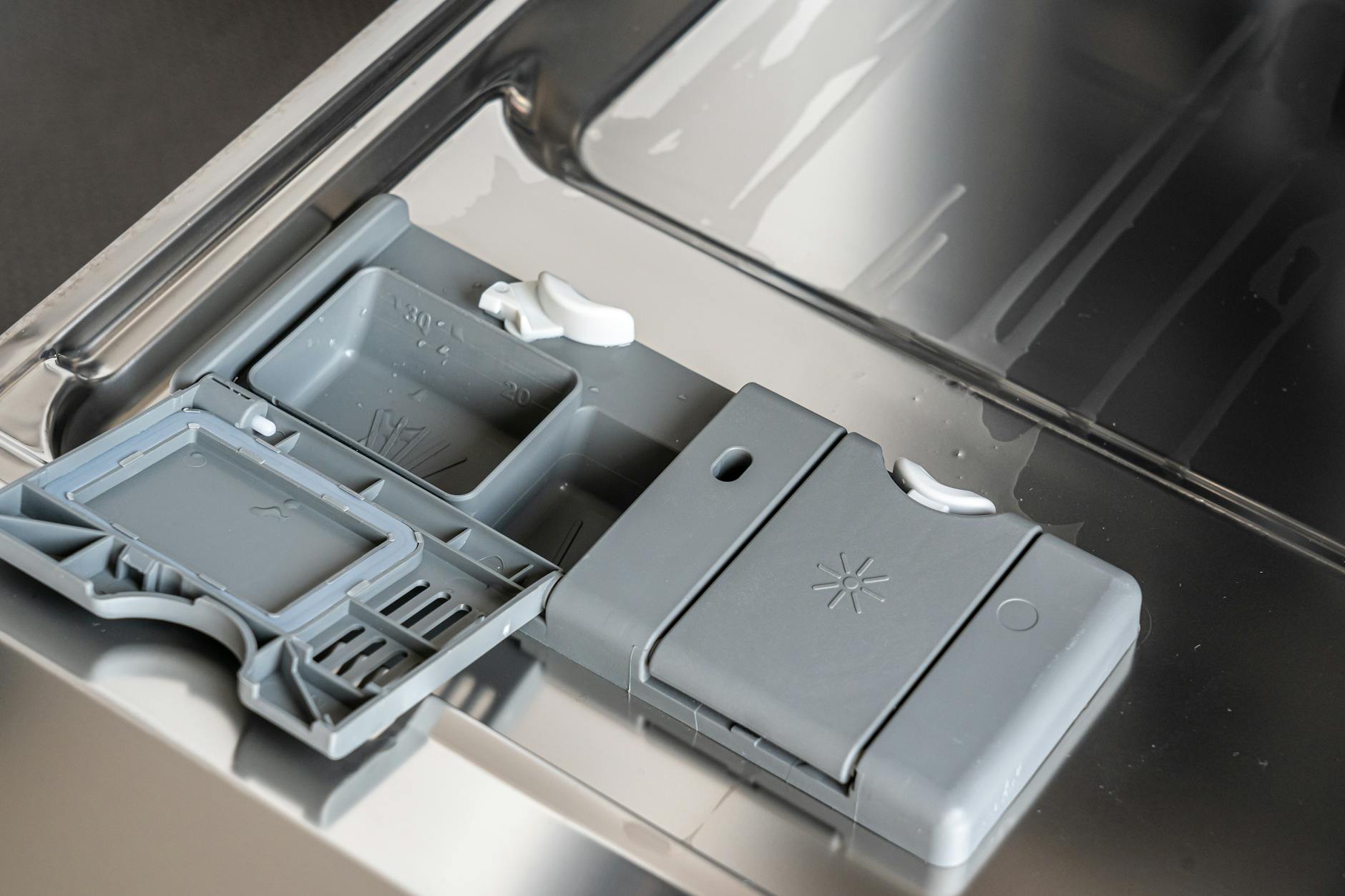
The phrase dishwasher intelligence hub complete guide suggests something more than a simple buying manual. It implies a systematic approach to understanding how these appliances consume resources, when they justify their space in the kitchen, and how to extract maximum efficiency from every cycle. This guide examines the true economics of mechanical dishwashing: not merely the purchase price, but the cumulative cost of water, electricity, and detergent across years of ownership. Whether you are evaluating an existing unit or considering the switch from hand washing, the calculations below provide concrete figures rather than marketing claims.
Does a dishwasher actually save money compared to hand washing?
Energy Star dishwashers cost $0.15–$0.25 per load versus $0.35–$0.50 for hand washing with running hot water. Four weekly loads saves $30–$50 annually.
The economics depend entirely on water heating costs and flow rates. A standard kitchen faucet runs at 1.5–2.2 gallons per minute, and hand washing a sink full of dishes under continuously running hot water typically consumes 8–12 gallons. If your home uses an electric water heater at $0.14 per kWh, heating those additional 6–9 gallons beyond the dishwasher’s 3–4 gallon consumption costs approximately $0.20–$0.30 extra per load in electricity alone. Modern dishwashers seal water in a closed system, recirculating it through high-pressure jets and filtering food particles for reuse during the cycle, while hand washing allows heated water to flow directly down the drain.
The savings calculation assumes you scrape food debris into the compost rather than pre-rinsing under running water. Pre-rinsing habits negate much of the advantage, adding 3–4 gallons of hot water consumption before the machine even activates its soil sensors. Additionally, most users let the faucet run while adjusting the temperature, wasting another half-gallon of heated water. For households running two loads daily, the annual savings versus hand washing can exceed $80, though smaller households washing less frequently see more modest returns. Calculate your specific sink water costs to compare accurately against mechanical washing.
What is the true annual cost to run a dishwasher?
Annual costs run $25–$55 for electricity and water combined, depending on utility rates, cycle selection, and water heating method. Eco cycles reduce this by 15%.
Breaking down the components reveals where money flows. Electricity accounts for roughly 60% of operating costs, consumed primarily by the heating element that raises water temperature to 120–140°F and the circulation pump that moves water through spray arms. A typical cycle uses 0.8–1.2 kWh of electricity and 4–6 gallons of water. Over 150 cycles annually—three loads weekly—this generates the $25–$55 range, with coastal cities at higher electricity rates approaching the upper figure.
Natural gas water heaters alter the calculation significantly. If your dishwasher connects to a gas-heated water supply rather than heating water internally or drawing from an electric tank, electricity consumption drops to approximately 0.3 kWh per cycle for the motor alone, reducing the electrical component to $6–$10 yearly while adding $8–$12 in gas heating costs. Modern units with electronic controls and digital displays also draw 1–3 watts in standby mode, adding $3–$5 annually if the unit remains plugged in but idle. The dishwasher cost calculator allows input of your specific utility rates, water heating source, and cycle frequency for precise projection.
How much water does a dishwasher use compared to hand washing?
Modern efficient models use 3–4 gallons per cycle while hand washing the same dish load consumes 8–12 gallons under continuously running hot water, representing a 60% water savings.
The discrepancy stems from recirculation systems. A dishwasher sprays the same filtered water through multiple phases—pre-wash, main wash, and rinse—rather than constantly introducing fresh water. High-efficiency models achieve 2.5 gallons per cycle through improved spray arm design and turbidity sensors that shorten cycles when water clarity indicates adequate cleaning. Hand washing lacks these feedback mechanisms, resulting in linear water consumption regardless of how clean the dishes actually are.
Water conservation translates directly to energy savings because 80% of dishwasher energy consumption goes toward heating water. In drought-prone regions or homes with septic systems where water volume affects drain field longevity, the 60% reduction alone often justifies the appliance regardless of financial ROI. Additionally, homes with well pumps save electricity on pumping costs, as reducing water consumption by 5 gallons per cycle eliminates approximately 0.1 kWh of pumping energy for typical well systems with 100-foot lifts.
When does efficiency justify replacing an older unit?
Pre-2006 units use 6–8 gallons per cycle without soil sensors. Replacement pays back in three years when repairs exceed $150 and the unit is over eight years old.
Dishwasher efficiency improved dramatically after the 2006 Energy Star 1.0 specifications tightened water limits to 5.8 gallons and again with the 2015 2.0 standards requiring 3.5 gallons maximum. Older units lack turbidity sensors that detect food particle density in wash water, causing them to run full cycle lengths regardless of cleanliness. They also use exposed coil heating elements rather than insulated heat pumps, losing thermal energy to the surrounding air rather than transferring it efficiently to the water.
The replacement calculation weighs repair costs against efficiency gains. If your current unit requires a $200 pump replacement and consumes an extra $40 annually in water and electricity compared to a new Energy Star model, the repair extends to a five-year payback period just to break even on the efficiency differential. However, if the unit is only four years old and repairable for $100, keeping it likely makes sense. When dishwashers exceed twelve years, parts availability and the risk of catastrophic leaks causing cabinet damage often outweigh marginal efficiency improvements. Review our appliance lifespan guide for specific model longevity data.
Which wash cycles waste the most energy?
Heavy-duty cycles consume 40–60% more energy than eco settings through extended heating and additional rinses, adding $15–$25 to annual electricity costs.
Manufacturers program heavy, antibacterial, and pot-scrubber cycles to maintain higher temperatures for longer durations—often 150°F versus 120°F for standard cycles—and include additional water changes to remove grease. Each temperature boost of 10°F requires approximately 5% more energy, and extended durations compound consumption. These cycles also disable the automatic drying sensors, running heated dry for fixed periods of 30–45 minutes rather than stopping when humidity sensors indicate dryness.
The eco cycle, conversely, extends wash time to 135–160 minutes while reducing water temperature and volume, cleaning effectively through mechanical action and enzyme detergents rather than thermal energy. For normally soiled dishes from everyday meals, eco mode performs identically to standard cycles while using 0.5–0.8 fewer kWh. Reserve heavy cycles for baked-on cookware or sanitizing baby bottles; default to auto or eco for daily loads, and always select the “auto” dry option that uses condensation drying rather than the energy-intensive heated dry function.
What maintenance preserves efficiency over time?
Monthly filter cleaning and annual spray arm descaling prevent the 15–20% energy waste common in neglected units with clogged components and impaired water pressure.
Hard water deposits accumulate in spray arm jets, restricting water flow and forcing the pump to work harder while delivering less cleaning action. A 10% reduction in spray pressure typically causes users to select heavier cycles or run the unit twice, effectively doubling energy waste for those loads. The filter screen at the tub base traps food particles; when clogged, it restricts water circulation and can cause the heating element to cycle excessively trying to maintain temperature in stagnant water, drawing 1,000 watts continuously rather than cycling normally.
Descaling requires running an empty cycle with citric acid or specialized cleaner every six months in hard water areas, or annually in soft water regions. Check spray arm rotation monthly—it should spin freely without catching on dishes or the rack. If jets appear clogged, remove the arm and clear deposits with a fine wire or pin. Inspect the door seal for cracks that allow heat escape during drying cycles, as compromised seals extend drying time by 10–15 minutes and increase electricity consumption significantly. These twenty minutes of maintenance quarterly preserve the unit’s original efficiency specifications.
Is the Energy Star premium worth the upfront cost?
Certified models use 12% less energy and 30% less water than federal minimums, saving $75–$100 over the lifespan and justifying a $50–$100 purchase premium.
The federal minimum allowable efficiency represents the worst-performing legal unit available, not the average. Energy Star certification requires exceeding these minimums by specific margins verified by third-party testing. Over a ten-year lifespan, the certification typically saves $75–$100 in utility costs, though regional variations in electricity and water pricing significantly impact this figure. Some utilities offer tiered rebates—$25 for basic Energy Star, $50 for CEE Tier 2 efficiency—that eliminate the price differential entirely.
When comparing two models at $499 and $599, the $100 premium pays for itself within the warranty period, and any efficiency savings beyond year five represent pure return. Additionally, efficient models often qualify for state-level rebates under renewable energy programs or municipal conservation incentives. Our energy rebate guide tracks current offerings by zip code. The higher upfront cost also typically correlates with improved sound insulation and rack flexibility, adding quality-of-life benefits beyond mere utility savings.
How to calculate your precise dishwasher running costs
To determine exactly what your specific model costs per month, utilize the dishwasher cost calculator integrated into our appliance intelligence hub. The tool accounts for your local electricity rates (found on your utility bill under “per kWh charges”), water and sewer costs, cycle frequency, water heating source, and whether you select air dry or heated dry functions. Input your usage patterns to receive monthly and annual projections accurate to within $5, allowing precise budget allocation for household utilities.
For households considering purchase, the calculator includes a comparison function pitting older models against Energy Star alternatives, showing breakeven timelines and total cost of ownership over five, ten, and fifteen-year horizons. This data transforms abstract efficiency percentages into concrete dollar figures, supporting informed decisions about when to upgrade existing equipment versus maintaining current units. The calculator also estimates carbon footprint reductions, translating energy savings into environmental impact for households prioritizing sustainability alongside financial efficiency.