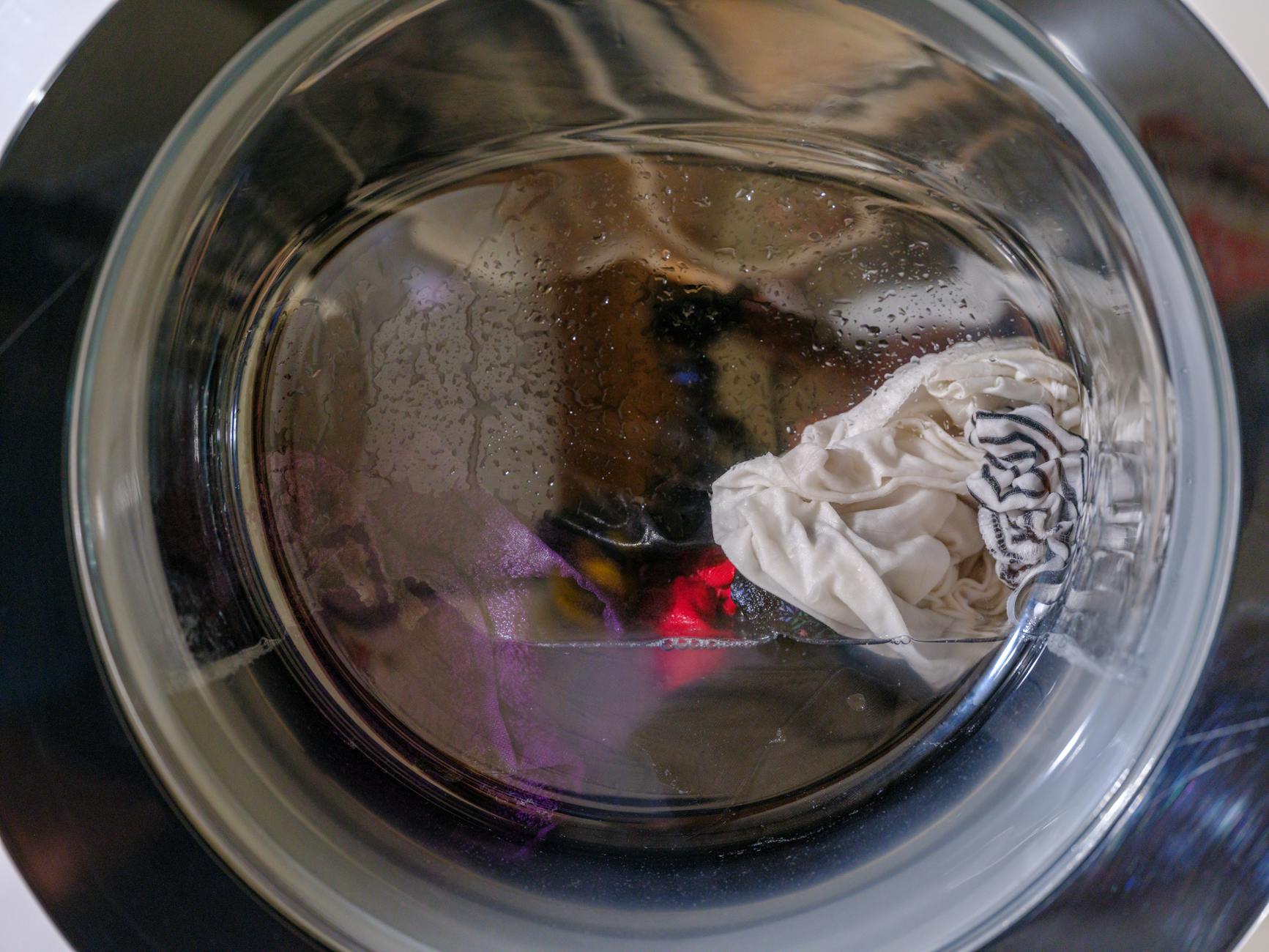
When you select a cotton cycle and see “1400” flashing on the display, you are looking at the washing machine spin speed. Understanding what this number means—and more importantly, what it costs you—separates an efficient laundry routine from one that quietly drains your energy budget. The figure represents revolutions per minute (RPM), but the implications stretch from fiber integrity to annual electricity expenses.
What does washing machine spin speed actually mean?
It measures how many times the drum rotates per minute during the final extraction phase. A 1200 RPM machine completes 1200 full rotations, using centrifugal force to press fabric against the perforated drum walls. This mechanical pressure drives water out through the holes and into the drainage system, leaving clothes damp rather than saturated. Most domestic machines range from 400 RPM for delicate silks to 1600 RPM for heavy cotton towels, with 1200-1400 RPM representing the standard for everyday cotton cycles.
The physics involve significant G-forces. At 1400 RPM, the drum’s outer edge accelerates fabric to speeds generating approximately 350 G—enough to extract water from deep within cotton fibers. However, these forces also stress bearings, suspension systems, and the fabrics themselves, creating the central trade-off of laundry economics: mechanical extraction versus energy consumption.
Does a higher spin speed save money on drying costs?
Yes, significantly. Every 100 RPM increase removes roughly 1-1.5% more residual moisture from fabric. At 1000 RPM, a standard cotton load retains approximately 56% of its weight in water; at 1400 RPM, this drops to 50%. For a typical 6 kg load, that is 360ml less water per cycle—the equivalent of reducing tumble dryer time by 15-20 minutes.
With electricity costs averaging £0.30 per kWh, a vented tumble dryer consuming 2.5 kWh per cycle costs £0.75 per hour to operate. Saving 20 minutes per load translates to £0.25 saved per wash. For a family running four loads weekly, that represents £52 annually in dryer electricity alone. The savings compound further when you consider that shorter drying times reduce mechanical wear on dryer components, extending appliance lifespan by an estimated 10-15%.
However, the relationship is not linear. Moving from 800 to 1200 RPM eliminates significantly more water than moving from 1200 to 1600 RPM due to diminishing returns in centrifugal physics. A 1600 RPM spin extracts approximately 54% of residual moisture—only 4% more than 1400 RPM—while placing substantially more stress on the washing machine’s bearings and the clothing fibers.
What spin speed should you use for different fabrics?
Match the RPM to the fiber’s tensile strength and water retention. High-speed spins create G-forces that distort weave structures and stretch yarns. Using 1400 RPM on a wool sweater permanently elongates the fibers; using 600 RPM on bath towels leaves them sodden and heavy, requiring excessive dryer time that damages the cotton pile.
- Silk, wool, and cashmere: 400-600 RPM. These protein fibers relax under centrifugal force and require gentle extraction to prevent felting and distortion.
- Synthetics (polyester, nylon, acrylic): 800-1000 RPM. These hydrophobic fibers shed water easily but crease permanently under excessive speed, necessitating ironing that consumes additional energy.
- Cotton and linen: 1200-1400 RPM. These cellulose fibers withstand high G-forces and benefit maximally from water extraction, reducing weekly laundry costs significantly.
- Towels and denim: 1400-1600 RPM only if the fabric is pre-shrunk and heavy-weight; otherwise 1200 RPM to prevent seam twisting and zipper damage.
Microfiber fabrics represent a special case. Their ultra-fine filaments trap water in capillary spaces, requiring 1000-1200 RPM for adequate extraction despite their synthetic composition. Running microfiber cloths at 400 RPM leaves them too wet for efficient air-drying.
Is a 1600 RPM washing machine worth the extra cost?
Only for households that tumble dry regularly and wash heavy fabrics frequently. Machines rated at 1600 RPM command a £100-150 premium over 1400 RPM equivalents. The additional water extraction saves approximately 5 minutes of drying time per load compared to 1400 RPM—roughly £13-15 annually for a twice-weekly tumble dryer user.
At that rate of return, the payback period extends to 7-10 years, often exceeding the washing machine’s functional lifespan. However, if you line-dry indoors using a heated clothes airer, the reduced moisture content cuts air-drying time from 8 hours to 5 hours, preventing mildew odors in winter months. For damp climates or households without outdoor drying space, this qualitative benefit may justify the cost regardless of pure energy economics.
Additionally, 1600 RPM machines typically feature more robust suspension systems and heavier concrete blocks to manage vibration. These components often translate to longer overall machine lifespan—potentially 12 years versus 8 years for lighter models—altering the total cost of ownership calculation substantially.
How does spin speed affect electricity consumption?
The washing machine uses marginally more electricity, but the dryer uses significantly less. Increasing spin speed from 1000 to 1400 RPM consumes an additional 0.04 kWh per cycle—approximately £0.012 at current UK rates. However, reducing dryer time by 15 minutes saves 0.6 kWh, or £0.18.
The net energy saving per load is approximately 0.56 kWh. Over 200 cycles annually, choosing 1400 RPM over 1000 RPM saves £33 in dryer costs while adding £2.40 to washing costs—a net benefit of £30.60 per year. If you skip the dryer entirely and use a dehumidifier or air-drying, the savings diminish but still favor higher spin speeds due to reduced indoor humidity loading.
Higher extraction also reduces water retention in rubber door seals and internal hoses, potentially lowering maintenance costs by preventing mold accumulation and associated drainage issues. This secondary benefit is difficult to quantify but favors aggressive spin cycles in humid environments.
Can you reduce spin speed to protect delicate clothing?
Yes, though it increases subsequent drying costs measurably. Most modern machines allow per-cycle speed adjustment through programmable settings. Reducing a cotton load from 1400 to 800 RPM protects vintage fabrics or embellished garments but leaves 8-10% more water in the drum—approximately 500ml additional moisture.
This additional moisture extends tumble drying by 25-30 minutes, adding £0.30-0.38 per load in energy costs. For occasional delicate items, the compromise is negligible. However, habitually under-spinning standard loads raises annual drying costs by £30-50 while paradoxically increasing fabric wear from prolonged heat exposure in the dryer.
For garments requiring minimal agitation, consider using a washing machine with a dedicated “hand wash” or “wool” cycle that combines low RPM with minimal drum rotation, rather than simply reducing spin speed on a standard cotton cycle. I earn a small commission if you purchase through my recommendations, at no cost to you.
Are higher spin speeds louder and harder on floors?
Significantly. 1600 RPM generates centrifugal forces exceeding 200 G, creating substantial vibration that transmits through the machine feet into flooring. The noise differential between 1200 and 1600 RPM is approximately 6-8 decibels—perceptibly louder, particularly during the initial spin ramp-up when load distribution imbalances occur.
Wooden suspended floors amplify this vibration, potentially disturbing downstairs neighbors in multi-story buildings. Concrete slab foundations absorb vibration effectively, but even then, anti-vibration pads are essential for 1600 RPM machines to prevent “walking”—the phenomenon where the machine gradually moves across the floor during aggressive cycles.
If your laundry area features original floorboards or sits above living spaces, 1400 RPM represents the practical maximum without significant soundproofing investment. The energy savings of 1600 RPM diminish rapidly if you must add rubber matting, sound-dampening enclosures, or structural reinforcements to accommodate the vibration.
Conclusion
Understanding spin speed allows you to optimize the intersection of fabric longevity and energy economics. For most households, a 1400 RPM machine hits the efficiency sweet spot, offering substantial drying cost reductions without the mechanical complexity, noise, and price premium of 1600 RPM models.
Reserve 400-600 RPM speeds for true delicates and woolens, employ 1200 RPM for synthetics to prevent creasing, and maximize extraction only for heavy cottons and towels. Always weigh the upfront appliance cost against your specific drying methods—if you line-dry exclusively, the premium for 1600 RPM rarely justifies itself; if you tumble dry daily, it pays dividends within two years. Greta recommends tracking your actual laundry costs for one month using a simple meter to determine whether your current spin settings are saving or costing you money in your specific climate and home setup.