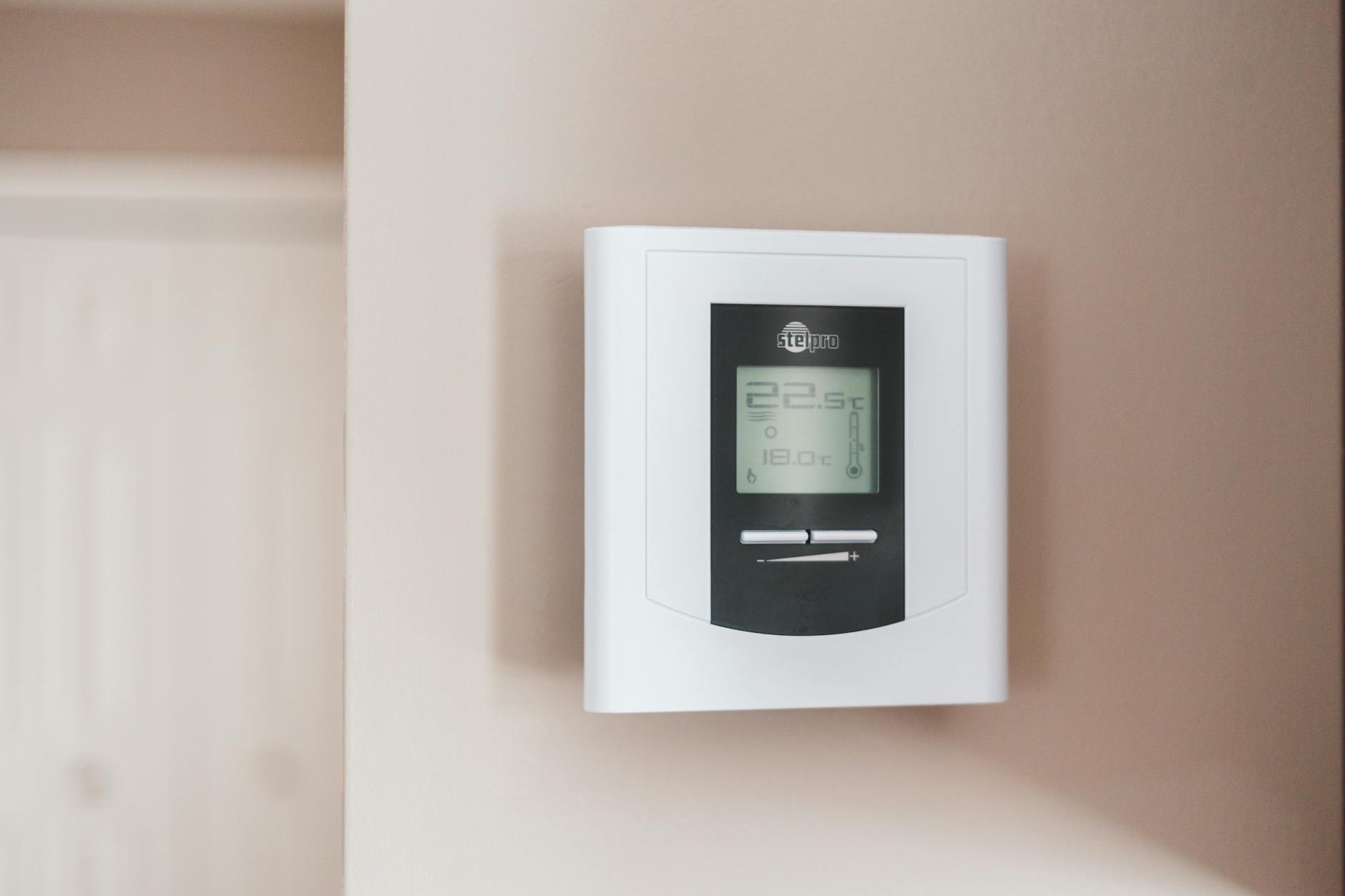
Finding the best thermostat settings to save money requires understanding the relationship between temperature differentials and heating or cooling loads. The Department of Energy provides clear benchmarks that, when followed with consistency, reduce residential energy consumption without compromising thermal comfort. Rather than pursuing dramatic lifestyle changes, the strategy relies on measured setbacks—small, strategic adjustments during periods of sleep or absence that accumulate into significant annual savings. For the average household, maintaining these disciplined parameters can reduce heating and cooling costs by up to ten percent, translating to measurable relief on monthly utility statements. The approach is universal enough to apply whether you rely on a forced-air furnace, a heat pump, or baseboard electric heating, though the specific mechanics of setback recovery vary slightly by system type.
⚡ In a Rush? Key Takeaways
- 8-hour setback of 7-10°F saves 7-10% on heating bills
- Every degree above 78°F in summer reduces cooling energy by 6-8%
- Consistent setbacks can save $100-$180 per year
- ✅ Lower temperature, don’t turn off, to avoid risks
What are the best thermostat settings to save money during winter?
Set your thermostat to 68°F while you are awake and at home, and lower it by 7-10°F when asleep or away. Each degree lowered for eight hours saves approximately 1% on heating bills.
During heating season, the baseline of 68°F represents the intersection of comfort and efficiency for most adults engaged in light activity. When occupied, this temperature provides sufficient warmth for standard domestic tasks without overburdening the furnace. The critical savings mechanism activates during the sixteen hours of the day when the house is either unoccupied or the occupants are sleeping. Lowering the setting to 58-61°F for these periods reduces the temperature differential between your interior space and the outdoor environment, directly decreasing the rate of heat loss through walls, windows, and roofs.
Sleep physiology supports cooler environments, with most adults experiencing deeper rest when bedroom temperatures range between 60-67°F. By programming a setback to 60-65°F beginning thirty minutes before bedtime, you align energy savings with biological preference. The savings accumulate linearly: an eight-hour nightly setback of 7-10°F yields approximately one percent savings per degree, or roughly 7-10% reduction in heating fuel for that period alone. Applied consistently across the heating season, this single adjustment accounts for the majority of potential thermostat-related savings. If recovering to 68°F upon waking feels sluggish, adjust your schedule to begin the warmup period twenty minutes before your alarm rather than maintaining higher overnight temperatures.
What are the best thermostat settings to save money during summer?
Set your thermostat to 78°F when home and awake, and raise it 7-10°F when away. Every degree higher reduces cooling energy consumption by 6-8%.
Cooling efficiency operates inversely to heating, yet the principle remains identical: minimize the temperature difference between indoors and outdoors. The recommended summer baseline of 78°F may feel warm initially, particularly in humid climates, but air movement from ceiling fans can extend comfortable perception by approximately 4°F without affecting the thermostat setting. When the residence is unoccupied for four hours or more, raising the temperature to 85-88°F significantly reduces the runtime of the compressor, the component responsible for the majority of electricity consumption in air conditioning systems.
Humidity control presents a secondary consideration in summer months. While raising the thermostat saves electricity, maintaining some air circulation prevents mold proliferation and preserves furniture integrity. Programmable thermostats can trigger the cooling system briefly during peak afternoon hours even when you are away, solely to dehumidify, before allowing temperatures to rise again. This balance prevents the musty stagnation associated with completely unconditioned spaces while still capturing 6-8% energy savings per degree of temperature increase during unoccupied periods.
How much money can I save by adjusting my thermostat?
Lowering your thermostat 7-10°F for eight hours daily reduces annual heating and cooling costs by roughly 10%, or $100–$180 per year.
The mathematics of thermostat setbacks depend on your local climate, fuel type, and utility rates, but national averages provide useful benchmarks. The Department of Energy estimates that a typical household spends $1,000 to $1,800 annually on heating and cooling combined, representing roughly half of total residential energy consumption. A consistent 10% reduction through proper setbacks therefore yields $100 to $180 in annual savings, with higher amounts in extreme climates or poorly insulated homes where heating and cooling loads represent larger percentages of the total bill.
Gas heating systems generally recover from setbacks more economically than heat pumps or electric resistance heating, though modern variable-speed heat pumps have narrowed this gap. In regions with high electricity costs, the summer savings from elevated temperature settings often exceed winter heating reductions. To calculate your specific potential, examine your utility bills from peak months—January for heating, July for cooling—and apply the percentage to your actual expenditures. Homeowners utilizing detailed heating cost estimators specific to their HVAC type can refine these figures further.
Is it better to turn the thermostat off or just lower it?
Lowering the temperature is more efficient than shutting the system completely off, which risks frozen pipes and humidity control issues.
The impulse to maximize savings by shutting the system entirely misunderstands thermal dynamics and introduces unnecessary risk. When you turn a heating system completely off during winter, the indoor temperature continues dropping until it reaches equilibrium with the outdoors—a process that accelerates as the gap widens. By the time the interior reaches 40°F, you risk frozen pipes in exterior walls, a catastrophic failure costing thousands in water damage that negates years of energy savings. Similarly, shutting off air conditioning during humid summers allows moisture accumulation that damages hardwood floors, encourages mold, and creates thermal mass that actually requires more energy to cool upon return than maintaining a moderate elevated temperature.
Lowering the thermostat, rather than eliminating operation, maintains a safety margin above freezing or humidity thresholds while still capturing nearly the full theoretical savings. The heat loss or gain slows as the interior temperature approaches the outdoor ambient level, following the second law of thermodynamics. A home set to 58°F in winter loses heat more slowly than one set to 68°F, but it never reaches the danger zone where plumbing infrastructure is compromised.
How quickly should I raise the temperature when I return?
Raise the thermostat to your desired temperature immediately upon return. Setting it higher does not heat the home faster and wastes energy.
Upon returning to a cooled or warmed house, set the thermostat immediately to your occupied temperature preference. Furnaces and heat pumps deliver heat at consistent rates regardless of how high you set the target; cranking the thermostat to 80°F in winter does not produce warm air more rapidly than setting it to 68°F. Instead, the system continues running past your comfort zone until it reaches the excessive setpoint, wasting fuel if you forget to readjust. For heat pump systems specifically, aggressive temperature increases may trigger auxiliary electric resistance heat—a notoriously expensive backup that undermines savings goals. Programmable thermostats eliminate this temptation by calculating recovery times and initiating heating or cooling cycles before your scheduled arrival.
Do programmable thermostats really save money?
Yes. Programmable thermostats automate setbacks, removing human error and typically paying for themselves within one to two heating seasons.
Manual thermostat management fails not because the concept is flawed, but because human behavior is inconsistent. We forget to lower the heat when leaving for work, or we wake chilled and maintain 72°F overnight rather than enduring temporary discomfort. Programmable thermostats remove this behavioral variable by executing setbacks automatically according to your weekly schedule. Models offering 5-2 programming (
📊 Efficiency Verdict
Consistent thermostat setbacks can save the average household $100-$180 per year.