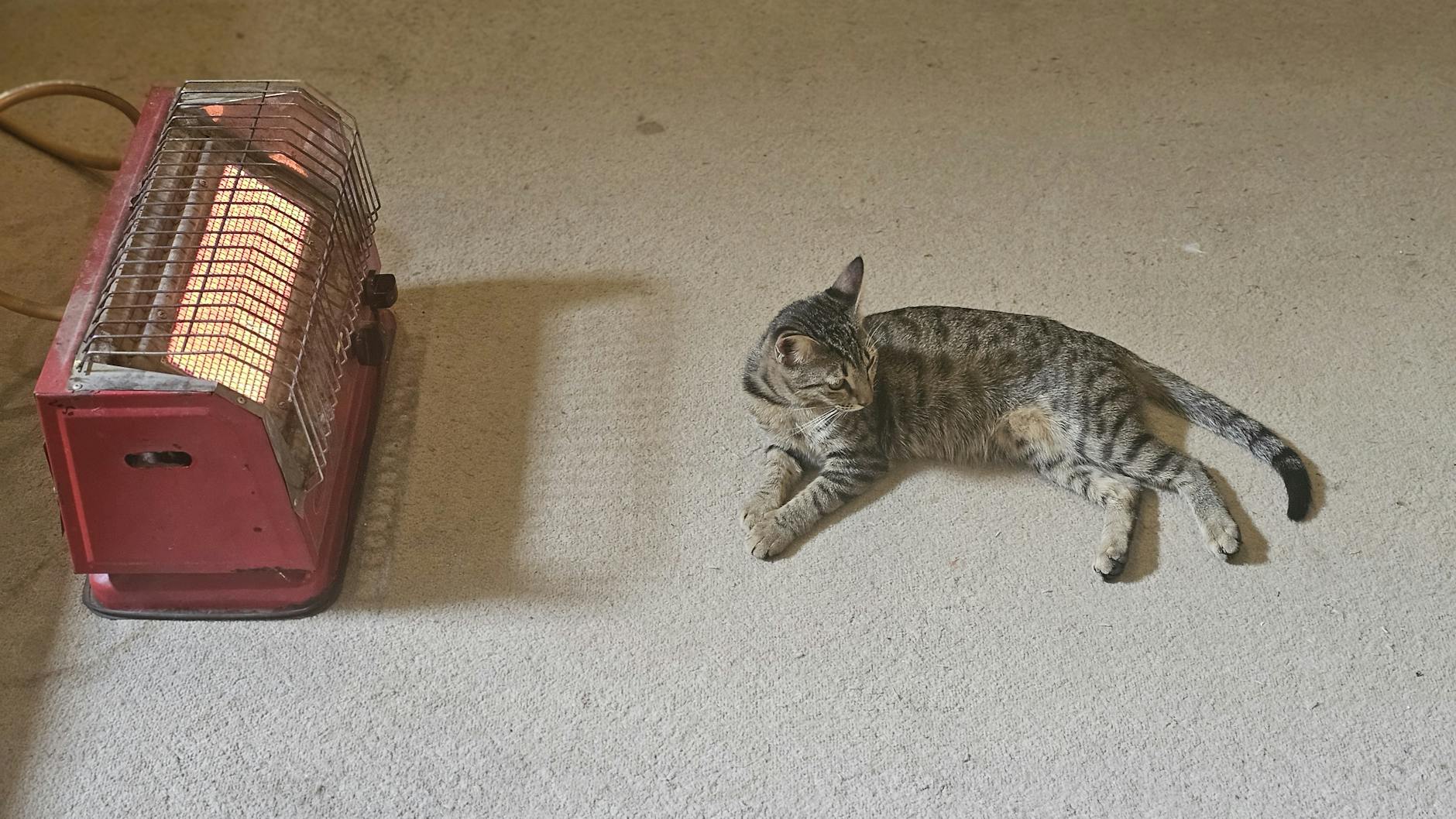
The question of whether to switch on an electric space heater or endure another hour of cold fingers arrives reliably each autumn. With the UK energy price cap fluctuating and central heating costs climbing, understanding the electric space heater cost per hour uk households face has become essential household arithmetic. The mathematics is straightforward, yet obscured by marketing claims about ceramic heating elements and oil-filled efficiency that rarely tell the complete financial story.
⚡ In a Rush? Key Takeaways
- A 2kW heater costs roughly 60p per hour at the UK price cap rate of 30p per kWh.
- Heating one room for two hours beats warming an entire unoccupied house in cost.
- Lowering the thermostat by one degree saves roughly 10% on heating costs.
- ✅ Use timers and heat only occupied rooms to reduce daily expenses.
I have calculated the running costs for every common heater type across varying room sizes and insulation standards. The figures reveal that while these portable units offer precision heating—warming only the space you occupy rather than the entire house—the hourly cost accumulates rapidly when used as a primary heat source. This guide provides the specific calculations you need to make an informed decision about supplemental heating without the January bill shock.
How much does an electric space heater cost per hour to run in the UK?
A 2kW electric heater costs roughly 60p per hour at the UK price cap rate of 30p per kWh. Running it for five hours daily adds approximately £90 to your monthly bill.
The calculation rests on a simple multiplication: your heater’s power rating in kilowatts multiplied by your electricity rate per kilowatt-hour (kWh). Under the current Ofgem price cap, electricity typically costs between 29p and 31p per kWh, though regional variations and specific tariffs may shift this by a few pence either direction.
Most portable electric heaters sold in UK retailers—whether oil-filled radiators, ceramic tower fans, or infrared panels—draw between 1kW and 3kW when operating at maximum output. A modest 1kW personal heater positioned under a desk consumes roughly 30p hourly, while a powerful 3kW convector heater capable of warming a large conservatory demands approximately 90p per hour. These costs scale linearly; there exists no magical heating technology that defies the laws of thermodynamics to produce more heat per watt than another.
The confusion often arises from thermostat control. A 2kW heater with a thermostat does not run continuously at full power once the room reaches temperature. It cycles on and off, typically consuming 60-70% of its maximum rating over an extended period in a moderately insulated room. However, for planning purposes—particularly when calculating whether you can afford to heat a garden office through February—budgeting for the maximum hourly rate prevents unpleasant surprises.
How to calculate electric heater running costs accurately
Multiply kilowatt rating by your electricity rate per kWh. A 1.5kW heater multiplied by 30p equals 45p per hour. Always check your specific tariff.
To determine your precise running costs, first locate the wattage rating on the heater’s base plate or packaging. This figure typically ranges from 400W for small personal units to 3000W for industrial-strength models. Divide this wattage by 1000 to convert to kilowatts. Then multiply this figure by your current electricity rate per kWh, found on your utility bill or supplier’s app.
For example, a dishwasher using 1.5kWh per cycle faces similar calculation methods, though heating devices operate at higher wattages consistently. If your heater displays multiple settings—1000W, 1500W, and 2000W—calculate each tier separately. Running a 2kW heater on its lowest 1kW setting halves your hourly cost to approximately 30p, though it also halves the heat output, extending the time required to raise the room temperature.
Consider the duty cycle for realistic budgeting. In a standard British semi-detached bedroom with double glazing and loft insulation, a 2kW oil-filled radiator might run for 20 minutes of every hour once the room reaches 18°C. This reduces the effective hourly cost from 60p to roughly 20p during the maintenance phase, though the initial warm-up period consumes full power for 30-45 minutes. For context on overall household energy bills, these incremental costs accumulate rapidly when multiple rooms require supplemental heating simultaneously.
Why wattage determines your hourly heating bill
Higher wattage means faster heat but steeper costs. A 3kW heater runs at 90p hourly versus 30p for a 1kW model, though it heats larger spaces faster.
The relationship between wattage and comfort follows basic physics: one kilowatt-hour of electrical energy converts to 3.6 megajoules of heat, regardless of whether it passes through a wire coil, ceramic plate, or oil-filled column. A 3kW heater generates three times the thermal output of a 1kW unit, heating the same air volume three times faster, but at three times the hourly expense.
This creates a crucial decision point for the efficient home. If you require immediate warmth in a small study for a two-hour work session, a 1kW fan heater running continuously at 30p per hour (£0.60 total) proves more economical than a 3kW unit cycling on and off, which might consume £1.20 in the same period despite achieving comfort faster. However, attempting to heat a draughty Victorian living room with a 1kW heater forces the unit to run continuously at maximum output, consuming the same electricity as a larger unit would while failing to reach thermostat temperature.
The efficiency rating displayed on some packaging refers to conversion efficiency—how effectively electricity becomes heat. Since all electric resistance heating operates at nearly 100% efficiency (all electrical resistance becomes thermal energy), these ratings offer little practical guidance. The relevant metric remains the wattage draw and the thermal mass of the heating element, which affects heat distribution but not the fundamental cost per hour.
Are electric space heaters cheaper than central heating?
Electric heaters cost more per unit of heat than gas central heating. However, heating one room for two hours beats warming an entire unoccupied house.
Gas central heating operates at significantly lower cost per kilowatt-hour—approximately 7p to 10p compared to electricity’s 30p—making it the economical choice for whole-house warmth. The mathematics shifts when considering zonal heating. Running a gas boiler to circulate hot water through fifteen radiators across a four-bedroom house solely to warm a single home office represents profound inefficiency.
In this scenario, the comparison with storage heaters or portable units favours the electric option. If your central heating boiler consumes 30kWh of gas daily to maintain minimal background warmth, costing roughly £2.10, substituting a 2kW electric heater for five hours in one room costs £1.50 while allowing the remainder of the house to cool. The saving compounds when you factor in the thermal lag of heating systems; electric heat delivers immediate warmth to the occupant rather than raising the temperature of walls, furniture, and unused corridors.
The break-even point typically occurs when heating three or fewer rooms for intermittent periods. Beyond this threshold, modern condensing boilers with smart thermostats regain their economic advantage. For households with elderly residents requiring constant warmth in multiple rooms, central heating remains the financially prudent choice despite higher infrastructure costs.
The hidden cost: Standing charges and daily rates
Daily standing charges apply regardless of usage, but they do not increase with heater use. The variable rate per kWh determines your hourly running cost exclusively.
Your electricity bill comprises two components: the standing charge (a fixed daily fee averaging 53p across UK suppliers) and the variable unit rate per kWh. Some consumers mistakenly believe that running high-draw appliances like electric heaters triggers additional daily charges. This confusion likely stems from certain Economy 7 or time-of-use tariffs, but standard variable and fixed-rate tariffs charge only for consumption above the standing charge.
Therefore, your space heater costs exactly its wattage multiplied by your unit rate, with no hidden multipliers. However, consistent use of electric heating may push you into a higher consumption tier on certain tiered tariffs, though these have become rare in the UK market. More commonly, heavy electricity use simply accelerates the depletion of any fixed monthly budget on smart meters, requiring earlier top-ups for prepayment customers.
When comparing infrared panels against convection heaters, the same electrical principles apply. Both draw the stated wattage and cost the same per hour. The perceived efficiency of infrared stems from thermal comfort—warming surfaces rather than air—allowing users to feel comfortable at lower thermostat settings, thereby reducing actual running hours rather than hourly costs.
Oil-filled radiators vs fan heaters: Which costs less per hour?
Oil-filled radiators and fan heaters consume identical electricity at the same wattage. Thermal mass affects heat retention, not the hourly energy consumption rate.
The marketing literature often suggests that oil-filled radiators operate more cheaply than fan heaters due to retained heat. This misinterprets the physics. A 2kW oil-filled radiator and a 2kW fan heater both draw exactly 2kW from the wall socket when heating elements are active, costing identical 60p hourly rates. The oil serves as thermal mass, continuing to emit warmth for several minutes after the thermostat cuts power, whereas fan heaters stop producing heat immediately.
This thermal lag provides modest savings through reduced cycling frequency in well-insulated rooms. Once the oil-filled unit reaches temperature, the thermostat interrupts power supply for longer periods compared to a fan heater, which allows the room to cool faster. In practice, this might reduce the duty cycle from 70% to 60%, saving approximately 6p per hour—hardly the dramatic efficiency claimed in retail descriptions.
Fan heaters offer superior spot heating for immediate personal warmth but distribute heat less evenly, creating temperature stratification. They suit short-duration use in bathrooms or while dressing. Oil-filled units provide steadier background warmth suitable for all-day occupancy in home offices. Neither offers a cost advantage on the meter; the choice depends on usage patterns and thermal comfort preferences.
How to reduce electric heater running costs without freezing
Lowering the thermostat by one degree saves roughly 10% on heating costs. Using a timer and heating only occupied rooms reduces daily expenses significantly.
Precision heating requires disciplined habits. Set the heater’s thermostat to 18°C rather than 21°C—a temperature the NHS recommends for healthy adults wearing appropriate clothing. Each degree reduction saves approximately £80 annually when heating a single room for eight hours daily. Wear a merino base layer and wool socks before reaching for the thermostat; the savings rival switching to a heated airer for laundry.
Implement strict timing controls. Modern plug-in timers cost under £10 and prevent the expensive mistake of leaving a heater running overnight or while commuting. Heat the room for thirty minutes before occupancy rather than attempting to raise the temperature rapidly from cold, which forces the unit to operate continuously at maximum wattage. Close doors and use draft excluders—heating a room with an open door to an unheated hallw