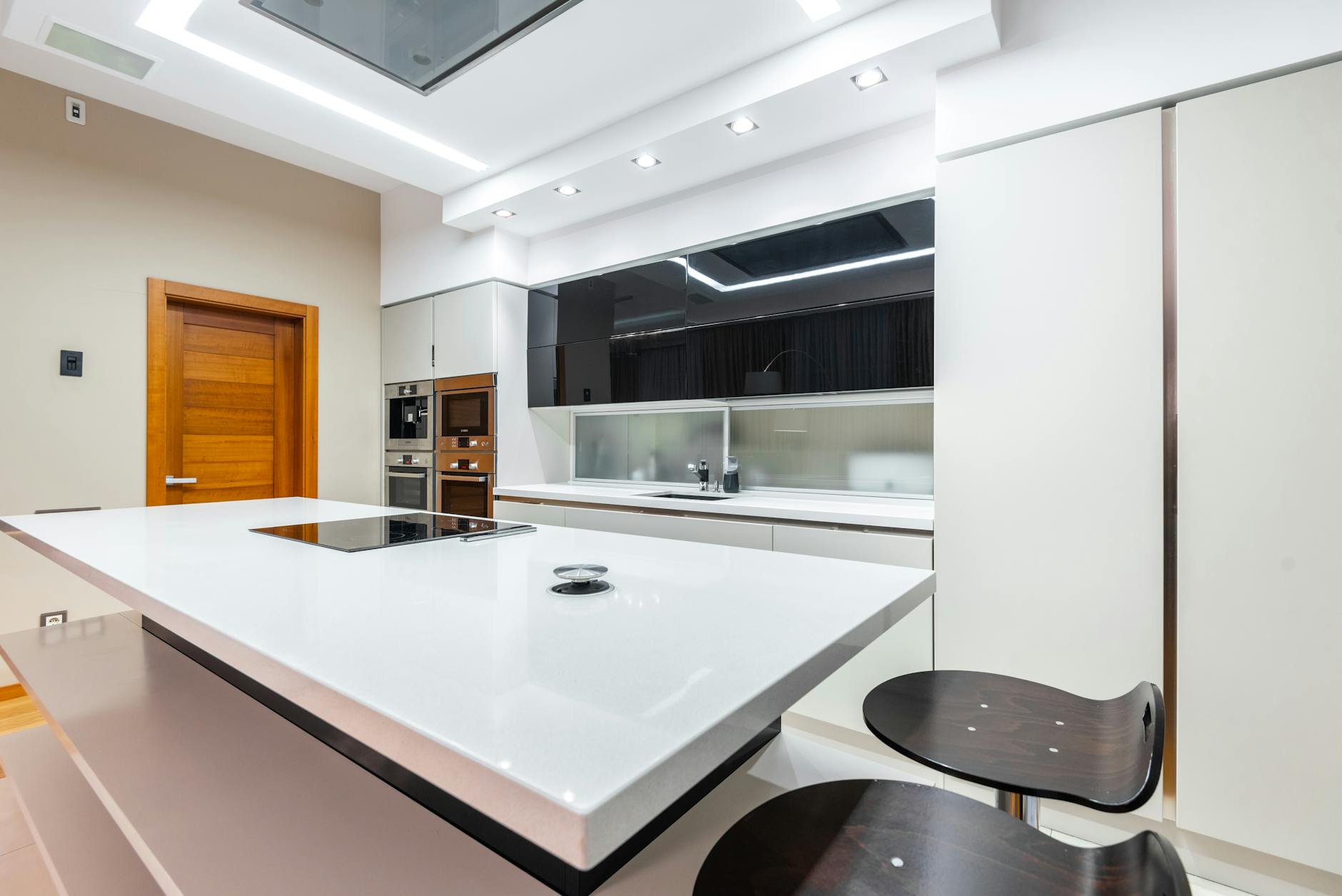
Understanding the exact induction hob running cost per hour uk households face requires more than looking at the electricity tariff. While induction cooking offers superior efficiency to conventional electric or gas hobs, the actual pence-per-hour figure depends on your specific model’s wattage, the heat setting you use, and your current energy provider’s unit rate. With electricity prices fluctuating around the 30p per kWh mark under recent UK price caps, running costs have become a significant consideration for anyone upgrading their kitchen or managing household budgets.
Induction technology works through electromagnetic induction rather than thermal conduction, meaning the pan itself becomes the heat source. This method translates to roughly 90% energy efficiency compared to 40% for gas hobs and 74% for traditional ceramic electric hobs. However, efficiency ratings do not automatically translate to your bill without understanding the actual power consumption per hour of use. Below is a complete analysis of what you can expect to pay when cooking with induction.
What determines the hourly running cost of an induction hob?
Power rating, your electricity tariff, and cooking duration are the three variables. A standard 2kW induction zone costs approximately 60p per hour at 30p per kWh, though most cooking uses partial power.
⚡ In a Rush? Key Takeaways
- Standard 2kW induction zone costs 60p/hour at 30p/kWh
- Most cooking uses partial power, reducing actual costs
- Induction modulation reduces real-world running costs
- ✅ Induction hobs are 30-40% cheaper than ceramic and 10-20% cheaper than gas
The wattage of your induction zones varies significantly between models and settings. Standard domestic induction hobs feature zones ranging from 1.4kW on smaller burners to 3.7kW on large or ‘PowerBoost’ zones. Your electricity tariff, currently hovering between 28p and 36p per kWh depending on your region and whether you are on a standard variable or fixed tariff, forms the baseline calculation. Finally, duration matters—unlike gas, which heats slowly and remains on, induction reaches temperature almost instantly and cycles on and off to maintain heat, meaning actual consumption rarely matches the maximum wattage for the full cooking period.
Theoretical maximum running costs can be calculated by multiplying the kilowatt rating by your per-hour electricity cost. A 2.0kW zone at 30p per kWh equals 60p per hour if running constantly at full power. However, induction hobs modulate power through rapid cycling once they reach target temperature, typically operating at 50-70% of maximum wattage during sustained cooking. This modulation makes real-world running costs lower than the headline figures suggest.
How much does an induction hob cost per hour in practice?
- Real-world cooking averages 20–35p per hour
- Gentle simmering: 10p per hour
- High-heat searing: 51p per hour
Most home cooking involves varied heat settings rather than maximum power. Gentle simmering of soups or sauces on a smaller 1.4kW zone at half power draws approximately 700W, costing roughly 21p per hour. Melting butter or chocolate on low power might use only 600W, resulting in an 18p hourly rate. Conversely, bringing a large pot of water to boil using a 3kW zone on full power costs approximately 90p per hour, though this high-draw phase typically lasts only three to five minutes before the power automatically reduces to maintain the boil.
The ‘PowerBoost’ or ‘Boost’ function available on many mid-range and premium models temporarily draws up to 3.7kW on a single zone, costing £1.11 per hour at 30p/kWh. However, this setting automatically times out after five to ten minutes to prevent overheating and is designed specifically to minimise the expensive high-draw period. For everyday cooking—frying onions, sautéing vegetables, or maintaining a gentle boil—expect consistent costs in the 25-40p per hour range, significantly less than the theoretical maximum suggests.
Is induction cheaper than gas or ceramic hobs per hour?
| Option | Key stat | Best for |
|---|---|---|
| Induction | 90% efficiency, 25-40p/hour | Frequent cooks, precise control |
| Gas | 40% efficiency, 32p/boil | Occasional cooks, slow heat |
| Ceramic | 74% efficiency, 25-35p/hour | Budget-conscious, easy to clean |
Despite higher electricity unit costs, induction’s 90% energy transfer efficiency makes it 30–40% cheaper than ceramic electric and 10–20% cheaper than gas when comparing actual cooking output.
The comparison requires looking beyond the raw unit price of energy. Gas currently costs approximately 7p per kWh compared to electricity’s 30p, appearing cheaper on paper. However, gas hobs lose approximately 60% of their heat to the surrounding air rather than the pan, meaning you must run them longer and hotter to achieve the same results. Ceramic electric hobs, while better than gas at approximately 74% efficiency, still lose heat through the glass surface and take longer to adjust temperature, extending cooking times.
For example, boiling two litres of water on gas might take eight minutes at full burner output, consuming roughly 4.5kWh equivalent of gas energy (accounting for inefficiency) costing approximately 32p. The same task on an induction hob completes in four minutes using approximately 0.25kWh of electricity, costing 7.5p. Over a year of daily cooking, these per-meal savings accumulate significantly, particularly for households cooking multiple dishes daily.
Does cooking technique affect the hourly cost?
- Using boost function triples power draw to 3.7kW, costing £1.11/hour
- Gentle steaming uses just 600W at 18p/hour
- Matching pan size to zone size affects efficiency
Your cooking habits dramatically influence the actual running costs. High-heat techniques like searing steaks or stir-frying demand consistent high wattage, pushing you toward the 50-60p per hour range. Conversely, techniques involving residual heat—such as bringing water to a boil then reducing to a simmer, or using a lid to maintain temperature—allow the induction zone to cycle off frequently, dropping the average hourly consumption.
Matching pan size to zone size also affects efficiency. A 12-inch pan on an 8-inch induction zone forces the hob to work harder to heat the outer edges, potentially increasing energy consumption by 15-20%. Conversely, using appropriately sized induction-compatible cookware with flat, ferromagnetic bases ensures optimal energy transfer. Cast iron and磁性 stainless steel maintain heat well, allowing you to reduce the power setting earlier in the cooking process without losing cooking momentum, effectively lowering your hourly cost while maintaining results.
How to calculate your exact hourly running costs
Multiply your hob zone’s kilowatt rating by your electricity rate per kWh. Example: 2.0kW × £0.30 = £0.60 per hour at full power, though modulation reduces actual costs.
To determine your specific costs, first identify the wattage ratings of your induction zones, usually printed on the hob’s specification label or in the manual. Convert watts to kilowatts by dividing by 1,000. Next, check your latest electricity bill for your unit rate per kWh—this appears as ‘Unit Rate’ or ‘price per kWh’ and currently ranges between 28p and 36p for most UK households.
For precise monitoring, consider an inexpensive plug-in energy monitor for portable induction hobs, or check if your smart meter offers appliance-level monitoring. Alternatively, calculate your energy costs manually by timing your cooking sessions and n