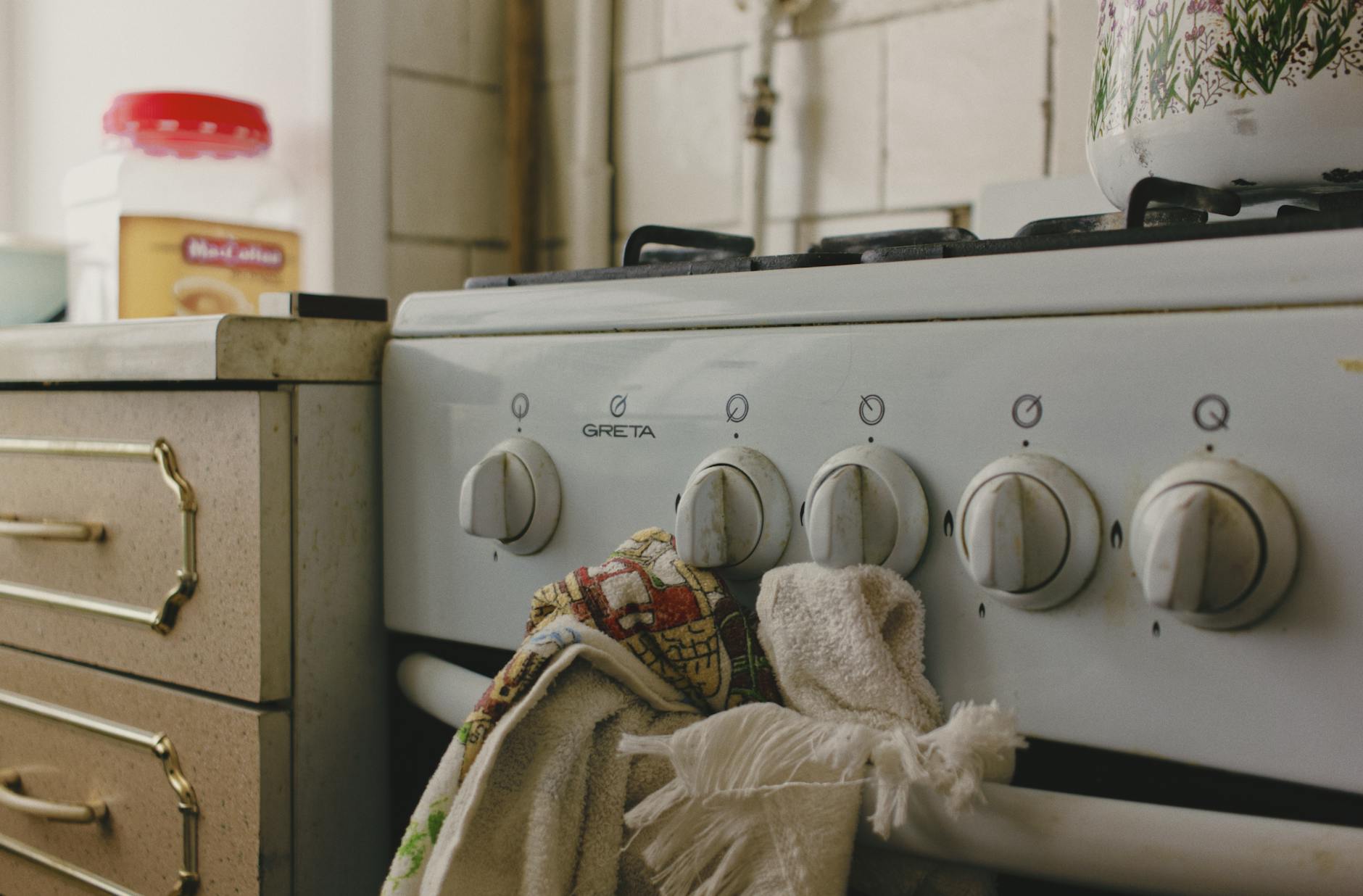
The question of when to replace old appliances for efficiency rarely arrives with a dramatic failure. More often, it reveals itself through gradually climbing utility bills, the third service call in as many months, or the realization that your refrigerator predates your adult children. Determining the optimal replacement window requires balancing the embodied energy of existing machines against the operational savings of modern equivalents, while accounting for the less visible costs of maintenance and reliability.
⚡ In a Rush? Key Takeaways
- Appliances over 12 years old silently extract $150-$300 yearly from your budget.
- Modern Energy Star refrigerators use 50% less electricity than 2001 models.
- Prioritize replacing refrigerators and freezers for fastest ROI.
- ✅ Consider a 7-year payback period for major appliances.
When annual repair costs exceed 10% of replacement price or energy bills spike 20% above baseline, replacement becomes economically rational.
The mathematics of appliance retention are rarely intuitive. A refrigerator that still hums along after fifteen years feels like a testament to durability, yet its compressor may be drawing 1,200 kilowatt-hours annually compared to the 400 kWh consumed by a current Energy Star model. At the national average electricity rate of $0.16 per kWh, that difference amounts to $128 yearly—enough to finance a replacement unit on a five-year timeline.
Beyond energy, consider the reliability tax. Appliances over a decade old face a 40% higher likelihood of catastrophic failure according to consumer reliability data. When your washing machine bearings seize or your dishwasher pump fails, the $300 service call plus parts must be weighed against the remaining useful life of the machine. If the appliance is already approaching the end of its typical lifespan—ten years for washers and dishwashers, fifteen for refrigerators—pouring money into repairs becomes a sunk cost fallacy.
Track your maintenance expenses meticulously. The moment your twelve-month repair total crosses the threshold of 10% of a new unit’s purchase price, you have entered the replacement zone. This metric accounts for both the direct cost of repairs and the opportunity cost of your time spent coordinating service visits and managing disruptions to household routines.
What is the energy cost difference between old and new appliances?
Modern Energy Star refrigerators use 50% less electricity than 2001 models, while contemporary washing machines cut water use by 40% and energy by 25%.
| Option | Key stat | Best for |
|---|---|---|
| 2001 Refrigerator | 50% more electricity | None |
| 2024 Refrigerator | 50% less electricity | Energy efficiency |
| 2000s Washing Machine | 40% more water & energy | None |
| 2024 Washing Machine | 40% less water & 25% less energy | Water & energy efficiency |
The efficiency gap between generations of appliances has widened dramatically since 2010, driven by stricter federal standards and inverter technology adoption. A refrigerator manufactured in 2005 typically consumes 600 kWh annually; its 2024 equivalent uses approximately 350 kWh while offering 20% more interior capacity. For a household paying $0.18 per kWh, this represents a $45 annual savings—modest until multiplied across the appliance’s fifteen-year lifespan, totaling $675 in electricity costs avoided.
Clothes washers present an even more compelling case. Traditional top-loading machines from the early 2000s used 40 gallons per load and substantial hot water. Current front-loaders and high-efficiency top-loaders operate with 13–15 gallons, extracting more water during spin cycles to reduce dryer time. The combined water and energy savings average $60–$100 annually for a family washing four loads weekly.
Dishwashers have undergone similar transformation. Pre-2010 models typically used 10 gallons per cycle; modern units require 3.5 gallons while delivering superior cleaning through soil sensors and targeted spray jets. For households running the dishwasher five times weekly, this efficiency upgrade saves approximately 1,700 gallons of water and $50 in heating costs annually.
Use an appliance cost calculator to model your specific scenario, inputting your local utility rates and usage patterns. The results often reveal that appliances over twelve years old are silently extracting a premium of $150–$300 yearly from your household budget.
Which appliances should you prioritize replacing first?
Refrigerators and freezers offer the fastest ROI due to constant operation, followed by clothes washers and dishwashers used daily.
Strategic replacement sequencing matters when budget constraints prevent whole-home upgrades. Prioritize appliances that operate continuously or daily, as these generate the most significant cumulative savings. Your refrigerator runs 8,760 hours annually; a clothes dryer might run 200 hours. The per-hour efficiency gain matters less for intermittently used devices.
Start with the kitchen’s cooling appliances. A side-by-side refrigerator from 2008 costs approximately $180 yearly to operate; replacing it with a bottom-freezer Energy Star model drops this to $65. The $115 annual savings recoups a $1,200 purchase in just over ten years, faster if utility rates increase or if your old unit requires repairs.
Next, address the washing machine. Beyond energy savings, modern washers treat fabrics more gently, extending clothing lifespan—a secondary economic benefit rarely calculated in efficiency guides. Front-loaders also eliminate the agitator, increasing usable capacity by 30% without increasing footprint.
Defer replacement of ovens and cooktops unless they are truly ancient. These appliances use resistive heating elements that have seen minimal efficiency gains; a 1990s electric oven performs nearly as efficiently as a new one. Similarly, clothes dryers have improved only marginally since most convert electricity to heat with inherent thermodynamic limits. Focus your capital on the cooling and washing categories first.
How do you calculate the payback period on a new appliance?
Divide the purchase price minus resale value by annual utility savings. A $800 refrigerator saving $150 yearly pays for itself in 5.3 years.
The payback period calculation requires precision to avoid optimistic projections. Begin with the fully loaded purchase price, including delivery, installation, and any necessary electrical or plumbing modifications. Subtract any utility rebates or tax credits—many municipalities offer $50–$100 for recycling old refrigerators and additional incentives for Energy Star purchases.
Estimate annual savings conservatively. Use the EnergyGuide label’s kWh estimate multiplied by your actual electricity rate, not the national average if your local rates differ significantly. For water-using appliances, factor in both water and heating costs. A high-efficiency dishwasher saves not only the water itself but the energy required to heat 6.5 fewer gallons per cycle.
Consider the residual value of your current appliance. While most aging machines have negligible resale value, some vintage or commercial-grade units retain worth on secondary markets. Deduct this amount from your calculation. Conversely, acknowledge disposal costs—many retailers charge $25–$50 for haul-away, though some offer free removal with delivery.
A prudent payback threshold is seven years for major appliances, aligning with typical warranty periods and financing terms. If your calculation exceeds this horizon, consider whether energy efficiency standards in your region might tighten further, or if your current unit’s reliability justifies earlier replacement despite marginal economics.
Are there hidden costs to keeping old appliances beyond the energy bill?
Aging machines increase home insurance premiums, risk water damage from corroded hoses, and require expensive refrigerants now phased out or banned.
📊 Efficiency Verdict
Old appliances can increase insurance premiums and risk water damage, costing thousands in repairs or remediation.
The visible utility bill represents only a portion of an old appliance’s financial burden. Insurance underwriters increasingly view aging mechanical systems as liability risks. A twenty-year-old water heater or washing machine with corroded supply lines poses flood risks that may trigger higher premiums or policy exclusions. Some insurers now require documentation of appliance age for homes over thirty years old.
Environmental regulations have rendered many legacy refrigerants prohibitively expensive. If your 2005 refrigerator requires a compressor repair involving R-22 or early R-134a recharge, the refrigerant costs alone—often $100–$200—may exceed the value of the repair. Modern appliances use R-600a (isobutane) or R-32, which are cheaper and more environmentally sound but incompatible with older systems.
Water damage represents perhaps the most catastrophic hidden cost. Washing machine supply hoses should be replaced every five years, yet most homeowners never perform this maintenance. When a corroded hose bursts while the family is away, the resulting damage can reach $10,000–$50,000 in remediation costs. Modern washers feature automatic leak detection and shutoff valves, offering insurance against this scenario.
Finally, consider the cognitive load of managing unreliable equipment. The mental bandwidth consumed by remembering to jiggle the dishwasher door to start the cycle, or propping the refrigerator closed with a chair, carries a subtle but real quality-of-life cost that efficiency calculations rarely capture.
When does repair make more sense than replacement?
If the appliance is under eight years old, the repair costs less than 30% of replacement, and energy ratings are already efficient, repair is prudent.
Replacement is not always the rational choice. For appliances in the first half of their expected lifespan—generally under eight years for most categories—quality repairs often extend service life sufficiently to justify the investment. A $200 control board replacement on a six-year-old dishwasher with modern efficiency ratings preserves a machine that likely has another six years of service potential.
The 30% rule provides a useful heuristic: if the repair estimate exceeds 30% of the cost of a comparable new unit, replacement becomes compelling unless the appliance is nearly new. For a $900 washing machine, this threshold sits at $270. Below this amount, repair preserves the embodied energy of the existing unit and avoids the manufacturing impact of producing a replacement.
Consider the specific failure mode. Door seals, pumps, and control boards are replaceable components that do not indicate systemic failure. However, compressor failures in refrigerators, drum bearing failures in washers, or motor failures in dryers often signal that other components are approaching fatigue. When a technician identifies “cascading failures,” replacement becomes the wiser economic choice.
Consult Greta’s refrigerator buying guide or equivalent resources for your specific appliance category to compare your current unit’s efficiency class against modern standards. If your existing appliance already meets current Energy Star criteria, the savings from replacement may be insufficient to justify the capital outlay, making repair the efficient choice.
Making the final decision
Determining when to replace old appliances for efficiency ultimately requires synthesizing quantitative data with household-specific variables. A family planning to relocate within three years faces different calculus than one settling into a forever home. Renters must negotiate with landlords, while homeowners bear full responsibility for both failure risks and efficiency gains.
Document your current appliances’ ages, model numbers, and recent energy bills. Request quotes for both repair and replacement before the appliance fails catastrophically, allowing time for measured decision-making rather than emergency purchases. The most expensive appliance is often the one bought in haste during a crisis, when research time is unavailable and premium prices for expedited delivery seem unavoidable.