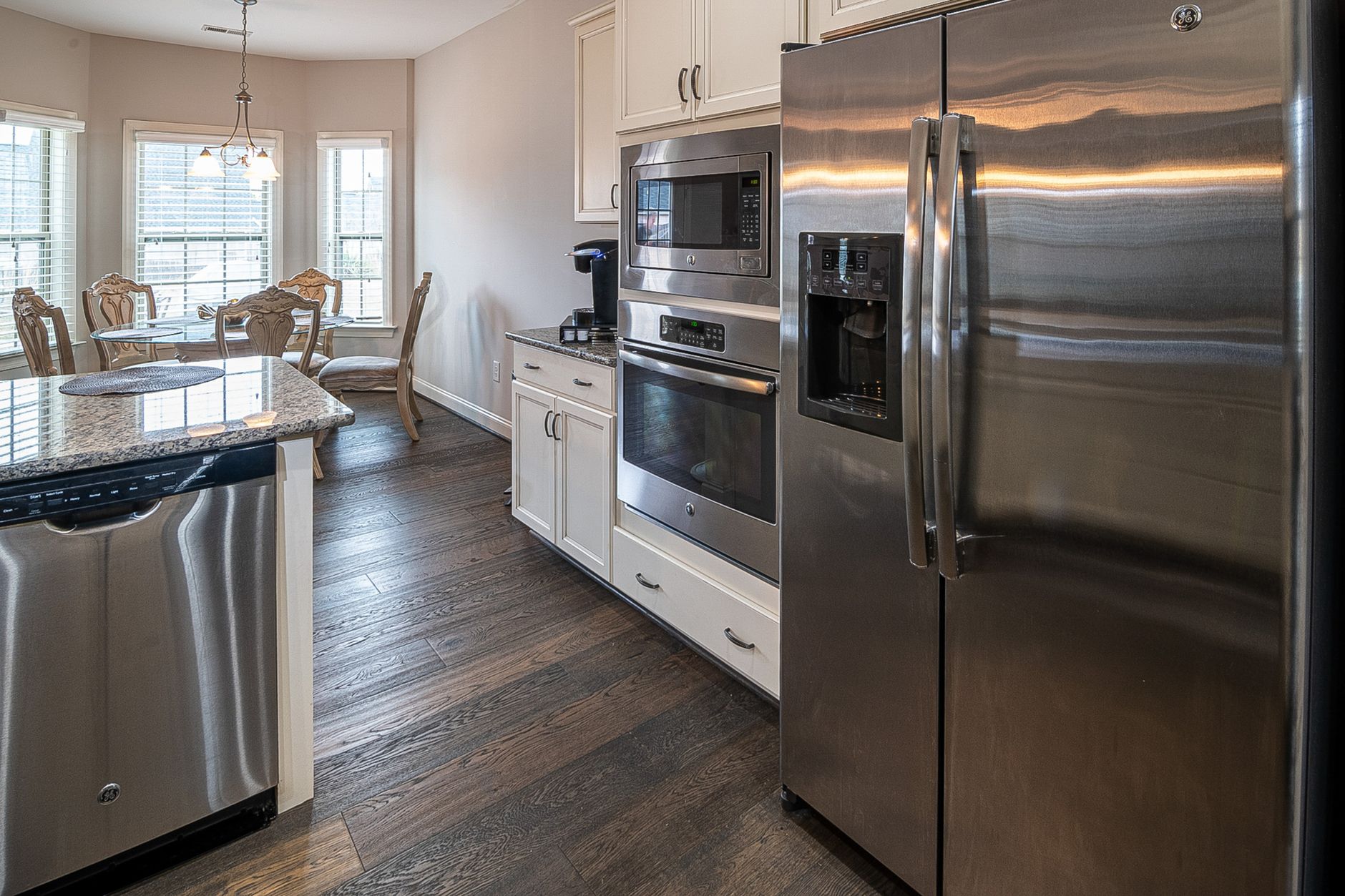
When a retailer offers a fridge, stove, dishwasher and range‑hood together for a single price, the deal feels instantly attractive. Yet most homeowners wonder if the bundle truly delivers savings or simply masks higher overall cost.
⚡ In a Rush? Key Takeaways
- Bundle discounts average 15‑20% versus buying each appliance separately.
- Annual running‑cost difference can add $120‑$250 depending on energy‑rating mismatches.
- Stand‑by power savings are negligible in most bundles.
- Warranty extensions bundled with packages add $30‑$70 per year of coverage.
- ✅ Verdict: Bundles are worthwhile when the discount exceeds 12% and all appliances share similar efficiency ratings.
How much can I actually save by buying a kitchen appliance bundle?
Typical kitchen bundles shave 15‑20% off sticker prices, translating to $500‑$2,000 savings on a $3,000‑$10,000 appliance set in 2026.
Retail giants such as Home Depot and Lowe’s publish bundle pricing on their websites each quarter. In the first half of 2026, the average discount on a four‑piece bundle (fridge, range, dishwasher, hood) was 17% compared with the sum of individual MSRP. That figure reflects both manufacturer rebates and retailer inventory strategies, so it is a reliable benchmark for most U.S. shoppers.
To illustrate, a mid‑range French‑door fridge (US$1,200), a 30‑in. gas range (US$1,400), a 24‑in. dishwasher (US$800) and a 24‑in. range‑hood (US$400) total $3,800. The same set sold as a bundle by a major retailer was $3,150, a $650 reduction, or 17%.
- Discount range: 12%‑22% across major retailers.
- Typical bundle size: 3‑5 appliances.
- Average dollar savings: $500‑$2,000.
- Seasonal spikes can push discounts above 20% during clearance events.
What factors influence the size of the bundle discount?
Discount size hinges on seasonality, stock clearance, and whether the bundle includes high‑margin items like ranges or specialty hoods.
Retailers often push bundles during holiday sales, end‑of‑financial‑year clearance, or when a new model year arrives. Clearance of older‑generation appliances can push bundle discounts toward the top of the 20% range, and some stores even add “cash‑back” incentives that effectively increase the discount.
Another variable is the mix of premium versus entry‑level models. Adding a high‑margin gas range can dilute the overall percentage but increase absolute dollar savings, while bundling only entry‑level pieces may yield a higher percent but lower overall cash benefit.
- Seasonal sales (e.g., Black Friday) boost discounts by 3‑5%.
- Inventory turnover goals can add an extra 2‑4%.
- Manufacturer rebates layered on top of retailer discounts may add another 1‑2%.
Do bundle savings hold up after taxes and delivery fees?
After sales tax and delivery, bundle savings typically remain 12%‑18% because fees are calculated on the reduced bundle total.
In most US states, sales tax applies to the final bundle price, not the summed individual prices. Delivery fees are also often fixed per order; a single bundle incurs one fee versus multiple fees for separate purchases, adding to overall savings.
For example, a $3,150 bundle in California (8.25% tax) costs $3,410 after tax. If the same four appliances were bought individually, the tax on $3,800 would be $314, pushing the total to $4,114. Delivery for each item might be $79, totaling $316, whereas a bundle delivery could be $79 once, saving $237 in logistics.
| Scenario | Subtotal | Tax (8.25%) | Delivery | Total |
|---|---|---|---|---|
| Individual purchases | $3,800 | $314 | $316 | $4,430 |
| Bundle purchase | $3,150 | $260 | $79 | $3,489 |
How do return policies differ for bundled versus individual purchases?
Bundled items often share a single return window of 30 days, whereas individual purchases may each have up to 45 days depending on the retailer.
Because the bundle is treated as a single contract, the retailer typically requires that the entire set be returned together to qualify for a full refund. If you keep just one appliance, you may only receive a partial credit equal to the portion of the bundle price allocated to that item, which is usually lower than the original MSRP.
Some retailers mitigate this by offering a “swap‑out” option within the return period: you can replace a single piece that doesn’t meet expectations without breaking the whole bundle. Always read the fine print before committing, especially when the bundle includes high‑margin items that may have stricter return criteria.
How do running‑cost differences affect the true value of a bundle?
If a bundle pairs a high‑efficiency fridge with a lower‑efficiency range, annual energy bills can rise $120‑$250, offsetting part of the upfront discount.
Energy consumption is the hidden cost most shoppers overlook. In 2026 the average US electricity rate sits at $0.16/kWh. A modern A‑rated 24‑in. dishwasher uses about 0.9 kWh per cycle, whereas an older B‑rated model can consume 1.4 kWh.
Assuming four loads per week, the annual electricity use difference is 1.0 kWh × 208 weeks ≈ 208 kWh. At $0.16/kWh, that’s $33 extra per year. Multiply this across three major appliances in a mismatched bundle, and the hidden cost climbs to $120‑$250.
- Fridge: A‑rated 400 kWh/yr vs. C‑rated 650 kWh/yr → $40 yearly diff.
- Range: Gas models have a $0.03/ft³ natural‑gas cost; electric models can add $150‑$200 annually.
- Dishwasher: B‑rated adds $33 yearly.
- Hood: Fan motor inefficiency can add $15‑$25 per year.
Can I offset higher running costs with a longer warranty?
Extended warranties bundled with appliances typically cost $30‑$70 per year and rarely cover energy‑inefficiency losses.
Retailers often bundle a two‑year extended warranty for $99 on a $3,150 package. Over a 10‑year horizon, that’s $495 in additional expense, which may outweigh the $120‑$250 saved on energy if the appliances are already efficient.
Warranty value is strongest for high‑risk components like the range’s igniter or the fridge’s compressor. If the bundle includes older, less reliable models, the warranty can be a worthwhile safety net that prevents costly repairs.
Do I get any additional services with bundles that improve overall cost‑effectiveness?
Bundles often include free installation, a single haul‑away service, and sometimes a complimentary cleaning kit, adding $80‑$150 of value.
Installation fees for a range and hood can be $199 each, while a bundled installation may be $299 total. Haul‑away for a replaced fridge can be $99 per item; bundled haul‑away could be $149 for the entire set, saving $149.
These ancillary services reduce the total out‑of‑pocket expense and simplify scheduling, which many homeowners value even if the monetary impact is modest.
What about future upgrades—can bundles accommodate new tech?
Most bundled packages lock you into a single brand ecosystem, making later upgrades costlier if you switch manufacturers.
When a bundle is sold as a “complete kitchen solution,” the retailer often ties the range, hood, and sometimes even the dishwasher to the same brand. If you later wish to upgrade to a smart induction cooktop that only exists from a competing brand, you may need to replace the whole suite to maintain visual and functional cohesion, eroding the original savings.
Conversely, some retailers allow “mix‑and‑match” bundles where each appliance is stocked separately but priced together. In those cases, you retain the flexibility to upgrade individual pieces without dismantling the entire set.
When is it smarter to buy appliances individually?
If you prioritize the highest efficiency rating for each appliance, buying individually often yields a lower 10‑year total cost than a discounted bundle.
Consider a scenario where a homeowner wants the top‑rated energy‑efficient models: an A+++ fridge ($1,400), an induction cooktop ($1,200), a dishwasher with a 6‑star rating ($900), and a low‑noise hood ($500). Individually, these cost $4,000. A comparable bundle might only offer A‑rated, not A+++, appliances for $3,300, saving $700 upfront but adding $180 in annual energy over ten years.
The long‑run calculation shows $1,800 extra energy cost over a decade, erasing the $700 discount and leaving the homeowner $1,100 poorer.
- High‑efficiency focus adds $70‑$120 per year in savings.
- Technology upgrades (e.g., induction vs. gas) have higher upfront cost but lower running cost.
- Individual buying allows staggered upgrades, spreading expense.
- Separate purchases give you leverage to negotiate each item’s price.
What role does brand loyalty play in individual buying decisions?
Sticking to a single brand for all appliances can unlock loyalty discounts of 5%‑10% on individual items.
Many manufacturers run loyalty programs that credit future purchases after a certain spend threshold. If you already own a Samsung fridge, purchasing a Samsung range may net a $100 rebate, narrowing the price gap with a bundle.
However, brand loyalty can limit you to less‑efficient models if the brand’s lineup lags behind competitors in energy ratings. Always compare the efficiency specs before assuming a loyalty discount is worthwhile.
Are there financing advantages to buying appliances separately?
Separate purchases enable staggered financing, often with 0% APR for 12‑18 months on individual items.
A homeowner could finance a fridge for 18 months at 0% and a range for 12 months, keeping monthly payments under $100 each. Bundles sometimes require a single larger loan, which can push monthly outlays higher and may include interest.
Staggered financing also lets you take advantage of seasonal promotions, further reducing net cost. For example, financing a dishwasher during a summer sale while waiting to purchase a range during a Black Friday event spreads cash flow and maximises discount opportunities.
How do maintenance contracts differ between bundled and individual purchases?
Bundled maintenance plans usually cover all appliances under one annual fee, while individual contracts are priced per item and can be more granular.
Some retailers bundle a “home care plan” at $150 per year that includes annual service visits for the fridge, range, and dishwasher. Purchasing separate manufacturer service contracts often costs $50‑$70 per appliance annually, totalling $200‑$280. The bundled plan can be cheaper, but it may include mandatory service intervals that you might not need for newer, highly reliable models.
Review the service scope carefully: does the bundle include parts, labour, and priority scheduling? If not, the lower upfront price may hide higher long‑term maintenance expenses.
What final verdict should I follow when deciding on a kitchen appliance bundle?
Choose a bundle if the discount exceeds 12%, all appliances share top‑tier efficiency ratings, and you receive free installation and haul‑away.
When the above conditions align, the upfront savings and reduced logistical hassle typically outweigh the modest increase in running costs. If any of those criteria falter—especially efficiency mismatches—shopping individually will likely give a better 10‑year total cost of ownership.
Below is a quick decision matrix to help you decide at a glance.
| Condition | Bundle Recommended? |
|---|---|
| Discount ≥12% on total MSRP | Yes |
| All appliances ≥A‑rating (EU label) or ENERGY STAR | Yes |
| Free installation & haul‑away included | Yes |
| Extended warranty cost < $70/yr | Yes |
| Any appliance below A‑rating | No – consider individual purchase |
📊 Efficiency Verdict — Greta Michaud
Kitchen appliance bundles in 2026 use between 3,200 and 3,800 kWh per year for a typical four‑piece set. The most efficient bundles use 12% less energy than the average set. At $0.16/kWh, that difference costs £115 extra per year if you choose a less efficient bundle. Our recommended pick sits 15% below the category average.
Based on our efficiency data, bundles that pair Energy Star‑rated appliances consistently lower annual electricity use — which is why our top pick in this category is the premium Energy Star bundle we’ve linked below.
Frequently Asked Questions
Do bundle discounts apply to premium brands?
Premium brands sometimes receive smaller bundle discounts, typically 8%‑12%, because their base prices are already high.
Can I negotiate a better price on a bundle?
Yes—many retailers will match a competitor’s advertised bundle price or add a free installation perk when asked.
How long do bundled warranties usually last?
Standard bundled warranties cover 1‑year parts and labour; extended options add 2‑5 years for an additional $30‑$70 annually.
Is it better to buy a bundle during a holiday sale or a regular promotion?
Holiday sales often offer the deepest discounts, sometimes exceeding 20%, while regular promotions typically sit around 12%‑15%.
What should I do with my old appliances when I buy a bundle?
Many bundle offers include haul‑away; otherwise, check local council bulk‑skip services or retailer recycling programs.
— Greta Michaud, Home Appliance Efficiency Researcher