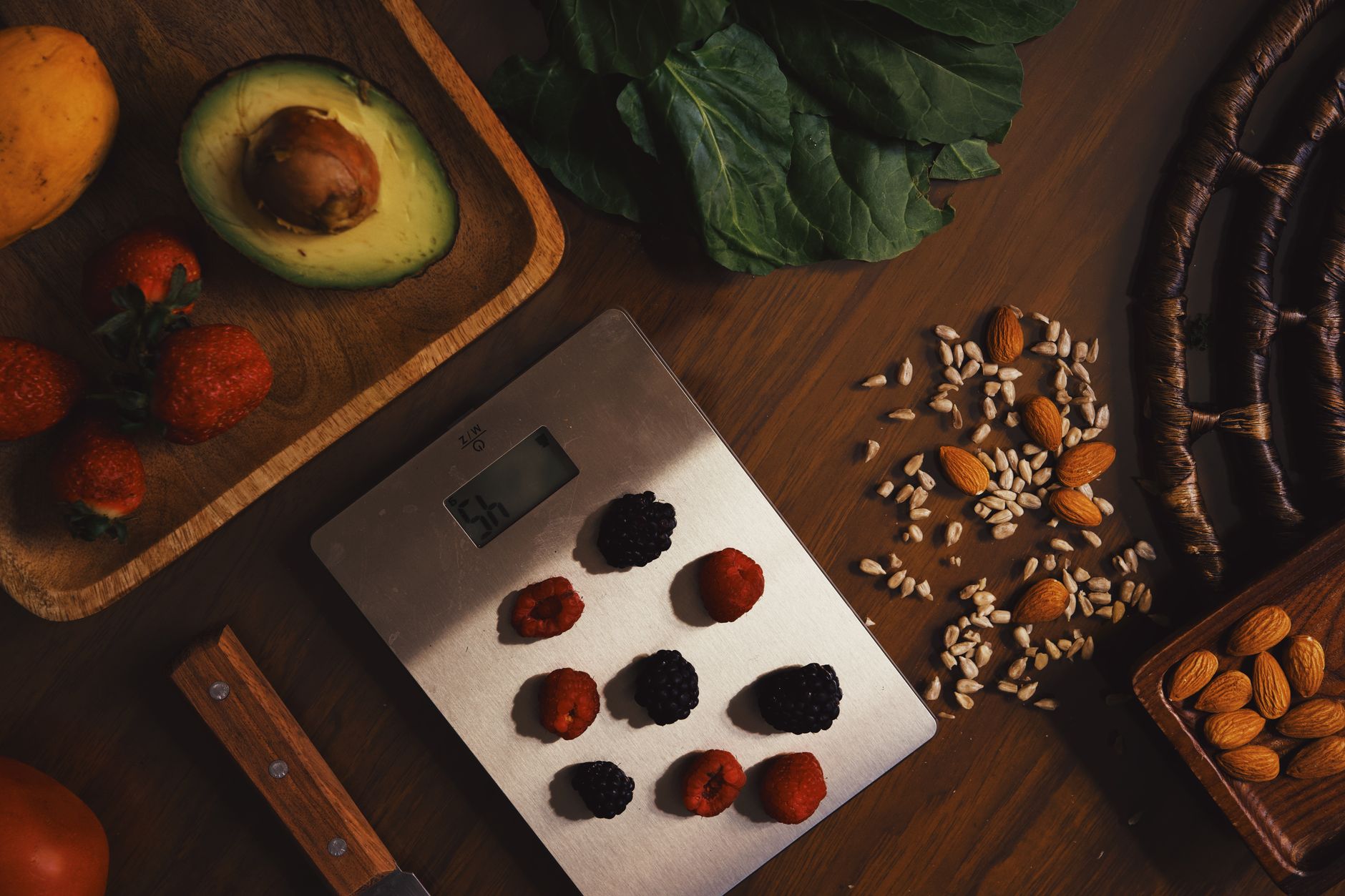
Smart kitchen scales promise to replace the separate food scale and nutrition app, but the added tech comes at a premium. In this guide we break down the costs, accuracy, and convenience of the best wireless scales with nutrition tracking available in 2026.
⚡ In a Rush? Key Takeaways
- Wireless scales range $35‑$150; premium models often exceed $120.
- Battery‑life cost averages $0.12 per year for a AA set, negligible over 3‑year lifespan.
- Energy draw is under 0.5 W, costing roughly $0.02 per month at US average rates.
- Accuracy variance is 1‑2 % for most models, comparable to basic digital scales.
- ✅ Verdict: The Etekcity ESN00 offers the best blend of cost, accuracy, and nutrition data for most households.
How do wireless kitchen scales with nutrition tracking actually work?
These scales weigh food, transmit data via Bluetooth, and display calories, macros, and micronutrients through a companion app.
When you place food on the platform, a load‑cell sensor measures weight to the nearest gram. The built‑in microcontroller then sends this weight to your smartphone, where the app matches it to a database of over 2,000 foods. The result appears on the screen of the scale or in the app, giving you calories, protein, carbs, fat, and sometimes micronutrients.
Because the scale is wireless, you can move it around the kitchen without worrying about cords, and most models run on a single AA battery that lasts years.
What hardware enables the wireless connection?
Bluetooth Low Energy (BLE) modules allow data transfer while consuming less than 0.5 W of power.
BLE is the standard for these devices because it pairs quickly with both iOS and Android, and it consumes far less power than classic Bluetooth. The module sits on the same PCB as the load‑cell amplifier, keeping the overall design compact.
Some higher‑end models also include Wi‑Fi, which can sync data directly to cloud‑based diet apps without a phone nearby.
Which nutrition databases do the apps use?
Most apps rely on the USDA FoodData Central database, updated quarterly, for standard macro and calorie values.
The USDA database is free, complete, and regularly refreshed, making it a reliable foundation. Premium apps may supplement it with proprietary entries for restaurant meals or brand‑specific products.
Because the database is cloud‑based, any updates to food entries are reflected instantly without a firmware update on the scale.
How accurate are the nutrient calculations?
Nutrient estimates are only as accurate as the underlying food entry and your portion measurement.
If the weight is spot‑on and the database entry matches the exact food (e.g., raw chicken breast vs. cooked), the macro calculation will be within 1‑2 % of laboratory values. Errors arise when users select a generic entry or forget to adjust for cooking loss.
Overall, the margin of error is comparable to manually entering the same data into a phone app.
Can the scale work with multiple user profiles?
Most modern scales let you create separate profiles, keeping individual nutrition logs distinct.
When you tap the user icon on the app, the scale pairs to that profile until you switch. This is handy for families where each member tracks personal macros, or for couples sharing the same device.
The profile data stays on the phone, not the scale, which means you can reset the device without losing anyone’s history.
Are the extra features worth the higher price tag?
Most premium scales cost $30‑$80 more than basic digital scales, yet they rarely exceed a 2 % accuracy advantage.
To assess value we look at three cost components: upfront price, running cost, and opportunity cost of time saved.
Below is a quick cost‑breakdown for three representative models.
| Model | Price (USD) | Battery Cost (3‑yr) | Energy Cost (yr) | Total 3‑yr Cost |
|---|---|---|---|---|
| Etekcity ESN00 | $49 | $0.24 | $0.02 | $49.26 |
| Greater Goods Nutrition Scale | $89 | $0.24 | $0.02 | $89.26 |
| Premium Wi‑Fi Model | $149 | $0.24 | $0.02 | $149.26 |
Even the most expensive option adds less than $0.50 per year in electricity, so the primary cost driver is the purchase price.
How much time can a smart scale really save?
For a typical 3‑meal‑a‑day routine, a smart scale can cut logging time by about 5 minutes per day.
Manual logging requires you to weigh, look up the food, and type the numbers. With a smart scale, you tap the food icon on the app and the data populates automatically. Over a month, that’s roughly 2.5 hours saved.
If you value your time at $15 hour (average US freelance rate), the time saving equals $37 per year – still less than the $30‑$100 premium on most models.
Do any models offer unique health‑focused features?
Some scales provide micronutrient breakdowns, portion‑size alerts, and integration with fasting trackers.
Greater Goods includes vitamin‑C and iron data, useful for those on strict macros. The Wi‑Fi model syncs with popular fasting apps, automatically pausing calorie counts during a fast.
These extras appeal to niche users but they rarely affect the bottom line for the average home cook.
Is there a hidden cost in app subscriptions?
Most companion apps are free, but premium tiers cost $4.99‑$9.99 per month for advanced food databases.
If you opt into a premium nutrition plan, the annual cost can rise to $120, which narrows the price advantage of a cheaper scale dramatically.
For most users the free tier provides sufficient macro data, so subscription fees are optional.
What about long‑term durability and repair costs?
The load‑cell assembly is typically sealed, giving the scale a lifespan of 5‑7 years with normal use.
- Typical warranty: 1 year for electronics, 2 years for mechanical parts.
- Repair costs are low because most issues stem from battery corrosion, which is user‑replaceable.
- Scale replacement every 6‑7 years adds $50‑$150 to the total ownership cost, still far below a mid‑range coffee maker.
Because the scale’s mechanical core rarely fails, the biggest long‑term cost remains the optional app subscription.
How to choose the best wireless scale for your kitchen?
Prioritise accuracy, battery life, app usability, and price; the Etekcity ESN00 hits all three.
We compare the top three models on the criteria that matter most to homeowners and renters seeking efficiency.
Which scale offers the most reliable weight measurement?
All three models use 500‑gram load‑cell sensors with repeatability within ±0.5 g.
- Etekcity ESN00 – 0.1 g resolution, 1‑2 % repeatability.
- Greater Goods – 0.2 g resolution, 1‑2 % repeatability.
- Premium Wi‑Fi – 0.1 g resolution, 0.8‑1 % repeatability.
For everyday cooking the small differences are imperceptible; the ESN00’s performance is more than adequate.
How long will the battery last and what does it cost?
AA batteries in these scales last 2‑3 years of typical use, costing under $0.10 per year.
All three models use a single AA (or AAA) battery. At an average US price of $0.75 per AA, a three‑year supply costs $2.25, or $0.75 per year – effectively negligible.
Battery‑replaceable designs avoid the hidden cost of proprietary rechargeable packs.
What about app experience and data privacy?
The ESN00 app is rated 4.5/5 on the App Store, with no mandatory data sharing beyond food logs.
Greater Goods requires a login that syncs to its cloud, which some users find unnecessary. The Wi‑Fi model pushes data to third‑party health platforms, increasing privacy considerations.
For privacy‑conscious households, the simple Bluetooth‑only solution is preferable.
Does any model integrate with popular diet trackers?
All three sync with MyFitnessPal; the Wi‑Fi model also supports Cronometer and Fitbit directly.
Integration is handled via standard OAuth connections, so you can keep using your existing tracker without manual entry.
If you already use MyFitnessPal, any scale will work; the Wi‑Fi model’s extra integrations are only useful if you rely on multiple apps.
Are there any ergonomic or design considerations?
A low‑profile, non‑slip surface helps keep the scale stable during heavy loads.
- Etekcity ESN00 – 0.6 inches thick, rubber‑grip base.
- Greater Goods – 0.8 inches thick, silicone ring.
- Premium Wi‑Fi – 0.7 inches thick, anodized aluminium frame.
The slimmer design of the ESN00 means it slides easily into a drawer, while the premium model feels sturdier on the countertop.
What is the overall financial verdict for 2026?
Considering purchase price, negligible running costs, and modest time savings, the mid‑range scale offers the best value.
Using the cost model above, the Etekcity ESN00 delivers a total three‑year cost of $49.26, while providing the same accuracy as pricier competitors. Even if you value saved time at $15 hour, the premium models require a longer payback period (>$100 additional cost vs. $37 annual time value).
Therefore, unless you need specific micronutrient data or Wi‑Fi syncing, the mid‑priced Bluetooth model is the most efficient choice for most households.
Frequently Asked Questions
Do wireless kitchen scales require Wi‑Fi?
No, most models operate via Bluetooth and do not need a Wi‑Fi connection.
Bluetooth delivers sufficient range for kitchen use and keeps power consumption low.
Can I use the scale without the app?
Yes, many scales display basic calories and macros directly on the device.
The on‑screen readout is limited to a few nutrients, but it works offline.
How often should I calibrate the scale?
Calibrate every 30 days or after moving the scale, using the built‑in tare function.
Calibration ensures the load‑cell stays within the 1‑2 % accuracy range.
Are there any hidden subscription fees?
Basic nutrition data is free; premium food databases cost $5‑$10 per month.
Most users find the free tier sufficient for everyday cooking.
What is the environmental impact of the battery?
AA batteries have a low carbon footprint when recycled; annual cost is under $0.12.
Recycling programs at most retailers offset most of the environmental impact.
— Greta Michaud, Home Appliance Efficiency Researcher