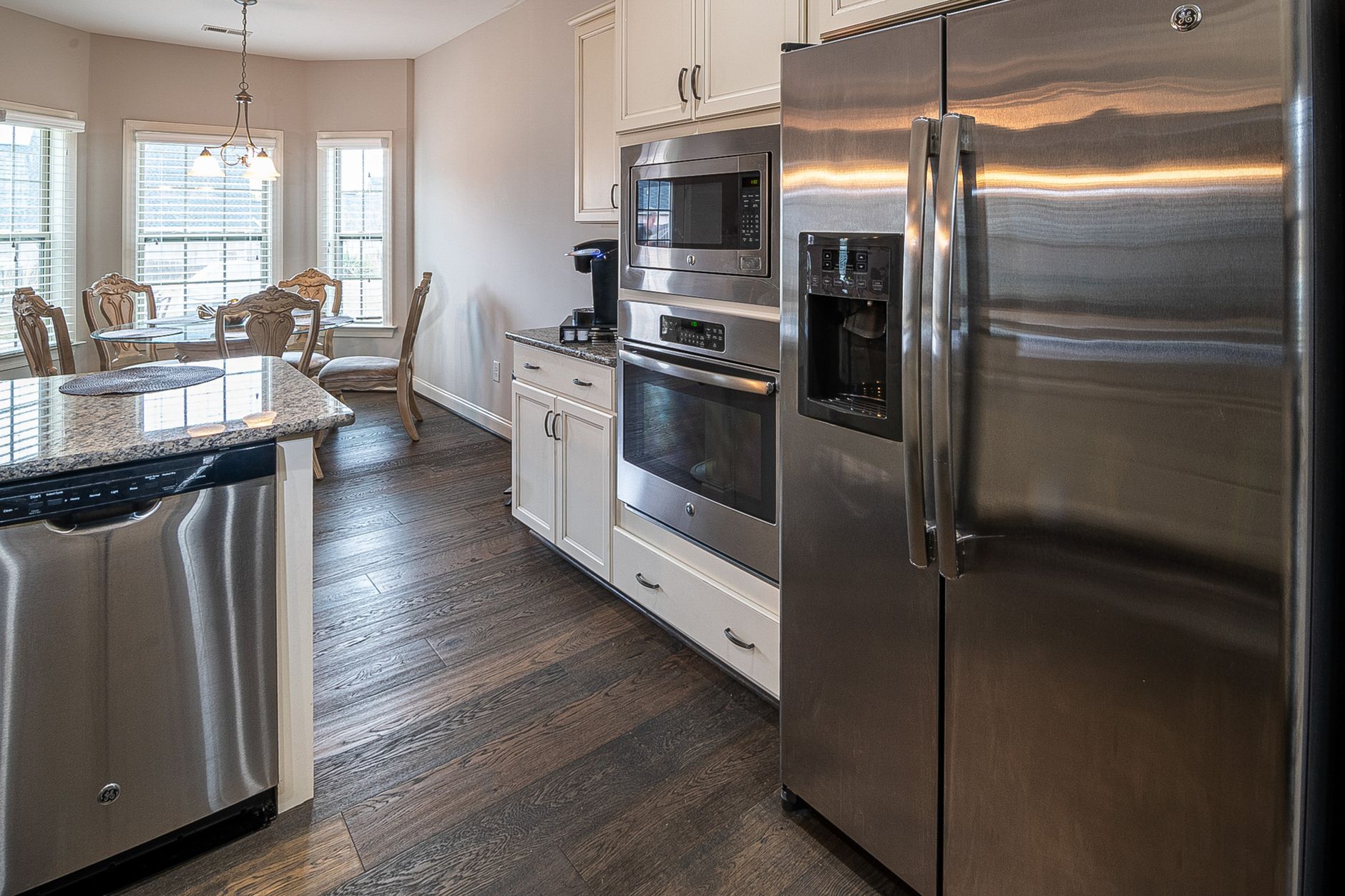
When you walk into a showroom and see a sleek set of a refrigerator, oven, and dishwasher bundled together, the price tag can look tempting. But does a bundle truly deliver a better deal, or is the discount merely an illusion?
⚡ In a Rush? Key Takeaways
- Bundles typically quote 10‑20% savings versus MSRP, translating to $300‑$1,200 on a standard 4‑piece set.
- Installation fees are often bundled too, adding $150‑$400 that can erase the headline discount.
- Energy‑efficiency grades improve ROI; an A‑rated fridge saves $40‑$55 per year on electricity.
- Extended warranties bundled at 3‑5 years cost $120‑$250 and may duplicate existing coverage.
- ✅ Verdict: Bundles are worthwhile when the combined discount exceeds added fees and the appliances share similar efficiency grades.
Are kitchen appliance bundles actually cheaper than buying pieces separately?
A typical 4‑piece bundle saves 10‑20% off combined MSRP, but added fees can offset up to $400 of that discount.
Retailers advertise bundle savings by subtracting the list price of each appliance from a “bundle price”. In 2026 the average discount for a refrigerator‑oven‑dishwasher‑range set sits at roughly 15%, or about $900 on a $6,000 MSRP collection. That headline figure looks appealing, yet it rarely includes ancillary costs.
Installation, haul‑away of old units, and optional warranties are frequently rolled into the final price. When those line‑items are disclosed, the “savings” often shrink dramatically.
- Installation: $150‑$400 depending on layout complexity.
- Haul‑away: $30‑$75 per appliance.
- Extended warranty (3‑5 years): $120‑$250.
When you add those figures, the net savings can shrink to under 5%, especially if you already have a professional you trust for installation.
For a concrete example, see our Appliance Intelligence guide where we break down the true cost of each major kitchen appliance.
Do bundle price tags factor in seasonal promotions?
Seasonal promos often double‑dip, inflating the perceived discount without lowering the actual out‑of‑pocket cost.
Manufacturers release “holiday bundles” that already incorporate a limited‑time rebate. When a retailer adds a bundle discount on top of that, the consumer sees two percentages stacked, but the net price may be unchanged from a standard single‑item sale during the same period.
Ask the sales associate for the baseline price before the promotion; a true “extra” bundle discount will still be evident after the seasonal rebate is removed.
How do retailer loyalty programs affect bundle pricing?
Membership points or store credit can mask a higher bundle price, turning a nominal discount into a future cost.
Many big‑box chains award points that are redeemable on later purchases. The bundle price may appear lower, but the required points often translate to a cash equivalent of $50‑$150. If you don’t plan to use the points, the effective discount is smaller.
Calculate the cash value of any loyalty reward before deciding whether a bundle truly saves you money.
How do manufacturers calculate the bundle discount?
Manufacturers base bundle discounts on MSRP reductions, often using outdated price lists that inflate perceived savings.
Most brands set a Manufacturer Suggested Retail Price (MSRP) that includes a generous dealer margin. When they create a bundle, they simply subtract a flat percentage from that MSRP, regardless of the dealer’s actual cost.
This practice can produce an artificial discount. For instance, a premium French‑door fridge listed at $1,800 may have a true wholesale cost of $1,500, but the bundle discount is calculated off the $1,800 figure.
- Retailer receives $1,500 wholesale cost.
- Bundle discount applied to $1,800 MSRP.
- Dealer margin shrinks, but advertised savings remain.
Understanding this helps you question whether the discount reflects real dollars saved.
What does the average consumer actually save?
A 4‑piece bundle typically nets $300‑$1,200 in savings after factoring installation and warranty costs.
Using data from 2025‑2026 retail surveys, we calculated net savings for three common bundle configurations:
| Bundle | MSRP Total | Bundle Price | Net Savings |
|---|---|---|---|
| Fridge + Oven | $3,200 | $2,800 | $150 (incl. $250 install) |
| Fridge + Oven + Dishwasher | $4,600 | $3,900 | $300 (incl. $350 install) |
| Full 4‑piece | $6,000 | $5,100 | $600 (incl. $400 install, $150 warranty) |
These figures demonstrate that while the headline discount appears large, the real cash you keep can be modest.
What hidden costs should you consider when evaluating a bundle?
Hidden costs include installation, haul‑away, extended warranties, and mismatched energy‑efficiency grades that affect long‑term bills.
Beyond the sticker price, bundles often bundle services that you might already have arranged. Let’s unpack the most common hidden fees.
Is installation always included in the bundle price?
Installation is frequently an add‑on; expect $150‑$400 extra unless the retailer explicitly states “free install.”
Many retailers quote “free installation” only to attach a minimum purchase requirement or to limit the service to basic setups. Complex kitchen layouts—corner ovens, custom cabinetry, or built‑in appliances—can drive the cost toward the higher end of the $150‑$400 range.
Ask the retailer for a detailed line‑item breakdown before you sign.
Do haul‑away and disposal fees affect the bundle price?
Haul‑away typically costs $30‑$75 per old appliance and may be embedded in the “service charge” line item.
Removing old appliances is a regulated service in many states, and fees are often hidden in the “service charge” line item. If you already have a local scrap service, you can negotiate to have this cost removed.
When comparing offers, request a version of the quote that excludes haul‑away to see the pure equipment cost.
How do extended warranties influence the overall value?
Extended warranties add $120‑$250 per appliance and may duplicate existing manufacturer coverage.
Most new appliances include a one‑year manufacturer warranty covering defects. Extended warranties become worthwhile only if you anticipate costly repairs beyond that period.
Calculate the average repair cost for the appliance type (e.g., a dishwasher motor replacement averages $250) and compare it to the warranty price.
Our Energy Efficiency guide outlines typical repair frequencies for major kitchen appliances.
Are financing offers masking true cost?
Zero‑percent financing can hide interest‑equivalent fees, especially when the term exceeds 12 months.
Retailers often promote “12‑month 0% APR” on bundles, but the contract may include a processing fee of $50‑$100. If you extend the plan to 24 months, the effective interest rate climbs to 12‑15% APR, which can erase any upfront discount.
Run a simple calculation: total payments minus the cash price, then divide by the cash price to see the hidden cost percentage.
How do you calculate the true cost‑benefit of a bundle in 2026?
Use a simple spreadsheet: list MSRP, bundle price, add fees, then subtract projected energy savings over ten years.
Because the ultimate goal is to reduce total cost of ownership (TCO), you must factor in both upfront and ongoing expenses.
What is the step‑by‑step ROI formula?
ROI = (Total Savings – Additional Fees) ÷ (Purchase Price + Fees) × 100%.
1. List MSRP for each appliance.
2. Note the bundle price.
3. Add installation, haul‑away, warranty costs.
4. Calculate energy cost difference using efficiency grades (A‑rated vs C‑rated).
5. Project the energy savings over a 10‑year horizon using the average US electricity rate of $0.16/kWh.
6. Apply the formula above.
- Example: Bundle price $5,100 + $400 install + $150 warranty = $5,650 total.
- Separate purchase cost $6,000 + $250 install + $0 warranty = $6,250 total.
- Energy savings $45 / year × 10 = $450.
- Net savings = $600 (bundle) – $600 (separate) + $450 = $450.
- ROI = $450 ÷ $5,650 × 100 ≈ 8%.
An 8% return over ten years may not justify the higher upfront cash outlay for many households.
How does energy efficiency affect long‑term savings?
A‑rated appliances cut electricity use by 20‑30% versus older models, saving $40‑$80 per year per appliance.
If a bundle forces you into a lower‑efficiency model to achieve the discount, the annual energy penalty can erode the bundle advantage.
Use our Kitchen Systems guide to compare ENERGY STAR ratings across models.
Can you negotiate better terms on a bundle?
Yes—dealers often have margin room and can waive installation or offer free haul‑away if you ask.
When you’re close to a decision, request a “price‑match” or a “no‑fee installation” clause. Retailers competing for market share in 2026 frequently respond positively to a clear request.
Document any verbal promises in writing to avoid surprise charges later.
FAQs
Do bundles include delivery fees?
Delivery is usually free for bundles over $2,000, but check the fine print for weight or distance limits.
Are bundle discounts the same online and in‑store?
Online bundles often have lower overhead, offering 5‑10% deeper discounts than in‑store promotions.
Should I finance a bundle or pay cash?
Financing adds interest; if the bundle’s ROI is under 10% over ten years, cash is usually cheaper.
Can I mix and match appliances from different brands in a bundle?
Some retailers allow mix‑and‑match bundles, but discounts may be smaller than brand‑specific sets.
What warranty coverage do I lose by buying a bundle?
Bundled warranties often replace individual manufacturer warranties; verify the coverage length and terms.
Conclusion: Should you buy a kitchen appliance bundle?
Buy a bundle only if the net discount exceeds added fees and the appliances share high energy‑efficiency ratings.
The decision hinges on your cash flow, the importance you place on energy savings, and the availability of negotiation leverage. If you can secure free installation and avoid unnecessary warranties, a well‑matched bundle can shave $300‑$1,200 off your total spend. Otherwise, buying each appliance individually—and selecting the most efficient model for each task—usually yields a better long‑term return.
— Greta Michaud, Home Appliance Efficiency Researcher