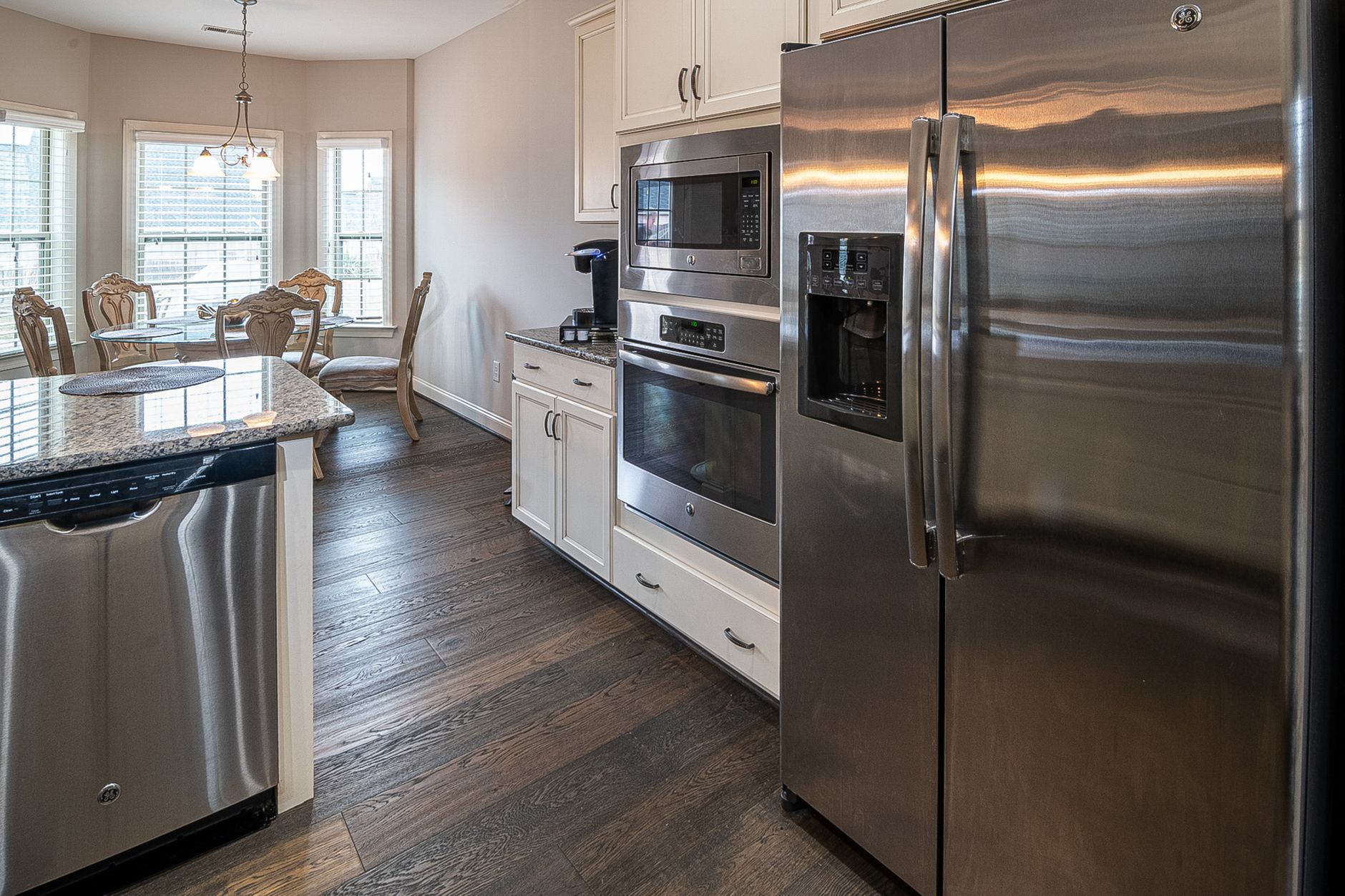
Updating a kitchen often involves the significant decision of how to purchase major appliances. Appliance bundles, available from most major retailers, promise convenience and savings. But do they deliver on that promise, or are you better off selecting each piece individually? Understanding the true cost, potential trade-offs, and long-term value is essential before committing to a package deal.
⚡ In a Rush? Key Takeaways
- Appliance bundles can save 10-20% relative to buying items separately.
- Savings are often highest when purchasing less popular brands or during major sales events.
- Bundles can limit choice, potentially forcing compromise on desired features or aesthetics.
- Total cost of ownership (including running costs and repairs) is often overlooked in bundle deals.
- ✅ Bundles are often worth it for budget-conscious buyers prioritizing coordinated style and significant upfront savings.
Why Do Retailers Offer Appliance Bundles?
Retailers offer bundles to streamline sales, move inventory, and encourage larger purchases, often with a 10-20% saving on the total upfront cost compared to individual items.
The allure of a kitchen appliance bundle is undeniable. For homeowners embarking on a kitchen renovation or simply replacing aging appliances, the idea of selecting a matching suite of refrigerator, range, dishwasher, and microwave all at once, with the suggestion of a collective discount, is highly appealing. Retailers, from large chains like Home Depot and Lowe’s to independent appliance stores, leverage this desire by curating “packages” designed to fit various aesthetic preferences and budget levels. These bundles often feature appliances from the same manufacturer, ensuring a cohesive look. While the promise of savings is front and center, it’s crucial to dissect what makes these packages attractive to retailers and whether those advantages translate directly to your household’s financial well-being.
What Exactly Constitutes a Kitchen Appliance Bundle?
A typical bundle includes at least three major kitchen appliances – refrigerator, range, and dishwasher – with options to add a microwave or other items.
At its core, a kitchen appliance bundle is a pre-selected group of appliances, usually a refrigerator, a range or cooktop and oven, and a dishwasher. Many packages also include a microwave, either over-the-range (OTR) or countertop. The defining characteristic is that these items are offered together as a single purchase rather than individually. Retailers often group them by brand, finish (stainless steel, black stainless, white), and a general price point. The idea is to provide a complete solution for outfitting an entire kitchen quickly and, theoretically, more affordably. This simplification can be particularly attractive for first-time homebuyers or those undertaking a major remodel who may feel overwhelmed by the sheer volume of individual choices.
How Much Savings Can You Genuinely Expect?
Expect savings ranging from 10% to 20% of the combined individual appliance prices, which can amount to $500 to over $2,500 on higher-end packages.
According to industry observations and shopper feedback, purchasing a bundled kitchen appliance set can indeed lead to savings. Figures often cited suggest a discount of anywhere from 10% to 20% compared to buying each appliance separately at its full retail price. For a mid-range package totaling $4,000, this could mean a saving of $400 to $800. On higher-end suites, where individual appliances might cost $2,000 or more each, the total savings could easily exceed $2,000. However, these savings are most pronounced when the bundle is part of a larger promotion, involves less popular brands, or when retailers are keen to move specific inventory. It’s essential to compare the bundle price against the *sale* prices of individual appliances, not just their full MSRP, to accurately gauge the actual discount.
Are There Downsides to Choosing a Bundle?
The primary downsides are limited choice in model features, potential compromises on specific preferences, and exclusion of running costs over time.
While the savings are attractive, bundles inherently involve a degree of compromise. You are typically choosing from a pre-selected set of models. This means you might not get the exact refrigerator configuration you envisioned, or perhaps the dishwasher model doesn’t have the specific wash cycle you wanted. If you are particularly discerning about the features or performance of each individual appliance, a bundle might force you to accept a less-than-perfect fit for one or more items to get the collective discount. Furthermore, bundled pricing rarely accounts for the long-term running costs or potential repair expenses, which can vary significantly between models, even within the same brand.
Evaluating the Cost-Effectiveness of Bundles
True cost-effectiveness is found by comparing bundle prices to individual sale prices and considering the total cost of ownership, not just upfront savings.
To truly assess if an appliance bundle is a wise financial decision, one must look beyond the advertised discount and perform a thorough cost analysis. This involves more than just comparing the bundle’s total price to the sum of the individual appliances’ Manufacturer’s Suggested Retail Prices (MSRP). Savvy shoppers will also check current sale prices for comparable individual units from different retailers. Sometimes, aggressive sales on individual appliances can bring their combined total close to, or even below, the bundled price. Moreover, a complete evaluation must extend to the total cost of ownership, factoring in energy efficiency, expected lifespan, and potential repair costs.
Bundled Price vs. Individual Appliance Sale Prices
When individual appliance sale prices approach bundle discounts, the perceived value of bundling diminishes significantly.
This is arguably the most critical step in determining if a bundle is worthwhile. Retailers often price bundles to appear more attractive than they truly are. It’s imperative to research the specific models included in the bundle. Once identified, check their individual prices at other retailers or even at the same retailer during promotional periods. For instance, during major sale events like Black Friday, Memorial Day, or Labor Day, individual high-end appliances might see significant price drops. If you can find the refrigerator you want for $1,500, the range for $1,200, and the dishwasher for $600, that’s a total of $3,300. If the bundle of comparable models is $3,500 with a supposed 15% discount, the actual saving is minimal or even non-existent. Always compare potential savings against current market realities.
| Appliance | Individual MSRP | Individual Sale Price (Est.) | Bundle Price (Est.) | Bundle Savings (vs. MSRP) |
|---|---|---|---|---|
| Refrigerator | $1,800 | $1,400 | $4,500 (for 4-piece) | ~$1,000 (Approx. 18%) |
| Range | $1,500 | $1,100 | ||
| Dishwasher | $800 | $550 | ||
| Microwave (OTR) | $700 | $450 | ||
| Total Individual Cost | $4,800 | $3,500 | $4,500 | ~$300 (vs. Sale Price Total) |
How Do Energy Efficiency Ratings Impact Long-Term Value?
Higher energy efficiency ratings can save hundreds of dollars annually on electricity bills, often making a higher upfront investment worthwhile.
Appliances consume a significant amount of electricity, and their energy efficiency ratings are not merely a compliance measure; they represent ongoing operational costs. A refrigerator, running 24/7, or a dishwasher and range used daily, contribute substantially to your utility bills. When evaluating a bundle, pay close attention to the Energy Star ratings or the new EU energy labels. An appliance with a superior energy rating might have a higher initial purchase price, but its lower kilowatt-hour consumption over its lifespan can result in substantial savings. Consider a refrigerator that uses 150 kWh less per year than a comparable less efficient model. At an average US electricity rate of $0.16 per kWh, that’s a $24 annual saving. Over 15 years, that’s $360 per appliance. While bundles often include models with good ratings, they may not always be the absolute most efficient available in that price tier.
For instance, a standard electric range might consume 1.5 kWh per hour of use, while a more efficient induction range could use 0.8 kWh for the same task, significantly reducing cooking costs over time. Similarly, a high-efficiency dishwasher can use considerably less water and energy per cycle. When assessing a bundle, always verify the individual energy consumption figures and compare them against your household’s typical usage patterns. This detailed look into running costs can reveal that the seemingly smaller upfront saving from a bundle might be offset by higher energy bills for years to come.
What About Reliability and Repair Costs?
Bundles may not always feature the most reliable models, highlighting the need to research individual appliance reviews and repair histories.
The initial purchase price and energy efficiency are critical, but the total cost of ownership also hinges on reliability and potential repair expenses. Bundles often comprise mid-tier models or sometimes even slightly older designs that are being cleared out. While these might offer a good discount, they may not possess the same long-term durability or advanced features as premium individual units. Researching consumer reports, owner reviews, and brand reliability ratings for each specific appliance within a bundle is as important as checking the price. A high-quality refrigerator might last 15-20 years, whereas a less reliable model might necessitate costly repairs or replacement within 7-10 years. The cost of a major repair, such as a compressor replacement for a refrigerator or a heating element for a dishwasher, can often range from $200 to $600 or more. Investing in a bundle that includes robust, well-reviewed appliances can prevent these unexpected expenses.
Furthermore, consider that if one appliance in a bundle fails early and is outside its warranty, and you need to replace just that one item, it can be difficult to find a perfect match from the same series or finish that perfectly complements the remaining bundled appliances. This can lead to an aesthetically mismatched kitchen if you are forced to buy an individual replacement, potentially negating some of the initial aesthetic benefits of the bundle.
The Trade-Offs: Choice vs. Convenience
The primary trade-off when buying bundles is sacrificing bespoke selection for streamlined purchasing and a unified aesthetic.
The decision to purchase a kitchen appliance bundle often boils down to a fundamental trade-off: convenience and a cohesive look versus the freedom to select the absolute best individual appliance for each specific need. For many homeowners, particularly those undertaking a large renovation where time and decision fatigue are significant factors, the streamlined nature of a bundle is invaluable. It simplifies the process considerably. However, for those who are highly particular about specific features, brands, or performance characteristics, a bundle might feel constricting.
Limited Model Selection and Feature Compromises
Bundles often restrict choices to specific models, meaning you might forgo a desired feature on one appliance to achieve savings on the package.
When you opt for a kitchen appliance bundle, you are typically choosing from a curated selection of models. This means that while you might be able to select the finish (e.g., stainless steel or black stainless), you may not have access to every model within a manufacturer’s lineup. For example, a bundle might include a refrigerator with a standard ice maker, but you might have preferred a model with filtered water and advanced ice-making capabilities. Similarly, a bundled range might offer convection cooking, but you might have held out for induction technology or a dual-fuel option. These compromises can range from minor inconveniences to significant dissatisfactions, depending on how critical each feature is to your cooking and kitchen habits. It’s crucial to review the specifications of each appliance within the bundle and ensure they meet your core requirements before making a purchase.
Achieving a Cohesive and Coordinated Look
Bundles excel at providing a uniform aesthetic, ensuring all appliances share the same finish and design language.
One of the most significant advantages of purchasing a kitchen appliance bundle is the guaranteed aesthetic consistency. When you select a package, all the included appliances typically come from the same product line or series by a single manufacturer. This ensures a uniform finish, handle style, and overall design language, creating a harmonious and professionally designed look for your kitchen. This is particularly important for homeowners who are concerned with the visual appeal of their space and want a smooth integration of their appliances. Mismatched appliances, even if they are all functional, can detract from the overall look and feel of a renovated kitchen. For many, the peace of mind that comes with a perfectly matched suite is a compelling reason to choose a bundle, even if it means a slight compromise on individual features.
When and Where Are Bundles Most Advantageous?
Bundles offer the greatest value during major sales events and when purchasing from brands that offer substantial package discounts.
The financial benefit of appliance bundles is not static. Their true value is often amplified during specific times and under certain conditions. Major holiday sales events, such as Black Friday, Cyber Monday, Memorial Day, and Labor Day, are prime times when retailers offer deep discounts on appliance packages. Manufacturers also frequently run promotions where purchasing a suite of appliances results in significant rebates or direct discounts. Furthermore, if you are open to brands that are not the absolute top-tier luxury names, you might find that bundles offer more substantial percentage savings as these manufacturers may be more aggressive with package pricing to gain market share. Always inquire about current promotions and rebate offers when discussing bundles with a sales associate.
Additionally, some retailers have exclusive bundle deals that are not available for individual appliance purchases. These can sometimes represent a genuine value proposition. It is always advisable to compare the advertised bundle price with the retailer’s own sale prices for the individual components. If the bundle price is significantly lower, and the models meet your needs, it represents an excellent opportunity for savings. For instance, a 5-piece stainless steel bundle for $4,999 might be a much better deal than buying a $2,000 refrigerator, a $1,500 range, a $700 dishwasher, and a $600 microwave individually, totaling $4,800 at their best sale prices – the bundle provides a slightly better price and a guaranteed match.
## Understanding Total Cost of Ownership with Bundles
The long-term financial impact of appliance bundles extends beyond the initial purchase price, encompassing energy, water, and potential repair costs over a decade or more.
The upfront cost of a kitchen appliance bundle is a significant investment, but it’s crucial to view it through the lens of total cost of ownership (TCO). This metric encompasses not only the purchase price but also the ongoing expenses associated with operating and maintaining the appliances throughout their typical lifespan, which for major appliances can be anywhere from 10 to 20 years. When considering bundles, it’s easy to be swayed by the immediate discount, but neglecting the TCO can lead to paying more in the long run. This is particularly true if the bundled appliances are less energy-efficient or have a higher propensity for mechanical issues.
Calculating Long-Term Running Costs