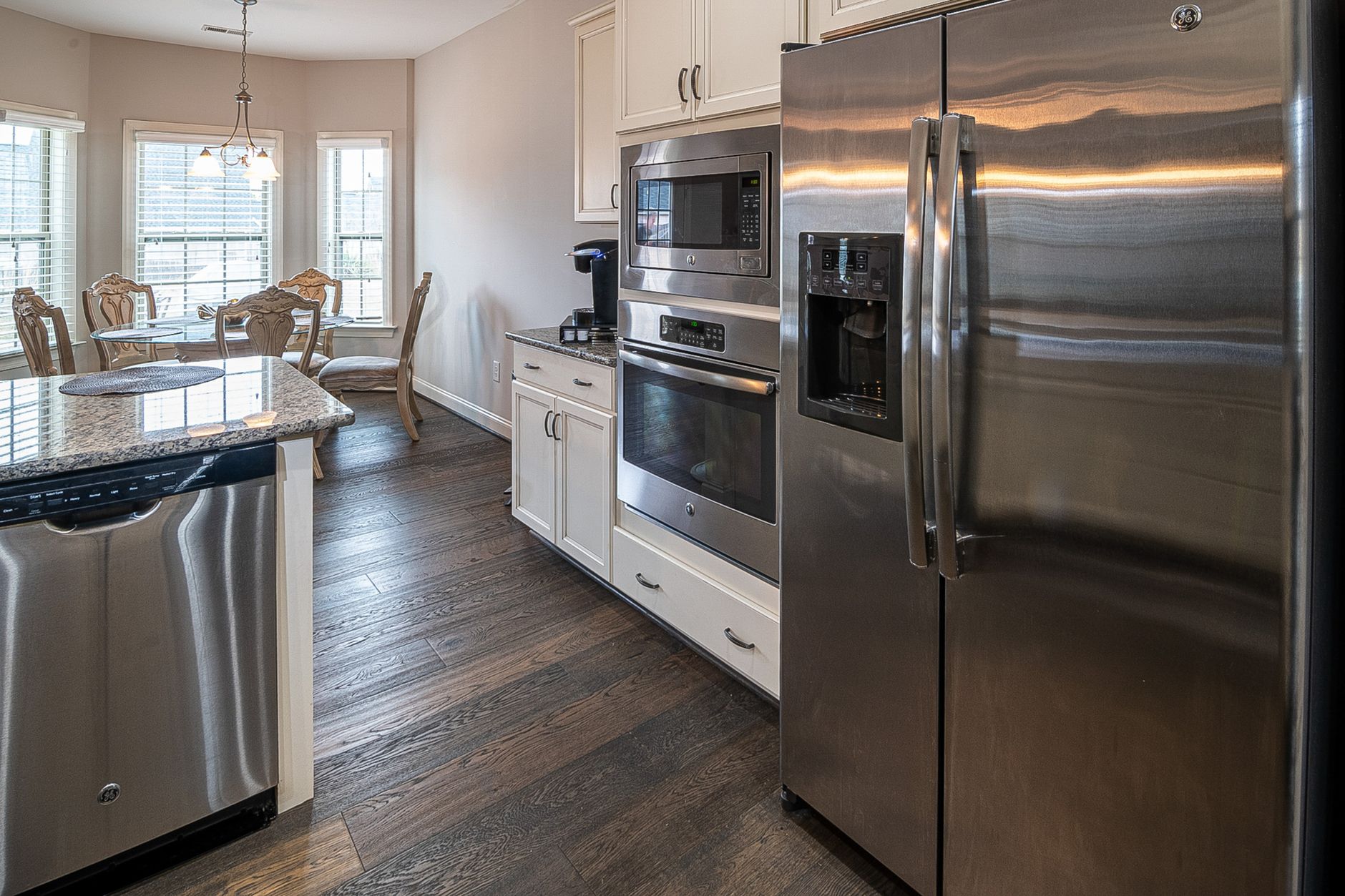
As homes age and kitchens demand updates, the question of purchasing multiple appliances at once inevitably arises. Retailers frequently promote kitchen appliance bundles, often promising significant savings. But do these packages always deliver the promised value, or is it more financially prudent to select each appliance individually based on specific needs and performance metrics?
⚡ In a Rush? Key Takeaways
- Bundles can save 10-20% on upfront costs, but specific model choices are limited.
- Individual purchases allow for optimal performance and efficiency selection.
- An average 3-piece bundle might cost $4,500 vs $5,000 individually.
- Consider long-term running costs, not just sticker price.
- ✅ Bundles are often worth it for builders and basic upgrades; individual selection for discerning homeowners.
Does Buying Kitchen Appliances as a Bundle Save Money?
Yes, appliance bundles can offer immediate cost savings of 10-20%, but careful consideration of model specifics is vital for long-term value.
The allure of a perfectly coordinated kitchen, where the refrigerator, oven, dishwasher, and microwave all share a cohesive aesthetic and brand identity, is powerful. Appliance bundles are designed to tap into this desire for smooth design, often accompanied by the promise of significant financial savings. Retailers like Home Depot and Lowe’s frequently feature package deals, touting discounts that can appear enticing on paper. However, to truly assess whether these bundles are a worthwhile investment, we must look beyond the initial price tag and scrutinize the underlying value proposition, encompassing not just upfront costs but also long-term performance and efficiency.
What Constitutes a Standard Kitchen Appliance Bundle?
A typical kitchen bundle includes a refrigerator, range/oven, and dishwasher; often a microwave is also included, forming a 3- or 4-piece set.
When retailers advertise kitchen appliance bundles, they generally refer to groupings of essential kitchen machines. The most common configuration involves a refrigerator, a range (either gas or electric, or a dual-fuel model), and a dishwasher. Many packages also include a built-in microwave or a range hood, expanding the set to four major components. These bundles are frequently curated around a specific brand or finish, aiming to simplify the selection process for homeowners undertaking a renovation or seeking a complete appliance overhaul. The simplification aspect is a key selling point, reducing the number of decisions a consumer must make.
These bundled sets are particularly popular among individuals undertaking new home construction or undertaking a significant kitchen remodel where all primary appliances need replacing simultaneously. The convenience of selecting a coordinated set that promises professional installation and a unified look is a strong draw. It streamlines the purchasing process, especially for those who may not have the time or deep interest to research each appliance model individually.
How Much Can You Really Save with an Appliance Package?
Savings typically range from 10% to 20% on the total purchase price compared to buying each appliance separately.
The primary driver for considering appliance bundles is the potential for cost savings. Manufacturers and retailers often advertise discounts ranging from 10% to as much as 20% off the combined retail price of individual units when purchased as a package. For example, a set of four popular mid-range stainless steel appliances might retail for around $5,000 if bought one by one. However, when purchased as a bundle, the same set could be offered for $4,000 to $4,500, representing a tangible saving of $500 to $1,000. These figures are compelling, especially for those working with a strict renovation budget.
It is important to note that the exact savings can vary significantly based on the brands involved, the specific models included in the bundle, and current promotional periods. Higher-end brands or models with advanced features may offer less percentage-wise in discounts, while mid-range or entry-level appliances might present more aggressive savings. The timing of your purchase, such as during major holiday sales events like Black Friday or President’s Day, can also influence the final price and depth of discounts available on bundles.
The savings are often structured through manufacturer rebates or retailer-specific promotional pricing for package deals. These incentives are designed to encourage consumers to commit to purchasing multiple items from the same brand or retailer, thereby increasing overall sales volume and brand loyalty. Understanding how these savings are applied—whether a direct price reduction or a mail-in rebate—is crucial for accurate budgeting.
What Are the Downsides of Appliance Bundles?
Bundles often limit model choices and may prioritize aesthetics over optimal performance or specific feature sets.
While the financial savings are attractive, appliance bundles are not without their drawbacks. One of the most significant limitations is the constrained selection of models. Retailers typically curate bundles using specific configurations or popular models within a brand’s lineup. This means you might not get your preferred refrigerator model if it’s not part of the pre-selected package, even if it offers superior energy efficiency or a feature set better suited to your needs. The curated nature of bundles can compel you to compromise on individual appliance preferences.
Furthermore, the focus in bundles can sometimes lean more heavily towards aesthetic cohesion and a generally acceptable performance profile rather than peak efficiency or specialized features. For instance, the refrigerator in a bundle might be a standard model, while you might have preferred one with a more advanced water filtration system or a specific internal layout. Similarly, the dishwasher might be decent but lack the ultra-quiet operation or specialized wash cycles that a higher-tier individual model offers. This means you might be settling for “good enough” across the board rather than “best in class” for each appliance.
Another consideration is that the savings might not always be as substantial as they first appear, especially if the bundled models are not precisely what you would have chosen otherwise. If you end up compromising on a key feature for one appliance to get a $500 discount on a four-piece set, the true value proposition diminishes. It requires a careful comparison between the bundle’s components and the cost of purchasing your ideal individual appliances.
Comparing Costs: Bundle vs. Individual Appliance Purchase
Individual selection offers flexibility and optimal performance choices, but typically carries a higher upfront cost than pre-packaged bundles.
When embarking on a kitchen renovation, the decision between purchasing a pre-selected appliance bundle or selecting each appliance individually is a critical juncture. The immediate financial incentive of a bundle is undeniable, often presenting a lower total upfront cost. However, this initial saving must be weighed against the long-term implications of performance, efficiency, and your personal satisfaction with each appliance’s capabilities. A deeper dive into the cost comparison reveals nuances that extend beyond the sticker price.
The Upfront Cost Analysis
A 3-piece bundle might cost $4,500, whereas selecting comparable individual appliances could total upwards of $5,000.
Let’s consider a hypothetical scenario for a typical kitchen update in 2026. A standard 3-piece stainless steel appliance bundle—a 25 cu. ft. French door refrigerator, a 30-inch electric range with convection, and a standard 24-inch dishwasher—might be priced at approximately $4,000 to $4,800. This price often includes delivery, though installation fees for the range and dishwasher may be additional. The perceived saving compared to purchasing each item separately could easily be between $500 and $1,000 or more, depending on the brands and specific models within the bundle.
Conversely, choosing each appliance individually offers a more tailored approach. You might select a highly-rated French door refrigerator for $2,200, a premium electric convection range for $1,800, and an ultra-quiet dishwasher for $1,000. This individual selection approach could bring the total to $5,000 or higher. This is particularly true if you prioritize specific features, energy efficiency ratings, or brands known for reliability that might not align with the bundled offerings. The “sticker shock” of individual purchases can be a significant deterrent for budget-conscious homeowners, making the bundle appear far more appealing.
It’s crucial to track sales and promotional pricing for individual appliances. Sometimes, deep discounts on individual models can narrow or even eliminate the price gap between buying a bundle and buying à la carte. Waiting for major sale events can make individual appliance purchasing more competitive financially.
Performance and Feature Set Comparison
Individual choices allow for prioritizing high-performance appliances where it matters most, rather than accepting compromises across the board.
Beyond the initial outlay, the performance and feature sets of bundled versus individually selected appliances warrant close examination. Bundles often comprise models that are popular, well-rounded, and aesthetically pleasing, but they may not represent the absolute best performance in each category. For instance, a bundled refrigerator might have adequate temperature control but lack the advanced humidity management drawers found in a higher-tier individual model. Similarly, a bundled range might offer convection but not the precise simmer capabilities or rapid boil induction technology that some consumers prioritize.
When you buy appliances individually, you have the freedom to research and select models that excel in the areas most important to you. Perhaps you bake frequently and require a range with superior temperature accuracy. Or maybe you host often and need a dishwasher with exceptional quietness and robust cleaning cycles. Choosing individually allows you to allocate your budget strategically, perhaps opting for a top-tier range and a more modest, yet still capable, refrigerator. This is a critical consideration for those who are passionate about cooking or entertain frequently.
Furthermore, energy efficiency is a key performance metric where individual selection can truly shine. While many bundled appliances carry good energy ratings, you may find that a specific individual model offers superior energy consumption per cycle or a more advanced energy-saving mode that isn’t available in the bundled option. Over the lifespan of the appliance (typically 10-15 years), these efficiency differences can translate into substantial savings on utility bills, potentially offsetting a higher initial purchase price.
Long-Term Running Costs and Reliability
Higher upfront cost for individually selected, energy-efficient appliances can lead to lower running costs and fewer repair expenses over time.
The true cost of an appliance is not just its purchase price but its total cost of ownership, which includes energy consumption and maintenance or repair expenses over its operational life. This is where the value proposition of individual appliance selection often becomes more compelling, particularly for energy-conscious homeowners. Appliances with superior energy efficiency ratings, often found in higher-tier individual models, consume less electricity or gas over time. For example, a high-efficiency refrigerator might use 100-200 kWh less per year than a standard model, translating to annual savings of $15-$35 in the US, at current average electricity rates. Over a 15-year lifespan, this amounts to $225-$525 in savings.
Reliability is another crucial factor. While bundles often feature models from reputable brands, a deep dive into user reviews and reliability studies (e.g., from Consumer Reports or Which?) for individual models can reveal significant differences. Investing in an individually selected appliance that is consistently rated as highly reliable might prevent costly repairs down the line. A bundle might include a model known for issues in one component, which could become a recurring expense. The average cost of a major appliance repair can range from $200 to $600, not including parts, making reliability a significant long-term cost consideration.
When buying individually, you can research specific models known for durability and lower repair rates. Opting for an appliance that is engineered for longevity, even if it carries a higher initial price, can prove more economical over many years of use. This approach aligns with Greta’s philosophy of evaluating appliances based on their total cost of ownership rather than solely on their purchase price, ensuring a more sustainable and cost-effective kitchen in the long run.
When Are Kitchen Appliance Bundles the Right Choice?
Bundles are ideal for new construction, basic upgrades where brand or specific features are secondary, and budget-driven renovations.
For certain situations, the convenience and immediate cost savings offered by kitchen appliance bundles make them an excellent choice. These scenarios typically involve homeowners who prioritize a streamlined purchasing process, a uniform aesthetic, and a lower upfront investment over having the absolute top-tier in every appliance category. Understanding these specific contexts can help you determine if a bundle aligns with your renovation goals.
For New Home Construction and Speculative Builds
Builders and developers often use bundled appliances to achieve a coordinated look cost-effectively for new homes.
In the realm of new home construction, particularly for speculative builds (homes built to be sold without a specific buyer at the outset), appliance bundles are a standard strategic choice. Developers aim to equip kitchens with a complete and aesthetically pleasing set of appliances at a predictable and manageable cost. These bundles allow them to achieve a cohesive look—often featuring popular finishes like stainless steel—without the time-consuming process of individually selecting and coordinating each appliance. The goal is to present a fully functional and attractive kitchen that appeals to a broad range of potential buyers.
The cost-effectiveness of bundles is paramount for developers. They often negotiate volume discounts with manufacturers or distributors, further enhancing the savings. The primary objective is to equip the home with dependable, attractive appliances that meet standard consumer expectations, rather than catering to highly specialized individual preferences. This approach ensures that the kitchen appears complete and move-in ready, contributing to the overall marketability of the property without inflating the construction budget unnecessarily.
For Simple Kitchen Updates and Rental Properties
Rental properties benefit from bundles offering durability and broad appeal, minimizing complexity and maximizing ROI.
Homeowners looking for a straightforward refresh of their kitchen, perhaps without undergoing a full renovation, might find bundles appealing. If the goal is simply to replace aging appliances with newer models that offer better efficiency and a modern appearance, a bundle can simplify this process. It eliminates the need to spend hours researching dishwasher models or comparing refrigerator capacities. For owners of rental properties, a bundle offers a practical solution: a set of matching, reasonably durable appliances that provide a consistent look and function without breaking the bank. The reduced complexity in purchasing and installation is a significant advantage when managing multiple properties.
In these contexts, the focus is less on having cutting-edge features and more on reliable performance and a generally pleasing aesthetic. The durability and readily available support for bundled products also contribute to their suitability for rental units where maintenance and replacement efficiency are key concerns.
When Budget is the Primary Constraint
When budget is the main consideration, bundles offer the most significant upfront cost reduction for multiple appliance purchases.
For homeowners facing tight budgetary constraints, appliance bundles often present the most financially accessible path to a complete kitchen appliance upgrade. The upfront savings, which can range from several hundred to over a thousand dollars, make a full set of matching appliances attainable when individual purchase prices would be prohibitive. This allows homeowners to achieve a significantly improved kitchen aesthetic and functionality within their financial limits.
The ability to secure a refrigerator, range, and dishwasher as a package deal at a reduced price point is particularly beneficial. This allows homeowners to allocate remaining renovation funds to other areas, such as cabinetry, countertops, or flooring, that also contribute to the kitchen’s overall transformation. When the primary objective is to upgrade the entire suite of appliances simultaneously while minimizing the initial financial outlay, bundles typically offer the most direct route to achieving that goal.
When is Buying Appliances Individually More Sensible?
Individual selection is advisable for homeowners prioritizing specific performance features, energy efficiency, or top reliability rankings.
Conversely, there are numerous scenarios where deviating from the convenience of a bundle and opting for individual appliance selection is the more judicious choice. These situations typically involve homeowners who have specific performance requirements, a strong focus on energy and water conservation, or a desire for the highest possible reliability and longevity from their kitchen investments.
Prioritizing Specific Performance Features
When you need specialized features, like induction cooking