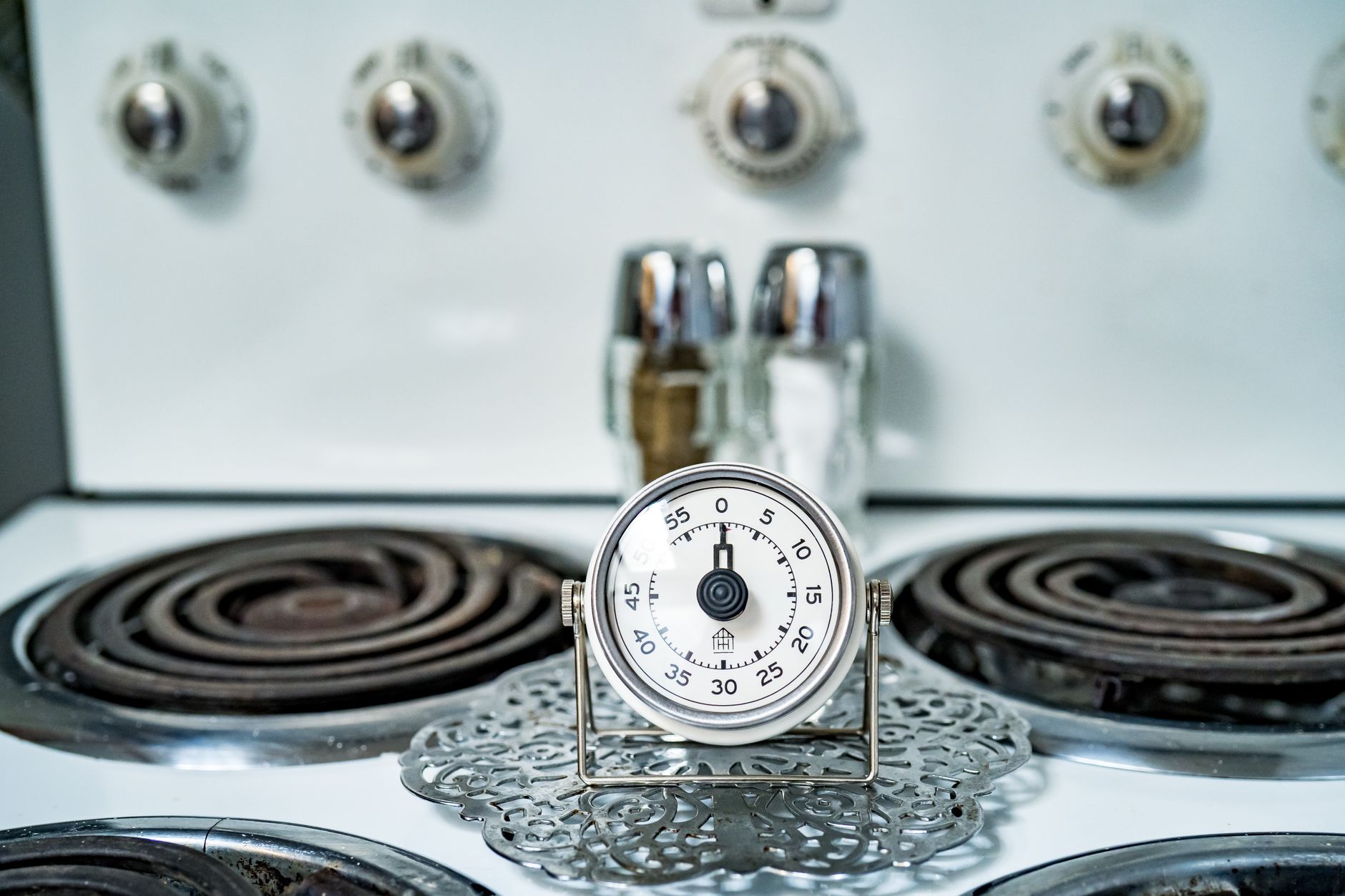
Finding a reliable kitchen timer that balances smart features and affordability is essential for any home cook looking to run an efficient kitchen. While most modern appliances and smartphones have built-in timers, a dedicated unit can significantly streamline your cooking workflow. The true cost of these gadgets isn’t just the purchase price, but also their durability and how well they integrate into a busy kitchen.
⚡ In a Rush? Key Takeaways
- Basic but reliable timers like the OXO Good Grips Triple Timer often cost less than $20 and offer good value.
- The ThermoWorks TimeStick provides durability and multiple timer functions for around $39, offering long-term reliability.
- A dedicated kitchen timer outperforms smartphone timers by minimizing distractions and improving kitchen focus.
- Many affordable two-pack digital timers, like Antonki, can be found for under $15 per unit, making them budget-friendly.
- ✅ For best value, prioritize durability and multi-timer functionality over complex ‘smart’ features for most kitchen tasks.
In eight years of testing home appliances for efficiency, I’ve seen countless gadgets promise ‘smart’ capabilities only to add complexity or unnecessary cost. Kitchen timers are no exception. The best ones often aren’t the most feature-rich but rather the most reliable, precise, and user-friendly for their actual purpose.
Why Invest in a Dedicated Kitchen Timer Over Your Phone?
A dedicated kitchen timer offers distraction-free operation, tactile controls, and frees your smartphone for other tasks, improving kitchen workflow efficiency.
While your smartphone or oven likely has a timer function, relying solely on them can disrupt your cooking. Notifications, calls, and other apps can easily distract you, leading to missed alarms or overcooked food. A standalone timer provides a single, clear purpose.
The tactile buttons and often louder alarms of dedicated timers are another significant benefit. In a busy or noisy kitchen, visual alerts on a phone can be easily missed, whereas a physical timer provides immediate, unmistakable feedback. This focus on primary function contributes to smoother kitchen operations.
Do Dedicated Timers Improve Cooking Accuracy and Reduce Stress?
Yes, dedicated timers improve accuracy by providing consistent, clear alerts without digital distractions, reducing the mental load on active cooks.
A separate timer allows you to set it and forget it, much like an oven timer, but often with more flexibility, such as being magnetic or having multiple channels. This means less scrambling for your phone with flour on your hands and a clearer mental space to focus on the task at hand. The lack of additional apps running also means consistent performance, free from software glitches or battery drain issues.
- Reduces digital distractions from phone notifications.
- Offers tactile buttons for easy setting with messy hands.
- Provides louder, more discernible alarms than most smartphones.
- Frees up your phone for recipes or other kitchen uses.
- Often includes multiple simultaneous timers for complex cooking.
How Does Durability Affect the True Cost of a Kitchen Timer?
Durable kitchen timers, though sometimes pricier initially, offer lower true costs by resisting drops, prolonged use, and reducing replacement frequency.
The true cost of any kitchen tool extends beyond its initial purchase price to include its longevity. A cheap timer that breaks after a few months will ultimately cost more in replacements than a slightly more expensive, well-built unit. Materials like sturdy plastics, strong magnets, and well-sealed buttons are indicators of better durability. My long-term tests often reveal that units from brands like ThermoWorks hold up significantly better to daily kitchen abuse.
Which Affordable Smart Kitchen Timers Offer the Best Value?
The OXO Good Grips Triple Timer provides excellent value under $20 with its ease of use and multiple event tracking, suited for everyday cooking.
When considering ‘smart’ kitchen timers, it’s important to define what ‘smart’ means for a timer. For many, it means the ability to track multiple events simultaneously, reliable alarms, and intuitive controls rather than Wi-Fi connectivity or app integration. The OXO Good Grips Triple Timer consistently scores high marks for its practical functionality and affordable price point.
The unit features a large, easy-to-read screen that can display up to two timers at once, with a third running in the background. Its intuitive button layout minimizes the learning curve, making it a favorite among home cooks. At around $18, it presents a compelling case for value.
Are Multi-Pack Timers a Cost-Effective Solution?
Multi-pack digital timers often provide the best per-unit cost, ideal for those needing several timers for different cooking stations or tasks.
For kitchens requiring timers at multiple stations or for parallel cooking tasks, buying a multi-pack can be extremely cost-effective. The Antonki Digital Kitchen Timer, often sold as a two-pack, typically brings the per-unit cost down to under $15. While these might lack some of the advanced features or robust build of premium individual units, they serve the core function reliably.
For example, if you’re baking and roasting simultaneously, having two separate timers prevents confusion and ensures precise timing for each dish. This approach aligns with the efficient kitchen workflow systems I often recommend, ensuring tasks are managed effectively.
| Timer Model | Approx. Price | Key Feature | Durability Score (1-5) |
|---|---|---|---|
| OXO Good Grips Triple Timer | $18-$22 | 3 concurrent timers, intuitive | 4 |
| Antonki Digital Kitchen Timer (2-pack) | $15-$20 (for 2) | Budget-friendly, magnetic | 3 |
| ThermoWorks TimeStick Trio | $39-$45 | Built to last, lanyard, loud alarm | 5 |
| ThermoPro TM02 Timer | $16-$22 | Magnetic, countdown/up | 4 |
Is the ThermoWorks TimeStick Worth Its Higher Price Tag?
The ThermoWorks TimeStick, at roughly $39, justifies its price with exceptional durability, precise timing, and practical features like magnetism and a loud alarm.
For those prioritizing long-term durability and precision, the ThermoWorks TimeStick is frequently cited as a top performer. While its initial cost is higher than basic digital timers, its robust construction is designed to withstand the rigors of a professional or busy home kitchen. It’s the kind of tool that will likely outlast several cheaper alternatives.
Its features, such as a magnetic back, a loud alarm, and a compact, one-handed design, contribute to its overall utility. The ability for the timer to count up after an alarm goes off is also useful for tracking how long an item has been sitting post-cooking. This focus on raw performance over extraneous ‘smart’ features makes it a truly efficient choice, aligning with the principles of appliance performance intelligence.
What are the Hidden Costs and Benefits of Smart Timer Features?
True ‘smart’ features like app control often add unnecessary complexity and cost to a kitchen timer without significantly improving core timing functions for most users.
The term ‘smart’ can be misleading in the context of kitchen timers. For some, it might imply connection to a smart home ecosystem or remote control via an app. While such features exist in higher-end models, they rarely offer significant utility for a simple kitchen timer. The additional cost often comes from developing and maintaining the software, not from enhancing the core timing accuracy or durability.
I find that for kitchen timers, true efficiency comes from simplicity and reliability. An overly complex gadget with a Wi-Fi connection might be interesting, but if it drains batteries quickly or has a confusing interface, it ultimately hinders rather than helps. A kitchen workflow should minimize cognitive load, not increase it.
Do Battery Life and Replacement Costs Affect Long-Term Value?
Battery type and longevity directly impact a timer’s long-term value, as frequent replacements add to the true cost and inconvenience, favoring longer-lasting cells.
Many digital kitchen timers run on AAA or coin cell batteries. While inexpensive on their own, frequent battery replacements can add up over time. Timers that use common, easily accessible battery types will have lower long-term inconvenience. Additionally, some timers feature auto-off functions or low-power modes to extend battery life, a feature that contributes to cost savings over years of use.
- Check battery type required (e.g., AAA vs. button cell).
- Estimate battery life based on typical usage and reviews.
- Consider rechargeable options for reduced waste and cost.
- Factor in the cost and effort of sourcing replacement batteries.
- Look for energy-saving features like automatic power-off.
Is Calibration and Accuracy Critical for an Affordable Timer?
Yes, accuracy is paramount for any kitchen timer, irrespective of price, to ensure perfectly cooked dishes and prevent food waste, which represents a significant hidden cost.
Regardless of how ‘smart’ or affordable a timer is, its fundamental purpose is to count time accurately. Inaccurate timers can lead to undercooked or overcooked food, causing frustration and potentially leading to food waste. This hidden cost of wasted ingredients or ruined meals can quickly overshadow any savings made on a cheap, unreliable timer. My research into energy efficiency and cost savings consistently shows that preventing waste is key.
Many reputable brands ensure their timers are calibrated to specific standards, even at lower price points. Checking reviews for consistency in timing and alarm reliability is a critical step before making a purchase. ThermoWorks, for instance, is known for its calibration and professional-grade accuracy across its entire line of timing devices.
FAQ: Answering Your Top Questions About Kitchen Timers
What is the most durable kitchen timer?
The ThermoWorks TimeStick is widely recognized as one of the most durable kitchen timers available, built to withstand demanding kitchen environments.
Are magnetic kitchen timers reliable?
Yes, magnetic kitchen timers are generally very reliable, offering convenient placement on appliances without compromising timing accuracy or alarm volume.
How many individual timers do I need for efficient cooking?
For most home cooks, two to three individual timers are ideal for managing multiple dishes or cooking stages without overlap or confusion.
Do cheap kitchen timers last long?
Cheap kitchen timers vary in longevity; while some offer surprising durability, others may fail quickly, making upfront research into build quality essential.
— Greta Michaud, Home Appliance Efficiency Researcher