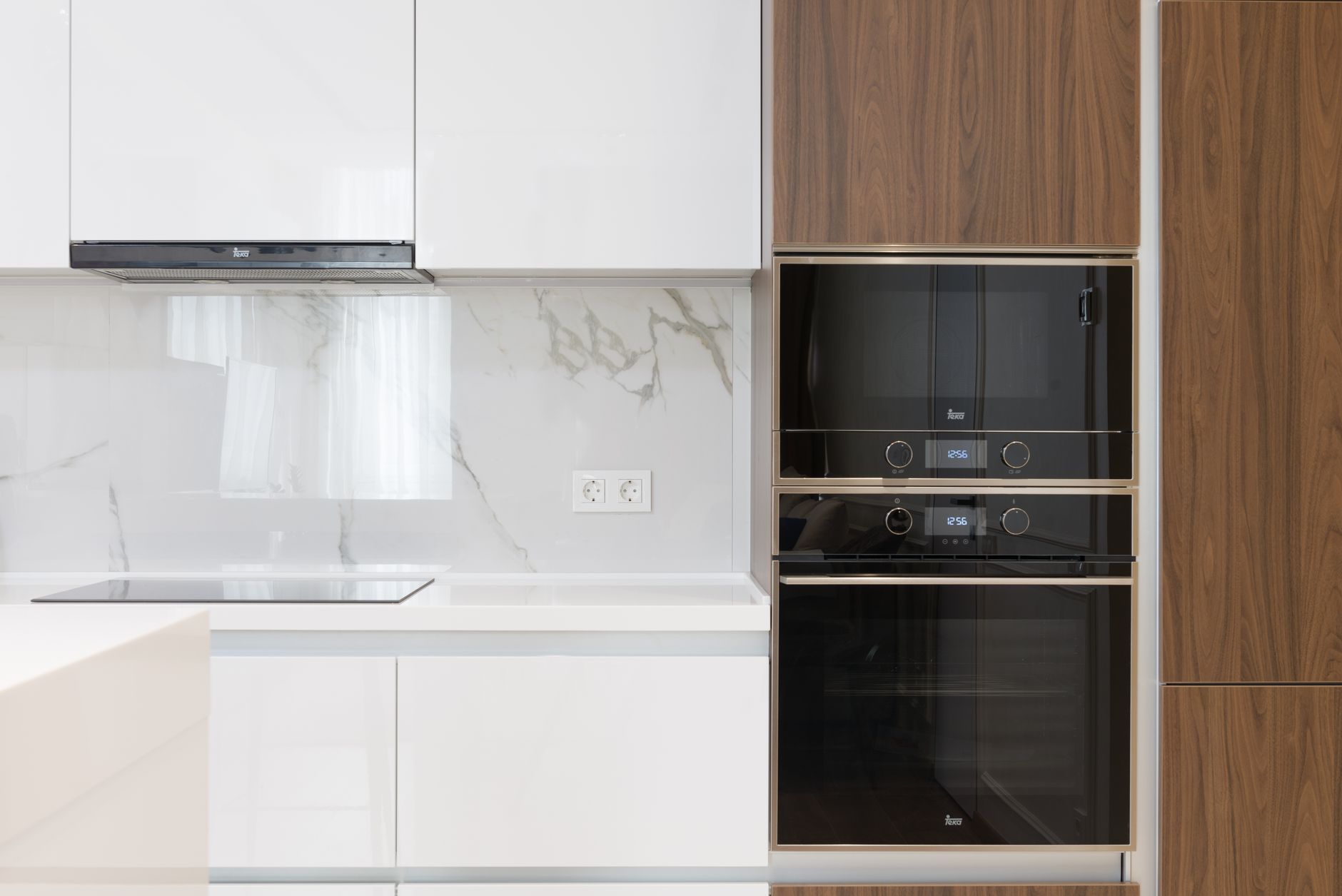
When outfitting a new kitchen or undertaking a major renovation, the question of purchasing appliances often arises: is it more economical to buy them as a bundle, or piece together individual units? This decision, often framed by immediate cost savings and long-term utility, involves more than just the sticker price. We’ll explore the financial and practical implications of both strategies in 2026, considering everything from upfront discounts to installation complexities.
⚡ In a Rush? Key Takeaways
- Kitchen appliance bundles typically offer 10-20% discounts compared to individual purchases.
- Bundles save on shipping and installation, often coming as a single, coordinated delivery.
- While convenient for new kitchens, they limit flexibility in choosing top-performing individual units.
- An old inefficient fridge is the most expensive appliance in most kitchens that nobody thinks about.
- ✅ Bundles are worth it for full kitchen overhauls; individual buys for targeted upgrades or specific performance needs.
Do Kitchen Appliance Bundles Actually Save Money?
Yes, kitchen appliance bundles often provide a financial advantage, with discounts typically ranging from 10% to 20% compared to purchasing items separately.
Retailers and manufacturers frequently incentivize bundled purchases by offering significant discounts. These savings are designed to encourage customers to commit to a larger sale, making bundles particularly appealing for major kitchen projects. Beyond the initial price reduction, there are other cost efficiencies to consider that contribute to the overall financial benefit.
What are the typical savings percentages on appliance bundles?
Bundles can net savings of 10% to 20% or more, varying by retailer, brand, and promotional activities, especially during sales events.
The exact discount you can expect on an appliance bundle is not fixed; it fluctuates based on several factors. During major sales events like Black Friday, Memorial Day, or end-of-year clearances, these percentages can be at their highest. It’s not uncommon to see bundle deals providing a 15% discount on the total price, or even offering one appliance for free when purchasing a set.
- Manufacturer Promotions: Brands like Samsung, LG, or GE often have standing offers for bundle purchases.
- Retailer-Specific Deals: Stores like Best Buy or Lowe’s may create their own bundle packages with additional incentives.
- Seasonal Sales: Expect deeper discounts around holiday periods and major shopping events throughout the year.
How do shipping and installation costs affect bundle vs. individual pricing?
Bundles often reduce or consolidate shipping fees and may lower installation costs, as multiple items are delivered and potentially installed at once.
One often-overlooked area where bundles offer financial savings is in logistics. When you purchase multiple appliances separately, you might incur individual delivery charges for each item, potentially from different vendors. Bundles, however, tend to be shipped as a single unit or coordinated delivery, streamlining the process and reducing associated costs. This extends to installation as well.
- Consolidated Delivery: A single delivery fee for multiple items is almost always cheaper than several individual fees.
- Installation Efficiency: Installers can often complete work more efficiently when all appliances are present and can be installed sequentially.
- Haul-Away Services: Some bundle deals include the cost of hauling away old appliances, which can be an extra charge for individual purchases.
What are the Practical Benefits and Drawbacks of Appliance Bundles?
Bundles offer convenience and aesthetic cohesion, but they can limit your ability to choose the best-performing individual units for each specific function.
Beyond the financial calculus, the decision between bundles and individual purchases carries significant practical implications for the homeowner. These aspects range from the ease of the buying process to the long-term satisfaction with your kitchen’s functionality and appearance. Understanding these trade-offs is crucial for making an informed decision that aligns with your household’s needs and aesthetic preferences.
How do bundles impact convenience and coordination during a renovation?
Bundles simplify the buying process by reducing research, comparison, and delivery coordination, which is highly convenient for large projects.
The hassle factor cannot be underestimated, especially during a kitchen renovation or when moving into a new home. Sourcing individual appliances requires extensive research, comparing specifications, reading countless reviews, and then coordinating multiple deliveries. This can be time-consuming and challenging. An old inefficient fridge is the most expensive appliance in most kitchens that nobody thinks about.
| Aspect | Appliance Bundles | Individual Purchases |
|---|---|---|
| Research Time | Low (reviewing a package) | High (comparing every single product) |
| Price Comparison | Easier (one package price) | Complex (many permutations) |
| Delivery Logistics | Simplified (one or coordinated delivery) | Complex (multiple deliveries) |
| Installation | Often integrated/streamlined | May require separate coordination |
Can bundles compromise appliance performance or aesthetic preference?
Yes, bundles may force compromises on specific appliance features or brand uniformity, potentially sacrificing peak performance for value.
While a bundle offers a streamlined approach, it inherently limits your choices. You might find a refrigerator that perfectly suits your needs, but the accompanying range or dishwasher in the bundle might not be your first choice in terms of features, energy efficiency, or brand preference. This trade-off between convenience and bespoke selection is often the core dilemma for discerning buyers.
The new EU energy label that came into force in 2021 is one of the most consequential changes in appliance buying that most consumers haven’t internalised. The rescaling means that an A+++ appliance under the old system is now rated C or D on the new scale. Buyers comparing prices across old and new-label appliances are comparing on incompatible scales. A washing machine listed at A on the new label is exceptional. Anything below C is worth scrutinising on running cost before buying regardless of sticker price.
- Brand Loyalty: You might prefer a Bosch dishwasher for its quiet operation and a Samsung refrigerator for its smart features. Bundles rarely accommodate this cross-brand preference.
- Specific Features: If you desire a specific type of oven (e.g., steam oven) or a highly specialized range, finding it in a bundle may be challenging or impossible.
- Energy Efficiency: Not all appliances within a bundle might meet your precise energy efficiency standards, potentially leading to higher running costs in the long run.
What about maintenance and warranty implications for bundled appliances?
Bundles can simplify warranty claims if all appliances are from the same brand, but issues with one unit may affect the entire set’s service schedule.
When all your new appliances come from the same manufacturer within a bundle, it often means dealing with a single point of contact for warranty claims and service. This can streamline the process, avoiding the frustration of coordinating with multiple manufacturers for different units. However, this also means that if a particular brand has known reliability issues, you might experience problems across several of your new kitchen units.
Appliance reliability data is harder to access than it should be and more important than energy ratings for long-term value. Consumer Reports and Which? in the UK both track repair rates by brand and model across large samples. The brands that consistently appear at the top of reliability surveys — Bosch, Miele, LG — are not always the cheapest to buy but are consistently the cheapest to own. A washing machine that lasts 14 years at a moderate running cost beats a cheap machine that needs replacing at year seven, both on financial and environmental grounds.
When is it Better to Buy Individual Appliances?
Buying individual appliances is typically superior when you need to replace only one or two units, or prioritize specific features, brands, or optimal energy performance.
While bundles offer appealing discounts, they are not a universal solution. There are distinct scenarios where the flexibility and precise selection offered by individual purchases outweigh the cost savings of a package deal. Understanding these situations can help you avoid buyer’s remorse and ensure your kitchen is equipped exactly as you need it.
When are individual purchases more cost-effective?
Individual purchases are more cost-effective when you only need one or two appliances, avoiding inflated bundle prices for unwanted items.
If you’re only replacing a single broken dishwasher or upgrading an old refrigerator, buying an entire bundle makes no sense. The ‘savings’ in a bundle are tied to purchasing multiple items. For targeted upgrades, focusing on just the appliance you need allows you to allocate your budget more efficiently and avoid paying for unnecessary additions.
- Single Item Replacement: If only one appliance fails, buying just that unit is the most economical choice.
- Staggered Upgrades: Spreading appliance costs over time by replacing units as needed can be easier on your budget than a large lump sum for a bundle.
- Specific Sales: Sometimes, individual appliances go on deep sale, matching or even beating the per-unit price in a bundle if you’re patient enough to wait for deals.
How can individual purchases optimize performance and energy efficiency?
Individual appliance selection allows you to choose the top-rated, most energy-efficient model for each specific appliance type, avoiding package compromises.
For some homeowners, maximum performance, specific features, or superior energy efficiency are non-negotiable. Individual purchasing allows for a meticulous selection process where each appliance can be chosen for its strengths, rather than being part of a manufacturer’s predetermined set. This means you can get the quietest dishwasher, the most powerful range, and the most energy-efficient refrigerator, regardless of brand.
Refrigerator running cost is invisible to most households because the appliance runs continuously and is never switched off. A fridge-freezer built before 2015 typically uses 400–600 kWh per year. A current A-rated model uses 100–200 kWh. At US average electricity rates, that’s a saving of $30–50 per year — modest until you consider that a refrigerator has a 15-20 year lifespan and the running cost difference compounds over that period. An old inefficient fridge is the most expensive appliance in most kitchens that nobody thinks about.
When is brand mixing desirable for particular kitchen needs?
Brand mixing is desirable when individual brands excel in different appliance categories, offering consumers the best possible functionality for each unit.
The market for kitchen appliances is vast, with different manufacturers specializing in different areas. Bosch is often lauded for its quiet dishwashers, LG for its innovative refrigerators, and Wolf or Viking for professional-grade ranges. By purchasing individually, you are free to mix and match to create a kitchen tailored to your precise cooking habits and aesthetic preferences, without being confined to a single brand’s offerings across the board.
Frequently Asked Questions About Appliance Bundles
-
What is typically included in a standard kitchen appliance bundle?
A standard bundle usually includes a refrigerator, range, dishwasher, and over-the-range microwave, forming a cohesive four-piece set for a new kitchen.
-
Are clearance bundles a good deal, or do they come with risks?
Clearance bundles can offer deeper discounts but may carry minor cosmetic damage or come with limited warranty options, so inspect thoroughly.
-
How do I compare the long-term running costs of bundle appliances?
Compare ENERGY STAR ratings and estimated annual kWh consumption for each appliance to project long-term running costs beyond the purchase price.
-
Can I customize a bundle by swapping out an appliance?
Some retailers offer limited customization of bundles, allowing swaps for a different model or upgrade, often at an adjusted price or reduced discount.
The Verdict: Do Kitchen Appliance Bundles Offer Real Value?
Kitchen appliance bundles provide excellent value for new kitchen installations or full renovations, but individual purchases are better for targeted upgrades or specific performance needs.
The decision to buy kitchen appliance bundles or individual units hinges on your specific circumstances. For a complete kitchen overhaul or a new home build, bundles present a compelling case due to significant discounts, simplified logistics, and aesthetic consistency. The average savings of 10% to 20% on the total purchase, plus reduced shipping and installation costs, can accumulate to a substantial amount.
However, if your needs are more targeted – a single broken appliance, a desire for best-in-class performance across different categories, or a commitment to the absolute lowest long-term running costs from individually selected high-efficiency units – then purchasing appliances separately offers superior flexibility. It allows you to select each item based on its individual merits, ensuring that your kitchen is equipped not just affordably, but optimally for your lifestyle and energy consumption goals. Ultimately, weighing the immediate financial benefits against long-term satisfaction and efficiency is key.
— Greta Michaud, Home Appliance Efficiency Researcher