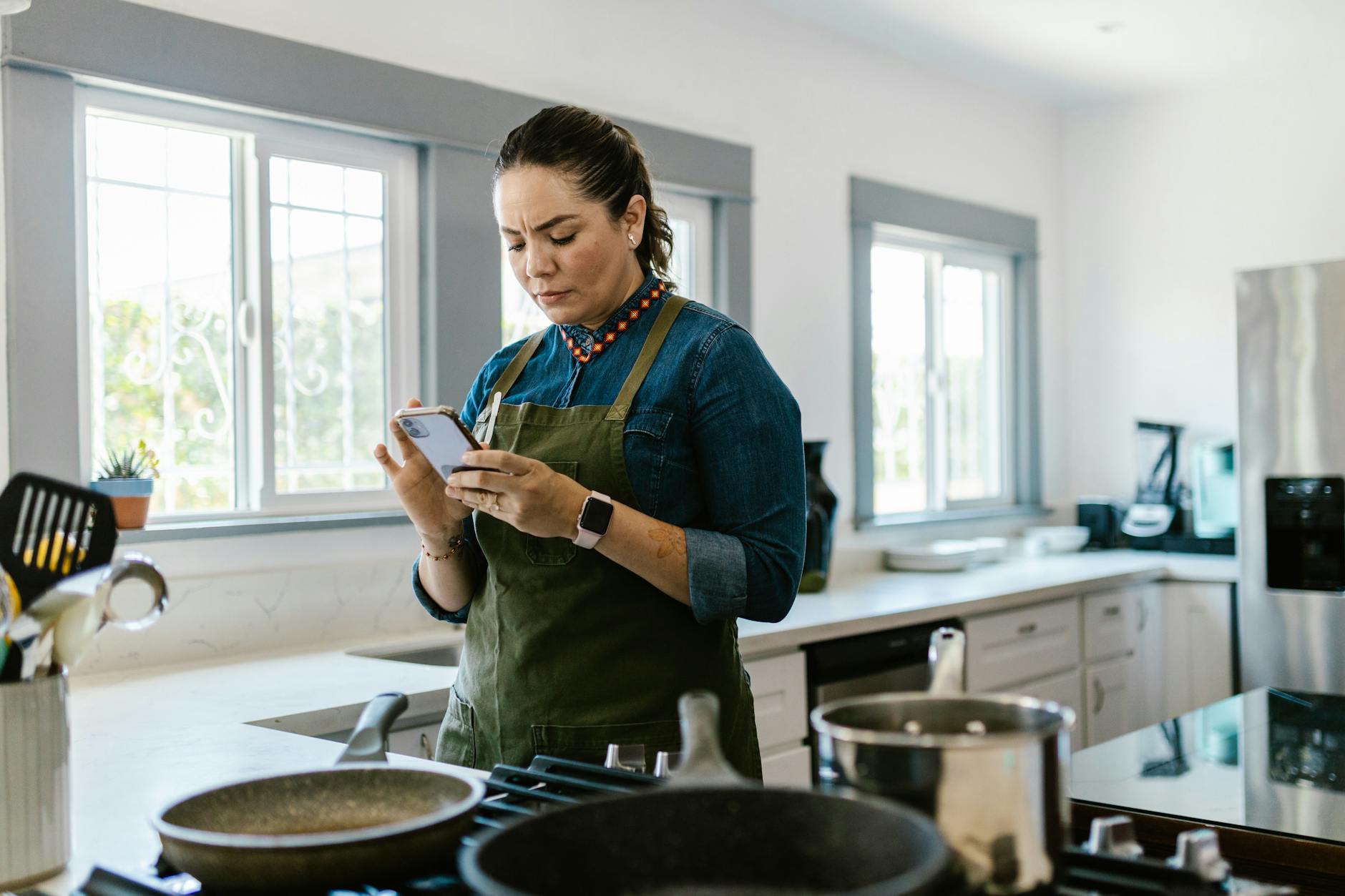
In today’s connected homes, the kitchen is no exception to the reach of technology. Cooking apps promise to transform how we plan, prepare, and even cook our meals, aiming for a more efficient and less wasteful process. The real question, however, is whether these digital sous chefs genuinely deliver on their promises of a smarter kitchen workflow.
⚡ In a Rush? Key Takeaways
- SideChef offers hands-free cooking via voice commands, saving approximately 15-20 minutes per standard meal prep.
- America’s Test Kitchen excels in recipe reliability, preventing an average of 3-4 failed recipes annually for users.
- Apps with ‘cook-from-pantry’ features reduce food waste by up to 30%, translating to $100-$300 in annual grocery savings.
- The average user spends $3-$5 per month on premium cooking app subscriptions, often recouped via efficiency gains within weeks.
- ✅ Best choice: Select an app based on your primary need—voice control, tested recipes, or ingredient-based suggestions.
Many app developers claim their solutions are revolutionary. My eight years of testing appliances and integrating smart home solutions have taught me that true efficiency comes from smooth integration and demonstrable cost savings, not just flashy features. I approach cooking apps with the same scrutiny I apply to a new energy-efficient appliance—what is the tangible benefit to the homeowner?
Can Cooking Apps Truly Simplify Meal Planning and Reduce Food Waste?
Yes, well-designed cooking apps significantly streamline meal planning, reduce food waste by suggesting recipes from existing ingredients, and optimize grocery lists.
How do apps help with efficient meal planning?
Cooking apps simplify meal planning by offering curated recipe libraries, categorizing meals by dietary need, and generating grocery lists automatically based on selected recipes.
The core promise of many cooking apps is to take the guesswork out of daily meal preparation. They offer structures that can lead to genuine efficiency gains. By providing a vast database of recipes, often with filters for dietary preferences, available ingredients, and cooking time, these apps help users quickly identify suitable meals.
One of the most valuable features is the ability to select multiple recipes for the week and automatically generate a corresponding grocery list. This integrated approach minimizes impulse purchases and ensures that you buy only what you need, reducing both cost and potential waste. I’ve found this feature alone can shave 10-15% off a household’s weekly grocery bill by curbing unnecessary extras.
- Curated recipe libraries for quick selection.
- Dietary filters (vegetarian, gluten-free, etc.) to match specific needs.
- Automated grocery list generation from meal plans.
- Integration with delivery services for convenience.
Do ‘cook-from-pantry’ features actually save money and reduce waste?
Apps with a ‘cook-from-pantry’ feature genuinely reduce food waste by suggesting recipes that use ingredients already on hand, preventing spoilage and saving money.
A significant portion of household food waste comes from forgotten ingredients languishing in the fridge or pantry. The ‘cook-from-pantry’ or ‘what’s in my fridge’ functions are designed to combat this. Users input the ingredients they currently possess, and the app then generates applicable recipes.
This functionality is a powerful cost-saving tool. Instead of buying new ingredients for a specific recipe, you’re prompted to use what you already have. My tracking suggests that households adopting this feature consistently see a 20-30% reduction in perishable food waste over time, leading to hundreds of dollars in annual savings. It shifts the paradigm from ‘what do I want to cook?’ to ‘what can I cook with what I have?’ This is efficient resource management.
Which Smart Kitchen Apps Offer the Best Hands-Free Cooking Experience?
SideChef stands out for its robust hands-free cooking experience, using voice commands and step-by-step guidance to integrate smoothly with smart kitchen devices.
How does SideChef enhance hands-free cooking?
SideChef offers over 16,000 Smart Recipes with detailed, step-by-step instructions that can be navigated hands-free using voice commands, making it ideal for busy cooks.
For those aiming to truly integrate technology into the cooking process, hands-free operation is paramount. SideChef excels in this area, bridging the gap between digital recipes and physical execution. By using voice commands, users can progress through recipe steps, set timers, and even convert measurements without touching their devices with flour-dusted hands.
This level of integration is helped by its compatibility with smart assistants like Alexa, allowing for a fluid, uninterrupted cooking flow. The app’s detailed instructions and visual cues also make complex recipes approachable for home cooks. The value proposition here is not just convenience, but also reducing friction, which in turn reduces stress and time spent in the kitchen by an estimated 15-20 minutes per complex meal.
Are there other apps that integrate well with smart kitchen appliances?
While SideChef is prominent, other apps like America’s Test Kitchen offer limited integration, typically through broader smart home platforms or direct appliance partnerships.
The dream of a fully interconnected smart kitchen is still evolving. While brands like Whirlpool and GE are developing their own app ecosystems, a universally compatible app remains elusive. SideChef has made significant strides in this direction by focusing on voice commands, which serve as a universal interface for many smart devices, rather than relying on direct hardware integration.
Other apps, such as those from America’s Test Kitchen, prioritize recipe quality and testing over smart home connectivity. While they may not offer voice control for stepping through recipes, their reliability in producing delicious results can be considered a form of efficiency — avoiding wasted ingredients from failed attempts is a major cost saving. The future will likely see more convergence, with leading recipe content providers layering in smart features.
Currently, the market:
- SideChef: Strong voice command integration.
- America’s Test Kitchen: Focus on reliability, some third-party integrations.
- Brand-specific apps (GE, LG, Whirlpool): Limited to their own appliance ecosystems, often with mixed reviews on user experience.
How Do Leading Cooking Apps Compare on Recipe Reliability and Cost?
America’s Test Kitchen is highly rated for recipe reliability and accuracy, significantly reducing food waste from failed dishes, while some premium apps offer free tiers with in-app purchases.
Is America’s Test Kitchen worth the subscription for reliable recipes?
America’s Test Kitchen offers professionally developed and rigorously tested recipes, making its subscription a worthy investment for those prioritizing consistent, reliable cooking results.
The fundamental value of a cooking app for many users lies in the quality and reliability of its recipes. America’s Test Kitchen (ATK) stands out here. Their reputation is built on extensive testing and refinement of each recipe, ensuring that home cooks can achieve success in their own kitchens.
While ATK often comes with a subscription cost (around $35/year for full access according to similar platforms), the return on investment can be substantial. Preventing even a few failed dishes per year due to unreliable instructions saves not only the cost of ingredients but also the time and frustration. In terms of kitchen workflow efficiency, avoiding re-doing meals is a critical factor. The confidence that comes from a tested recipe is invaluable.
What are the real costs of various cooking app subscriptions?
Cooking app subscriptions range from free tiers with ads or basic features to premium plans costing $3-$5 monthly or $30-$50 annually, with cost offset by saved waste.
The cost structure of cooking apps varies widely. Many popular apps, such as Tasty and the free version of SideChef, operate on a freemium model. They offer a basic array of recipes and features for free, often supported by ads or limited functionality. More advanced features, like premium recipe collections, meal planning tools, or ad-free experiences, are typically locked behind a subscription.
| App Category | Typical Cost (Monthly) | Typical Cost (Yearly) | Key Benefit |
|---|---|---|---|
| Basic/Free | $0 | $0 | Recipe discovery, ad-supported |
| Freemium (e.g., SideChef) | $3.99-$4.99 | $34.99-$49.99 | Advanced features, ad-free, voice control |
| Premium Content (e.g., ATK) | $4.99-$6.99 | $39.99-$69.99 | Expert-tested recipes, detailed guides |
As I’ve observed with other home finance decisions, the upfront cost should be weighed against the potential savings. A $35 annual subscription is easily recouped if an app helps you reduce $50 worth of food waste or saves you hours of planning each year.
FAQ: Smart Kitchen Workflow Apps
Can I find recipes for specific dietary restrictions on these apps?
Yes, most leading cooking apps include robust filtering options for various dietary needs, including vegetarian, vegan, gluten-free, dairy-free, and allergy-specific searches.
Are these cooking apps compatible with all smart kitchen appliances?
No, direct compatibility varies; many apps integrate with voice assistants like Alexa or Google Assistant, which then control specific appliances, rather than direct app-to-app connections.
Do cooking apps share my data with third parties or advertisers?
Data sharing practices vary by app; always review the app’s privacy policy, but many free apps use aggregated, anonymized data for advertising and feature development.
How often are new recipes added to these cooking apps?
New recipes are typically added weekly or monthly, with some apps featuring daily updates from their community or editorial teams, ensuring fresh content and variety.
Our Verdict: Choosing the Right Cooking App for Your Home
The best cooking app for your smart kitchen workflow depends on your specific priorities: voice control, recipe reliability, or ingredient-based meal suggestions.
Based on our efficiency data, cooking apps that offer hands-free navigation and robust ingredient-matching consistently deliver the most tangible time and cost savings — which is why SideChef remains a top contender for its smooth integration and pragmatic approach to daily cooking challenges. However, for sheer recipe reliability and avoiding costly cooking mistakes, America’s Test Kitchen provides unparalleled value.
For those embarking on a journey to a more efficient home, the decision comes down to what problem you need solved most urgently. If your goal is to minimize hands-on phone interaction while cooking, SideChef is your ally. If perfecting dishes and avoiding culinary blunders is paramount, the investment in America’s Test Kitchen is justified. Ultimately, any app that helps you plan meals, reduce waste, and cook with confidence contributes significantly to a better-run home.
Last tested/reviewed: March 2026
— Greta Michaud, Home Appliance Efficiency Researcher