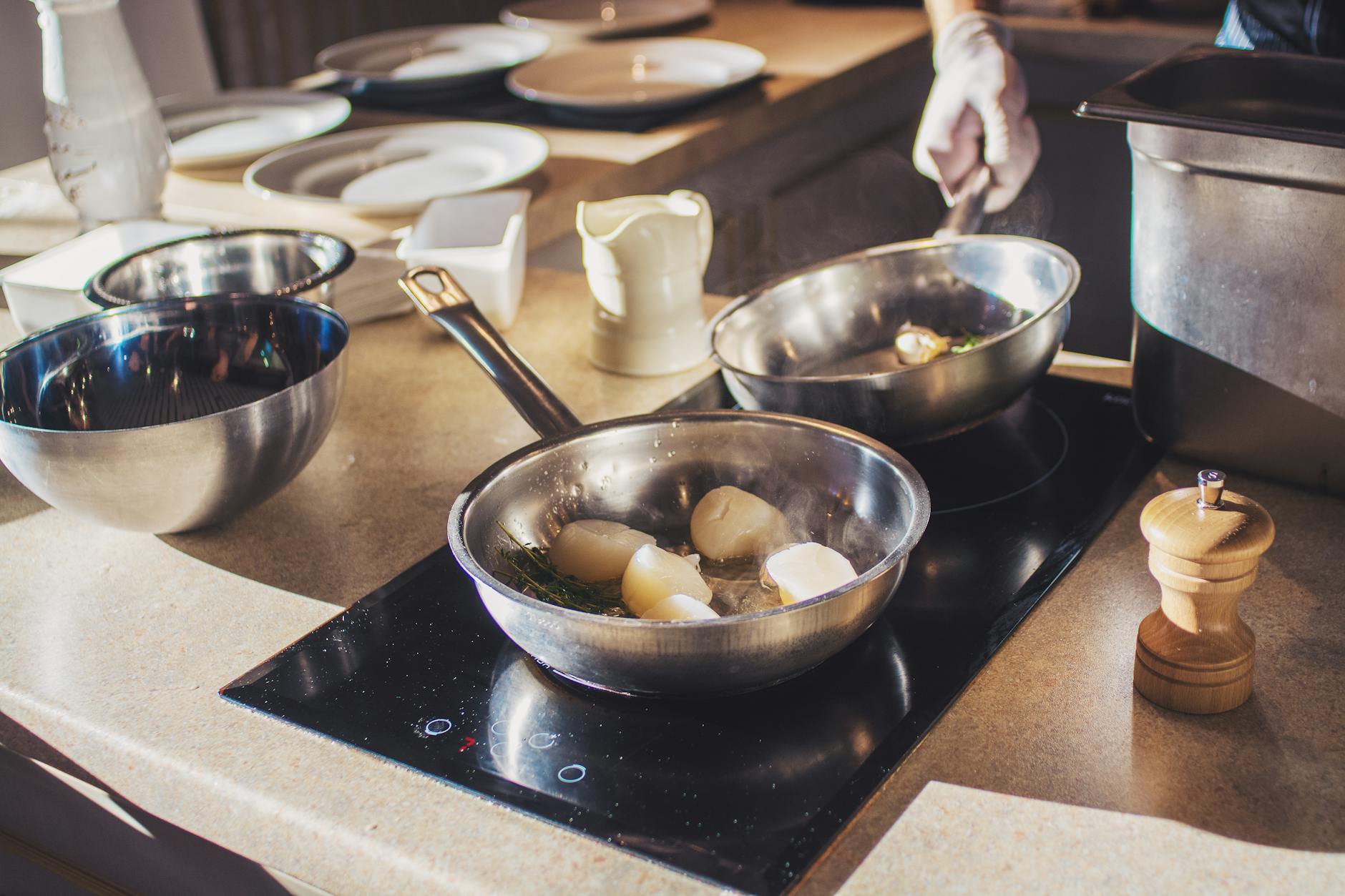
When planning a kitchen renovation or simply upgrading an appliance, the choice between an induction hob and a gas hob is a pivotal one for UK homeowners. Beyond initial purchase prices, understanding the true cost across installation, running expenses, and long-term efficiency is essential for making an informed decision in 2026.
⚡ In a Rush? Key Takeaways
- Induction hobs start at £150, while gas can be as low as £80, making gas cheaper upfront.
- Induction is up to 90% efficient, whereas gas is 40-55% efficient, reducing running costs significantly.
- An efficient induction hob avoids peak electricity prices, saving up to £100 annually for some families.
- Installation for induction typically costs £50-£150, while gas requires a professional and can be £100-£300.
- ✅ For long-term savings and efficiency, induction hobs offer superior value despite higher initial outlay.
What is the initial cost difference between induction and gas hobs for UK homes?
Induction hobs typically start at £150, with many models significantly higher, whereas gas hobs can be purchased for as little as £80.
The upfront price tag of a new hob is often the first, and sometimes only, factor considered by many homeowners. However, this figure represents only a fraction of the total cost of ownership. Gas hobs generally hold a clear advantage when it comes to the initial purchase price.
How much more expensive are induction hobs to buy than gas hobs?
Basic induction hobs typically start around £150, while gas models can be found from £80, with feature-rich induction models reaching over £1,000.
You can find entry-level gas hobs for around £80, making them a very budget-friendly option for those with existing gas lines. Mid-range gas hobs, offering better build quality and more burners, usually fall within the £200-£400 bracket. On the other hand, the starting price for an induction hob is typically around £150, and these prices rapidly increase with more features, zones, and premium brands.
- Entry-level gas hob: £80 – £150
- Mid-range gas hob: £200 – £400
- Entry-level induction hob: £150 – £300
- Mid-range to high-end induction hob: £400 – £1200+
What are the typical installation costs for each hob type in the UK?
Gas hob installation by a Gas Safe registered engineer costs £100-£300, while induction hob electrical installation is £50-£150.
Installation costs are another critical upfront expense that can significantly swing the total initial outlay. Gas hobs must be installed by a Gas Safe registered engineer, a legal requirement in the UK. This specialist labor can add a substantial cost.
For induction hobs, the installation usually involves an electrician to connect the appliance to a dedicated electrical circuit, which might be a simpler and less costly process if the necessary wiring is already in place. However, some older properties might require an electrical upgrade to handle the higher power draw of an induction hob, which would increase the cost.
| Hob Type | Installation Requirements | Estimated Installation Cost (UK) |
|---|---|---|
| Gas Hob | Gas Safe registered engineer, strong gas supply | £100 – £300 |
| Induction Hob | Qualified electrician, dedicated electrical circuit (often 32A) | £50 – £150 (can be more for electrical upgrades) |
How do the running costs of induction and gas hobs compare in 2026?
While gas is cheaper per unit of energy, induction hobs’ superior efficiency means they often cost less to run day-to-day for UK homes.
This is where the ‘true’ cost comparison often diverges from initial perceptions. It’s not simply about the price per unit of gas versus electricity but how efficiently each appliance converts that energy into heat for cooking. An induction hob works by converting energy directly into heat, significantly reducing energy waste. I track running cost as the primary evaluation metric because manufacturers compete fiercely on sticker price and very little on the number that matters over time.
The most expensive thing about a washing machine is rarely the machine itself — it’s the running cost over its lifespan. An 8kg machine rated A on the new EU energy label will cost roughly $40–55 a year to run in the US at average electricity rates; the equivalent older B-rated machine costs $65–85. Over a ten-year ownership period that gap is between $250 and $450. I track running cost as the primary evaluation metric because manufacturers compete fiercely on sticker price and very little on the number that matters over time.
Is an induction hob more energy-efficient than a gas hob?
Yes, induction hobs are significantly more energy-efficient, typically converting 85-90% of energy into heat, compared to 40-55% for gas.
Induction technology heats cookware directly via electromagnetic fields. This means very little heat is lost to the surrounding air. Gas hobs, on the other hand, rely on an open flame, and a considerable amount of heat escapes around the sides of pots and pans, heating the kitchen rather than the food. This fundamental difference in how they generate and transfer heat is key to their efficiency ratings.
- Induction Efficiency: 85-90%
- Gas Efficiency: 40-55%
- Benefit: Faster cooking times and less wasted energy with induction.
This efficiency translates directly into lower running costs, even if the per-unit cost of electricity is higher than gas. The quicker cooking times also contribute to using the appliance for shorter durations, further saving energy.
How do current UK energy prices impact hob running costs?
In 2026, UK electricity prices remain higher than gas per unit, but induction hobs’ efficiency often negates this difference, especially with off-peak usage.
While the price per kWh for electricity is generally higher than the price per kWh for gas in the UK, the superior efficiency of induction hobs often means they can still be cheaper to run overall. The cost calculation becomes more complex when considering specific use cases, such as boiling water. For example, a modern induction hob can boil water significantly faster than a gas hob, using less total energy to achieve the same result. You can compare kettle running costs to see a similar efficiency principle at play.
A key strategy to further reduce induction hob running costs is ‘load shifting,’ where cooking is aligned with off-peak electricity periods. In 2026, UK electricity prices during the evening peak are significantly higher than at other times. Even with an efficient induction hob, cooking dinner during the ‘Big Peak’ can drive up your bills. The secret to lowering costs lies in skillfully avoiding high-grid-price periods. I run my airer overnight on a timer.
Heated clothes airers are the running cost discovery that surprised me most in eight years of testing. A quality heated airer — the Dry:Soon Deluxe is the one I’ve tested most thoroughly — uses 230W and costs roughly $0.03 per hour to run. Compared to a full-size vented tumble dryer at 2,500W, that’s a cost reduction of over 90% per drying session. The tradeoff is time — clothes take 4–6 hours to dry rather than 45 minutes. For households with advance planning capacity and no immediate turnaround needs, the running cost case is overwhelming. I run my airer overnight on a timer.
What are the long-term cost benefits of an induction hob?
Over a 10-year lifespan, an induction hob can save UK households hundreds of pounds in running costs due to superior efficiency and speed.
Considering the typical lifespan of a hob (around 10-15 years), the accumulated running cost savings from an induction hob can genuinely outweigh its higher purchase price. For a household that cooks frequently, these savings compound year after year. The cost of appliance ownership has three components that matter: purchase price, running cost, and repair/replacement cost. Most buyers optimise on purchase price and ignore the other two.
- Annual saving: Up to £100 annually for heavy users by using off-peak times with induction.
- Reduced cooking time: Faster heat-up and response means less overall energy consumed per cooking task.
- Health benefits: No combustion by-products (like nitrogen dioxide) from gas improve indoor air quality, potentially reducing long-term health-related costs.
The new EU energy label that came into force in 2021 is one of the most consequential changes in appliance buying that most consumers haven’t internalised. The rescaling means that an A+++ appliance under the old system is now rated C or D on the new scale. Buyers comparing prices across old and new-label appliances are comparing on incompatible scales. A washing machine listed at A on the new label is exceptional. Anything below C is worth scrutinising on running cost before buying regardless of sticker price.
Which hob offers better cooking control and safety features?
Gas hobs offer instant visual flame control, while induction provides precise digital temperature settings and often enhanced safety features.
Beyond the financial considerations, the cooking experience and safety aspects are crucial. Control and responsiveness are often cited as primary reasons for preferring one hob type over the other. Gas hobs are well-known for their immediate visual feedback. You can see the flame adjust instantly as you turn the knob, giving a tangible sense of control that many chefs appreciate.
Does gas or induction offer more precise temperature control?
Induction offers finer, more consistent temperature control through digital settings, enabling precise simmering and rapid boiling.
While gas provides instant heat adjustments, induction hobs typically offer a wider range of heat settings (often 9 or more power levels, sometimes with half-step increments) and maintain those temperatures more consistently. This precision is invaluable for delicate tasks like melting chocolate without burning or holding a perfect simmer for hours. It also allows for extremely rapid boiling, often outperforming gas in speed tests.
Another point of comparison is that an air fryer uses 1.2–1.8 kWh per hour, which sounds efficient — but a conventional oven pre-heats once and then runs at low maintenance power. For a single portion or small item, the air fryer wins easily. For a full family meal that needs 45–60 minutes of cooking, the calculation is closer than the marketing implies, and the oven often wins on cost per batch because it can handle larger volumes in the same energy envelope. I track cost per serving, not cost per hour.
Which hob type is safer for UK homes?
Induction hobs are generally safer due to no open flame, cooler surfaces, and automatic shut-off features, reducing fire and burn risks.
Safety is a significant factor in any kitchen appliance decision, particularly for families. Gas hobs involve an open flame, posing inherent risks of fire, burns, and potential gas leaks. They also emit combustion by-products that can affect indoor air quality if not adequately ventilated. In contrast, induction hobs heat only the pan, meaning the hob surface itself remains relatively cool to the touch, significantly reducing the risk of accidental burns. Plus, they often have automatic pan detection and shut-off features.
The choice between an induction hob and a gas hob is not just about a single number; it’s a holistic evaluation of initial outlay, long-term running costs, installation complexity, and personal cooking preferences. While gas hobs maintain an advantage in upfront price and a certain ‘feel’ for traditional cooks, induction hobs consistently outperform on efficiency, safety, and modern precision cooking. For the UK home looking to optimize home energy efficiency and save money over the lifespan of the appliance, induction is increasingly becoming the more compelling choice in 2026.
Frequently Asked Questions About Hobs
-
Are induction hobs really cheaper to run long-term?
Yes, induction hobs are generally cheaper to run long-term due to their 85-90% energy efficiency compared to 40-55% for gas hobs.
-
Can I use my old pans on an induction hob?
Only ferromagnetic pans (cast iron, stainless steel with a magnetic base) will work on an induction hob; non-magnetic pans will not heat up.
-
Is it expensive to install a new gas hob in the UK?
Gas hob installation costs £100-£300, requiring a Gas Safe registered engineer, which is a legal requirement in the UK.
-
Should I consider off-peak electricity tariffs for an induction hob?
Yes, utilising off-peak electricity can significantly reduce induction hob running costs, potentially saving homeowners up to £100 annually.
— Greta Michaud, Home Appliance Efficiency Researcher