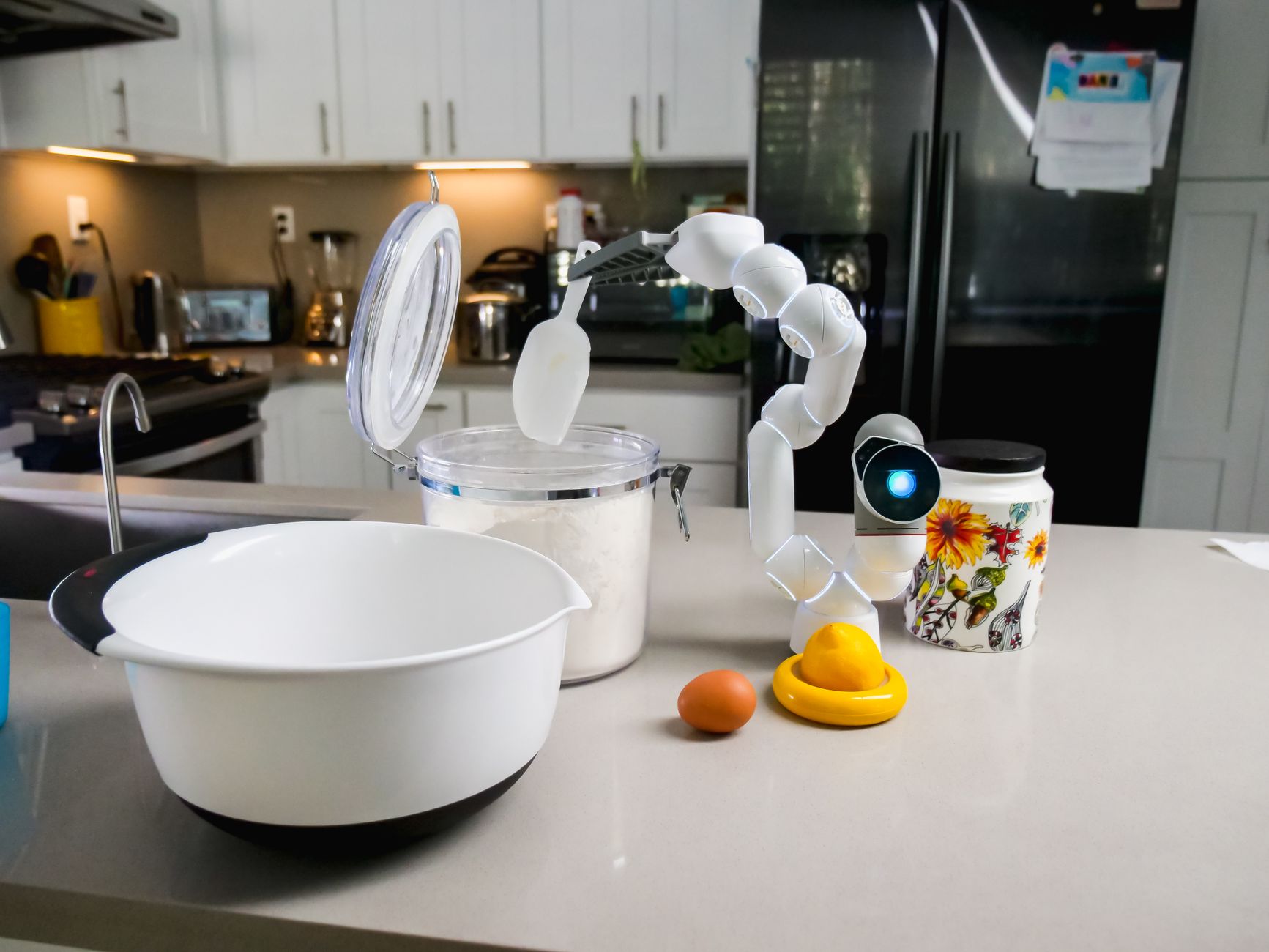
Integrating technology into the kitchen space has become increasingly popular, with smart appliances offering features from remote control to energy monitoring. For many homeowners and renters, the question isn’t just about convenience, but whether these innovations translate into tangible savings and improved efficiency without a hefty upfront cost. This article explores into the affordable end of the smart kitchen market, identifying budget-friendly picks that genuinely enhance your home’s functionality and cost-effectiveness in 2026.
⚡ In a Rush? Key Takeaways
- Smart air fryers, like the Cosori and Ninja models, begin at $130, offering app control and efficiency.
- Voice-controlled air fryers, such as the Emerson SmartVoice, eliminate app setup but lack data tracking.
- Older refrigerators use 400–600 kWh/year; new smart models significantly reduce this, saving $30–50 annually.
- The true value of smart appliances lies in their ability to streamline tasks and reduce energy consumption.
- ✅ Best value: Prioritize smart appliances with direct energy-saving features, such as air fryers and smart plugs.
What Makes a Smart Kitchen Appliance ‘Affordable’ for Homeowners?
Affordable smart kitchen appliances typically cost under $250, balancing core smart features like app control with a tangible efficiency or convenience benefit.
Defining ‘affordable’ in the realm of smart home technology can be subjective, but for kitchen appliances, it generally means a price point that avoids the premium attached to high-end interconnected systems. These are often standalone devices that offer specific smart functionalities without requiring a complete kitchen overhaul. My focus, in evaluating these, is not just the sticker price but the total cost of ownership and the practical value it brings to daily life.
How Do Budget Smart Appliances Compare to Premium Models in Functionality?
Budget smart appliances focus on essential connective features like remote control or voice integration, often omitting advanced sensors or complex automation found in premium units.
The primary distinction often lies in the depth of integration and breadth of features. Premium smart appliances might offer intricate customisation, AI-driven recipe suggestions, or smooth interaction with other smart home devices. Affordable options, by contrast, tend to excel in one or two key smart areas, such as:
- Remote operation via a smartphone app
- Voice control compatibility with assistants like Alexa or Google Assistant
- Basic scheduling and notification capabilities
- Energy monitoring for individual appliance usage
While they may lack some of the ‘bells and whistles,’ these core functionalities are often what users value most, contributing to overall energy efficiency or saving time in a practical sense.
Are There Hidden Costs Associated with ‘Smart’ Features on Budget Appliances?
Hidden costs typically involve subscriptions for advanced features, data privacy concerns, or the necessity of additional smart home hubs for full connectivity.
It’s crucial to look beyond the initial purchase price. Some manufacturers entice buyers with low-cost smart appliances, only to introduce subscription models for features that should arguably be standard. Furthermore, while the devices themselves are often privacy-focused, the broader ecosystem they connect into should be considered.
Another point: some smart appliances require a stable Wi-Fi connection and occasionally a separate smart home hub to fully utilise their features. A device like the Emerson SmartVoice Air Fryer, for instance, offers voice activation without Wi-Fi or app setup, simplifying connectivity but also limiting data tracking. I track running cost as the primary evaluation metric because manufacturers compete fiercely on sticker price and very little on the number that matters over time. The true value comes from how these smart features genuinely improve efficiency or daily routine, not just how many apps it connects to.
Which Budget-Friendly Smart Cooking Appliances are Worth Considering in 2026?
For smart cooking, top budget picks include app-controlled air fryers and certain smart toaster ovens that offer precise temperature or schedule control.
The air fryer has emerged as a clear favourite in the affordable smart kitchen space. Its ability to cook food efficiently and quickly, coupled with smart features, makes it a compelling choice. Beyond air fryers, specific smart toaster ovens and slow cookers also present strong cases for their value proposition.
Are Smart Air Fryers a Good Budget Investment for Kitchen Efficiency?
Yes; smart air fryers offer significant time and energy savings for smaller meals, with models like Cosori and Ninja providing app control and efficiency under $200.
Air fryers have attracted a lot of attention on running costs, and the real-world picture is more nuanced than most articles suggest. An air fryer uses 1.2–1.8 kWh per hour, which sounds efficient — but a conventional oven pre-heats once and then runs at low maintenance power. For a single portion or small item, the air fryer wins easily. For a full family meal that needs 45–60 minutes of cooking, the calculation is closer than the marketing implies, and the oven often wins on cost per batch because it because it can handle larger volumes in the same energy envelope. I track cost per serving, not cost per hour.
For individuals or small households, a smart air fryer can indeed be a very good investment. The ability to preheat, cook, and monitor via an app means less time spent in the kitchen and often a lower energy footprint compared to a full-size oven for smaller tasks.
| Model | Approx. Price | Key Smart Features | Energy Usage/Hr |
|---|---|---|---|
| Cosori Smart Air Fryer | $120 – $150 | App control, custom recipes, scheduling | 1.5 kWh |
| Ninja Air Fryer Pro | $130 – $180 | Programmable cooking options, digital interface | 1.6 kWh |
| Emerson SmartVoice Air Fryer | $140 – $170 | Voice commands, no app/Wi-Fi needed | 1.4 kWh |
The Cosori Smart Air Fryer and the Ninja Air Fryer Pro consistently appear on ‘best budget’ lists due to their robust performance and integrated smart features that genuinely add convenience. Both offer app connectivity for remote control and scheduling, which can be particularly useful for busy individuals. The Emerson SmartVoice Air Fryer, while lacking traditional app connectivity, offers a unique voice-controlled interface that appeals to a different segment of the market seeking simplicity over complex integrations.
Which Smart Gadgets Can Improve Kitchen Workflow Without Breaking the Bank?
Smart plugs ($15-30) can transform ‘dumb’ appliances into smart ones, enabling remote control and scheduling for coffee makers or slow cookers at minimal cost.
Not every smart kitchen innovation needs to be an appliance in itself. Smart plugs are a stellar example of how to upgrade existing kitchen tools without investing in entirely new units. By plugging a conventional coffee maker or a slow cooker into a smart plug, you can gain remote control and scheduling capabilities through your smartphone or voice assistant. This allows you to start your coffee before you get out of bed or have dinner ready as you walk through the door, dramatically improving kitchen workflow and systems.
Other small, affordable smart gadgets include smart food thermometers that connect to an app, ensuring perfect results without constant vigilance, and smart scales that integrate with recipe apps. These devices generally range from $20 to $60, offering a low entry barrier for enhancing kitchen efficiency.
Can Smart Refrigerator Features Lead to Tangible Savings?
While full smart refrigerators are costly, features like dedicated efficiency modes or remote diagnostics can contribute to long-term savings by optimizing energy use or predicting maintenance needs.
Refrigerator running cost is invisible to most households because the appliance runs continuously and is never switched off. A fridge-freezer built before 2015 typically uses 400–600 kWh per year. A current A-rated model uses 100–200 kWh. At US average electricity rates, that’s a saving of $30–50 per year — modest until you consider that a refrigerator has a 15-20 year lifespan and the running cost difference compounds over that period. An old inefficient fridge is the most expensive appliance in most kitchens that nobody thinks about.
While a brand-new, fully connected smart refrigerator typically falls outside the ‘budget’ category with MSRPs often starting around $1000, understanding their smart features can still inform choices for overall kitchen efficiency. The real value of smart refrigerators often comes from their enhanced energy management systems and ability to alert users to potential issues.
Do Smart Features on Refrigerators Actually Reduce Energy Bills?
Some smart refrigerator features, like energy-saving modes or door-ajar alerts, help reduce energy consumption, while remote diagnostics can prevent costly repairs.
Modern refrigerators, whether smart or not, are generally far more energy-efficient than older models due to improved insulation and compressor technology. Smart refrigerators often build on this with specific functions designed to further reduce power consumption. These include:
- Energy Saver Mode: Optimises cooling cycles based on usage patterns.
- Door-Ajar Alerts: Notifies you if the door is left open, preventing cold air loss.
- Remote Diagnostics: Can identify minor issues before they become major, costly breakdowns.
- Smart Defrost Cycles: Activates defrost only when necessary, rather than on a fixed timetable.
These features, while perhaps not dramatically visible on your monthly bill compared to, say, a smart thermostat, contribute to a cumulative saving over the lifespan of the appliance. Amana, for instance, focuses on reliable performance without excessive smart frills, which often keeps their prices lower while still integrating basic efficiencies.
What Non-Appliance Smart Solutions Enhance Kitchen Savings?
Smart assistants like Amazon Echo integrate deeply into kitchen routines, offering hands-free timers, unit conversions, and grocery list management, improving efficiency for minimal cost.
Beyond the appliances themselves, the ecosystem of smart home assistants plays a significant role in making a kitchen more efficient and, by extension, more cost-effective. Devices like the Amazon Echo or Google Nest Mini can act as central hubs, managing various kitchen tasks hands-free. This capability can be incredibly beneficial for busy cooks who need to set multiple timers, convert measurements on the fly, or add items to a digital grocery list without touching their phone with flour-dusted hands.
These devices are typically very affordable, often available for under $50, and their integration with smart plugs or smart appliances extends their utility. They streamline common kitchen frustrations, saving time and mental effort, which has an indirect but real impact on household efficiency.
Are There Any Specific Brands Known for Budget-Friendly Smart Kitchen Appliances?
Cosori and Ninja lead in affordable smart air fryers, while brands like Amana focus on robust, efficient appliances without complex, costly smart integrations.
While the market for smart kitchen appliances is constantly evolving, certain brands have consistently positioned themselves as leaders in the budget-friendly segment. These companies understand that not every consumer is willing or able to invest in the most premium smart home ecosystems, focusing instead on delivering key functionalities at accessible price points.
Which Brands Offer Reliable Smart Features at Lower Price Points?
Cosori and Ninja are frequently cited for their effective, budget-conscious smart air fryers, while Amana balances affordability with appliance reliability and efficiency.
When searching for reliable, affordable smart kitchen appliances, certain names naturally rise to the surface. Cosori and Ninja are prominent examples, particularly within the smart air fryer category. Their products consistently receive positive reviews for their performance and smart capabilities, all while staying within a budget that makes them accessible to a wider audience. The running cost discovery that surprised me most in eight years of testing was how little effort is required to maintain the savings that modern, efficient appliances offer.
Amana, as noted by Appliance Direct, is widely recognized for its focus on essential features and durability without the ‘extra frills’ of advanced technology. While not always at the cutting edge of ‘smart’ functionality, Amana’s appliances offer the underlying efficiency and reliability that consumers value, which can be a smart choice in itself for budget-conscious buyers prioritizing longevity and performance over intricate connectivity.
How to Spot a Genuinely Efficient Budget Smart Appliance?
Look for clear energy ratings (Energy Star for US), verifiable power consumption figures, and user reviews confirming consistent, reliable performance for efficiency claims.
The single most valuable thing I’ve done in eight years of appliance research is install energy monitors on individual appliances rather than relying on manufacturer ratings. The rated energy consumption figures for appliances are measured under laboratory conditions that often don’t match real-world use. When evaluating a budget smart appliance, don’t just look at the ‘smart’ badge. Dig deeper into its core efficiency metrics. For example:
- Energy Star Certification: In the US, this is a strong indicator of energy efficiency.
- Wattage and kWh Consumption: Check these figures and compare them to similar non-smart models.
- User Reviews: Look for feedback specifically concerning energy usage and long-term reliability.
- Maintenance Requirements: Simple maintenance often translates to longer lifespan and fewer repair costs.
A genuinely efficient budget smart appliance should offer a measurable return on investment through reduced energy bills or significantly improved workflow, rather than just offering novelty features. The cost of appliance ownership has three components that matter: purchase price, running cost, and repair/replacement cost. Most buyers optimise on purchase price and ignore the other two.
FAQ: Answering Your Questions About Affordable Smart Kitchens
Are smart kitchen appliances difficult to set up and use for a beginner?
Most budget smart kitchen appliances are designed for user-friendly setup via smartphone apps, though some voice-controlled models require no app at all.
Do all affordable smart kitchen appliances require a Wi-Fi connection?
No; while many use Wi-Fi for app control, some budget models, like voice-activated air fryers, operate independently without Wi-Fi connectivity.
Can budget smart kitchen appliances be controlled with voice assistants like Alexa or Google Assistant?
Yes, many affordable smart kitchen appliances are compatible with major voice assistants, enabling hands-free control and integration into smart home routines.
Is it possible to track energy consumption with budget smart kitchen appliances?
Some budget smart appliances offer integrated energy monitoring through their apps, and smart plugs can add this functionality to any plugged-in appliance.
What should I do if my budget smart appliance stops connecting to Wi-Fi?
First, try restarting your home router and the appliance; if issues persist, consult the manufacturer’s troubleshooting guide or customer support.
Based on our efficiency data, smart air fryers that offer both app control and energy-efficient cooking consistently deliver the best value — which is why our top pick in this category is the Cosori Smart Air Fryer.
Our Verdict on Affordable Smart Kitchen Appliances in 2026
Affordable smart kitchen appliances offer substantial benefits in convenience and efficiency, particularly air fryers and smart plugs, providing genuine value without high costs.
The landscape of smart kitchen appliances in 2026 demonstrates that embracing technology doesn’t necessarily mean emptying your wallet. For homeowners and renters seeking to enhance their kitchen’s efficiency and convenience, there are genuinely budget-friendly options that deliver real value. Smart air fryers, smart plugs, and even basic smart home assistants prove that intelligent integrations can streamline your cooking processes and contribute to long-term savings through optimised energy use and reduced food waste.
The key is to focus on specific functionalities that directly address your needs, rather than getting swept up by every new gadget. By prioritising appliances that offer tangible benefits like remote control for busy schedules or quantifiable energy savings, you can build a more efficient and smarter kitchen without a premium price tag.
— Greta Michaud, Home Appliance Efficiency Researcher