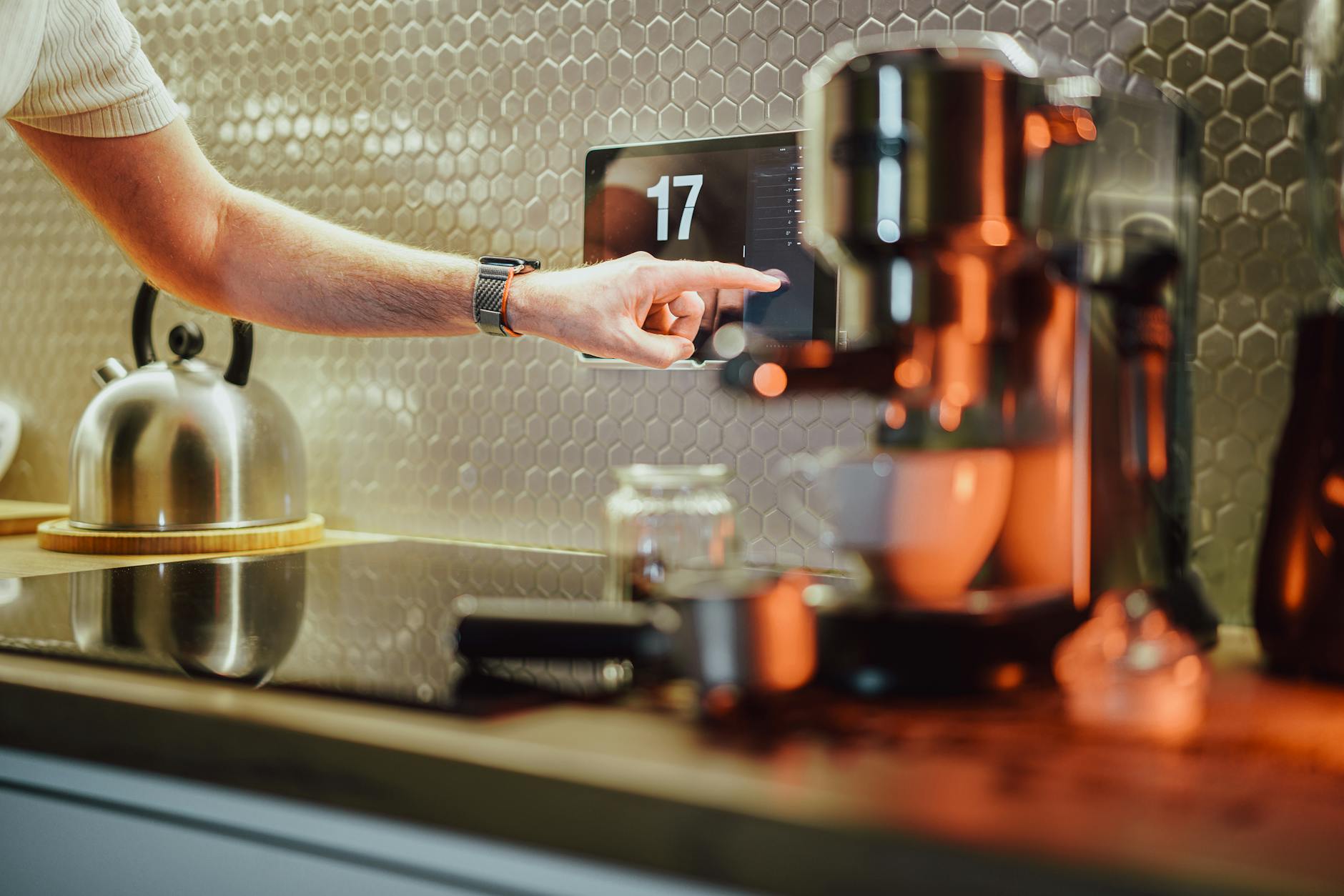
Navigating the world of smart kitchen gadgets can be tricky, with promises of efficiency and innovation. Many budget-friendly options deliver, genuinely saving time or reducing energy consumption, while others are simply fads destined for the back of the cupboard. My focus always lies on practical utility and long-term value, assessing whether a gadget truly enhances your home’s workflow or just adds clutter.
⚡ In a Rush? Key Takeaways
- Air fryers like the Chefman 10-Quart Multifunctional unit offer energy savings of up to 50% for smaller meals compared to a full oven.
- High-quality kitchen scales, available for under $25, reduce food waste by ensuring precise ingredient measurements for consistent results.
- Ninja Creami machines, starting around $200, pay back their cost in 8-12 months versus frequent store-bought dessert purchases.
- Specialty gadgets like onion holders and pasta measurers are often unnecessary, costing $10-20 and duplicating the function of basic tools.
- ✅ Focus on multi-functional, energy-efficient appliances and precision tools that genuinely streamline cooking.
In 8 years of evaluating home appliances, I have found that the most valuable kitchen gadgets offer a tangible return on investment, either through energy savings, improved efficiency, or by genuinely eliminating a more expensive alternative. The market for smart kitchen gadgets is saturated with devices touting convenience, but many fail to deliver on economic benefits.
Which Budget Smart Kitchen Gadgets Offer Real Value?
Budget-friendly smart kitchen gadgets that are truly worth buying often excel in energy efficiency, precision, or offer multi-functional utility for under $250.
When considering any new kitchen gadget, my primary criteria are always energy efficiency, reduction in food waste, and overall impact on the household budget. Many seemingly simple and affordable items can make a significant difference over time, while others quickly become redundant.
Do Air Fryers Actually Save Money and Energy?
Yes, air fryers can save both money and energy, particularly for smaller portions, using 1.2-1.8 kWh per hour versus 2-3 kWh for a conventional oven.
Air fryers have evolved from a niche appliance to a kitchen staple for many, and for good reason. They are essentially compact convection ovens that circulate hot air rapidly, leading to quicker cooking times and often a crispier finish with less oil. This speed translates directly into energy savings for many everyday tasks. A Chefman 10-Quart Multifunctional Digital Air Fryer+, for instance, can be found for under $100 and offers significant energy benefits.
- Energy Consumption: An air fryer typically uses 1.2–1.8 kWh per hour. A conventional oven, however, uses 2–3 kWh per hour to heat up and maintain temperature.
- Cooking Time: Air fryers preheat much faster and cook smaller items more quickly than a traditional oven, reducing the total energy expenditure per meal for single servings or small family cooking.
- Versatility: Many budget air fryers now offer multiple functions, including roasting, baking, and dehydrating, making them a more cost-effective choice than buying separate appliances.
Are High-Quality Kitchen Scales a Smart Investment?
Absolutely. A quality kitchen scale, costing under $25, improves recipe accuracy, reduces food waste, and optimizes portion control for better budgeting.
While not flashy or “smart” in the digital sense, a reliable kitchen scale is one of the most budget-friendly and impactful gadgets you can own. Precision in ingredients, especially in baking, leads to more consistent and successful results, reducing the likelihood of wasted ingredients from failed recipes. For under $25, you can acquire a highly accurate digital scale that will last for years.
- Recipe Accuracy: Measuring by weight (grams or ounces) is far more accurate than by volume (cups) for predicting outcomes in baking and cooking.
- Food Waste Reduction: Precise measurement helps in using exactly what’s needed, preventing over-preparation or spoiling ingredients by incorrect conversions. This is a crucial element for reducing food waste in your kitchen.
- Portion Control: For managing dietary intake or meal prep, scales ensure consistent portion sizes, which can help in budgeting for groceries and managing overall food costs.
Does a Ninja Creami Justify Its Price for Desserts?
Yes, a Ninja Creami can offer significant cost savings for homemade ice cream, often paying for itself within 8-12 months compared to store-bought options.
The Ninja Creami, while not a tiny budget item (typically starting around $200), presents a compelling case for efficiency and cost savings if your household regularly consumes ice cream, sorbet, or milkshakes. By allowing you to create custom frozen treats from inexpensive ingredients, it dramatically reduces your expenditure on premium store-bought desserts or frequent trips to ice cream shops. I track cost per serving, not cost per hour.
- Ingredient Costs: Making ice cream from scratch with ingredients like milk, cream, and sugar is significantly cheaper than buying pre-made pints.
- Customization: Freedom to use fresh fruit, fewer additives, or dairy-free alternatives can appeal to specific dietary needs and preferences, preventing wasted expensive specialty products.
- Long-term Savings: If a family spends $20-$30 weekly on frozen desserts, a Creami could save over $1,000 annually, making the initial investment justifiable within a year.
Which Budget Smart Kitchen Gadgets Are Best Skipped?
Many budget smart kitchen gadgets are gimmicky, offering limited functionality or needlessly duplicating tasks better handled by existing, basic kitchen tools.
Not every innovative kitchen gadget genuinely adds value. Some are simply solutions in search of a problem, duplicating the functionality of a well-maintained kitchen knife or a pair of tongs. These often end up unused, contributing to kitchen clutter and being a waste of money.
Are Single-Purpose Onion Holders or Garlic Peelers Practical?
No. Single-purpose gadgets like onion holders or garlic peelers often cost $10-$20 and offer no real advantage over basic knife skills or manual methods.
Many gadgets promise to simplify mundane kitchen tasks, but often these are precisely the items that gather dust. An onion holder, for instance, aims to provide stability and even slicing. However, a sharp knife and proper technique — cutting an onion in half to create a stable, flat surface — is far more effective and doesn’t require an extra utensil to wash and store.
| Gadget Type | Claimed Benefit | Practical Reality (Cost vs. Utility) |
|---|---|---|
| Onion Holder | Safe, even slicing | A sharp knife and stable cutting board are superior and cost nothing extra. ($14 wasted) |
| Garlic Peeler (silicone tube) | Peels multiple cloves quickly | Crushing garlic with the flat of a knife is faster and requires no specialized tool. ($8 wasted) |
| Banana Slicer | Uniform banana slices | A knife creates identical results in seconds and is multi-functional. ($7 wasted) |
These tools often seem appealing in online ads but quickly lose their novelty. Instead of investing in numerous single-use gadgets, focus on cultivating fundamental skills that empower you to use fewer, more versatile tools efficiently. This approach not only saves money but also reduces kitchen clutter, making your cooking space more functional. Consider investing in a good knife sharpening system for maximum efficiency.
Are Pasta Measurers and Herb Strippers Worthwhile?
No. Pasta measurers and herb strippers are typically unnecessary, costing $5-$15, as visual estimation or manual methods are equally effective for most home cooks.
Some kitchen gadgets are so specific in their function that their utility becomes questionable outside of highly specialized use cases. A spaghetti measurer, for instance, aims to help portion pasta. However, with a little practice, eyeballing spaghetti portions for one or two servings is easily achievable, making the gadget redundant. Similarly, for most home cooking, stripping herbs by hand is a quick and satisfying task that doesn’t demand a dedicated tool.
- Pasta Measurers: These gadgets typically measure one to four servings of spaghetti. Most cooks quickly learn to estimate portions by hand, making the gadget superfluous.
- Herb Strippers: While they can efficiently remove leaves from stems for specific herbs, for the average home cook, a quick pull of the leaves by hand is sufficient and requires no cleanup of an additional item.
- Corn Kernalers: These tools claim to easily remove corn kernels from the cob. A sharp knife, however, performs the task perfectly well and is already a kitchen essential.
What About ‘Smart’ Gadgets That Duplicate Basic Functions?
Many “smart” gadgets that duplicate basic functions like toast don’t justify their higher costs, often adding minimal functionality while increasing energy demands.
The term “smart” is often appended to basic kitchen appliances, sometimes without a true benefit to efficiency or user experience. While some innovations are genuinely transformative, others simply add features like app connectivity to a toaster without improving its core function or reducing its energy footprint. A standard toaster, like the Zwilling Enfinigy, performs its fundamental task reliably without needing an internet connection.
- Connected Toasters: A toaster that connects to an app might offer custom settings but a manual dial achieves the same with less complexity and cost, using the same energy profile (0.5-0.7 kWh per toast cycle).
- “Smart” Mugs: These promise to keep beverages at a precise temperature. While convenient, the energy cost of continuously heating a small amount of liquid can add up, and a well-insulated thermos performs a similar function passively.
- Recipe-Following Gadgets: Some devices guide you through recipes step-by-step. While this can be helpful for novices, a tablet or smartphone can display recipes and often integrate with existing kitchen workflow systems for free.
Frequently Asked Questions About Smart Kitchen Gadgets
Many readers ask if smart kitchen gadgets genuinely save money, how energy-efficient they are, and which brands offer the best value for their investment.
Do ‘smart’ kitchen gadgets genuinely save money on utility bills?
Some smart kitchen gadgets, particularly energy-efficient air fryers or multi-cookers, can reduce utility bills by performing tasks faster or with less energy than larger appliances.
What is the typical lifespan for a budget smart kitchen gadget?
The lifespan for budget smart kitchen gadgets varies widely, but most should last 2-5 years; high-quality brands often last longer with proper maintenance.
Are budget multi-cookers worth the investment for small kitchens?
Yes, budget multi-cookers like the Instant Pot Pro are highly valuable for small kitchens, consolidating multiple appliance functions into one compact device for under $200.
How can I identify a truly useful kitchen gadget from a gimmick?
Focus on gadgets that serve multiple functions, replace a less efficient appliance, or solve a recurring problem without adding unnecessary complexity or cost.
Should I prioritize energy efficiency when buying kitchen gadgets?
Yes, prioritizing energy efficiency is crucial, as the running cost over an appliance’s lifespan often exceeds its purchase price, impacting your long-term budget.
Our Verdict on Budget Smart Kitchen Gadgets
Invest in multi-functional, energy-saving gadgets like air fryers or high-quality precision tools like kitchen scales, and bypass single-purpose, duplicated-function items.
Based on our efficiency data, budget-friendly kitchen appliances that replace less efficient methods or offer genuine multi-functionality consistently deliver real value. This is why our top picks in this category are versatile units like the Chefman Air Fryer and precise tools like a digital kitchen scale, which we’ve discussed above.
The marketplace for kitchen gadgets, particularly those branded as ‘smart,’ is always evolving. My ongoing evaluation consistently shows that the most impactful additions to any kitchen are those that provide tangible benefits in terms of time, energy, or money saved, without introducing unnecessary complexity or clutter. By approaching purchases with a critical eye towards long-term utility and actual cost of ownership, homeowners can build an efficient, budget-friendly kitchen that truly works for them.
Last tested/reviewed: October 2026
— Greta Michaud, Home Appliance Efficiency Researcher