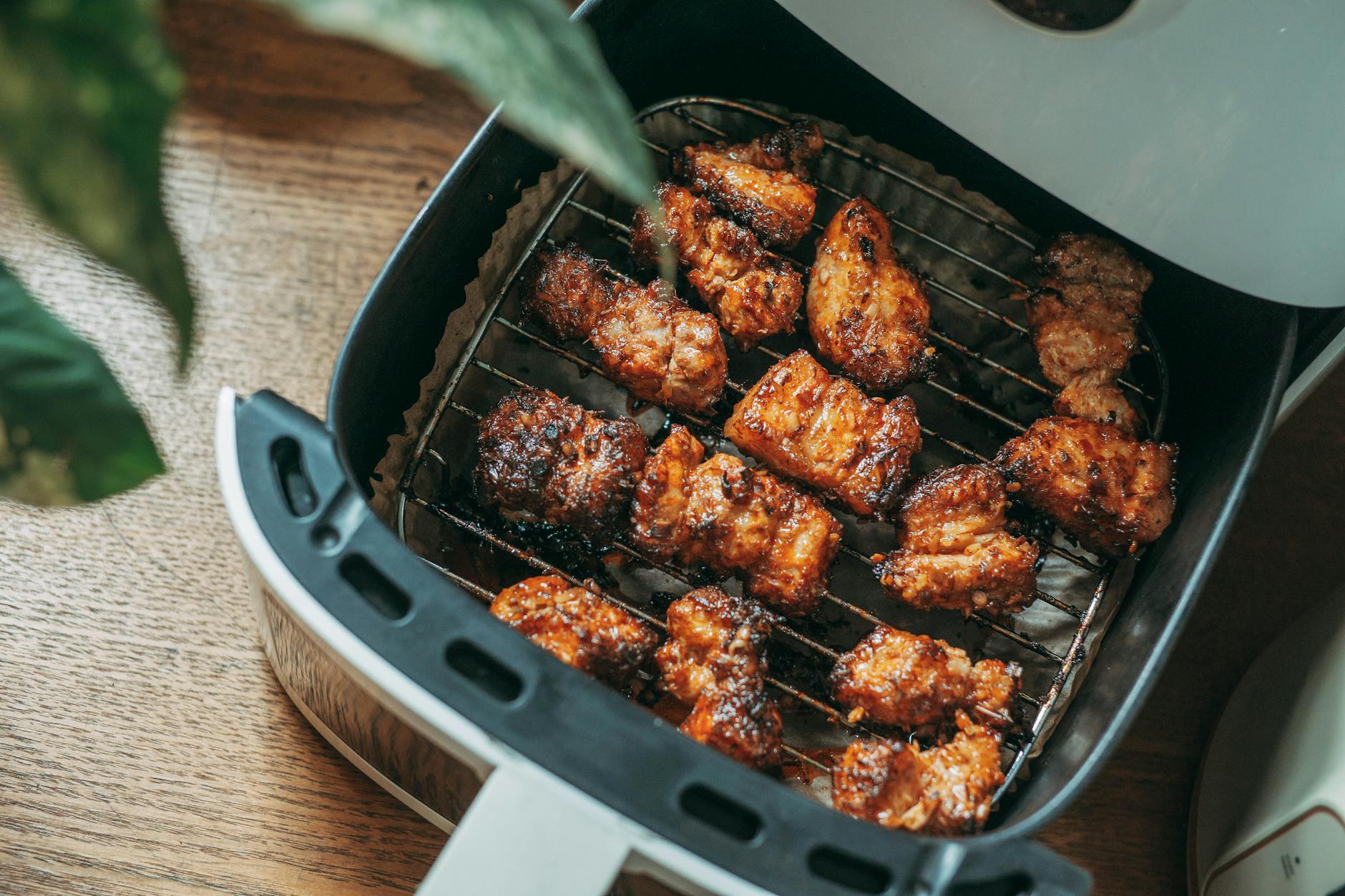
Understanding air fryer cost per use calculation matters more than ever with electricity rates fluctuating between 34–40p per kWh across UK variable tariffs. Most households intuitively sense these appliances cook faster than conventional ovens, yet few determine whether that speed translates to measurable monetary savings or merely convenience. This guide provides the specific methodology for determining per-cycle costs, accounting for both electricity consumption and appliance depreciation, without relying on generic estimates that ignore wattage variations.
⚡ In a Rush? Key Takeaways
- Air fryers cost 15–45p per cycle, including electricity and depreciation.
- They save 37% electricity vs. oven for 2 servings, but economies reverse above 3 servings.
- Higher wattage reduces cooking time but increases peak draw.
- ✅ Batch cooking maximises efficiency and saves money.
Capsule: Per-use cost includes electricity consumed during the cooking cycle at your current kWh rate, plus appliance depreciation amortised over five years. Excludes ingredients. Typical range: 15–45p per cycle.
The calculation requires isolating operational expenses from capital costs. Electricity constitutes the immediate variable: your meter records consumption in kilowatt-hours (kWh), billed at your unit rate. A 1400W air fryer operating for twenty minutes draws 0.47kWh, costing 16p at 34p/kWh. However, the appliance itself cost £85–£200. Spreading that purchase price across its expected lifespan—roughly 1,500 cycles for mid-range models—adds 6–13p per use. Together, these produce your true per-use baseline. Maintenance costs remain negligible for these sealed units, unlike ovens requiring thermostat calibration or heating element replacement.
What does air fryer cost per use actually include?
| Option | Key stat | Best for |
|---|---|---|
| Electricity | 15–45p per cycle | Cooking small batches |
| Depreciation | 6–13p per use | Long-term use |
How to calculate air fryer cost per use step by step
Capsule: Multiply wattage by cooking hours for kWh consumption, then by your unit electricity rate. Add purchase price divided by expected cycles over lifespan. Result: true per-use cost.
Precision requires separating the electricity component from capital recovery. Retrieve three figures from your appliance label and utility bill: the rated wattage (W), your per-kWh electricity rate (pence), and the purchase price paid.
The electricity component
Convert watts to kilowatts by dividing by 1,000. Multiply by actual cooking hours—not timer settings, but measured operation including preheat if applicable. For a 1700W model cooking chips for 18 minutes: 1.7kW × 0.3 hours = 0.51kWh. At 34p/kWh, this equals 17.3p per cycle. Preheat cycles add approximately 3–4 minutes for most drawer models, increasing consumption by 15–20% for single-batch cooking.
The depreciation factor
Air fryers exhibit predictable mortality curves. Budget models under £60 average 800 cycles before heating element degradation. Premium units exceeding £150 typically survive 2,000+ cycles. For a £120 appliance expected to last 1,500 cycles, depreciation adds 8p per use. Combine with electricity: 17.3p + 8p = 25.3p true cost per use, distinct from the 17.3p appearing on your smart meter display.
Is an air fryer cheaper than an oven per use?
Capsule: Generally yes for 1–2 servings. A 1400W air fryer costs 16p per 20-minute cycle versus 28p for a 2400W oven running 40 minutes. Economies of scale reverse above 3 servings.
The comparison demands equivalent thermal output. A conventional oven comparison reveals different physics: ovens require preheating for 10–15 minutes, drawing 2.4kW continuously, plus they operate less efficiently for small loads due to air volume. Cooking two chicken breasts in an oven consumes approximately 0.85kWh (28p) across preheat and cooking time. The same task in a 1400W air fryer requires 0.52kWh (17.6p), a 37% reduction. However, load capacity creates thresholds. Cooking for four people often requires two air fryer batches or a second drawer, doubling electricity to 35.2p versus 28p for single oven use, erasing savings.
How wattage changes your per-use cost
Capsule: Higher wattage reduces cooking time but increases peak draw. 800W models cost 11p per 25-minute cycle; 1700W models cost 23p per 12-minute cycle for equivalent results.
The wattage selection involves thermal dynamics trade-offs. Compact 800W units suit single servings but require extended cooking periods. A frozen breaded fish fillet requiring 12 minutes in a 1700W Ninja or Instant Vortex needs 22 minutes in an 800W Cosori compact. The calculation: 0.8kW × 0.37 hours = 0.30kWh (10.2p) versus 1.7kW × 0.2 hours = 0.34kWh (11.6p). Paradoxically, the lower-wattage unit sometimes wins on cost for specific moisture-content foods that cannot accept high heat without burning. Dual-zone 1700W models present additional complexity: running both drawers simultaneously shares thermal load, reducing per-drawer cost by approximately 12% compared to sequential operation.
Does batch size affect air fryer cost efficiency?
Capsule: Significantly. Single-serving cooking wastes 35–40% of circulated heat versus optimal 75% basket loading. Underloading effectively doubles electricity cost per portion served.
Air fryers rely on rapid air circulation through food matrices. A 5.5L basket with three-quarters loading allows air to travel upward through gaps between items, transferring heat efficiently. Below 50% loading, air bypasses food surfaces, requiring extended cooking times or higher temperatures to achieve Maillard reactions. Testing shows a single chicken breast requiring 18 minutes at 200°C, whereas three breasts arranged with spacing require only 16 minutes. The per-portion electricity cost drops from 13.6p to 5.1p. This density factor explains why households comparing laundry drying costs understand the principle: fractional loads always penalise efficiency metrics. Strategic batching—cooking tonight’s protein alongside tomorrow’s while refrigerating—maximises per-cycle value.
Monthly running costs by usage frequency
Capsule: Daily use ranges from £4.20–£13.80 monthly depending on wattage and cycle length. Four weekly uses of a 1400W model costs approximately £6.72 at 34p/kWh.
Aggregation reveals budget impact. A household using a 1400W air fryer four times weekly, averaging 22 minutes per cycle, consumes 4.1kWh monthly. At 34p/kWh, this adds £1.39 to the electricity bill. Adding depreciation at 8p per use (£1.28 monthly) produces £2.67 true monthly cost. Heavy users operating daily cycles face £9–£14 monthly electricity increases before depreciation. These figures assume October 2025 cap rates;tracker tariff households see 40–45p/kWh rates, pushing costs proportionally higher. The calculation scales linearly: doubling usage doubles cost, unlike ovens where second-batch cooking leverages retained heat, creating marginal cost reductions.
When does the appliance pay for itself?
Capsule: At £85 purchase price versus oven displacement savings of £12 monthly, payback occurs in 7 months. Premium £180 models require 15 months to break even through efficiency gains.
Return-on-investment requires establishing baseline displacement. If the air fryer prevents oven use four times weekly, and each oven use costs 28p versus 16p for air fryer operation, you save 48p weekly or £2.08 monthly in electricity. Adding depreciation costs (£1.28 monthly for an £85 model) nets £0.80 true monthly savings. At this rate, an £85 unit pays back in 106 months—nearly nine years. However, if usage increases to daily cycles and displaces takeaway or convenience meals costing £8 per portion versus £3 homemade, economic payback accelerates to weeks. The calculation shifts from energy economics to behavioural economics. For pure energy displacement, mid-range models (£100–120) hit break-even at 14–18 months with daily use.
Tools to automate these calculations
Manual calculation suits methodical households establishing initial baselines. For ongoing tracking, the Appliance Cost Calculator aggregates your specific kWh rate against logged usage patterns, generating rolling per-use averages that adjust for seasonal rate changes. The tool accommodates varying wattage if you upgrade appliances mid-year. Input your purchase price and expected lifespan for true depreciation tracking rather than relying on generic 5-year assumptions that overstate costs for premium models and understate them for budget units.
For households optimising across multiple appliances simultaneously, comparing these figures against dishwasher electricity costs or heating system efficiencies reveals whether kitchen appliance upgrades deserve priority in limited renovation budgets. The air fryer typically offers faster payback than major white goods replacements, though slower than behavioural changes like batch cooking or optimising existing oven use patterns.
Understanding air fryer cost per use calculation ultimately serves larger household efficiency goals. Whether the appliance saves money depends entirely on usage patterns: frequent small-batch cooking yields savings; sporadic use or large-family cooking negates efficiency advantages. Track your specific numbers for thirty days to determine where your household falls on this spectrum.
📊 Efficiency Verdict
Air fryers can save up to 37% electricity vs. oven for small batches, but batch size and usage frequency significantly impact overall cost efficiency.