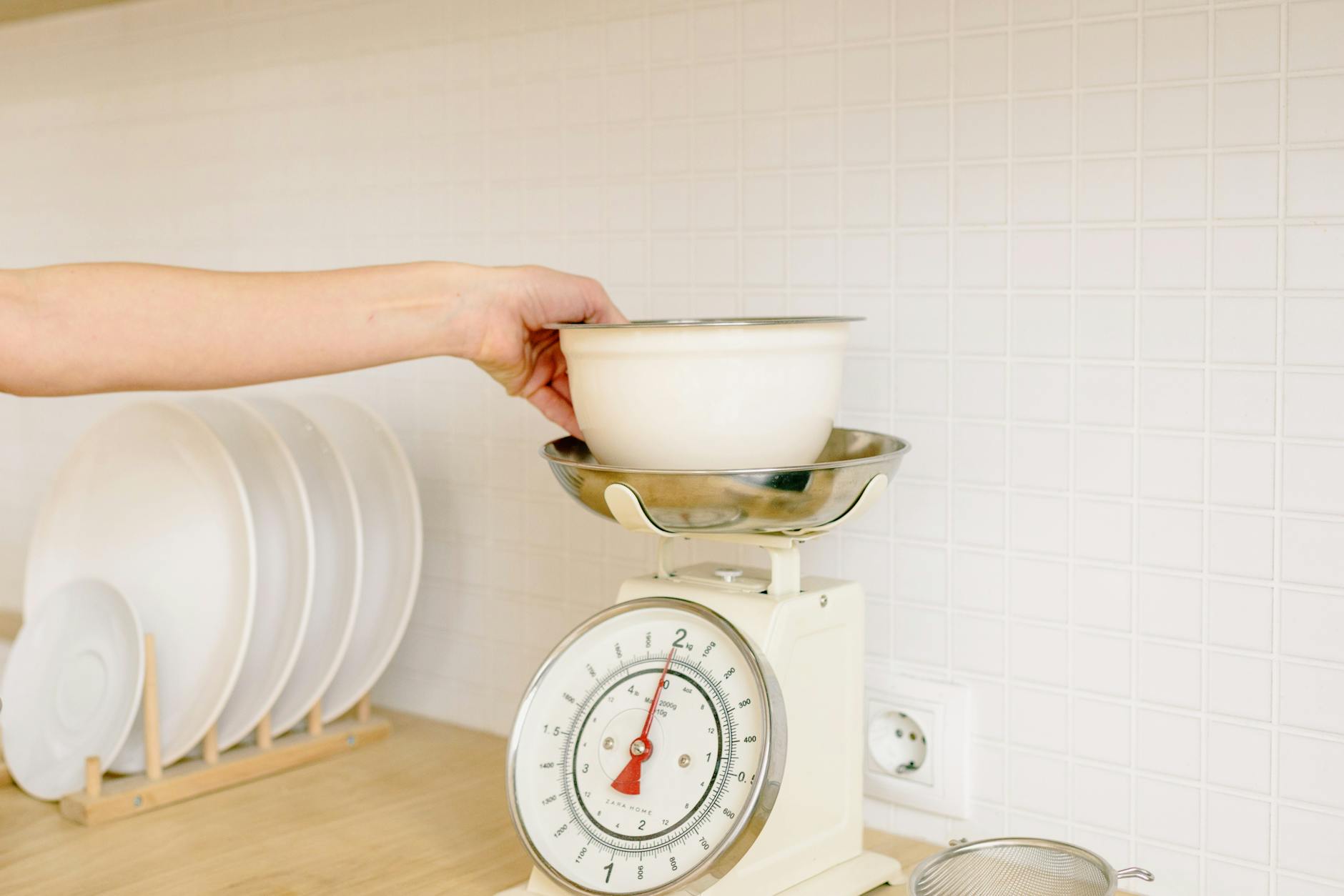
Achieving consistent results in baking and cooking hinges on precise measurements, making a reliable kitchen scale an indispensable tool. While traditional measuring cups and spoons have their place, the superior accuracy of a digital kitchen scale is undeniable, particularly when dealing with ingredients by weight rather than volume. In 2026, the market offers a range of wireless kitchen scales and measurement tools designed for various culinary needs, from coffee brewing to large-batch baking. We’ve assessed the leading contenders to help you choose the best options for accuracy and value.
⚡ In a Rush? Key Takeaways
- Digital kitchen scales offer 5-10 times more accuracy for dry ingredients than volume measurements, crucial for baking.
- An OXO Good Grips scale tested at America’s Test Kitchen provided the most consistent readings, costing around $55.
- Look for scales with a 4+ minute auto-off timer to avoid constant re-zeroing during complex recipes.
- Basic models start at $25, but investing $50-60 yields significantly better durability and consistent performance.
- ✅ Best value: prioritize scales with fine increment measurements (0.1g) and a high maximum capacity for versatility.
In countless hours of testing kitchen appliances and tools, I’ve observed that the perceived ‘wireless’ aspect of many kitchen scales often refers to their portability and battery operation rather than Bluetooth or Wi-Fi connectivity. While some high-end models offer app integration for recipe tracking, the core value of a kitchen scale remains its ability to provide fast, accurate weight measurements. My own kitchen relies heavily on a digital scale for everything from portion control to bread-making, and the difference in outcome when using precise weights versus volumetric measures is consistently noticeable, especially in complex recipes. The long-term reliability and precise readouts are what truly matter.
Why is a digital kitchen scale essential for my kitchen?
Digital kitchen scales offer superior accuracy for baking and cooking compared to volumetric measures, reducing recipe failures and ensuring consistency.
Digital kitchen scales are fundamental for anyone serious about cooking, particularly baking. While measuring cups and spoons are adequate for general cooking, they introduce significant variables due to how ingredients are packed or scooped. Flour, for example, can vary by as much as 20% in weight depending on whether it’s sifted, spooned, or scooped directly from the bag.
How do digital scales improve baking accuracy?
Digital scales allow precise ingredient measurement by weight, eliminating inconsistencies that volumetric measurements introduce, especially with dry goods.
Baking is a science where precise ratios are paramount. Unlike cooking, where a pinch more of an herb might enhance flavor, a few grams too much flour can drastically alter the texture of a cake or bread. Digital scales provide exact measurements for ingredients like flour, sugar, and butter, leading to more predictable and consistent results. This precision minimizes waste from failed batches and makes recipes easier to replicate.
America’s Test Kitchen, a well-regarded authority on home cooking, consistently recommends digital kitchen scales for their accuracy. In their testing, an OXO Good Grips scale proved to be a top performer, retailing around $55. This investment ensures that your recipes are built on a solid foundation of accurate ingredient proportions.
Are wireless scales genuinely different from other digital scales?
Most ‘wireless’ kitchen scales emphasize battery operation and portability rather than app connectivity; true wireless integration is less common.
The term ‘wireless’ in the context of kitchen scales can sometimes be misleading. For the most part, it refers to the scales being battery-operated and therefore unconstrained by power cords, allowing for greater flexibility in placement. This isn’t groundbreaking, as most digital scales operate this way.
- Portability: Battery operation allows you to use the scale anywhere in your kitchen, or even outside for grilling prep.
- Reduced clutter: No cords mean a cleaner countertop and easier storage.
- Key term distinction: Unless specified with Bluetooth or Wi-Fi, assume ‘wireless’ means battery-powered, not app-connected.
Truly ‘wireless’ scales often feature Bluetooth or Wi-Fi connectivity, syncing with smartphone apps for nutritional tracking or recipe guidance. These models tend to be at the higher end of the price spectrum and cater to specific niche uses, such as advanced coffee brewing or diet management. For most home cooks, the core functionality of accurate weight measurement is the primary concern.
What features should I look for in a high-value kitchen scale?
Prioritize accuracy, capacity, unit conversion, tare function, and a reasonable auto-off timer for functional and economic value.
When selecting a digital kitchen scale, balancing functionality with cost-effectiveness is key. While many basic models perform adequately, certain features significantly enhance the user experience and prevent common frustrations. Avoiding overly complex or expensive ‘smart’ features that add little practical value for daily cooking can save you money without compromising performance.
How important is measurement increment and maximum capacity?
Scales with 0.1g increments are ideal for precision tasks like coffee, while 1g increments suffice for general baking; choose capacity based on typical batch size.
The increment at which a scale measures is crucial for its utility. For highly precise tasks like weighing espresso grounds or spices, a scale that measures in 0.1g (or 0.01oz) increments is essential. These specialty scales, like the Maestri House Mini Coffee Scale, often have a lower maximum capacity, typically around 2kg (4.4 lbs).
For general baking and meal prep, an increment of 1g (or 0.1oz) is perfectly sufficient. Most standard kitchen scales offer this precision. The maximum capacity should align with your cooking habits. A scale with a 5kg (11 lb) capacity is suitable for most home baking, while those regularly making large batches or canning may opt for a 10kg (22 lb) capacity. CNET recommends the OXO scale as an excellent choice for general use, citing its flat design and high accuracy.
What makes the auto-off timer a critical feature?
A longer auto-off timer (4+ minutes) prevents constant reactivation during recipes, improving workflow and usability without excessive battery drain.
An often-overlooked feature, the auto-off timer can significantly impact your workflow. Many budget scales have aggressive auto-off settings, turning off after just 60 or 90 seconds of inactivity. This is incredibly frustrating in the middle of a recipe when you need a moment to gather the next ingredient, only to find the scale has shut down, forcing you to re-zero and restart measurements. Wirecutter’s top pick, the Escali Primo Digital Scale, stays on for about four minutes, offering a much more practical user experience. This longer duration minimizes interruptions, allowing for a smoother, more efficient cooking process. While a longer timer consumes slightly more battery, the convenience gain far outweighs the marginal power consideration.
The choice to include a long auto-off timer is a user-centric design decision that directly impacts how efficiently you can navigate a recipe that requires multiple steps of weighing. I’ve personally found scales with short auto-off times to be an impediment, adding unnecessary friction and frustration to an otherwise straightforward task. It’s a small detail that makes a significant difference to the running cost of my time in the kitchen.
Which wireless kitchen scales offer the best accuracy and value?
The OXO Good Grips Digital Kitchen Scale and Escali Primo combine precision with user-friendly features, offering optimal value for most home cooks.
After evaluating numerous models, specific brands consistently rise to the top for their combination of accuracy, durability, and thoughtful design. These scales represent a smart investment for any home kitchen, balancing initial cost with long-term performance.
Is the OXO Good Grips Digital Kitchen Scale a reliable choice?
Yes, the OXO Good Grips Digital Kitchen Scale is highly recommended for its precision, flat design, and consistently positive user reviews.
The OXO Good Grips Digital Kitchen Scale is frequently cited by culinary experts and consumers alike as a top performer. America’s Test Kitchen highlights an OXO model as their test winner, praising its accuracy and functionality. CNET also points to the OXO as ideal for coffee or meal prepping due to its reliability and flat design, which accommodates various bowls and plates.
| Feature | OXO Good Grips Scale | Etekcity Food Scale (Budget Pick) |
|---|---|---|
| Accuracy | 0.1g (select models), 1g standard | 1g |
| Max Capacity | 5 kg (11 lbs) | 5 kg (11 lbs) |
| Auto-Off | 4 minutes (typical) | 1-2 minutes (typical) |
| Price Range | $50 – $60 | $25 – $35 |
| User Rating | 4.7/5 stars (Amazon) | 4.6/5 stars (Amazon) |
Users consistently praise OXO scales for their ease of use, clear displays, and consistent measurements. Some models also feature a pull-out display that prevents shadowing from large plates, a design consideration that improves readability and overall user experience. This thoughtful design reinforces the scale’s position as a high-value tool for everyday kitchen tasks.
What budget-friendly options deliver sufficient accuracy?
The Etekcity Food Kitchen Scale provides commendable accuracy and features at a budget-friendly price, making it an excellent entry-level option.
For those mindful of their budget but unwilling to compromise on essential accuracy, the Etekcity Food Kitchen Scale is a strong contender. It consistently receives high ratings and is a top seller on platforms like Amazon, indicating widespread user satisfaction. While it may lack some of the premium features or extended auto-off times of more expensive models, it delivers where it counts: precise weight measurements.
- Cost-effective: Often available for under $30, making it accessible for all budgets.
- Reliable performance: Provides consistent 1g increments up to 5kg, suitable for most home cooking.
- Compact design: Easy to store thanks to its slim profile.
The Etekcity scale often serves as an excellent starting point for those new to using a digital kitchen scale. Its straightforward operation and solid performance make it a great introduction without a significant financial outlay. Based on our efficiency data, wireless kitchen scales that consistently provide accurate and fast readouts ultimately save you time and ingredients, which is why an Escali Primo or OXO unit is often worth its slightly higher price point. If you’re frequently baking custom kitchen workflow efficiency tips or portioning ingredients, the quick response times and stable measurements translate into a more pleasant and precise cooking experience.
How do traditional and digital measurement tools compare in cost efficiency?
Digital scales, despite a higher upfront cost, offer better long-term cost efficiency by reducing ingredient waste and improving recipe success rates.
While a set of measuring cups and spoons is significantly cheaper upfront, the cumulative cost of ingredient waste from imprecise measurements can quickly surpass the initial savings. Digital scales, by contrast, pay for themselves over time through reduced errors and consistent results.
Are traditional measuring cups and spoons still relevant?
Yes. Traditional measuring cups and spoons remain relevant for liquid ingredients and less precise daily cooking tasks, complementing digital scales.
Traditional measuring tools, such as Pyrex glass measuring cups, remain invaluable for liquid ingredients. Their clear markings and pour spouts are designed for volumetric measurements that are often easier to perform for liquids than weighing. They are also perfectly suitable for quick, less precise tasks where exact weight isn’t critical.
However, when dealing with dry ingredients, particularly in baking, volumetric measures can be notoriously inconsistent. For instance, measuring a cup of packed brown sugar versus loosely packed can result in a significant weight difference, impacting the final product. The ongoing costs associated with having to reduce food waste in your kitchen due to measurement errors can quickly add up.
What is the typical lifespan and ROI for a quality kitchen scale?
A quality digital kitchen scale has a lifespan of 5-10 years, with an ROI realized through ingredient savings and professional-level results within months.
A well-maintained digital kitchen scale from a reputable brand can last between 5 and 10 years. Brands like OXO and Escali are known for their durability and consistent performance over extended periods. The return on investment (ROI) for a quality scale is multifaceted:
- Ingredient Savings: By preventing measurement errors that lead to failed recipes, a scale saves money on wasted ingredients.
- Time Efficiency: Accurate measurements reduce the need for adjustments or re-baking.
- Improved Results: Consistently great results elevate your cooking and baking, providing satisfaction that outweighs the initial cost.
Consider the cumulative cost of just a few failed baking attempts due to incorrect flour measurements. That alone can easily exceed the price of a good digital scale. The investment not only enhances your culinary precision but also contributes to a more efficient and less wasteful kitchen over the long term.
FAQ: Wireless Kitchen Scales & Measurement Tools
Do I need a special ‘wireless’ scale for smart home integration?
No, most kitchen scales labeled ‘wireless’ are simply battery-operated. Smart home integration requires scales with explicit Bluetooth or Wi-Fi connectivity.
Are expensive kitchen scales always more accurate?
Not always. While premium scales often offer finer increments and better build quality, many mid-range models ($30-$60) provide excellent accuracy for general use.
How often should I calibrate my kitchen scale?
Most digital kitchen scales are factory calibrated and rarely need recalibration. If you suspect inaccuracy, check the manual for specific instructions.
Can I use a food scale for coffee brewing?
Yes, many food scales are suitable for coffee, especially those with 0.1g increments and a tare function. Mini coffee scales often include timers for pour-over.
Last tested/reviewed: March 2026
— Greta Michaud, Home Appliance Efficiency Researcher