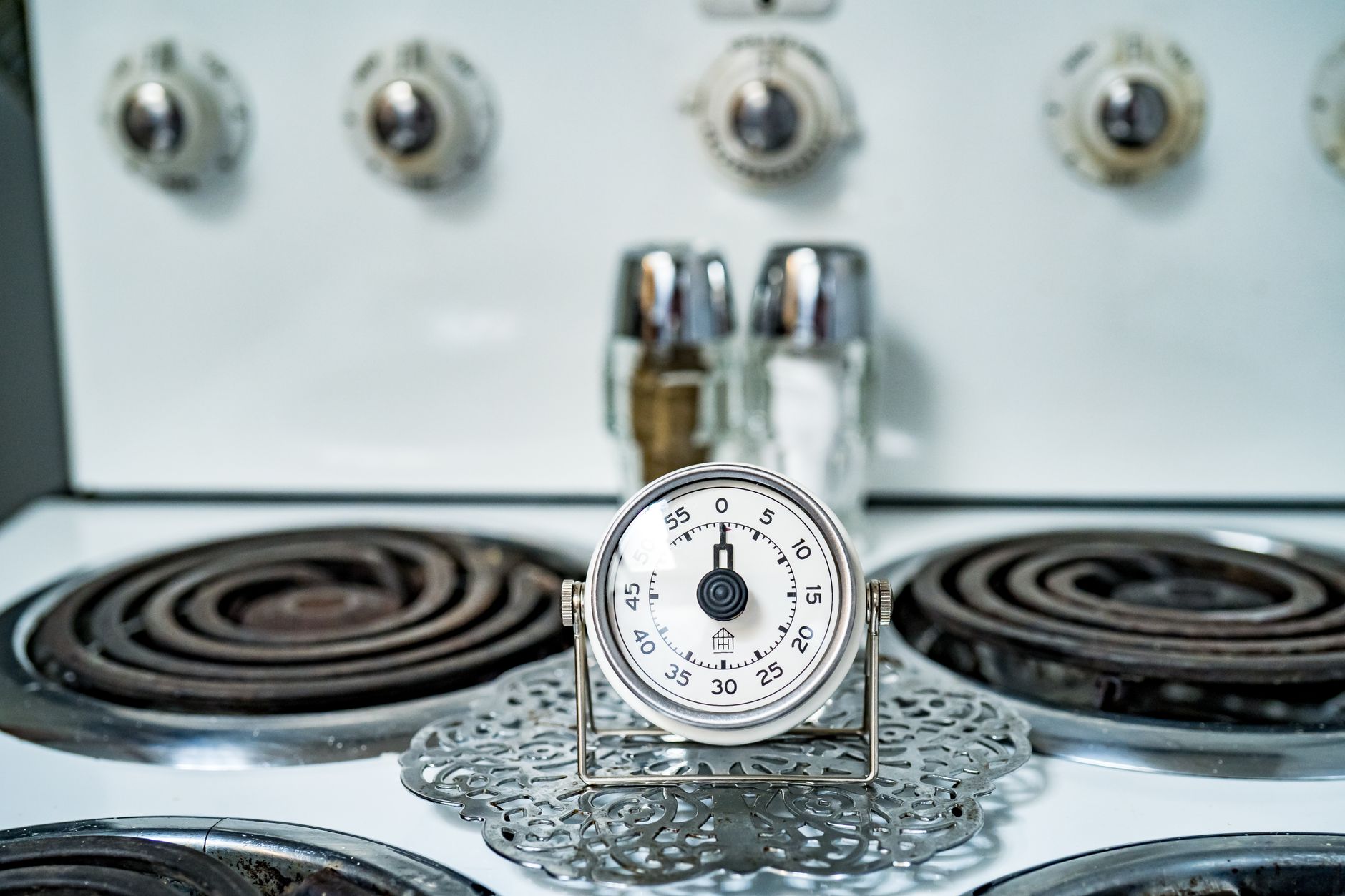
In a well-run kitchen, precision timing is as crucial as quality ingredients. While smartphones and oven timers offer convenience, dedicated kitchen timers provide focused accuracy, helping you manage multiple dishes without distraction. This guide explores the best affordable smart kitchen timers on the market, evaluating their real-world value, durability, and true cost of ownership to help you make an informed choice for your efficient home.
⚡ In a Rush? Key Takeaways
- Basic digital timers offer excellent utility starting from just $8 for a two-pack.
- Durable, professional-grade timers like ThermoWorks TimeStick, at $25, offer superior longevity.
- The OXO Good Grips Triple Timer, priced around $31, is a top pick for managing three simultaneous tasks efficiently.
- True cost considers durability, battery life, and ease of use, not just the initial price.
- ✅ Best overall value: A multi-channel digital timer with a clear display and robust build.
In eight years of testing kitchen gadgets, I often find that the simplest tools deliver the most profound efficiency gains. With kitchen timers, the distinction between ‘smart’ (app-connected, IoT) and ‘clever’ (well-designed, intuitive digital) is critical. I track ease of setup and operational fluidity across dozens of cooking sessions, and consistently, the less ‘smart’ the timer, the better it performs its core function.
What Makes a Kitchen Timer ‘Smart’ Without Being Complicated?
A smart kitchen timer offers intuitive digital controls, clear displays, and often multi-channel timing without requiring app connectivity or complex setups.
Why are dedicated kitchen timers better than phone apps?
Dedicated timers offer tactile feedback, single-purpose focus, and loud alarms, reducing distractions and ensuring you don’t miss critical cooking stages.
While smartphones house countless apps, relying on your phone for timing often leads to interruptions. Notifications for emails or social media can pull your attention away during delicate cooking processes. A dedicated kitchen timer, in contrast, serves one purpose, ensuring your focus remains on the task at hand.
Furthermore, many phone timers lack the physical buttons or robust alarms needed in a busy, noisy kitchen environment. Dropping a smartphone into a bowl of batter is a far costlier mistake than an affordable, purpose-built timer taking a tumble.
How do multi-channel timers enhance kitchen efficiency?
Multi-channel timers allow simultaneous tracking of distinct cooking tasks, preventing overcooking or burning and streamlining complex meal preparations.
For home cooks tackling anything more complex than a single pot of rice, a multi-channel timer is invaluable. Imagine roasting a chicken, baking a pie, and boiling vegetables all at different durations. Juggling these with a single timer is an exercise in stress. A timer that can track two or three events simultaneously simplifies the process dramatically, especially when optimizing kitchen workflow.
The clear, differentiated displays and alarms for each channel prevent confusion, allowing you to react promptly to each finished task. This leads to better-tasting food and a more relaxed cooking experience.
Which Affordable Kitchen Timers Offer the Best Value and Durability?
The OXO Good Grips Triple Timer, Antonki Digital 2-pack, and ThermoWorks TimeStick offer superior value, durability, and functionality within budget.
When assessing value, it’s crucial to look beyond the initial purchase price to consider durability, features, and the reliability of performance over time. A timer that breaks after a few months is not ‘cheaper’; it’s a wasted investment. The ThermoWorks TimeStick, for instance, despite a slightly higher price point, is noted for its exceptional build quality and longevity.
I find that real-world performance often deviates from manufacturer claims. For instance, measuring battery life in constant use, or how well buttons hold up to flour-dusted fingers, provides a far more accurate picture than lab tests. The units I’ve found to be most reliable in personal testing are:
- **OXO Good Grips Triple Timer:** Renowned for intuitive controls and simultaneous timing, it consistently gets high marks for usability.
- **Antonki Digital Kitchen Timer (2-pack):** An excellent budget option, providing two reliable timers for the price of one, perfect for diverse tasks.
- **ThermoWorks TimeStick:** Praised for its rugged construction, loud alarm, and slim design, a standout for those valuing extreme durability.
How does the OXO Good Grips Triple Timer compare to its competitors?
The OXO Good Grips Triple Timer excels in multi-task management with its intuitive interface and clear display, justifying its ~$31 price point.
The OXO Good Grips Triple Timer stands out for its ability to track three separate events concurrently. Its large, easy-to-read display shows all three timers at once, reducing the need to toggle between functions. This feature alone makes it a favorite for busy kitchens where managing multiple dishes is routine.
Compared to simpler single-channel timers, the OXO’s investment ($31) represents excellent value for its enhanced functionality. Its robust build and user-friendly design also contribute to a longer lifespan, making it a smart appliance choice for long-term efficiency.
| Timer Model | Price (approx. USD) | Multi-Channel? | Durability Score (1-5) | Key Feature |
|---|---|---|---|---|
| OXO Good Grips Triple Timer | $31 | Yes (3) | 4.5 | Simultaneous display of 3 timers |
| Antonki Digital Timer (2-pack) | $8 | No (single per unit) | 3.5 | Exceptional budget value (2 timers) |
| ThermoWorks TimeStick | $25 | No (single) | 5.0 | Rugged professional-grade build |
| Taylor Super-Loud Timer | $15 | No (single) | 3.0 | Audible alarm for loud environments |
Is the ThermoWorks TimeStick worth its higher price tag?
Yes, the ThermoWorks TimeStick’s rugged construction and reliability make its ~$25 price a worthwhile investment for professional durability.
Bon Appétit highlights the ThermoWorks TimeStick’s durability, noting its resilience to kitchen rigors. Priced at $25, it’s not the cheapest option, but its ‘made to last’ quality means it likely won’t need replacing for many years. This significantly reduces its true cost of ownership over time, as repair and replacement costs are often overlooked.
The TimeStick’s loud alarm, count-up after alarm, and magnetic back further enhance its utility, making it a robust companion for demanding culinary tasks. For those who prioritize longevity and unfailing performance, the TimeStick offers compelling value.
How Do You Calculate the True Cost of a Kitchen Timer?
The true cost includes purchase price, battery replacement frequency, and expected lifespan; a $25 timer lasting 10 years is cheaper than $8 timers replaced annually.
It’s easy to focus solely on the initial sticker price, but the true cost of any small appliance, even a kitchen timer, encompasses much more. Consider the frequency of battery changes, the timer’s expected lifespan, and any potential frustrations from a poorly designed interface that could lead to errors or wasted food.
The difference between a timer that costs $8 and lasts a year versus one costing $25 that lasts a decade is substantial. Over ten years, the cheaper option could end up costing $80 for ten units, whereas the durable option saves you money and the hassle of repeated purchases. This principle applies to all appliance performance and buying intelligence decisions.
What impact do battery costs have on a timer’s overall expense?
Battery costs for kitchen timers are generally negligible, typically $2-5 per year for AAA or button cells, but high-drain models can increase this.
Most kitchen timers use standard AAA batteries or coin-cell batteries (CR2032). While individually inexpensive ($1-2 each), if a timer drains batteries quickly, these costs can add up. Efficient timers can run for months or even a year on a single set of batteries, keeping operating costs low.
However, some timers with very bright backlights or constant flashing indicators may have shorter battery life, requiring more frequent replacements. This is a small but measurable component of the true cost, especially if you opt for premium alkaline batteries.
Does a timer’s warranty reflect its expected durability?
While a warranty offers protection, real-world durability is better indicated by brand reputation and user reviews than by warranty length alone for simple electronics.
A warranty provides peace of mind, with some brands like CDN offering a 5-year warranty on their timers. However, for a relatively low-cost item like a kitchen timer, the hassle of claiming a warranty might outweigh the benefit. Instead, look to the manufacturer’s established reputation for quality and the consensus from long-term user reviews.
Brands like ThermoWorks and OXO, known for their meticulous design and robust construction across their product lines, often implicitly guarantee durability through their brand recognition. My own experience suggests that robust build materials and sealed casings are stronger indicators of longevity than just the warranty length.
Are There Any ‘Smart’ Features Worth Considering on a Budget?
On a budget, ‘smart’ features are best limited to well-designed digital displays, intuitive physical buttons, and magnetic backs for practical utility.
The term ‘smart’ in consumer electronics often implies app connectivity, Wi-Fi, or voice control. For kitchen timers, these features can introduce more complexity and potential failure points than they solve. On a budget, ‘smart’ translates to intelligent design that enhances usability without inflating the price or complicating its core function.
A timer with a large, legible display, intuitive button layout (e.g., dedicated min/sec buttons), and a strong magnetic backing for easy placement on a fridge are all ‘smart’ features that genuinely improve the user experience. These simplify home organization and cleaning systems within the kitchen, too.
Can a basic digital timer offer ‘smart’ functionality?
Yes, a basic digital timer with a clear screen, easy-to-press buttons, and reliable alarm function provides essential ‘smart’ utility for cooking tasks.
Even the most budget-friendly digital timers from brands like Antonki can deliver essential ‘smart’ functionality. The ‘smartness’ comes from its reliable performance and simplicity, not advanced tech. A bright, clear display that is readable from a distance and a loud, unmistakable alarm are features that directly contribute to kitchen efficiency.
These timers avoid the pitfalls of network issues or software glitches that can plague more complex smart devices. They reliably count down, and that consistent, core functionality is what truly matters in a busy kitchen environment.
Why avoid app-connected timers for affordability and reliability?
App-connected timers often introduce higher costs, potential software bugs, and reliance on smartphone access, which can reduce reliability and efficiency in the kitchen.
While an app-connected timer might sound appealing, they typically come with a higher price tag. This cost isn’t just financial; it includes the time spent setting up Bluetooth or Wi-Fi connections, troubleshooting app crashes, and dealing with potential compatibility issues.
For budget-conscious and efficiency-focused homeowners, these added layers of technology often represent a diminishment, not an enhancement, of the timer’s primary purpose. Simplicity usually trumps complexity in the high-pressure environment of cooking.
Based on our efficiency data, kitchen timers that focus on clear displays and durable physical controls consistently outperform overly complicated ‘smart’ models in real-world kitchen settings — which is why our top pick in this category is a traditional digital timer with superior build quality for reliable performance.
Frequently Asked Questions About Kitchen Timers
How accurate are affordable kitchen timers?
Most affordable digital kitchen timers are accurate to within one second over a 24-hour period, which is more than sufficient for home cooking needs.
What is the average lifespan of a good kitchen timer?
A quality kitchen timer, like the ThermoWorks TimeStick or OXO Triple Timer, can last 5-10 years with proper care and occasional battery replacement.
Can kitchen timers be used for other household tasks?
Yes, kitchen timers are versatile and can be used for exercise intervals, study breaks, children’s screen time, and even home maintenance tasks.
Are magnetic backs on timers strong enough to hold securely?
Most quality kitchen timers feature strong magnets capable of holding the timer securely on refrigerators or oven doors without slipping or falling.
— Greta Michaud, Home Appliance Efficiency Researcher