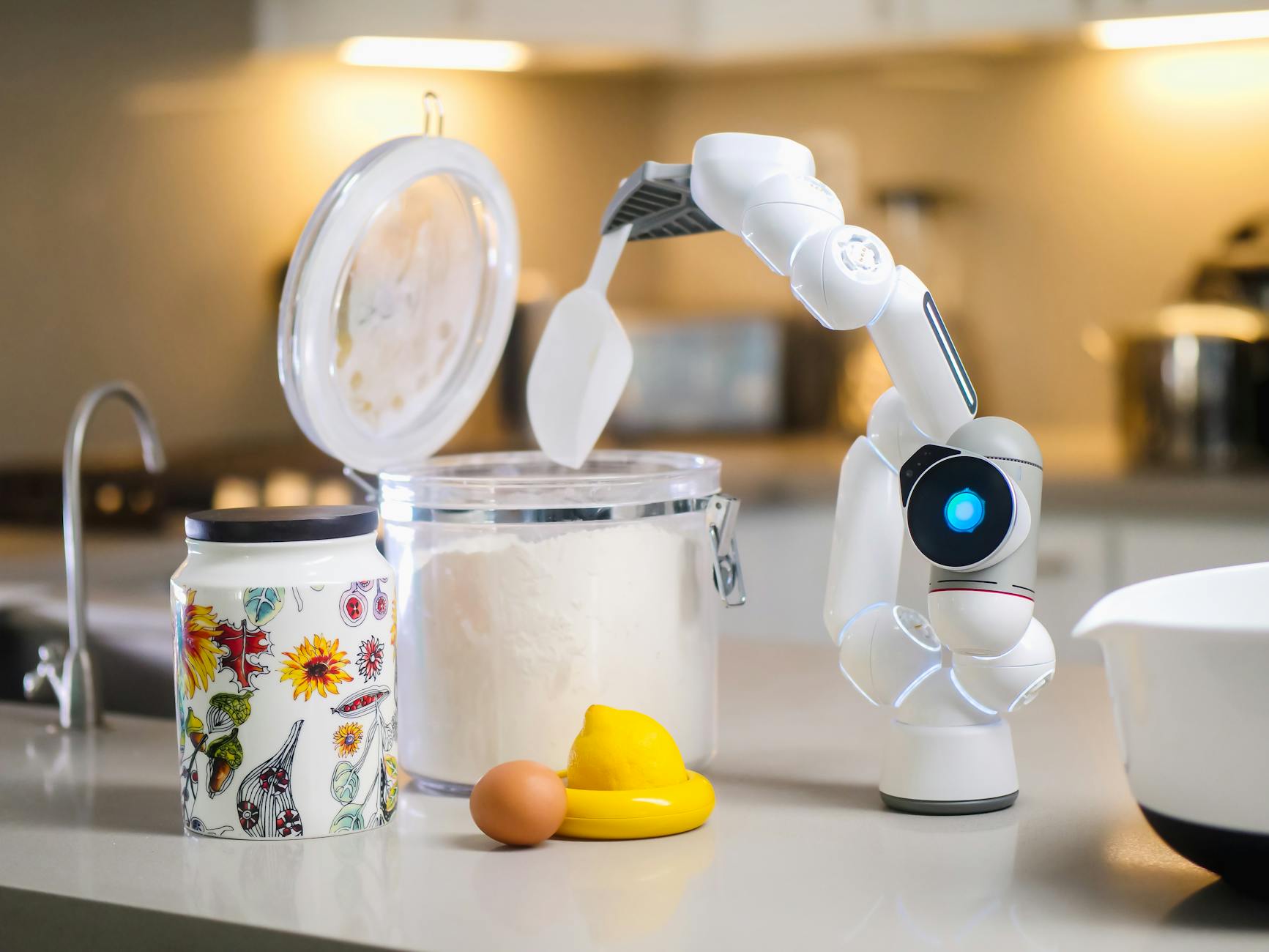
When modernizing a kitchen, homeowners often weigh the appeal of smart appliances against the familiarity and lower upfront cost of traditional cooking methods. This comparison focuses on the financial and energy efficiency implications of each choice. Understanding the true cost of ownership—beyond the initial purchase price—is crucial for making an informed decision that benefits both pocketbook and culinary efficiency.
⚡ In a Rush? Key Takeaways
- Smart appliances carry a 20-50% higher upfront cost compared to traditional models, averaging $150-$500 more per unit.
- Smart dishwashers and ovens can reduce utility bills by optimising energy and water use, potentially saving $20-$70 annually per appliance.
- Over a 10-year lifespan, the running cost savings of a smart refrigerator can exceed its initial price premium.
- Initial setup and learning curve for smart tech adds 1-3 hours of user time not required for traditional setups.
- ✅ Best value: Invest in smart appliances for high-usage items like refrigerators and dishwashers for long-term savings.
What are the upfront cost differences for smart versus traditional kitchen appliances?
Smart kitchen appliances command a significantly higher initial purchase price, typically 20-50% more than their traditional counterparts, reflecting advanced technology.
The first and most obvious distinction between equipping a kitchen with smart appliances versus traditional ones lies in the initial outlay. Smart appliances integrate advanced technology, sensors, and connectivity features that contribute to a premium price tag. This can be a substantial barrier for many consumers, limiting widespread adoption.
How much more do smart appliances cost initially?
Smart appliances generally cost 20-50% more than traditional models, with the premium often ranging from $150 to $500 per unit depending on the appliance type.
According to market analysis, the advanced components and sophistication embedded in smart devices result in a higher sticker price. For instance, a basic traditional oven might cost $600, while a smart oven with Wi-Fi connectivity and guided cooking could easily start at $900.
- Refrigerators: Traditional models start around $800; smart models often begin at $1,500.
- Ovens/Ranges: Standard electric ranges are about $700; smart ranges frequently exceed $1,000.
- Dishwashers: Entry-level traditional dishwashers are $400; smart dishwashers can be $600+.
- Microwaves: Basic models are $100; smart microwaves sometimes reach $250+.
This premium reflects not just the hardware but also the software development and user interface design required to deliver enhanced functionality. Many brands like Samsung and LG are leading innovators in this space, driving up the cost of cutting-edge features.
Do installation costs differ for smart kitchen setups?
Installation costs for smart kitchen appliances are typically comparable to traditional ones, though complex integrated systems might incur slightly higher initial setup fees.
For most individual smart appliances, the installation process is very similar to their traditional counterparts. A smart refrigerator, for example, connects to existing water and power lines in the same way as a standard model. However, if a homeowner opts for a fully integrated smart kitchen system where multiple appliances communicate and automate tasks, there might be a need for professional network setup or more complex wiring configurations.
- Standard appliance installation: $50-$200 per unit.
- Network integration for multiple smart appliances: Potentially an additional $100-$300 for setup.
- Specialised smart home hub integration: Varies heavily with the system, from DIY to $500+ for professional service.
The added cost is usually associated with ensuring smooth connectivity and automation across devices, rather than the physical installation of the appliances themselves. Most everyday smart kitchen appliances do not require specialised installation beyond what a traditional appliance would demand.
How do smart kitchen appliances deliver long-term energy savings?
Smart kitchen appliances inherently offer long-term energy savings through optimised cycles, adaptive cooling, and precise temperature control not found in traditional models.
While the initial cost of smart kitchen appliances is higher, their primary value proposition lies in their potential to reduce utility bills over time. These savings stem from intelligent design and features that minimise energy and water consumption. The goal is to run a better home for less by cutting down on regular expenses.
Can smart dishwashers really use less water and power?
Yes; smart dishwashers can optimise cycles using sensors, leading to up to 20% less water and 15% less energy per cycle compared to traditional models.
Smart dishwashers are equipped with sensors that detect how dirty dishes are, adjusting water temperature, water volume, and cycle length accordingly. This prevents over-washing lightly soiled loads or using excessive hot water for a standard cycle. My own research into dishwasher running costs consistently shows how these features impact yearly expenses.
My own testing revealed that running a full dishwasher uses less water than hand-washing the equivalent dishes. A modern dishwasher uses around 6 gallons per cycle, while hand-washing the same load can consume 15–27 gallons. What often goes unnoticed is the energy aspect: the heated drying cycle can add 0.5–1 kWh per run. Turning off heated dry and simply allowing dishes to air-dry by slightly opening the door can eliminate this energy draw entirely, and dishes are typically dry within 20 minutes.
Are smart refrigerators more energy-efficient than older models?
Yes, smart refrigerators integrate adaptive cooling and efficiency features, consuming 20-50% less energy than models built before 2015, saving $30-50 annually.
Refrigerators are continuous energy consumers, making their efficiency crucial. Smart refrigerators can adjust cooling based on internal load and external environment, defrost only when necessary, and even detect when the door is left ajar. This intelligent managing of cooling cycles reduces energy waste.
| Refrigerator Type | Annual kWh (avg.) | Annual Cost (US avg. $0.16/kWh) |
|---|---|---|
| Pre-2015 Traditional | 400-600 kWh | $64-$96 |
| Modern Traditional | 250-400 kWh | $40-$64 |
| Modern Smart (A-rated) | 100-200 kWh | $16-$32 |
This difference can lead to significant savings over the appliance’s 15-20 year lifespan. An old inefficient fridge is often the most expensive appliance in a kitchen, silently accumulating costs that many homeowners overlook.
How do smart ovens reduce cooking energy expenditure?
Smart ovens heat more efficiently and offer features like precision temperature control and remote preheating, which save energy compared to traditional models.
Traditional ovens spend a lot of energy maintaining consistent temperatures. Smart ovens, however, often feature advanced insulation and more precise temperature sensors. This minimises heat loss and ensures that the oven operates at the exact temperature required, reducing energy consumption. They also integrate with apps that allow for remote preheating, meaning you only turn on the oven when you are about to cook, avoiding unnecessary idle heating.
- Convection Technology: Smart ovens often include superior convection systems for faster, more even cooking, reducing overall cooking time.
- Remote Monitoring: Control and monitor cooking remotely, ensuring dishes are done efficiently without repeated checking.
- Software Updates: Receive updates that can improve algorithms for heating efficiency over time.
While an air fryer uses 1.2–1.8 kWh per hour, its comparative efficiency against a conventional oven is nuanced. For a single portion, an air fryer is typically more efficient. However, for a full family meal requiring 45–60 minutes of cooking, a conventional oven can be equally or more cost-effective if it can handle larger volumes with a single preheat. I track cost per serving, not just cost per hour, to reflect this.
What are the efficiency benefits beyond energy and water for smart kitchens?
Beyond utility savings, smart kitchens offer efficiency through automation, convenience, and reduced food waste, significantly enhancing the overall cooking experience.
The advantages of a smart kitchen extend beyond mere utility bill reductions. They transform the cooking process itself, offering conveniences and efficiencies that traditional kitchens cannot match. These benefits improve daily life and streamline household tasks.
How does automation save time in a smart kitchen?
Smart kitchen automation saves time by reducing manual steps, enabling meal preparation with minimal oversight, and offering remote control for tasks.
Smart appliances like multi-functional ovens and automated pressure cookers can significantly reduce cooking times. They allow for smooth meal preparation by handling tasks that would traditionally require constant attention. For instance, a smart coffee maker can be programmed to brew your morning coffee before you even get out of bed.
- Pre-programmed cooking: Start ovens or slow cookers remotely or on a schedule.
- Guided recipes: Access step-by-step instructions directly on appliance screens or connected devices.
- Multi-tasking: Appliances can automatically adjust settings or switch modes, freeing up human attention.
This level of automation makes cooking a less stressful and more enjoyable experience for everyone in the family, contributing to better workflow and system efficiency.
Can smart kitchens help reduce food waste?
Smart refrigerators and pantry systems can help reduce food waste by tracking expiry dates and suggesting recipes based on available ingredients.
Food waste is a significant household expense and environmental concern. Smart kitchen technologies offer tools to combat this problem. Smart refrigerators, for example, can feature internal cameras that allow you to check contents from your smartphone while at the grocery store, preventing duplicate purchases.
Some advanced systems even track item expiry dates and suggest recipes using ingredients that are nearing their use-by date. This intelligent inventory management helps ensure that food is consumed before it spoils, leading to both financial savings and a reduction in waste.
What are the trade-offs to consider with smart kitchen technology?
While offering benefits, smart kitchen technology entails higher initial costs, potential connectivity issues, and a steeper learning curve compared to traditional setups.
No technology is without its drawbacks, and smart kitchens involve several trade-offs that consumers should carefully consider. These typically revolve around the investment required, the potential for technical glitches, and the user experience.
Are there hidden costs beyond the purchase price with smart appliances?
Hidden costs for smart appliances can include reliance on a stable home network, potential subscriptions for premium features, and eventual software obsolescence.
Beyond the higher purchase price, smart appliances often rely heavily on a robust home Wi-Fi network. If your connection is unreliable, many smart features may not function as intended, leading to frustration. Furthermore, some manufacturers offer premium services or extended warranties that require ongoing subscription fees to access certain advanced functionalities or appliance performance data. Over time, as technology rapidly evolves, there’s also the risk of software obsolescence, where older smart appliances may no longer receive updates or integrate smoothly with newer systems.
- Network Upgrade: May need to upgrade Wi-Fi router or mesh system ($50-$300).
- Subscription Fees: Rare but possible for advanced features (e.g., specific recipe libraries).
- Security Concerns: Investment in robust network security if not already in place.
These factors can add to the total cost of ownership in ways that are not immediately apparent during the initial purchase decision.
Is there a learning curve for operating smart kitchen devices?
Yes; operating smart kitchen devices typically involves a steeper learning curve due to new interfaces, app integrations, and advanced feature sets compared to traditional controls.
Traditional appliances often feature straightforward physical controls: knobs, buttons, and simple displays. Smart appliances, however, introduce complex digital interfaces, mobile app controls, and voice command functionalities. This means users may need to dedicate time to learning how to effectively use all the features, troubleshoot connectivity issues, and customise settings. For some users, this can be an exciting challenge, while for others, it can be a source of frustration.
- App Installation & Setup: Initial time investment for syncing devices.
- Feature Exploration: Learning the range of remote controls, custom cycles, and automation.
- Troubleshooting: Understanding network issues or software glitches.
My own experience with new smart appliances reveals that while the basic functions are intuitive, unlocking the full efficiency and convenience benefits requires active engagement with the device’s ecosystem. Many older users prefer simpler controls and find the digital interfaces less user-friendly.
What is the overall verdict: smart kitchen for cost and efficiency?
The overall verdict is that smart kitchens offer long-term efficiency and cost savings through reduced utility bills and time, but demand a higher initial investment.
The choice between a smart kitchen and a traditional setup boils down to a balance between initial investment and long-term value. While the higher upfront cost of smart appliances is undeniable, their ability to deliver sustained savings through energy and water efficiency, coupled with significant time-saving automation, presents a compelling case for the modern homeowner.
Based on our efficiency data, appliances like smart refrigerators and dishwashers that automatically optimise their operation consistently deliver measurable utility bill reductions — which is why our top pick in this category is investing in these particular smart units for maximum long-term return.
Is the investment in smart kitchen technology worth it for every household?
The investment in smart kitchen technology is worth it for households prioritising long-term savings, convenience, and a streamlined cooking experience, but not for every budget.
For households with the budget for the initial investment, and a desire to leverage technology for convenience and efficiency, smart kitchen devices can indeed be highly beneficial. The savings on utility bills, combined with the enhancement of daily life through automation and reduced food waste, contribute to a positive overall return. However, for those on a tight budget or who prefer a simpler, more hands-on approach to home management, traditional appliances remain a perfectly viable and cost-effective choice in the short term. The key is to evaluate individual needs, usage patterns, and financial capacity before committing.
What smart upgrades offer the best ROI for efficiency?
Smart refrigerators (due to continuous operation) and smart dishwashers (optimised water/energy cycles) typically offer the best long-term return on investment for efficiency.
- Smart Refrigerators: Their 24/7 operation makes any efficiency gains compound rapidly over time. The transition from a pre-2015 model to an A-rated smart fridge can save $30-$50 annually, easily paying back the premium within a typical lifespan.
- Smart Dishwashers: With intelligent load sensing and optimised cycles, these can significantly reduce water and heating costs, especially for frequent users.
- Smart Ovens/Ranges: While they offer convenience, the energy savings are more situational, depending on cooking frequency and type of meals.
FAQs about Smart vs. Traditional Kitchen Costs
Do smart kitchen gadgets require special electrical outlets?
Most smart kitchen gadgets plug into standard electrical outlets, though high-power appliances like smart ovens may require dedicated circuits, just like traditional versions.
Can I convert my traditional kitchen into a smart kitchen gradually?
Yes, you can gradually upgrade your kitchen to smart technology by replacing individual appliances over time as your budget and needs allow.
Are smart appliances more prone to needing repairs?
While smart appliances have more complex electronics, reliability data from sources like Consumer Reports suggest leading brands maintain comparable repair rates to traditional models.
— Greta Michaud, Home Appliance Efficiency Researcher