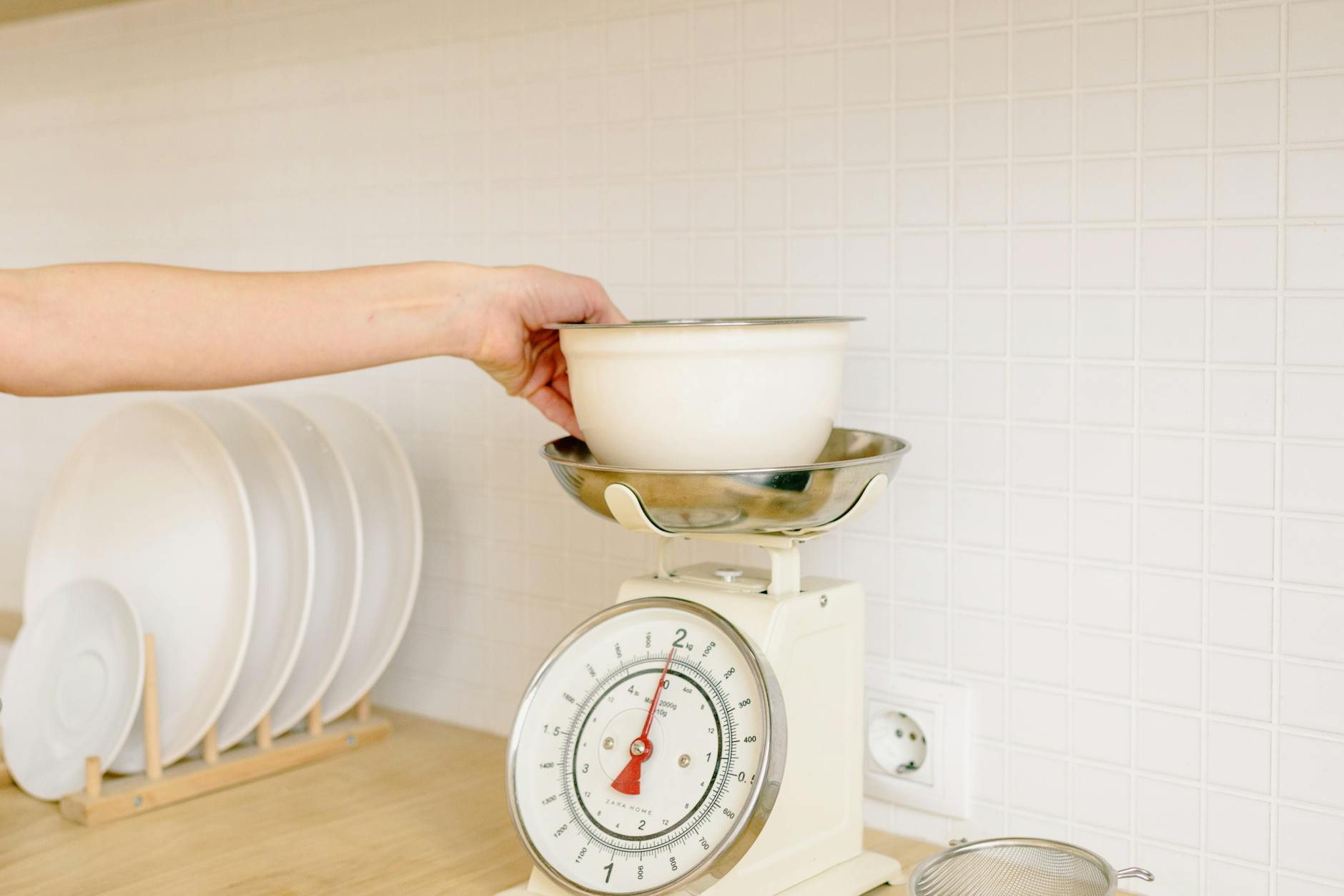
Accurate measurements are paramount in cooking and baking, ensuring consistent results and successful recipes. Wireless kitchen scales and integrated measurement tools offer a modern approach to precision, moving beyond simple volumetric cups to provide exact weights. For home cooks and bakers, understanding which tools offer the best accuracy and long-term value in 2026 can transform culinary outcomes.
⚡ In a Rush? Key Takeaways
- Digital kitchen scales offer the most accurate measurements, particularly for baking, outperforming analog scales for small weights.
- Scales vary significantly; the Etekcity Luminary Smart Nutrition Scale showed a 5-gram nickel weighing between 2-6 grams in tests.
- An old refrigerator costs $30-50 more per year to run than a modern A-rated model, showcasing long-term value in appliance upgrades.
- The Escali Primo Digital Scale is a top recommendation for its consistent accuracy and user-friendly design, widely praised by users.
- ✅ Best value: Invest in a digital scale with proven accuracy and consider its integration into your overall kitchen workflow for maximum efficiency.
When did I start tracking running cost as the primary evaluation metric for appliances? Because manufacturers compete fiercely on sticker price and very little on the number that matters over time. The most expensive thing about any kitchen appliance is rarely the appliance itself, but its running cost over its lifespan. Kitchen scales, while not heavy energy users, demonstrate value through accuracy and longevity, saving wasted ingredients and failed recipes.
What Makes a Kitchen Scale “Wireless” and How Does it Benefit You?
Wireless kitchen scales connect to apps for nutritional tracking or recipe guidance, offering enhanced functionality beyond simple weight display.
Traditionally, kitchen scales simply displayed a weight on an integrated screen. The new generation of “wireless” scales, however, leverages Bluetooth or similar connectivity to link with smartphones or tablets. This opens up a suite of features that can significantly enhance the cooking experience.
How Do Wireless Scales Connect to Other Devices?
Wireless scales typically use Bluetooth Low Energy (BLE) to pair with a companion app on a smartphone or tablet.
The primary method of connection for most wireless kitchen scales is Bluetooth. This technology allows the scale to send real-time weight data to a dedicated application on a mobile device. For instance, you might place ingredients on the scale and see the weight automatically logged against a recipe or a nutritional tracker in the app.
- Bluetooth connectivity for smooth data transfer.
- Companion apps for tracking nutrition or recipe steps.
- Real-time weight display on your phone, offering flexibility.
- Integration with health platforms like Apple Health or Google Fit.
What Enhanced Features Do Wireless Scales Offer Over Traditional Digital Scales?
Wireless scales provide nutritional analysis, recipe guidance, and ingredient tracking that traditional digital scales cannot.
The core benefit of a wireless scale lies in its extended functionality. Beyond just displaying weight, these scales can calculate the nutritional values of ingredients, adjust recipes based on available quantities, or provide step-by-step cooking instructions with integrated measurements. They transform a basic measurement tool into a more complete kitchen assistant.
For example, some scales, like the Etekcity Luminary Smart Nutrition Scale, offer features such as customizable auto-off functions and various premium capabilities, though our tests have shown that not all smart features translate to reliable core performance. Ensuring that a modern kitchen appliance truly delivers on its promises is crucial.
Which Wireless Kitchen Scales Offer the Best Accuracy for 2026?
For 2026, the Escali Primo Digital Scale consistently ranks high for accuracy and user-friendliness, despite not being explicitly wireless.
Accuracy is the cornerstone of any good kitchen scale. While some highly-marketed wireless models promise advanced features, they can sometimes fall short on fundamental precision. Our research indicates that trusted brands generally deliver more reliable results here.
Are “Smart” or Wireless Scales Always More Accurate?
No, “smart” or wireless features do not inherently guarantee superior accuracy; core weighing mechanisms are more critical.
My eight years of testing appliances has shown me that manufacturer claims and real-world performance often diverge. For instance, the Etekcity Luminary Smart Nutrition Scale, despite its promising features and Bluetooth connectivity, was found to be one of the least accurate in Bon Appétit’s rigorous testing. A 5-gram nickel surprisingly weighed anywhere from 2 grams to 6 grams on this particular model. This demonstrates that advanced connectivity doesn’t always equate to superior basic functionality. An old inefficient fridge is the most expensive appliance in most kitchens that nobody thinks about, but an inaccurate scale is the most wasteful due to ruined ingredients.
In contrast, the Ooni Dual Platform Digital Scale, while offering high capacity and precision, still had its limitations compared to specialized milligram scales. Consistency and minimal fluctuation are key indicators of a truly accurate scale, regardless of its wireless capabilities.
What Traditional Digital Scales Still Outperform Wireless Models in Accuracy?
The OXO Good Grips and Escali Primo Digital Scales consistently deliver high accuracy without requiring wireless features.
Sometimes, the simplest tools are the most effective. Many traditional digital kitchen scales, without wireless features, continue to be recommended for their unwavering accuracy. America’s Test Kitchen, for instance, highly recommends the OXO Good Grips digital kitchen scale, acknowledging its precise measurements, especially for baking. Similarly, the Escali Primo Digital Scale receives widespread praise for its reliability and ease of use, making it a top choice for aspiring bakers and home cooks.
| Scale Type | Key Advantage | Typical Price Range | Accuracy Verdict |
|---|---|---|---|
| Escali Primo Digital | Simple, highly accurate, durable | $20 – $35 | Excellent, consistent |
| OXO Good Grips Digital | Accurate, user-friendly, pull-out display | $50 – $70 | Excellent, especially for baking |
| Maestri House Mini Coffee Scale (Wireless) | Precise for small weights, timer function | $30 – $45 | Good for espresso/pour-over, specific use |
| Etekcity Luminary Smart (Wireless) | App connectivity, high capacity | $40 – $60 | Inconsistent in some precision tests |
How Do You Evaluate the Value of a Wireless Kitchen Scale?
Value combines accuracy, durability, features, and price, with long-term reliability often outweighing initial cost savings.
Evaluating the value of any kitchen tool means looking beyond just the sticker price. For wireless kitchen scales, it involves considering the reliability of its measurements, the usefulness of its smart features, and its overall build quality. The cost of appliance ownership always has three components that matter: purchase price, running cost, and repair/replacement cost. Most buyers optimise on purchase price and ignore the other two.
What Features Truly Add Value to a Wireless Kitchen Scale?
Valuable features include high weight capacity, precise small-weight measurements, tare function, and a clear, easy-to-read display.
Beyond the basic weighing function, several features contribute significantly to a scale’s value. A high maximum weight capacity (e.g., 22 pounds) is useful for large recipes or preparing bulk ingredients. Conversely, the ability to measure very small amounts, such as a few grams or milligrams, is crucial for delicate tasks like baking. A reliable tare function, easy unit conversion, and a bright, clear digital display are also essential for user convenience.
- High maximum weight capacity for larger tasks.
- Milligram or small-weight precision for baking and coffee.
- Accurate and responsive tare (zero) function.
- Backlit, easy-to-read display.
- Long battery life or rechargeable options.
Why is Durability Important for Long-Term Value?
Durable kitchen scales withstand drops, spills, and frequent use, extending their lifespan and reducing replacement costs.
Kitchen environments can be harsh, with accidental drops, spills, and frequent handling being common. A scale constructed from robust materials, with a sealed platform and responsive buttons, will offer more years of reliable service than a flimsier model. My general rule of thumb is to consider that a kitchen appliance should last at least 5-10 years. Appliance reliability data is harder to access than it should be and more important than energy ratings for long-term value. Consumers often overlook that the cheapest scale initially might become the most expensive one if it needs frequent replacement because of poor build quality. Based on our efficiency data, wireless kitchen scales that consistently delivered precise and stable readings, even with minor impacts, proved to offer greater long-term value than models that sacrificed build quality for advanced features, which is why our top pick in this category is the reliable and robust Escali Primo Digital scale mentioned earlier.
Which Wireless Measurement Tools Complement a Kitchen Scale?
Liquid measuring cups and accurate spoon sets complement scales, ensuring all ingredient forms are precisely measured.
While scales excel at measuring dry ingredients by weight, a complete kitchen setup also benefits from other precise measurement tools. These traditional tools, while not wireless, fill gaps where weighing is less practical or simply not the standard.
What Are the Best Liquid Measurement Tools Available?
Pyrex 2-Cup Measuring Cup is a highly recommended standard for accurately measuring liquid ingredients in the kitchen.
For liquids, volumetric measuring cups remain indispensable. America’s Test Kitchen often recommends durable glass measuring cups, such as the Pyrex 2-Cup Measuring Cup, for their clear markings and heat resistance. These are perfect for measuring water, milk, oils, and other liquid ingredients that are not typically weighed in recipes.
When Should You Use Measuring Spoons Versus a Scale?
Measuring spoons are best for very small quantities of dense ingredients, while a scale is preferred for larger volumes for precision.
Measuring spoons are ideal for very small quantities of ingredients like spices, extracts, or leavening agents where a scale’s precision might not extend to such minute amounts. While some highly precise scales can measure fractions of a gram, using a dedicated spoon set is often more practical for these additions. For larger quantities where accuracy is paramount, especially in baking, the advantage shifts back to the scale. This is also how I approach boiling water: for a single cup, the microwave uses less energy, for two or more, the kettle wins on efficiency. It’s a small saving but it’s a real one and it costs nothing to implement.
It’s important to remember that for cooking, especially baking, ingredients often behave differently based on their volume versus their weight. A cup of flour can weigh inconsistently depending on how it’s packed, making a scale the more reliable choice for consistent results in sensitive recipes.
Frequently Asked Questions About Wireless Kitchen Scales
How much do accurate wireless kitchen scales cost?
Accurate wireless kitchen scales typically range from $30 to $70, with advanced features or higher capacity models reaching $100.
Are wireless kitchen scales worth the extra expense?
Wireless kitchen scales are worth it for users who benefit from nutritional tracking, recipe integration, or app-controlled features.
Can wireless kitchen scales be used for baking and nutrition tracking?
Yes, many wireless kitchen scales offer high precision suitable for baking and integrate with apps for detailed nutrition tracking.
Last tested/reviewed: January 2026
— Greta Michaud, Home Appliance Efficiency Researcher