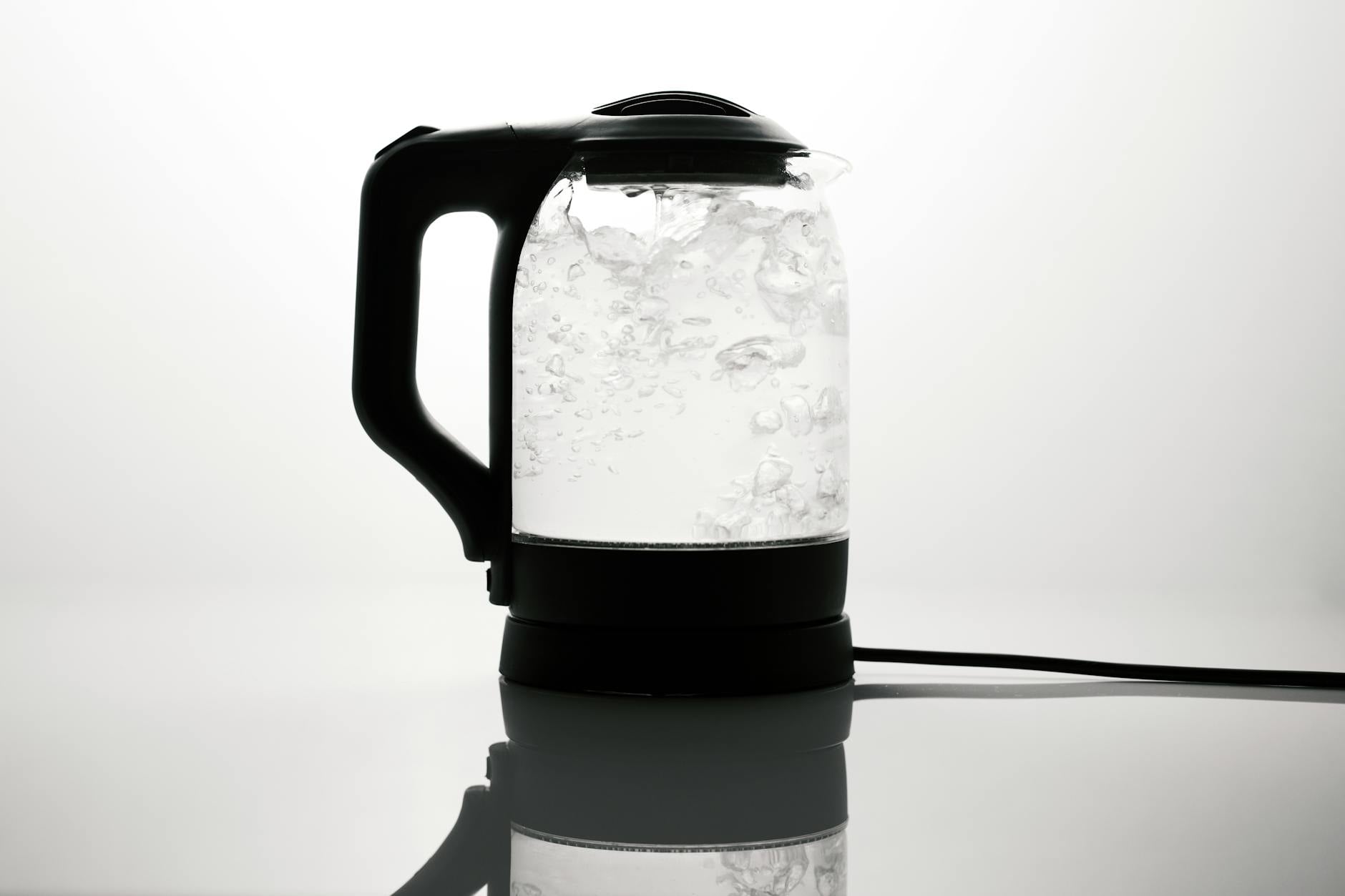
When evaluating a boiling water cost calculator, kettle specifications and local utility rates often obscure the simple mathematics determining your monthly expenses. Whether you heat water for a solitary morning cup or fill a thermos for the commute, understanding the precise cost per boil helps you budget accurately and identify unnecessary waste. The calculation requires only three variables: your appliance’s wattage, the volume of water heated, and your electricity rate per kilowatt-hour.
⚡ In a Rush? Key Takeaways
- Boiling one liter of water costs ~1.5 cents at average US rates.
- A full kettle boil (1.7L) costs ~2-3 cents.
- Heating double the required water doubles your cost per serving.
- ✅ Boil only what you need to save 30-40% annually.
How much does it cost to boil a full kettle?
A standard three-kilowatt kettle costs approximately two to three cents to bring one and a half liters of room-temperature water to boiling point at average residential electricity rates.
The physics of heating water remains constant regardless of appliance branding. Raising one liter of water from twenty degrees Celsius to one hundred degrees requires roughly zero point one kilowatt-hours of energy, accounting for typical heat transfer inefficiencies. At the United States average residential rate of thirteen to fifteen cents per kilowatt-hour, this translates to approximately one and a half cents per liter. A full kettle holding one point seven liters therefore consumes between two and three cents worth of electricity per boil.
Most households boil water multiple times daily. Morning coffee, afternoon tea, pasta preparation for dinner, and occasional sterilization tasks accumulate quickly. A household boiling the kettle four times daily at full capacity spends roughly twenty-five to thirty dollars annually on this single appliance. Reducing the volume by half immediately halves the cost, suggesting that habit changes matter more than appliance upgrades.
How do I calculate my exact kettle running costs?
Multiply your kettle’s wattage in kilowatts by the boil time in hours, then multiply that figure by your local electricity rate per kilowatt-hour to determine the precise cost per use.
To apply this formula accurately, first identify your kettle’s wattage, typically printed on the base or in the manual—most residential models draw between two thousand and three thousand watts. Next, time how long it takes to boil your usual quantity of water. A full kettle generally requires five to seven minutes, while a single cup takes ninety seconds to two minutes. Convert these minutes to decimal hours by dividing by sixty.
For example, a three-kilowatt kettle boiling for six minutes uses zero point three kilowatt-hours. At fifteen cents per kilowatt-hour, that specific boil costs four and a half cents. If you perform this action three times daily, the monthly cost approaches four dollars. For a more comprehensive analysis of appliance expenses across your household, consult our Appliance Cost Calculator to compare your kettle against your refrigerator, dishwasher, and other heavy-draw devices.
Is boiling water in an electric kettle cheaper than the stove?
Electric kettles convert approximately ninety percent of electrical energy into heat, compared to seventy percent for gas burners or forty to fifty percent for traditional electric coil cooktops.
The efficiency disparity stems from heat transfer mechanics. Electric kettles contain the heating element directly within the water, minimizing thermal loss to the surrounding air. Gas flames and electric coils, by contrast, heat the pot base and much of the surrounding kitchen space before the water absorbs the energy. Induction cooktops approach kettle efficiency at eighty-five to ninety percent, but still lose heat through the pot walls.
The following table compares the efficiency of different methods for boiling water:
| Method | Efficiency (%) | Best for |
|---|---|---|
| Electric kettle | 90 | Boiling water specifically |
| Gas burner | 70 | Cooking with pots |
| Electric coil | 40-50 | Basic heating |
| Induction cooktop | 85-90 | Efficient cooking |
For single servings, the microwave presents another alternative, though efficiency varies based on vessel material and microwave wattage. Generally, electric kettles remain the most economical choice for boiling water specifically, provided you heat only the required volume. If you currently use a gas stove to boil water for tea, switching to an electric kettle could reduce that specific energy expenditure by thirty to forty percent. Those considering broader kitchen efficiency improvements should examine our analysis of gas versus electric stove running costs for the complete picture.
Does filling the kettle to the top waste money?
Heating double the required water roughly doubles your cost per serving; consistently boiling only what you need reduces annual kettle expenses by thirty to forty percent.
The minimum fill line on most kettles exists to protect the heating element from exposure, not to indicate economic boiling volumes. Many households develop the habit of filling the kettle completely regardless of immediate need, assuming the standby heat will maintain temperature or that they might need extra hot water later. In reality, modern kettles cool rapidly, and reboiling cooled water requires nearly the same energy as heating it fresh.
Consider the mathematics: filling a one-point-seven-liter kettle for a single three-hundred-milliliter cup wastes one point four liters of heated water. Over a year of daily tea drinking, this excess consumption adds approximately fifteen to twenty dollars to your electricity bill unnecessarily. The solution requires simply filling a cup with cold water first, then pouring that measured volume into the kettle—a minor habit adjustment with measurable financial returns.
Are variable temperature kettles worth the higher price?
While variable models draw similar wattage, heating water to eighty degrees Celsius for green tea instead of one hundred degrees saves approximately twenty percent on energy per boil.
Variable temperature kettles allow precise heating for different beverages: delicate green teas require temperatures between seventy and eighty degrees Celsius, while pour-over coffee optimizes at ninety-two to ninety-six degrees. Heating to these lower temperatures requires less time and therefore less total energy, even though the element draws maximum power during the active heating phase. The shorter duration translates directly to lower kilowatt-hour consumption.
However, the upfront cost difference between basic and variable models ranges from thirty to one hundred dollars. If you drink only black tea or coffee requiring boiling water, the energy savings never offset the purchase premium. For households regularly brewing green tea, oolong, or delicate herbal infusions, the efficiency gain combined with improved flavor quality justifies the expenditure within approximately eighteen months of daily use.
How does limescale affect boiling costs?
Limescale buildup acts as thermal insulation, requiring the heating element to run twenty to thirty percent longer to reach boiling; descaling every three months restores original efficiency.
In regions with hard water, calcium carbonate precipitates onto heating elements with every boil. This white crust forces the element to heat the mineral layer before transferring energy to the water, extending boil times by thirty to ninety seconds depending on severity. Over months, this additional runtime accumulates significantly. A kettle requiring six minutes instead of four to boil one point five liters wastes an extra zero point one kilowatt-hours per use—approximately one and a half cents daily, or five dollars annually.
Descaling requires only white vinegar or citric acid solution, costing less than one dollar per treatment compared to the five to ten dollars in wasted electricity prevented. The process takes thirty minutes of passive soaking every three months. If your kettle develops visible scale or requires noticeably longer to boil, immediate descaling improves performance and prevents eventual element failure that would necessitate replacement.
What practices minimize daily boiling expenses?
Beyond calculating costs, operational habits determine whether your kettle operates efficiently or wastes electricity unnecessarily.
First, avoid the temptation to reboil water left standing in the kettle. Each reheat cycle repeats the full energy expenditure for minimal convenience gain. Instead, transfer unused hot water to an insulated thermos immediately after boiling. Quality vacuum flasks maintain near-boiling temperatures for four to six hours, eliminating the need for subsequent boils throughout the day.
Second, match your kettle size to household needs. A single person requires only a one-liter capacity; larger kettles encourage overfilling. Third, consider insulated electric kettles with double-wall construction. These retain heat longer, reducing the frequency of reheating, though they cost more initially. For those purchasing new appliances, our guide to energy-efficient kettle recommendations identifies models balancing performance with minimal standby energy consumption.
Finally, if your electricity provider implements time-of-use pricing, reserve kettle boiling for off-peak hours when rates drop by forty to sixty percent. The appliance draws high wattage briefly, making it ideal for shifting to lower-rate periods without lifestyle disruption.
Conclusion
Understanding your kettle’s precise operating cost—typically two to four cents per boil—enables informed decisions about daily habits and appliance selection. While individual boils cost pennies, annual expenditures reaching thirty to fifty dollars warrant attention. By boiling only required volumes, maintaining clean elements, and utilizing efficient heating methods, you reduce this expense by one-third without sacrificing comfort. The mathematics of domestic efficiency rarely demand dramatic lifestyle changes, only deliberate attention to the resources flowing through ordinary objects.
📊 Efficiency Verdict
Boil only what you need to save 30-40% annually.