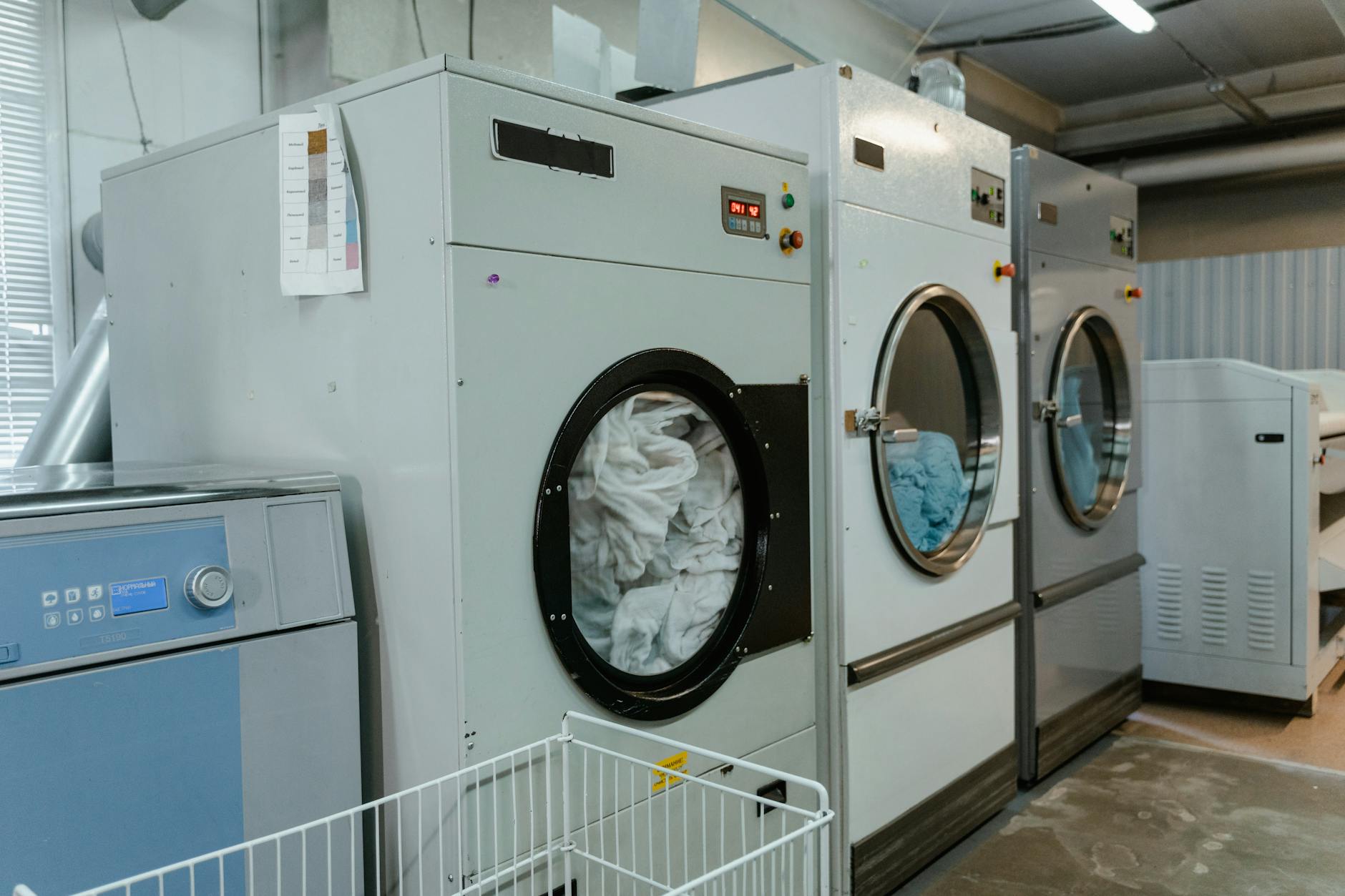
The question of how much a tumble dryer costs per load has shifted from a casual curiosity to a genuine household budget concern. With energy prices fluctuating and the average UK household running three to four dryer cycles weekly, understanding the precise cost per load matters more than the purchase price of the machine itself.
⚡ In a Rush? Key Takeaways
- Vented dryers cost £1.35-£1.65 per load
- Condenser dryers cost £1.40-£1.80 per load
- Heat pump dryers cost 60p-90p per load
- ✅ Heat pump dryers save £120 annually for families
This guide functions as both a practical tumble dryer cost per load calculator uk methodology and a comprehensive cost breakdown. Whether you own a decade-old vented model or are considering the investment in a heat pump dryer, the calculations that follow will help you determine exactly what each cycle adds to your energy bill. We will examine the variables that affect consumption—drum capacity, energy rating, and fabric type—while providing the specific formulas needed to calculate your own cost per load based on current UK energy prices.
How much does it cost to run a tumble dryer per load in the UK?
Between 70p and £1.80 per load depending on the drum size, energy efficiency rating, and whether you own a heat pump, condenser, or vented model. A standard 8kg heat pump dryer averages 90p per cycle.
| Option | Key stat | Best for |
|---|---|---|
| Vented dryer | £1.35-£1.65 per load | Budget-conscious users |
| Condenser dryer | £1.40-£1.80 per load | Small apartments |
| Heat pump dryer | 60p-90p per load | Energy-efficient households |
The variance in cost depends primarily on the technology your dryer employs. A traditional vented dryer, which expels hot air through a hose, typically consumes between 4.5 and 5.5 kilowatt-hours (kWh) per cycle. At the current UK average electricity rate of 30p per kWh, this translates to £1.35 to £1.65 per load. Condenser dryers, which collect moisture in an internal tank rather than venting it externally, operate similarly but often require slightly more energy to manage the condensation process, pushing costs toward the £1.40 to £1.80 range for older models.
Heat pump dryers represent a different engineering approach entirely. By recycling hot air through an evaporator and condenser system, they achieve the same drying results using roughly 2.0 to 3.0 kWh per load. This efficiency brings the cost per cycle down to approximately 60p to 90p, though actual figures depend on the specific energy label rating and load size. For a family running four loads weekly, the difference between a vented and heat pump model amounts to roughly £120 annually.
What factors determine the cost per load of a tumble dryer?
Four primary variables control your cost: the dryer’s energy efficiency rating, load capacity versus actual load size, fabric moisture content, and your specific electricity tariff rate per kilowatt-hour.
- Energy efficiency rating (A-G scale)
- Load capacity vs. actual load size
- Fabric moisture content
- Electricity tariff rate per kWh
The energy efficiency rating, now displayed on the new UK energy label scale from A to G, provides a standardised measure of consumption per kilogram of cotton load dried. An A-rated heat pump dryer might use 1.93 kWh for a full 8kg cotton load, while a similarly sized C-rated vented model could consume 5.24 kWh for the same task. These ratings assume standard testing conditions; real-world usage varies based on how you load the machine.
Overloading or underloading significantly impacts efficiency. A half-full dryer still uses nearly the same energy as a full one because the heating elements and drum motors operate for similar durations. Similarly, fabric composition matters. Cotton towels hold considerably more moisture than synthetic workout clothing, requiring longer drying cycles and higher temperatures. The ambient humidity in your drying space also affects performance, particularly for condenser and heat pump models that rely on air temperature differentials to extract moisture.
Is a heat pump tumble dryer cheaper per load than a vented model?
Yes. Heat pump dryers typically cost 40-50% less per load than vented models, though they command a higher purchase price. The break-even point usually occurs within 18-24 months of average use.
The mathematics of this comparison depend on usage frequency. A heat pump dryer costing £500 more than an equivalent vented model will recover that premium through energy savings if used regularly. At current rates, saving 80p per load four times weekly accumulates to £166 annually. Over a typical seven-year appliance lifespan, the total cost of ownership for a heat pump model proves substantially lower, assuming comparable build quality and maintenance requirements.
However, heat pump dryers operate at lower temperatures, typically around 50°C compared to 70-80°C for vented models. This gentler drying extends cycle times by 20-30 minutes, which some users find inconvenient. For households drying primarily robust cottons and linens, the time trade-off may not justify the efficiency gain. Comparing heated airer options against heat pump dryers reveals an interesting middle ground for those with sufficient space and time.
How can I calculate my exact tumble dryer cost per load?
Multiply your dryer’s energy consumption per cycle (found on the energy label or manual) by your electricity rate per kWh. For example, 3.5 kWh × 30p = £1.05 per load.
To perform this calculation accurately, locate the cotton cupboard drying cycle consumption figure on your appliance’s energy label. This represents the kilowatt-hours consumed drying one kilogram of cotton material. Multiply this figure by your drum capacity in kilograms, then multiply the result by your unit electricity rate. If your label shows 0.24 kWh/kg and you own a 9kg drum, the calculation is 0.24 × 9 = 2.16 kWh per cycle. At 30p per kWh, each load costs 65p.
For older dryers lacking detailed energy labels, install a plug-in energy monitor between the wall socket and appliance. Run a standard cotton cycle and note the kWh consumed. Our laundry cost calculator tool allows you to input these figures for ongoing tracking across different programmes. Remember that synthetics cycles typically use 30-40% less energy than cotton cycles due to lower temperatures and moisture content.
Does the energy price cap affect tumble dryer running costs?
Yes. The UK energy price cap sets the maximum unit rate per kWh, which directly scales your cost per load. A 10p increase per kWh raises the cost of a 4kWh cycle by 40p.
The Ofgem energy price cap limits the standing charge and unit rate suppliers can charge customers on standard variable tariffs. When the cap increases—as seen in recent adjustments—the cost of every tumble dryer cycle rises proportionally. This relationship is linear and immediate. Unlike heating or lighting, which you might reduce during price spikes, laundry often remains non-negotiable, making the dryer a fixed cost that scales with regulatory changes.
For those on fixed-rate tariffs, your cost per load remains stable until renewal. However, fixed rates typically exceed the variable cap during volatile market periods. Monitoring announcements regarding cap adjustments allows you to anticipate changes in your monthly laundry expenditure. A household running five loads weekly will see their monthly dryer costs increase by approximately £8 for every 10p rise in the unit rate.
Are tumble dryers getting more expensive to run?
Modern dryers are significantly more efficient than decade-old models, but rising electricity prices mean the net cost per load has increased for most households since 2021.
A vented dryer manufactured in 2015 might consume 5.8 kWh per cycle compared to 4.2 kWh for a 2024 equivalent. This efficiency improvement of 27% represents genuine technological advancement in moisture sensors, drum design, and heat exchange systems. However, electricity unit rates have increased from roughly 17p per kWh in early 2021 to approximately 30p currently. The mathematical result is that running a modern efficient dryer today costs more than running an inefficient model three years ago.
This trend suggests that upgrading an old dryer purely for running cost savings requires careful calculation. If your current machine functions adequately, the environmental and financial cost of manufacturing and transporting a new appliance may outweigh the marginal per-load savings. Repair and maintenance of existing efficient models becomes economically favourable compared to replacement.
When is the cheapest time to use a tumble dryer?
If you are on an Octopus Agile or similar time-of-use tariff, running cycles during off-peak hours (typically 2am-5am) can reduce costs by 40-60%, though standard variable tariffs charge the same rate throughout the day.
Time-of-use tariffs track wholesale electricity prices, which drop during low-demand nighttime hours. For households with smart meters and flexible schedules, programming the dryer to run at 3am can reduce a 90p load to 36p. However, safety considerations must temper this approach. Running tumble dryers unattended overnight presents fire risks that manufacturers explicitly warn against. Heat pump dryers, with their lower operating temperatures, mitigate but do not eliminate this risk.
Standard variable tariffs charge identical rates regardless of time, making when you run the dryer irrelevant to cost. For these households, reducing costs requires focusing on load efficiency—drying full loads, selecting appropriate programmes for fabric types, and ensuring lint filters remain clean to maximise airflow and reduce cycle duration.
Reducing your laundry costs beyond the calculator
Understanding your tumble dryer cost per load calculator uk figures represents the first step toward managing laundry expenses. The second involves optimising the variables within your control. Always dry similar fabric weights together—heavy towels require different settings than lightweight shirts, and mixed loads force the dryer to over-dry synthetics while under-drying cottons.
Spin clothes at the highest speed your washing machine allows before transferring to the dryer. Reducing moisture content by an additional 10% through spinning can reduce drying time by 15 minutes and save approximately 15p per load. Greta recommends investing in a moisture meter if your dryer lacks sensor-drying capabilities, as timed drying inevitably wastes energy.
Finally, consider whether each load requires machine drying. Air-drying partially damp items on a clothes horse for two hours before finishing in the dryer can halve mechanical drying time while achieving the soft finish many prefer. This hybrid approach captures most of the cost savings without sacrificing the convenience that makes tumble dryers essential in British households during winter months.
📊 Efficiency Verdict
Heat pump dryers offer the most cost-effective solution for energy-conscious consumers, with an average saving of £120 annually for families.