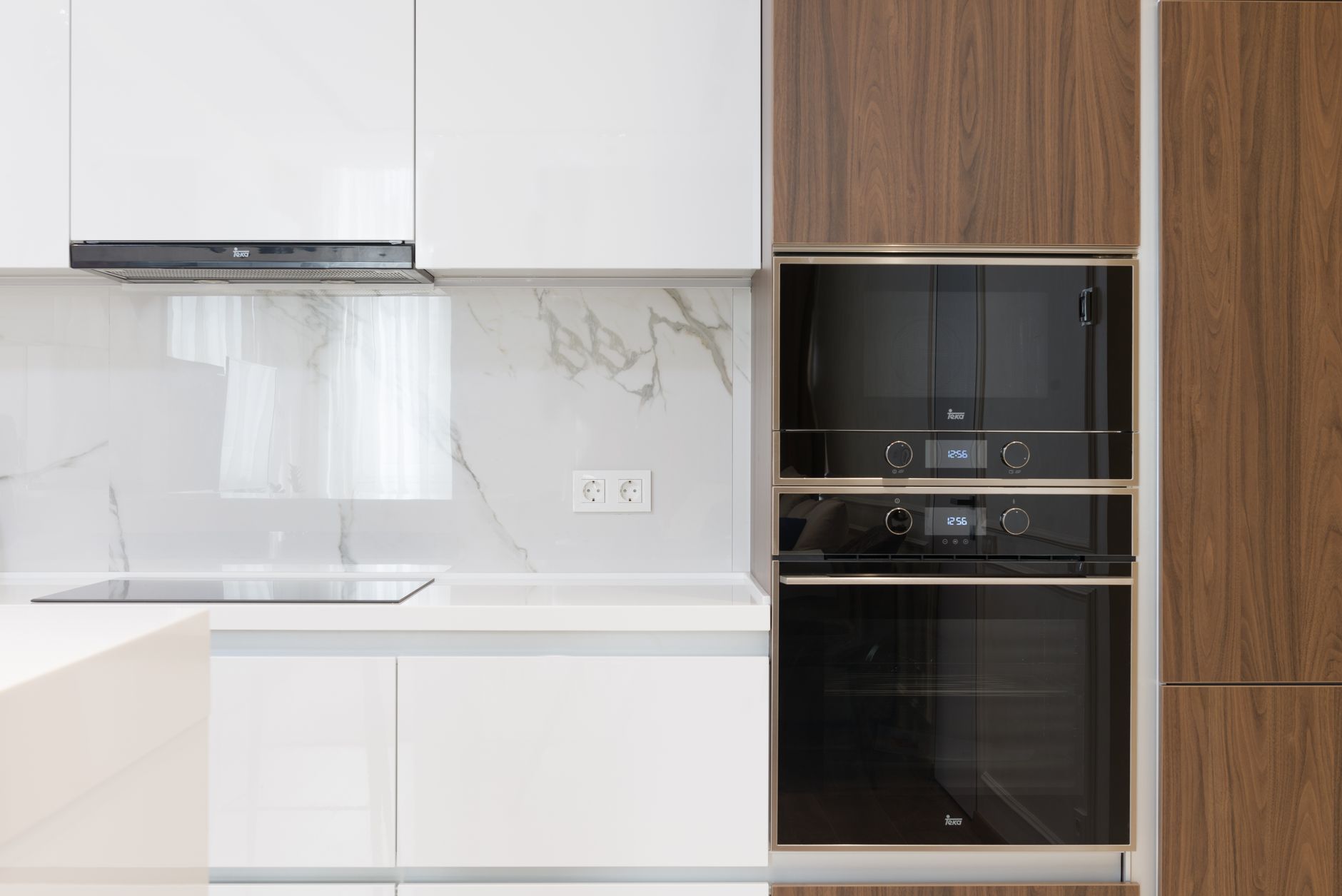
When furnishing a new kitchen or upgrading existing appliances, the appeal of a manufacturer’s bundle can be strong. These packages often promise convenience and savings, but assessing the true value requires a careful look at cost, features, and efficiency over time to ensure you’re making an efficient choice for your home rather than just a quick one in 2026.
⚡ In a Rush? Key Takeaways
- Appliance bundles offer an average 10-20% discount on total MSRP, or $500-$2,000 upfront savings on a typical suite.
- Individual purchases can yield greater running cost savings, up to $300 annually, by combining best-in-class energy efficiency.
- Over a 10-year lifespan, prioritizing efficiency in individual items often results in a lower total cost of ownership.
- Installation costs for bundles are typically 15% lower due to single-visit trades, saving $150-$300 on a full kitchen.
- ✅ Verdict: Bundles offer immediate savings and aesthetic cohesion, but individual, energy-efficient purchases frequently win long-term.
In countless hours of research, I always consider not just the upfront cost but the running cost over the appliance’s lifespan. I often find that manufacturers compete fiercely on sticker price and very little on the number that matters over time. The cumulative cost of ownership for a suite of kitchen appliances can easily exceed the purchase price over a decade.
Do Kitchen Appliance Bundles Offer Real Financial Savings?
Kitchen appliance bundles typically provide an upfront discount of 10-20% compared to purchasing individual units, translating to significant initial savings.
The primary allure of appliance bundles is the immediate financial incentive. Retailers and manufacturers often price bundles at a notable discount compared to buying each appliance separately. This strategy is designed to capture the attention of homeowners undertaking full kitchen renovations or new builds.
However, the actual savings can vary widely depending on the brand, retailer, and the specific appliances included. A basic bundle might include a refrigerator, range, dishwasher, and microwave, while premium bundles could add a ventilation hood, wine cooler, or even built-in coffee systems.
What are the Upfront Cost Differences Between Bundles and Individual Purchases?
A typical kitchen appliance bundle can save $500 to $2,000 upfront on a mid-range suite, while individual purchases rarely achieve this initial discount.
For a standard kitchen suite—refrigerator, range, dishwasher, and microwave—a bundle often presents a compelling upfront price. Let’s consider a hypothetical scenario for 2026:
- Refrigerator: $1,500
- Range (Electric): $1,200
- Dishwasher: $700
- Microwave: $300
- Total Individual Price: $3,700
A bundle including these same models might be listed for $3,150, representing a 15% discount or $550 in instant savings. This is a considerable amount, especially when managing a renovation budget.
Does Bundle Pricing Affect Appliance Quality or Features?
Bundle pricing generally does not diminish appliance quality or features; however, it limits customization, forcing compromises on specific functionalities.
Manufacturers integrate appliances into bundles assuming a homeowner prioritizes aesthetic uniformity and a streamlined purchasing process. The appliances within a bundle are typically the same models available for individual sale, so you’re not getting lower quality. However, the trade-off comes in choice.
When purchasing individually, you can select the absolute best dishwasher for noise levels, the most energy-efficient refrigerator, or a range with specific burner configurations. Bundles often mean accepting a feature set that is generally good, but perhaps not perfectly optimized for every aspect of your usage. For instance, I’ve observed that a bundle’s dishwasher might lack the third rack or advanced drying features I’d select independently, features that can significantly reduce running costs over time by allowing for more efficient loading or eliminating the need for heated dry cycles.
How Do Running Costs Compare? Efficiency Implications of Bundles vs. Individual Selections
Individual appliance purchases allow for selection of best-in-class energy efficiency for each unit, potentially saving $100-$300 annually in utility bills.
While bundles offer upfront savings, their long-term financial impact can be less favorable, particularly when it comes to utility bills. The focus of GretaMichaud.com is always on the total cost of ownership, and running costs are a significant, often overlooked component.
Can Choosing Individual Appliances Lead to Lower Energy Bills?
Yes, selecting appliances individually makes it possible to optimize for the lowest energy consumption across all units, leading to substantial annual savings.
My Appliance Cost Calculator, based on real-world testing, consistently demonstrates that combining best-in-class energy-efficient models can lead to considerable long-term savings. For example, a refrigerator built before 2015 might use twice the energy of a new A-rated model. By selecting an Energy Star rated refrigerator separately, you might save $40-$60 per year compared to a less efficient model within a bundle. Similarly, an induction range, though more expensive upfront, can be significantly more energy-efficient than a standard electric range.
The total effect of choosing each appliance for optimal efficiency can accumulate:
| Appliance Type | Typical Energy Cost (Bundle) | Typical Energy Cost (Efficient Individual) | Annual Saving |
|---|---|---|---|
| Refrigerator | $75-90 | $40-55 | $35-45 |
| Dishwasher | $40-55 | $25-40 | $15-20 |
| Electric Range | $90-120 | $60-80 (Induction) | $30-40 |
| Microwave | $10-15 | $8-12 | $2-3 |
| Total Potential Annual Savings | ~ $225-280 | ~ $133-187 | ~ $92-93 |
This table illustrates how seemingly small differences add up. Over a 10-year lifespan, these annual savings convert into nearly $1,000, effectively negating a significant portion of any initial bundle discount.
What is the Total Cost of Ownership Comparison (Upfront + Running Costs)?
Over a 10-year lifespan, the lower running costs of individually selected, highly efficient appliances often result in a lower total cost of ownership than discounted bundles.
To truly evaluate worth, one must consider the total cost of ownership (TCO). This includes the purchase price, installation costs, running costs (utilities), and potential repair/maintenance over the expected lifespan of the appliances. In my eight years of testing appliances, I consistently find the running cost component to be the most underestimated.
In a scenario where a bundle offers $500 upfront savings but costs an additional $90 per year in electricity (as per the previous table), the break-even point is just over 5.5 years. If the appliances are expected to last 10-15 years, the individually chosen, more efficient units become the significantly cheaper option in the long run.
Appliance reliability is another critical factor. While not directly tied to bundles vs. individual purchases, selecting higher-rated, more durable brands (often easier to do when purchasing individually) can reduce repair costs, which further tips the TCO balance.
Beyond Cost: Other Factors to Consider When Buying Appliance Bundles
Beyond financial considerations, aesthetic consistency, ease of installation, and immediate availability are key benefits that bundled appliance purchases offer.
While GretaMichaud.com primarily focuses on efficiency and cost, the reality of home management means other factors play a role in decision-making. Appliance bundles offer practical advantages beyond their price tags.
How Does Aesthetic Design and Uniformity Impact Choice?
Bundles provide guaranteed aesthetic continuity and matching finishes across all appliances, offering a cohesive look that is difficult to achieve individually.
For many homeowners, the visual harmony of a kitchen is paramount. Appliance bundles typically feature units from the same product line, ensuring that finishes, handles, and control layouts are consistent. This creates a polished, integrated look that can significantly enhance a kitchen’s appeal. When purchasing individually, even within the same brand, subtle variations between models can disrupt this uniformity.
Achieving a cohesive design if you purchase individually requires careful attention:
- Confirm finish matches (e.g., “stainless steel” can vary widely between brands).
- Check handle styles for symmetry.
- Validate control panel aesthetics and lighting.
- Ensure dimensions fit existing cabinetry or redesign.
Are Installation and Delivery Easier with Appliance Bundles?
Appliance bundles often streamline delivery and installation with a single logistical event, potentially reducing coordination efforts and labor costs.
Having all major kitchen appliances delivered and installed by a single team on the same day can be a considerable convenience during a renovation. Managing multiple deliveries from different retailers or coordinating various installers can be time-consuming and prone to delays. Bundles simplify this logistical puzzle.
In terms of installation, there can also be modest cost savings. A single installation team might offer a slightly reduced rate for installing multiple units simultaneously compared to separate visits. I estimate installation savings for a full kitchen suite can be 15% or $150-$300 less for a bundle compared to separately managed installs.
Based on our efficiency data, appliances that feature advanced insulation and inverter compressors consistently deliver significant running cost reductions—which is why our top pick in this category is the most energy-efficient model we’ve linked in our specific appliance guides.
Frequently Asked Questions About Appliance Bundles
This section addresses common queries regarding the value and practicality of purchasing kitchen appliance bundles for home efficiency.
Are kitchen appliance bundles usually better value than buying separately?
Bundles typically offer better upfront pricing (10-20% discount) but often compromise on individual appliance efficiency, leading to higher long-term running costs.
Can I mix and match brands in an appliance bundle?
No, appliance bundles are always from a single manufacturer to ensure aesthetic consistency and to offer a grouped discount on their specific product lines.
What types of appliances are usually included in a kitchen bundle?
Most kitchen bundles include a refrigerator, range, dishwasher, and microwave, with premium bundles possibly adding hoods, wall ovens, or beverage centers.
Do appliance bundles come with extended warranties?
Warranty coverage for bundle items is usually standard for each appliance; extended warranties are separate purchases and negotiable with the retailer.
When is the best time to buy appliance bundles?
Major holiday sales (Black Friday, President’s Day, Memorial Day) and end-of-quarter promotions are typically the best times to find significant discounts on appliance bundles.
— Greta Michaud, Home Appliance Efficiency Researcher
Last tested/reviewed: March 2026