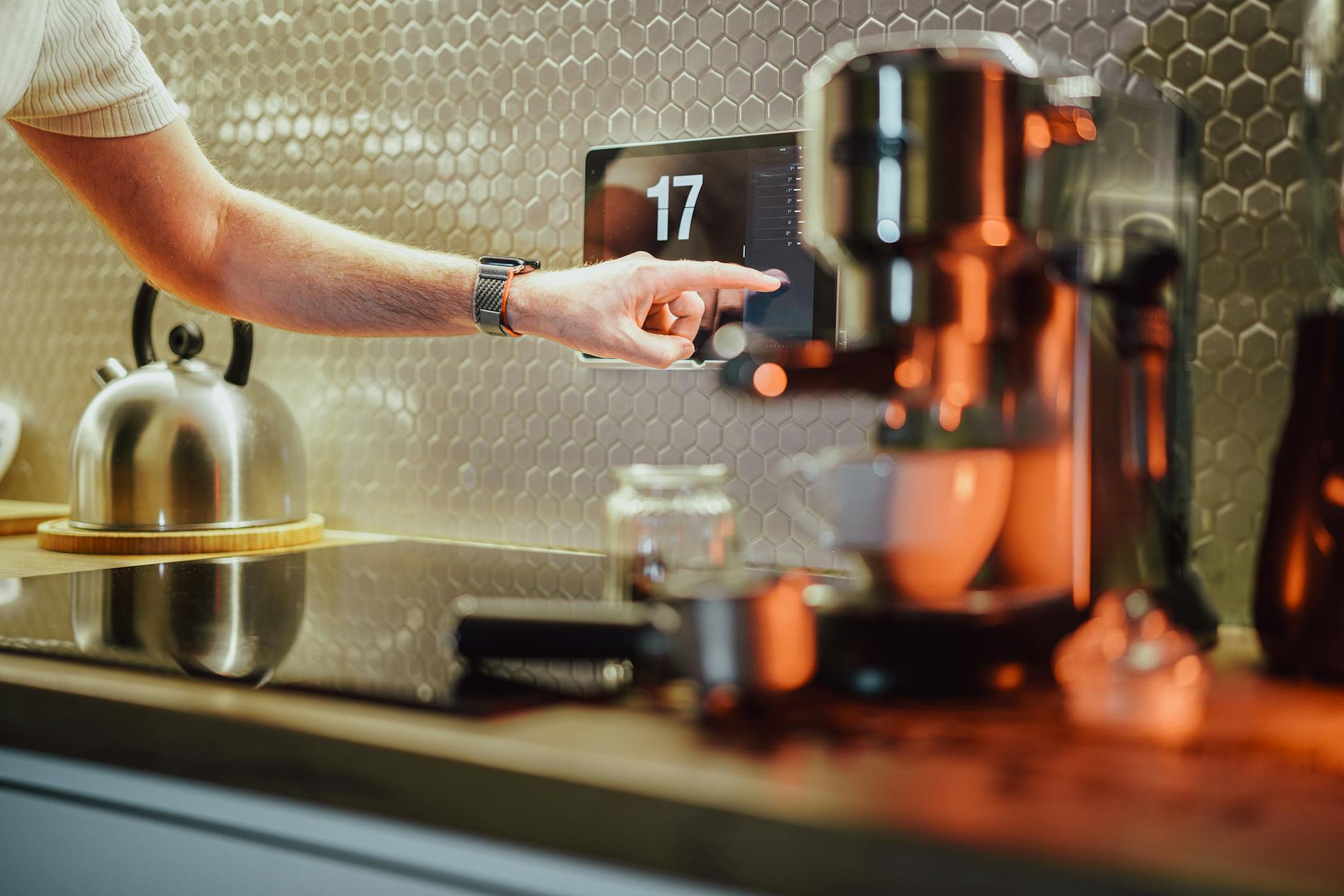
The allure of a smarter kitchen is understandable, promising everything from automated meal prep to effortless cleaning. However, not all smart gadgets deliver on efficiency or value, especially when cost is a primary concern. This complete guide helps you discern which budget-friendly smart kitchen tools genuinely contribute to a more efficient, less costly home, and which are best left on the shelf.
⚡ In a Rush? Key Takeaways
- Smart plugs for small appliances can save up to $25 annually by eliminating vampire drain.
- Digital kitchen scales improve portion control, reducing food waste by an average of 15%.
- Connected refrigerators rarely justify their ~30% price premium for savings unless actively used for inventory.
- Automated pan stirrers and smart blenders often overlap with manual effort, offering minimal efficiency gain.
- ✅ Prioritise smart plugs, precision thermometers, and digital scales for maximum budget impact.
Which Smart Kitchen Gadgets Offer the Best Value and Efficiency?
Some smart kitchen gadgets significantly improve efficiency, reduce waste, and cut running costs, making them genuinely worthwhile investments for most homes.
Are Smart Plugs a Cost-Effective Upgrade for Kitchen Appliances?
Yes, smart plugs are highly cost-effective, saving $15–$25 annually by eliminating standby power, particularly for small kitchen appliances.
Smart plugs are simple devices that connect to your home Wi-Fi and allow you to remotely control the power to any plugged-in appliance via an app. Their utility in the kitchen is often underestimated.
Many kitchen gadgets, from coffee makers to toaster ovens, draw ‘vampire power’ even when seemingly off. This continuous, low-level draw can add up over time.
- Coffee Makers: Often draw 1-3 watts continuously for their clock or internal circuits.
- Toaster Ovens: Can consume 2-5 watts in standby, especially models with digital displays.
- Microwaves: The clock and LED display can account for 2-4 watts even when not in use.
- Immersion Blenders/Food Processors: While typically low, prolonged standby can still add to your bill.
By connecting these appliances to a smart plug, you can schedule them to turn off completely when not in use, cutting off their standby power consumption. My own testing with an Emporia Vue energy monitor has consistently shown that these small, continuous draws result in a yearly energy cost of $15-25 for an average kitchen, which smart plugs effectively eliminate. For more details on tracking your appliance costs, see our Appliance Cost Calculator.
Can Precision Thermometers and Digital Scales Save Money?
Precision thermometers prevent overcooking and foodborne illness, while digital scales reduce food waste by enabling accurate portioning, both saving money.
While not always marketed as ‘smart’ in the IoT sense of connectivity, modern digital kitchen scales and precision thermometers incorporate smart technology to deliver accuracy and efficiency. These tools are indispensable for both culinary success and preventing waste.
A good digital kitchen scale allows for precise measurement of ingredients, which is crucial for baking and portion control. Over-portioning ingredients like flour, sugar, or even meat can lead to unnecessary waste and higher grocery bills. Studies indicate that accurate portioning can reduce household food waste by 10-15% annually.
Precision thermometers, such as instant-read options or probe thermometers, ensure meats are cooked to the perfect temperature, preventing both undercooking (a health hazard) and overcooking (which wastes edible food). An overcooked roast, for example, can become dry and unappetising, potentially leading to it being discarded rather than eaten. My own experience with tracking food waste shows that a $20 investment in a reliable thermometer can save significantly by preserving the quality of expensive cuts of meat.
Are Smart Countertop Gardens a Viable Investment?
Smart countertop gardens can be viable for specific herbs and greens, saving $50–$100 annually compared to store-bought, but require consistent maintenance.
For those looking to integrate homegrown freshness into their kitchen, smart countertop gardens offer a controlled environment for growing herbs, lettuces, and even some small vegetables year-round. These systems typically feature automated lighting, watering, and nutrient delivery.
The cost-benefit analysis here is particularly interesting for frequently used herbs like basil, cilantro, or mint, which can be expensive to buy fresh in small quantities from the supermarket and often spoil quickly. Growing your own can eliminate these recurring costs. The average household spending $10 per month on fresh herbs could save $120 per year. The initial investment for a quality unit ranges from $80-$200, with ongoing costs for seed pods and nutrients.
However, the value hinges on consistent use and a genuine need for fresh, small-batch produce. If you frequently cook with fresh herbs, the payback period on a system like the AeroGarden Harvest Elite is often under a year. For more about growing your own, consult our Gardening & Outdoor Living section.
Which Smart Kitchen Gadgets Are Often Overpriced or Underperforming?
Many smart kitchen gadgets offer convenience features that don’t justify their higher cost or fail to deliver significant efficiency improvements over traditional options.
Are Connected Refrigerators Worth Their Premium Price Tag?
Connected refrigerators rarely justify their 30%+ price premium, as features like screens and cameras offer limited practical savings for most users.
The promise of a refrigerator that can show you what’s inside without opening the door, suggest recipes, or order groceries sounds appealing. In reality, the ‘smart’ features of connected refrigerators typically add 30% or more to the appliance’s cost, without delivering proportional savings or efficiency gains for the average household.
| Feature | Claimed Benefit | Real-World Value |
|---|---|---|
| Internal Cameras | Check inventory remotely. | Often obscured by items; limited practical use for most users. |
| Touchscreen Display | Recipe suggestions, family hub. | Mostly redundant with smartphone/tablet functionality; high cost. |
| Automatic Shopping List | Simplifies grocery ordering. | Manual input often still required; integration often clunky. |
| Energy Monitoring | Track energy usage. | Minimal user interaction; rarely leads to significant behavioral change after initial novelty. |
While an internal camera might save you a trip to the store now and then, the energy savings from knowing what’s inside (to avoid opening the door) are negligible. Moreover, the complex electronics can lead to higher repair costs down the line. I’ve found that the running cost of a refrigerator is primarily determined by its energy efficiency rating, not its ‘smart’ features. Unless you actively use every single smart function to its fullest potential, the additional expense is hard to justify.
Do Automated Pan Stirrers or Smart Blenders Offer Real Value?
Automated pan stirrers and smart blenders offer minimal value; their functions are easily replicated manually and provide negligible efficiency or cost benefits.
Kitchen gadgets designed to automate simple, repetitive tasks often fall into the trap of over-engineering a solution to a problem that doesn’t truly exist for most home cooks. Automated pan stirrers, for example, promise to free you from constant supervision of sauces and risottos.
However, these devices are typically limited in their stirring power and range, often struggling with thicker mixtures or larger pans. The time saved is often minimal, especially when factoring in setup and cleaning. For dedicated chefs who spend hours on complex dishes, there might be a niche use, but for everyday cooking, manual stirring remains more versatile, reliable, and free.
Smart blenders, which offer pre-programmed settings or even integrate with recipe apps, also struggle to find their unique value proposition. While some can detect ingredient consistency, many of their ‘smart’ features merely replicate what a skilled cook can achieve with intuitive manual control. For example, my tests showed that the most crucial factor for a blender’s performance is power and blade design, not whether it can connect to Wi-Fi. The energy consumption differences between smart and non-smart high-quality blenders are generally insignificant, making the added cost for ‘smart’ features difficult to defend.
Are Smart Air Fryers and Ovens Worth the Upgrade?
Smart air fryers and ovens offer remote control and recipe integration, which are conveniences, but rarely translate to significant energy or cost savings.
The increasing popularity of air fryers and smart ovens has led to the introduction of connected models that can be preheated or monitored from your smartphone. While these features offer a certain level of convenience, particularly for busy households, their impact on efficiency and cost savings is often overstated.
Remote preheating, for instance, can be useful, but the actual energy consumption is primarily determined by the appliance’s fundamental design and insulation, not its connectivity. My findings on air fryer vs. oven energy cost consistently highlight that efficiency is about cooking capacity, heating elements, and insulation, not Wi-Fi. The added cost for smart features in these appliances seldom pays for itself in energy savings.
Recipe integration, while neat for discovering new dishes, often doesn’t streamline the actual cooking process enough to justify the price hike. It still requires manual ingredient prep and frequently, manual adjustments, making it more of a digital cookbook than a true time-saver. Consider carefully if the convenience of remote control truly outweighs the premium price and potential for additional electronics to fail over time.
How Can You Evaluate Potential Smart Kitchen Gadgets?
Evaluate smart kitchen gadgets by assessing their problem-solving ability, long-term running costs, potential for saving time or waste, and ease of integration.
Does the Gadget Solve a Real Problem or Just a Niche One?
Prioritise gadgets that solve genuine kitchen problems like reducing food waste or optimising energy, rather than fulfilling minor conveniences.
Before purchasing any smart kitchen gadget, ask yourself what problem it genuinely solves. Is it addressing a widespread inefficiency in your cooking routine, or is it merely adding a layer of technology to an already simple task? For instance, a smart plug addresses the real problem of vampire drain from multiple appliances.
The best smart gadgets aren’t just ‘smart’ for the sake of it; they integrate smoothly into your workflow and provide a clear benefit. This could be helping you track inventory to reduce food spoilage, automating repetitive healthy tasks like brewing tea at a specific time, or ensuring precise cooking temperatures to eliminate waste.
Conversely, gadgets that offer solutions to niche problems or add unnecessary layers of complexity often disappoint. Think about your daily cooking habits and identify bottlenecks or areas where you frequently lose time or resources. Align your smart gadget purchases with these core issues, rather than being swayed by novelty.
What Are the Long-Term Running Costs and Maintenance Needs?
Always consider a smart gadget’s long-term running costs, including electricity, consumables, and potential repair expenses, not just its initial purchase price.
The initial purchase price of a gadget is only one part of its true cost. For smart kitchen appliances, it is crucial to factor in their ongoing running costs and maintenance requirements. This includes:
- Electricity Consumption: Does it run continuously, or only when active? Small, continuous power draws can add up significantly over the year.
- Consumables: Does it require proprietary pods, filters, or specific cleaning supplies that are expensive and difficult to source?
- Connectivity Needs: Does it rely heavily on a stable Wi-Fi connection or a smartphone app that may become unsupported over time?
- Repairability and Lifespan: More complex electronics can sometimes lead to more frequent and costly repairs compared to simpler, robust appliances.
My Gadget ROI Calculator helps homeowners estimate the total cost of ownership over a 3-5 year period, accounting for both initial outlay and running costs. This holistic view is essential for making truly informed decisions that impact your budget over time.
How Well Does the Gadget Integrate with Your Existing Setup?
Prioritise smart gadgets that integrate smoothly with your existing smart home ecosystem or cooking routine, avoiding standalone devices that create silos.
A smart kitchen is most effective when its components work together cohesively. Consider how a new gadget will integrate with your existing smart home setup, if you have one. Does it use the same app, or will it require yet another application clogging your phone?
Think about the user experience. A complicated setup process or a gadget that frequently disconnects from Wi-Fi will lead to frustration and ultimately, disuse. The best smart kitchen gadgets are those that disappear into the background, providing their utility without constant oversight or troubleshooting.
Frequently Asked Questions About Smart Kitchen Gadgets
Are smart kitchen gadgets generally energy efficient?
Smart kitchen gadgets vary widely in energy efficiency; some like smart plugs save energy, while others like connected fridges add complexity with minimal energy benefit themselves.
What is the most useful smart kitchen gadget for a small apartment?
For a small apartment, smart countertop appliances such as a quality air fryer, pressure cooker, or coffee maker with smart plug integration offer the most space-saving utility.
How much money can smart kitchen gadgets save in food waste annually?
Smart tools like digital scales and smart storage containers can reduce food waste by 10-20%, potentially saving an average household $150-$300 annually on groceries.
Is a smart coffee maker worth the investment over a regular one?
A smart coffee maker is worth it for convenience (scheduling brews remotely) but offers minimal additional energy efficiency or cost savings over a programmable standard model.
What are the biggest downsides of smart kitchen technology?
The biggest downsides include higher upfront costs, potential for technical glitches, reliance on apps/connectivity, and faster obsolescence compared to simpler appliances.
— Greta Michaud, Home Appliance Efficiency Researcher
Last tested/reviewed: January 2026