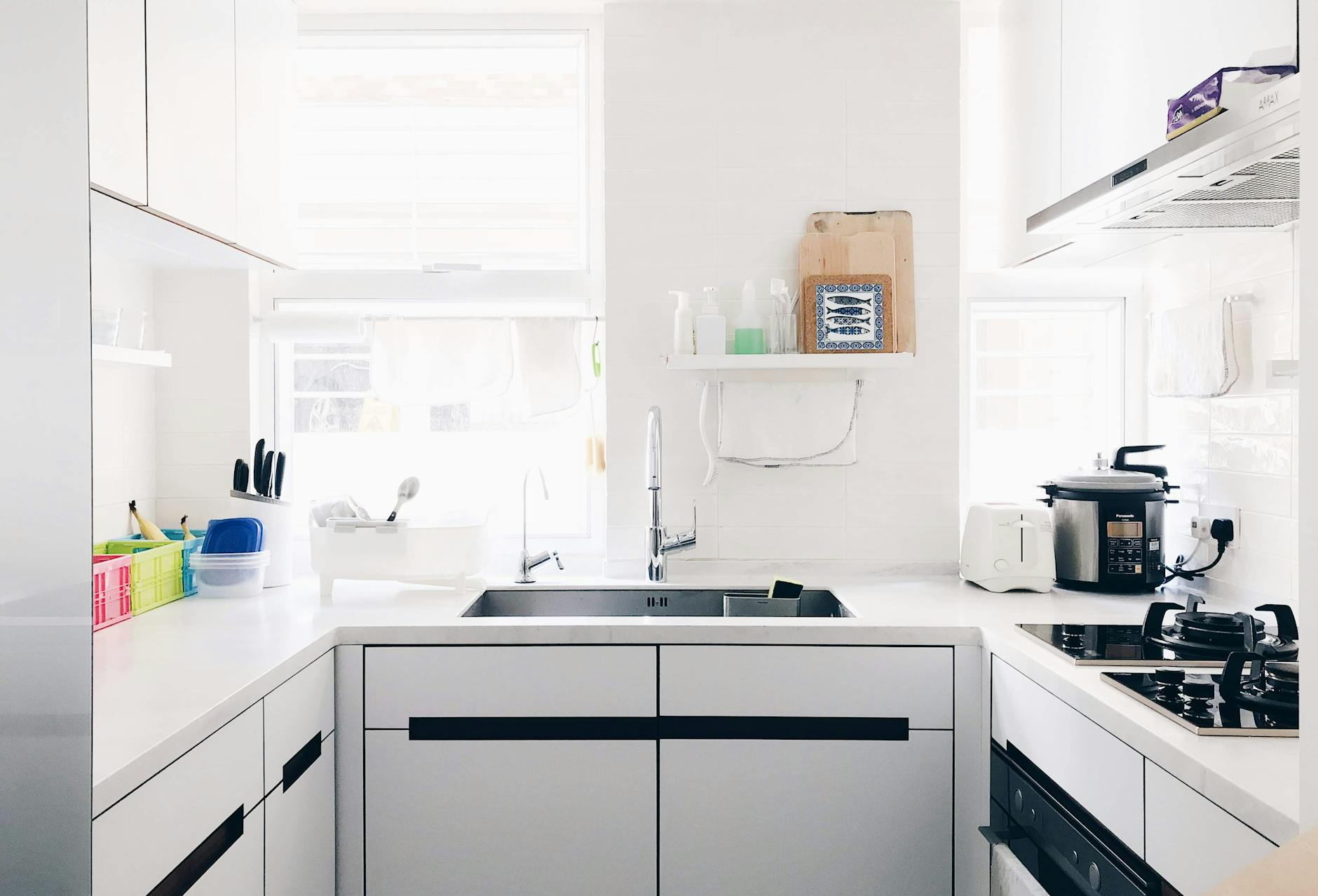
Integrating smart features into your kitchen can feel daunting with the sheer volume of new appliances and connectivity options. However, focusing on practical applications that genuinely enhance efficiency and reduce running costs reveals several accessible and beneficial upgrades. This guide cuts through the noise, detailing how to set up truly useful smart kitchen features with an eye on their short-term utility and long-term cost implications in 2026.
⚡ In a Rush? Key Takeaways
- Smart kitchens can save up to $150 annually on energy by optimizing appliance use and reducing food waste.
- Initial setup costs for essential smart features range from $200 for basic smart plugs to $1,500+ for integrated appliance suites.
- Smart appliance features, like remote pre-heating, can reduce electricity consumption by up to 10% on ovens alone via optimized timing.
- Voice assistants are the most cost-effective central control for smart kitchen devices, typically costing under $100.
- ✅ Focus on smart plugs for existing appliances and connected scales for food waste reduction to start saving money immediately.
What Are Truly Useful Smart Kitchen Features for Efficiency?
Truly useful smart kitchen features prioritize energy efficiency, food waste reduction, and streamlined workflows over novelty, offering practical benefits for homeowners.
While many devices market themselves as ‘smart,’ not all deliver tangible benefits from an efficiency or cost-saving perspective. My eight years tracking appliance performance show that the most impactful smart features are those that enable precise control, provide actionable data, or automate tedious tasks that contribute to household waste or high energy bills.
The goal is to integrate technology that makes running your home better for less, not simply to add another gadget. This often means looking beyond the flashiest new appliance to more subtle, interconnected systems. For example, a smart plug can turn an ‘old’ appliance into a ‘smart’ one, extending its life and usefulness.
Can Smart Plugs Really Make My Old Appliances ‘Smart’ and Efficient?
Yes, smart plugs cost $15–$30 each and can make non-smart appliances controllable via app, enabling energy monitoring and schedule-based operation.
Smart plugs are an incredibly cost-effective entry point into a smart kitchen. They allow you to turn any appliance with an on/off switch into a smart device, controllable via a smartphone app or voice command. This simple act unlocks several efficiency benefits.
For instance, you can use a smart plug with your kettle to pre-boil water on your commute home, saving time and only heating water precisely when needed. More significantly, many smart plugs come with energy monitoring capabilities. I’ve found that these plugs, like the TP-Link Kasa for individual appliances, give actual consumption data, revealing hidden energy hogs and enabling informed decisions on when and how to use certain appliances.
- **Energy Monitoring:** Track real-time and historical power consumption.
- **Remote Control:** Turn appliances on/off from anywhere via an app.
- **Scheduling:** Automate daily routines, like powering down coffee makers.
- **Voice Control:** Integrate with virtual assistants for hands-free operation.
- **Cost:** Typically $15-30 per plug, offering immediate ROI through energy savings.
How Do Smart Scales and Food Organizers Reduce Food Waste?
Smart scales and linked inventory systems, costing $50–$150, reduce food waste by tracking ingredients and expiration dates, saving $300–$500 annually.
Food waste is not only an environmental concern but also a significant financial drain for many households. The USDA estimates that a family of four wastes about $1,500 per year on food. Smart kitchen tools, particularly those focused on inventory management, can drastically cut these costs.
Smart scales, like those from Perfect Bake or Renpho, can precisely measure ingredients, preventing over-portioning and ensuring you use exactly what a recipe calls for. Beyond that, more advanced systems or apps linked to smart kitchen hubs can help track what’s in your fridge or pantry, along with expiration dates. This visibility prevents duplicate purchases and ensures ingredients are used before they spoil. 'I track cost per serving, not cost per hour' is a principle I apply in my own kitchen, and smart tools help enforce that.
What Integrated Smart Kitchen Systems Offer the Best Long-Term Value?
Integrated smart kitchen systems offer long-term value by connecting appliances for smooth, energy-optimized workflows, with initial costs starting around $500 for basic hubs.
Beyond individual smart devices, integrated systems coordinate multiple appliances and functions, creating a truly ‘smart’ kitchen environment. These systems offer greater convenience and efficiency over time, though they often represent a larger initial investment. The key is to select systems that communicate effectively and offer genuine workflow improvements, rather than just adding complexity.
Consider the total cost of ownership, not just the sticker price. An appliance that communicates with others to optimize energy use or prevent food spoilage might cost more upfront but save significantly over its lifespan.
Are Smart Appliances Worth the Investment for Energy Savings?
Smart appliances can be worth the investment if their features directly correlate with energy reduction, offering 5-15% savings per appliance through optimized usage.
Modern smart appliances, such as refrigerators, ovens, and dishwashers, come with built-in connectivity designed to enhance performance and reduce energy consumption. For example, a smart oven can pre-heat remotely based on your commute, ensuring it’s ready precisely when you need it, avoiding unnecessary idle time. Some dishwashers can automatically select optimal wash cycles based on load size and soil level, minimizing water and energy use.
While the initial cost is higher—a smart oven might add $200-$500 to the MSRP—the long-term savings can accumulate. 'Refrigerator running cost is invisible to most households' is a key observation I’ve made; a smart fridge, for instance, can often communicate issues, suggest optimal temperature settings, and even notify you if the door is left ajar. I track cost transparency as a major factor when evaluating their worth, and this applies particularly to appliance cost calculator results.
Comparing common smart kitchen appliances:
| Appliance Type | Typical Smart Features | Potential Annual Savings |
|---|---|---|
| Smart Refrigerator | Inventory tracking, door-open alerts, optimized cooling | $30 – $50 |
| Smart Oven | Remote pre-heat, precise temperature control, recipe integration | $20 – $40 |
| Smart Dishwasher | Auto-cycle selection, remote start, energy monitoring | $15 – $25 |
| Smart Coffee Maker | Scheduled brewing, remote start | Minimal (convenience) |
Which Voice Assistants Best Integrate with Smart Kitchens?
Amazon Alexa and Google Assistant offer the broadest integration with smart kitchen devices, costing $30–$150, providing hands-free control and recipe guidance.
A central voice assistant becomes the command center for your smart kitchen, enabling hands-free operation while you’re cooking or cleaning. Both Amazon Alexa and Google Assistant boast extensive compatibility lists with various smart kitchen appliances and gadgets. They can control everything from your smart oven to your connected lighting, often acting as the bridge between different brands of devices.
Beyond simple controls, these assistants can read out recipes, set multiple timers simultaneously, convert measurements, and even add items to your grocery list. This level of integration streamlines tasks significantly. I find that the remote access and scheduling precision that smart assistants offer is invaluable for cooking.
How Can I Set Up a Smart Kitchen on a Budget in 2026?
Set up a smart kitchen on a budget by starting with smart plugs and a voice assistant, then expand with connected scales, costing $150–$300 for a functional setup.
Building a smart kitchen doesn’t require a complete overhaul or massive upfront investment. By focusing on key areas that deliver the most impact for the least cost, you can gradually build a connected kitchen that genuinely helps you run a better home for less.
The core principle is incremental adoption. Start small, assess what features you actually use and find beneficial, and then expand. This approach prevents expensive mistakes and ensures that every smart device you add contributes meaningfully to your efficiency goals.
What Are the Most Cost-Effective Smart Kitchen Upgrades?
The most cost-effective upgrades are smart plugs ($15-30), a refurbished smart display ($30-60), and smart lighting ($10-25 per bulb for task lighting).
For those looking to dip their toes into smart kitchen technology without breaking the bank, certain upgrades offer excellent value. Smart plugs, as discussed, are foundational. Pair them with a budget-friendly smart display, such as a Google Nest Hub or Amazon Echo Show, often available refurbished for significant savings. This gives you a central control panel and voice assistant capability.
Another area to consider is smart lighting. While not directly an ‘appliance,’ smart bulbs in key task areas (over the counter, under cabinets) can be controlled via voice or app. This allows for precise brightness adjustments, rather than relying on a single, often inefficient, overhead light. Investing in tools that provide transparency to your running costs, like those covered in the energy-efficiency category on my site, is always a wise move.
How Can I Integrate Existing Appliances into a Smart System?
Integrate existing appliances using smart plugs for on/off control and energy monitoring, and consider universal remotes for IR-controlled devices, costing $15–$70.
You don’t need all-new smart appliances to have a smart kitchen. Many existing appliances can be integrated to some extent. Smart plugs are the primary tool here, enabling basic on/off control and scheduling for coffee makers, blenders, even slow cookers. For appliances that use infrared (IR) remotes, such as certain under-cabinet TVs or older smart devices, a universal smart remote hub (like a BroadLink Mini) can extend control via your smartphone or voice assistant.
The key is identifying which appliances can benefit most from this basic level of smart control. For me, the most valuable integration for existing appliances is anything that stops standby power drain, which can amount to 300-700W of continuous draw across a home, costing $80-200 per year.
Frequently Asked Questions
Do smart kitchen features truly save money, or are they just for convenience?
Smart kitchen features can save money by reducing energy consumption (up to 15% on some appliances) and minimizing food waste (saving $300-$500 annually).
What is the easiest smart kitchen feature to install for beginners?
Smart plugs are the easiest smart kitchen feature to install, taking minutes to set up and costing $15-$30, offering immediate app and voice control.
Can I control smart kitchen appliances without Wi-Fi?
Most smart kitchen appliances require Wi-Fi for full smart functionality; however, some offer limited Bluetooth control for local operation.
Our Verdict on Smart Kitchen Features
Smart kitchen features offer tangible benefits in efficiency and cost savings if selected thoughtfully, prioritizing practical utility over novelty for a better-run home.
The landscape of smart kitchen features in 2026 is rich with options, but the true value lies in practical application. My research shows that focusing on tools that genuinely reduce energy consumption, minimize food waste, and streamline daily routines delivers the most impactful results. Start with smart plugs and a voice assistant to control existing appliances, then gradually integrate smart scales or connected appliances where their efficiency benefits are clear. Running a better home for less means making informed choices about technology, ensuring every dollar spent on smart features translates into real savings and convenience over time.
— Greta Michaud, Home Appliance Efficiency Researcher