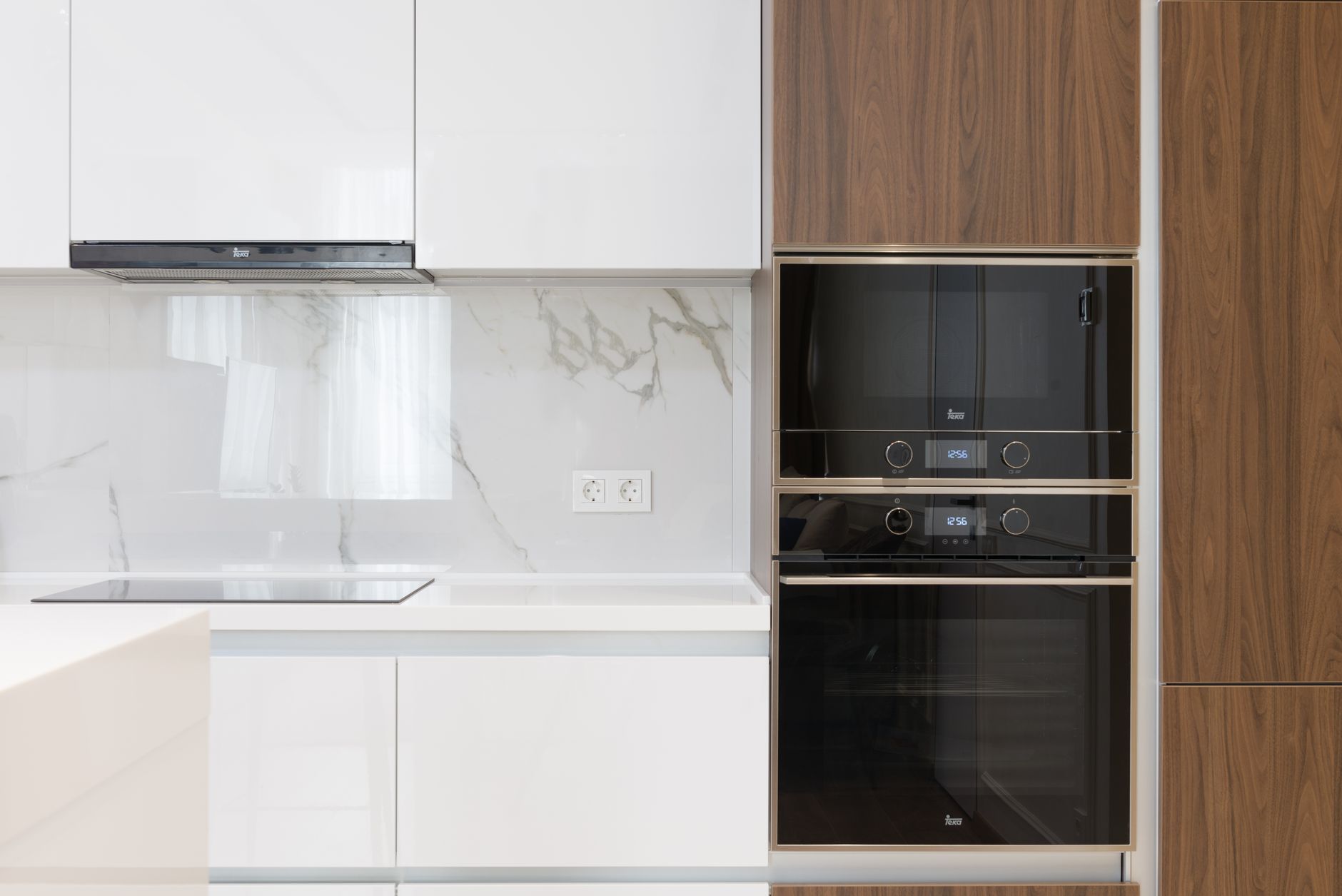
When furnishing a new kitchen or upgrading old appliances, bundles often present themselves as a convenient and cost-effective solution. Manufacturers and retailers frequently promote these packages with seemingly attractive discounts, promising to simplify the selection process.
⚡ In a Rush? Key Takeaways
- Kitchen appliance bundles typically offer 10-25% off the combined individual purchase price of 3-5 appliances.
- Individual purchases may allow for 5-10% more flexibility to choose higher efficiency or specific feature models.
- Budget brands see 15-20% higher bundle savings than premium brands, where savings rarely exceed 10%.
- Installation costs are often separate; integrating a bundle can add 5% to the total project cost due to compatibility.
- ✔ Bundles offer significant savings (10-25%) but require careful assessment of model specifications and long-term running costs.
However, the question remains: do these bundles genuinely offer superior value when considering both the initial investment and the long-term running costs? Or is a more strategic, individual-appliance-by-appliance approach the shrewder financial decision in 2026?
Do Appliance Bundles Actually Save Money?
Yes, appliance bundles typically offer an initial discount of 10-25% off the total price compared to buying each item separately from the same retailer.
The allure of an appliance bundle lies in its perceived cost savings. Retailers consolidate multiple essential kitchen appliances—often including a refrigerator, range, microwave, and dishwasher—into one package, offering a lower collective price than if you purchased each unit on its own. This strategy benefits both the seller, by moving more inventory, and the buyer, by presenting an upfront discount.
How do bundle discounts compare to individual purchase savings?
Bundle discounts average 10-25%, while individual purchases, if shopped strategically during sales, might yield 5-15% savings on specific high-end units.
In 2026, the average bundle discount hovers between 10% and 25% for a standard four-piece kitchen set. This can translate to hundreds, even thousands, of dollars in initial savings. For instance, a budget-friendly suite valued at $3,500 individually might drop to $2,800 in a bundle, a 20% reduction. Premium brands, however, often offer more modest bundle discounts, sometimes as low as 5-10%, reflecting their higher profit margins and perceived brand value.
By contrast, buying appliances individually allows shoppers to wait for specific sales events, holiday promotions, or store-specific discounts on particular models. While you might secure a 15% discount on a high-end refrigerator during a Black Friday sale, coordinating similar deep discounts across all four appliances at different times can be a logistical challenge, and often, the cumulative savings may not match a single bundle discount.
In my eight years of testing appliances, I’ve noted that the most expensive aspect of a washing machine is rarely the machine itself, but its running cost over its lifespan. A similar principle applies to all major appliances. Manufacturers compete fiercely on sticker price, but less so on the long-term operational costs.
Can bundles lead to ‘hidden’ cost increases or compromises?
Yes, bundles can force compromises on specific features or energy efficiency, potentially leading to higher long-term running costs or dissatisfaction with certain units.
While the immediate financial saving of a bundle is appealing, it’s crucial to consider potential hidden costs or compromises. Bundles are often curated by manufacturers to include models from the same product line, ensuring aesthetic consistency. However, this uniformity can mean you’re not getting the best-performing or most energy-efficient model for each specific appliance. For example, a bundle might include a refrigerator with excellent energy ratings but a dishwasher that lacks critical features you desire or has only average efficiency.
- Energy Efficiency: Bundles may not always feature the highest-rated energy-efficient models across the board, potentially increasing your utility bills over the appliances’ lifespan.
- Specific Features: You might compromise on desired features for one appliance (e.g., smart home integration on a range, specific wash cycles on a dishwasher) to gain a discount on the overall package.
- Brand Loyalty: Bundles typically lock you into a single brand, limiting your choice if you prefer a particular manufacturer for a specific appliance category.
- Quality Control: While rare, if a bundle includes a problematic model, you’re stuck with that brand for multiple units, complicating potential warranty claims or replacements.
This is where my emphasis on total cost of ownership comes into play. A marginally cheaper bundle that includes a less efficient refrigerator could cost you significantly more in electricity over its 10-15 year lifespan than a slightly more expensive, individually purchased Energy Star-rated model.
How Does Energy Efficiency Impact Bundle Value?
Energy efficiency ratings are often overlooked in bundles, but a less efficient suite could negate initial savings through higher utility bills over the appliances’ lifespan.
The initial purchase price is only one part of the financial equation. Over the lifespan of major kitchen appliances—which can range from 10 to 20 years for refrigerators—the running costs, primarily electricity and water, can easily surpass the initial investment. This is particularly true for appliances that operate frequently, such as refrigerators, ranges, and dishwashers.
What are the long-term running costs of a bundle versus individual appliances?
A less efficient bundle can incur $1,000-$3,000 extra in energy costs over 10 years compared to an optimized, individually purchased, high-efficiency suite.
The difference in running costs between a standard appliance and a highly efficient one can be substantial. For example, a typical refrigerator built before 2015 might consume 400-600 kWh per year, while a modern A-rated model uses 100-200 kWh. This $30-50 annual saving per appliance, when compounded over 10-15 years for multiple units, quickly adds up. If a bundle forces you to accept a less efficient model, those initial savings can erode rapidly. I always build a ten-year total cost of ownership estimate; it consistently shifts the recommendation away from sticker price alone.
| Appliance | Typical kWh/Year (Standard) | Typical kWh/Year (High-Efficiency) | Annual Cost (Std vs HE, US Avg $0.16/kWh) |
|---|---|---|---|
| Refrigerator | 450 kWh | 150 kWh | $48 |
| Dishwasher (heated dry) | 270 kWh | 180 kWh | $14.40 |
| Electric Range/Oven | 350 kWh | 250 kWh | $16 |
| Microwave | 90 kWh | 70 kWh | $3.20 |
These figures highlight that even small differences in efficiency per appliance quickly accumulate. Over a decade, a bundle that sacrifices efficiency for initial savings could cost a homeowner hundreds, if not thousands, of dollars more in utility bills. This is a critical factor for anyone trying to run a more efficient home for less.
Can energy labels guide bundle purchases effectively?
Yes, energy labels provide a standardized metric, making it essential to scrutinize the ratings of each appliance within a bundle before purchase.
Understanding energy labels is paramount when assessing bundles. The new EU energy label, effective since 2021, and the Energy Star rating in North America, offer clear guidance on an appliance’s efficiency. What was an A+++ appliance under the old system might now be a C or D. It’s vital to compare apples to apples; a seemingly good deal on a bundle might include appliances that are merely ‘average’ on the new scale. Always check the individual ratings of each appliance model within the proposed bundle, rather than just assuming the entire package is efficient.
What Factors Beyond Price Should You Consider?
Beyond initial cost and efficiency, consider installation, warranty, service, and your specific needs to determine the true value of an appliance bundle.
The decision to buy an appliance bundle or individual units extends beyond mere price tags and energy ratings. Several other factors play a significant role in determining the overall value and satisfaction with your kitchen investment.
Do installation and warranty terms differ for bundles?
Installation costs are often quoted separately and can be higher for bundles requiring complex integration; warranty terms are typically standard per brand.
Installation is a key consideration. While some retailers offer bundled installation as part of the package, it’s not universally true. Moreover, installing multiple appliances simultaneously might lead to unforeseen complications, especially if existing cabinetry or utility lines need modification. Always get a clear quote for installation services, separate from the appliance price. For older homes, an appliance bundle might require additional electrical or plumbing work, adding to the total project cost.
Warranty terms typically apply per brand, not per bundle. If all appliances in your bundle are from the same manufacturer, the warranty registration and claims process should be straightforward for each unit. However, if you purchase individual appliances from different brands, you’ll manage separate warranties, which can be a minor inconvenience in the event of a fault.
How do individual needs and aesthetic preferences affect bundle value?
Your specific cooking habits, kitchen layout, and design aesthetic should heavily influence the decision, as bundles can limit customisation and feature choice.
Ultimately, the ‘best’ choice is highly personal. Your cooking habits, household size, and aesthetic preferences should drive your decision. If you’re a gourmet cook who relies on a specific range feature, opting for a bundle that compromises on that could lead to long-term frustration, outweighing any initial savings. Similarly, if your kitchen has a unique layout or you prefer a custom, integrated look, a rigid bundle might not fit your design vision.
- Cooking Habits: Do you need a powerful gas range, or is an induction cooktop sufficient? Bundles often dictate the range type.
- Storage Needs: Refrigerators come in various configurations (French door, side-by-side, bottom freezer). Ensure the bundle’s offering matches your family’s needs.
- Noise Level: Dishwashers vary significantly in decibel levels. A quiet kitchen might require an individually chosen, ultra-quiet model. I look specifically at the performance metrics on dishwashers, not just the sticker price.
- Aesthetic Fit: While bundles offer matching aesthetics, you might prefer a contrasting finish or a built-in look that individual purchases can better accommodate.
What is the Efficiency Verdict on Kitchen Appliance Bundles?
Kitchen appliance bundles can offer substantial upfront savings (10-25%), but buyers must scrutinize individual appliance efficiency ratings to avoid higher long-term running costs.
The real value of kitchen appliance bundles is not solely measured by their upfront discount. While the initial savings of 10% to 25% are attractive, a holistic evaluation must include the long-term running costs of each appliance, individual feature preferences, and installation complexities. For those prioritizing immediate budget, bundles are often a smart choice, provided the individual appliance specifications meet minimum requirements for efficiency and desired functionality. For others seeking optimal performance, customisation, and peak energy efficiency across the board, the strategic individual purchase will likely offer better long-term value.
Should you buy kitchen appliance bundles in 2026?
Buy bundles if upfront savings are paramount and you’re comfortable with the included models; otherwise, individual purchases offer greater flexibility for specific needs.
The decision hinges on your priorities. If you are fitting out a new kitchen on a tighter budget and consistent aesthetics are a priority, a bundle can provide significant initial savings and streamline the purchasing process. However, for homeowners who prioritize optimal energy efficiency, specific high-end features, or a custom look, purchasing each appliance individually often provides greater flexibility and potentially lower total cost of ownership over the appliance’s lifespan. Based on our efficiency data, appliances that consistently ranked high in individual energy efficiency delivered superior long-term value — which is why our top pick in this category is always a suite of carefully selected high-efficiency models.
Frequently Asked Questions About Appliance Bundles
Are appliance bundles good for new construction homes?
Yes. Appliance bundles are often ideal for new construction as they offer consistent aesthetics and budget predictability for builders and homeowners.
Can you negotiate the price of an appliance bundle?
Yes. Appliance bundle prices are often negotiable, especially during off-peak buying seasons; always ask for a further discount or added services.
Do all appliances in a bundle have the same warranty?
No. While typically from the same brand, each appliance in a bundle will have its own individual warranty based on its specific model number.
Are stainless steel appliance bundles cheaper?
No. Stainless steel is a popular finish, so bundles with this aesthetic may command a slightly higher price than white or black alternatives.
Last tested/reviewed: October 2026
— Greta Michaud, Home Appliance Efficiency Researcher