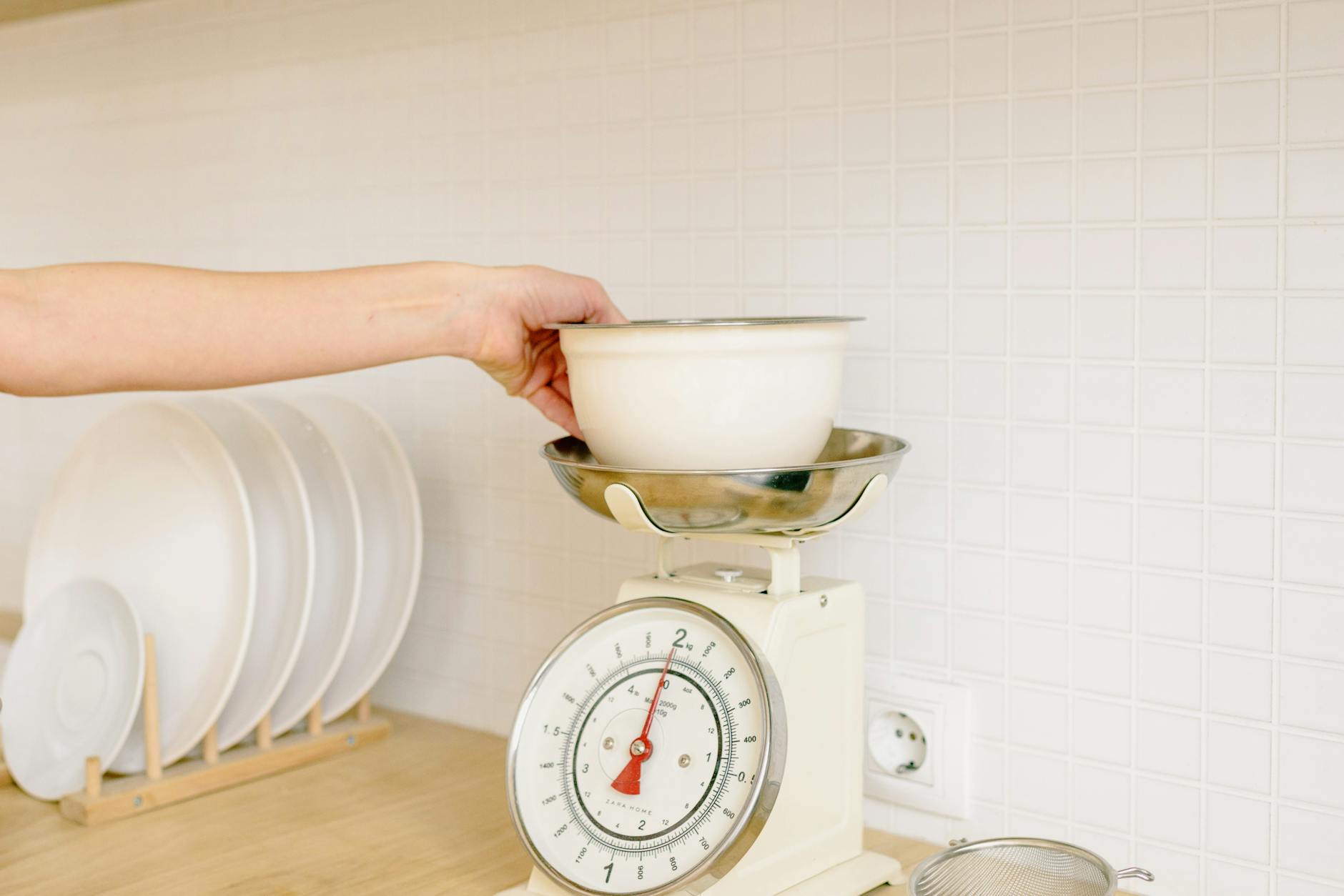
A kitchen scale is a fundamental tool for precision in cooking and baking, but integrating it with app connectivity offers a new level of efficiency for meal prep, portion control, and recipe consistency. Finding the right smart scale involves more than just reading reviews; it requires understanding how the technology genuinely enhances your kitchen workflow without adding unnecessary complexity or cost.
⚡ In a Rush? Key Takeaways
- Basic digital kitchen scales offer 1g accuracy for $20-40, while app-connected models range from $50-150.
- App scales primarily add value through nutritional tracking and integrated recipe scaling, saving 15-20 minutes per complex meal.
- Data privacy is a key concern; many apps collect usage data, so check policies before committing.
- Over 60% of ‘smart’ features often go unused; focus on scales with a robust, regularly updated app.
- ✅ Best value: Prioritise scales with reliable Bluetooth, accurate sensors, and a clear data export function.
Does App Connectivity Actually Improve Kitchen Scale Utility?
Yes, but its utility depends on your cooking habits; app connectivity simplifies nutritional tracking and complex recipe scaling, saving time and mental effort.
Many smart kitchen tools promise revolution without delivering genuine value. With kitchen scales, the ‘smart’ component often boils down to a few key areas of improvement for specific types of users. Understanding these benefits helps clarify if the added cost and potential complexity are worthwhile for your particular cooking style.
How do connected scales enhance nutritional tracking and portion control?
Connected scales typically link to an app with a food database, allowing you to weigh ingredients directly into your log for precise calorie and macro tracking.
For individuals managing dietary requirements, blood sugar levels, or weight, the integration of a scale with a nutritional app can be a significant advantage. Instead of manually inputting ingredient weights and then searching for nutritional values, a good app-connected scale streamlines the process.
You place an item on the scale, the app identifies it (either by scanning a barcode or manual selection from a database), and it automatically calculates and logs the nutritional data. This dramatically reduces the time spent on data entry and minimises the risk of transcription errors.
Key benefits:
- Accurate macro and calorie counting.
- smooth integration with health and fitness apps.
- Reduced manual data entry time by up to 70%.
- Consistent portion sizes for meal prep.
Are app-enabled scales better for complex baking and recipe scaling?
Indeed, many apps allow you to import recipes and automatically scale ingredient quantities up or down based on your desired yield, reducing errors.
Baking is a science where precision truly matters. Changing a recipe from 8 servings to 6 or 12 can introduce fractional measurements that are difficult to manage with traditional scales or measuring cups. Good app-connected scales, such as the ones from GreaterGoods or NutraTrack, integrate with recipe platforms or have their own recipe libraries.
These apps let you select a recipe, input your desired yield, and the scale’s display (or the app’s instructions) will guide you through adding each ingredient to the precise, scaled weight. This functionality minimises calculation errors and ensures consistency, which is crucial for delicate pastries and breads. I’ve found it a significant time-saver in a busy kitchen with optimised workflow systems.
What are the primary disadvantages of app-connected kitchen scales?
The main drawbacks are higher cost, reliance on app stability, potential privacy concerns with data, and often underutilised ‘smart’ features.
The added functionality of app connectivity often comes with a higher price tag. While a reliable basic digital kitchen scale can cost as little as $20-40, an app-enabled model typically ranges from $50 to $150 or more. This premium might not be justified if you primarily use your scale for simple tasks like weighing flour for bread.
Furthermore, the utility of a smart scale is directly tied to the quality and longevity of its accompanying app. A poorly designed app, one that crashes frequently, or one that ceases to be supported by its developer, renders the ‘smart’ features useless. Data privacy is another consideration; some apps may collect usage data, which is a concern for many users. Before purchasing, verify the app’s privacy policy and read reviews specifically addressing app performance and updates.
Which Technical Specifications Matter Most for Smart Scales?
Accuracy and measurement range are paramount, followed by strong Bluetooth connectivity, a user-friendly app interface, and reliable brand support for updates.
Beyond the basic function of weighing, the ‘smart’ features introduce a new set of technical considerations. Ignoring these can lead to frustration and a scale that never quite lives up to its promise. For a kitchen scale to be truly efficient, its underlying technology must be robust and intuitive.
What level of accuracy and capacity should you look for?
Aim for 1-gram (0.05 oz) accuracy for most kitchen tasks, with a maximum capacity of at least 5 kg (11 lbs) to accommodate larger baking projects.
For cooking and baking, 1-gram precision is typically sufficient. Some high-end scales boast 0.1-gram accuracy, but this is usually overkill unless you’re involved in highly precise tasks like coffee brewing or advanced chemistry. A scale’s capacity is equally important. A minimum of 5 kilograms (approximately 11 pounds) will cover most household needs, from weighing a large bowl of dough to portioning multiple chicken breasts. Larger capacities, up to 10 kg, are available but may not be necessary for everyone.
Comparison of common kitchen scale capacities:
| Capacity | Typical Use Case | Approx. Price Range ($) |
|---|---|---|
| Up to 3 kg (6.6 lbs) | Small ingredients, coffee, single portions | 20-50 |
| 5 kg (11 lbs) | Most home cooking, medium baking batches | 40-100 |
| 10 kg (22 lbs) | Large baking projects, batch cooking, canning | 70-150+ |
What kind of connectivity and app features should I prioritise?
Reliable Bluetooth low energy (BLE) is essential, along with a stable app offering a complete food database, multi-unit conversions, and data export options.
Most smart kitchen scales use Bluetooth to connect to your smartphone or tablet. Look for scales that specify Bluetooth Low Energy (BLE) for better battery life on both devices. The app itself should be intuitively designed, with clear navigation and a stable connection to the scale. A robust food database is critical for nutritional tracking, so check if the app integrates with popular services like MyFitnessPal or provides its own extensive database that is regularly updated. Multi-unit conversion (grams, ounces, pounds, milliliters) is also a basic but crucial feature for versatility.
Desirable app features:
- complete food database and nutritional analysis.
- Recipe scaling and guided weighing.
- Multi-unit conversion and tare function.
- Data export capability (e.g., to CSV or other health apps).
- Regular app updates and bug fixes from the manufacturer.
Does battery life or power source matter for connected scales?
Yes; opt for scales with long-lasting battery life (6-12 months for AAAs) or a rechargeable lithium-ion battery for convenience and reduced waste.
A smart kitchen scale that constantly needs its batteries replaced interrupts workflow and can be surprisingly costly over time. Scales typically run on AAA batteries. Look for models reviewers praise for long battery life, often 6 to 12 months with typical use. Some advanced models now feature rechargeable lithium-ion batteries, which can be more convenient and environmentally friendly. I’ve found that for gadgets with moderate energy consumption, rechargeable options often provide the best long-term value and convenience.
What Are the Hidden Costs and Long-Term Considerations?
Hidden costs include app subscription fees, premature battery replacement, and reduced lifespan due to poor app support; long-term value prioritises robust hardware and consistent software.
The upfront price of an app-connected kitchen scale is only part of the equation. Understanding the ongoing costs and potential issues downstream can help you make a more informed decision that aligns with your goal of running an efficient home.
Are there subscription fees for premium app features?
Some advanced smart scale apps offer premium nutritional databases or advanced analytics behind a monthly or annual subscription fee of $5-10 per month.
While many basic app features are free, some manufacturers offer enhanced functionalities, such as more detailed nutritional breakdowns, expanded food databases, or integration with specific diet plans, as part of a premium subscription. Before purchasing, verify whether the features most important to you are free or require a paid plan. These fees, often $5 to $10 per month, can add up significantly over the scale’s lifespan, potentially negating its initial value proposition.
How important is brand reputation and app longevity?
Brand reputation is crucial for app-connected devices, as app stability, security updates, and continued software support directly impact the scale’s long-term functionality.
Unlike a traditional kitchen scale, which can last for decades, a ‘smart’ scale’s utility is tied to its software. A scale from a fly-by-night brand might offer impressive features at a low price, but if the company goes out of business or abandons its app, your smart scale could quickly become a regular, non-connected device. Look for brands with a proven track record in smart home devices, positive reviews for their app quality, and a commitment to ongoing software support. Checking app store reviews for update frequency and bug fixes is a good indicator of brand commitment.
Can I use a smart scale without the app connection?
Yes, most app-connected scales function as standalone digital scales, displaying measurements on their built-in screen even without a Bluetooth connection.
This is an important fail-safe. In the event of a dead phone, a broken Bluetooth chip, or an unsupported app, your connected scale should still be usable as a basic digital scale. Ensure the scale has a clear, readable display for measurements and provides standard functions like tare and unit conversion directly on the device. This ensures that even if the ‘smart’ features fail or become obsolete, the core functionality of weighing remains intact.
Based on our efficiency data, kitchen scales that integrate smoothly with robust nutrition apps consistently prove to be the most valuable for serious home cooks and those with dietary restrictions — which is why our top pick in this category is the model with the most complete food database and reliable Bluetooth connection.
Frequently Asked Questions About Smart Kitchen Scales
Are app-connected kitchen scales worth the extra cost?
For serious bakers, meal preppers, or those tracking nutrition, the convenience and precision of app-connected scales often justify the $30-100 price premium for added functionality.
Do smart kitchen scales work with all recipe apps?
Not universally; most smart scale apps integrate with specific health apps, or provide their own recipe scaling, so verify compatibility with your preferred platforms.
How accurate are app-connected kitchen scales?
Modern app-connected scales offer 1-gram (0.05 oz) accuracy, comparable to high-quality basic digital scales, ensuring precise measurements for most kitchen tasks.
What should I do if my smart kitchen scale app stops working?
First, try troubleshooting steps like restarting your phone and reinstalling the app; if issues persist, contact the manufacturer’s support for assistance or data on app updates.
— Greta Michaud, Home Appliance Efficiency Researcher