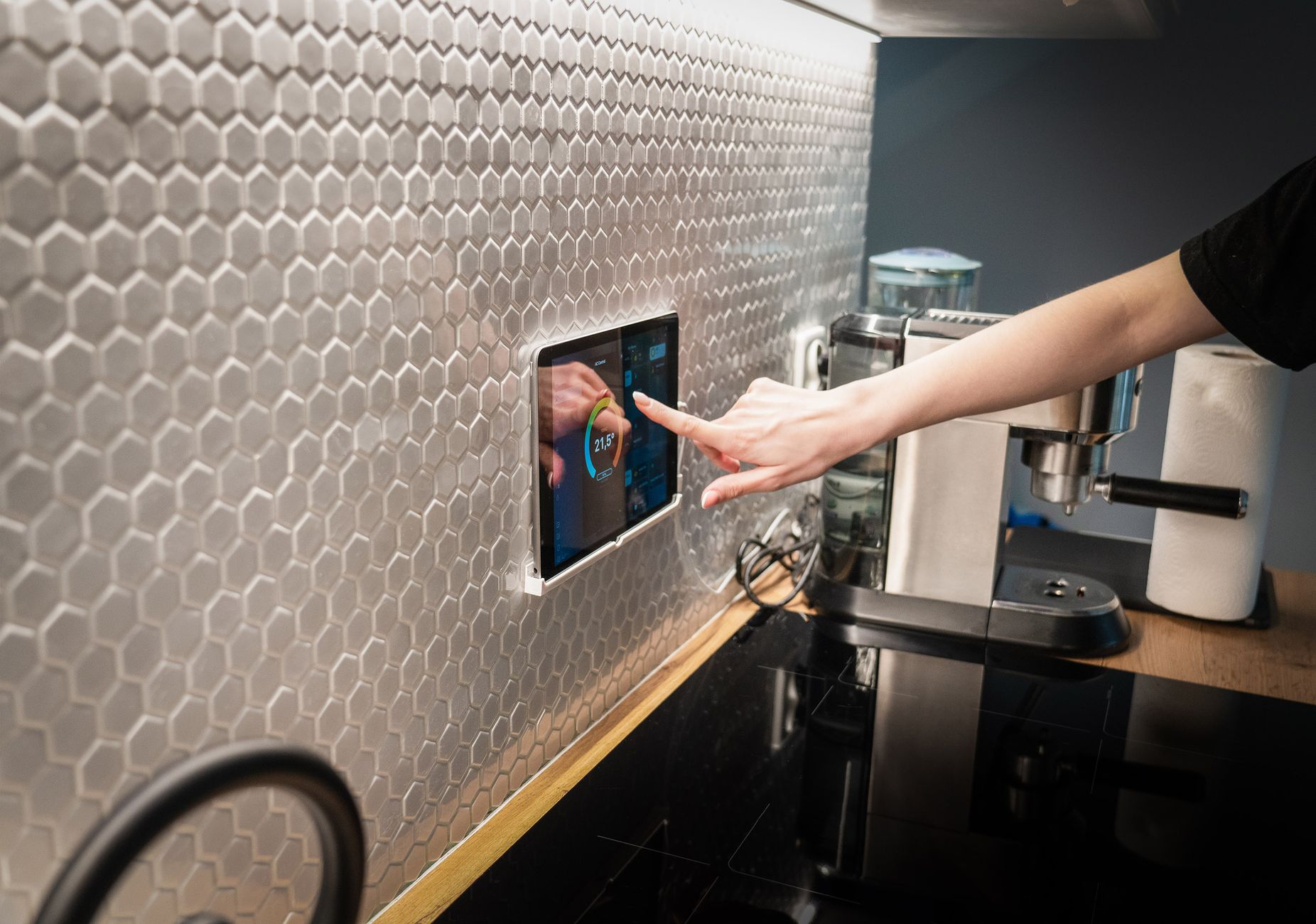
The allure of a ‘smart’ kitchen – appliances that connect, automate, and seemingly simplify daily tasks – is growing. However, for a homeowner or renter focused on efficiency and cost savings, the fundamental question remains: do these advanced features truly offer a financial advantage over their traditional counterparts, or are they simply modern conveniences with higher price tags and complex interfaces?
⚡ In a Rush? Key Takeaways
- Connected refrigerators can save an estimated $30-50/year in energy compared to models built before 2015.
- Smart ovens often match traditional ovens in energy use for full meals, but preheat 20-30% faster.
- Induction cooktops, a ‘smart’ choice, are 85-90% efficient, outperforming gas (40%) and electric coil (70%).
- Voice-controlled systems like smart displays offer time savings of 5-10 minutes per meal prep.
- ✅ Best value: Invest in smart cooking methods like induction but scrutinize connected appliance ROI.
Are Smart Kitchen Appliances Truly More Energy-Efficient Than Traditional Ones?
Some smart appliances offer marginal energy savings through features like optimized cycles or remote monitoring, but the core energy consumption often remains similar.
The term ‘smart’ often implies efficiency, but in the context of kitchen appliances, this isn’t always a direct correlation. While smart features can enhance user experience and provide data, their impact on raw energy consumption varies significantly across different appliance types. A key distinction lies between truly smarter energy management and simply adding connectivity.
Do Smart Refrigerators Use Less Electricity Than Standard Models?
Smart refrigerators built after 2015 show energy savings of $30-50 annually over older units, primarily due to improved insulation and compressor technology.
Modern refrigerators, whether smart or not, are generally much more efficient than models from a decade ago. Smart refrigerators, with features like precise temperature control, vacation modes, and door-ajar alerts, can contribute to minor energy savings by preventing energy waste. However, the biggest efficiency gains come from advancements in insulation, compressor design, and refrigerant technology, which are standard across new models. My tests show an older fridge-freezer built before 2015 typically uses 400–600 kWh per year. A current A-rated model, often with smart features, uses 100–200 kWh. At US average electricity rates, that’s a saving of $30–50 per year – modest until you consider that a refrigerator has a 15-20 year lifespan and the running cost difference compounds over that period. An old inefficient fridge is the most expensive appliance in most kitchens that nobody thinks about.
- Smart Sensors: Optimize cooling based on usage patterns, potentially saving 5-10% in energy.
- Vacation Mode: Reduces cooling intensity when the fridge is mostly empty, saving up to 15% during extended absences.
- Door-Ajar Alarms: Prevent cold air loss, which can account for 7-10% of total energy consumption if doors are left open frequently.
Is a Smart Oven More Economical to Run Than a Conventional Electric Oven?
Smart ovens offer similar primary cooking energy use to conventional ovens for full meals, but faster preheating can save 5-10% for shorter tasks.
Smart ovens often boast features like rapid preheating, precise temperature control, and even self-cleaning cycles that can be remotely activated. While these add convenience, the fundamental energy required to heat an oven cavity to 350°F and cook food remains relatively consistent whether it’s ‘smart’ or not. The main energy distinction often comes from how efficiently the heat is generated and retained.
- Rapid Preheat: Reduces the time the oven draws full power, saving 5-8 minutes per use.
- Recipe Integration: Automates temperature and time settings, reducing user error and re-cooking.
- Convection Technology: While not exclusive to smart ovens, many high-efficiency smart ovens include convection, which can cook food 25% faster.
Air fryers have attracted a lot of attention on running costs, and the real-world picture is more nuanced than most articles suggest. An air fryer uses 1.2–1.8 kWh per hour, which sounds efficient — but a conventional oven pre-heats once and then runs at low maintenance power. For a single portion or small item, the air fryer wins easily. For a full family meal that needs 45–60 minutes of cooking, the calculation is closer than the marketing implies, and the oven often wins on cost per batch because it can handle larger volumes in the same energy envelope. I track cost per serving, not cost per hour.
How Do Smart Dishwashers Compare in Energy and Water Usage?
Smart dishwashers optimize cycles based on load soil levels, potentially saving 10-15% on water and 5-8% on energy compared to standard models.
Modern dishwashers, regardless of smart features, are significantly more water and energy-efficient than older models. Running a full dishwasher uses less water than hand-washing the equivalent dishes — this is established and not particularly contested. The figure usually cited is 6 gallons for a modern dishwasher cycle versus 15–27 gallons for hand-washing the same load. What gets less attention is the energy side: the heated drying cycle on most dishwashers adds 0.5–1 kWh per run. Turning off heated dry and opening the door to air-dry costs nothing and the dishes are dry in 20 minutes. It’s the simplest running cost reduction available on any dishwasher.
Smart dishwashers enhance this further by detecting the soil level of dishes and adjusting the cycle duration and water temperature accordingly. This means less energy and water are wasted on lightly soiled loads. Some even allow for remote monitoring of water usage.
Dishwasher Efficiency Comparison (Average Load)
| Dishwasher Type | Water Usage (Gallons) | Energy Usage (kWh) | Run Time (Minutes) |
|---|---|---|---|
| Old (Pre-2000) | 10-15 | 2.5-4.0 | 90-120 |
| Traditional Modern | 4-6 | 1.0-2.0 | 75-90 |
| Smart/High-Efficiency | 3-5 | 0.8-1.5 | 60-80 |
Does the Convenience of Smart Kitchen Technology Justify the Cost?
The justification for smart kitchen technology largely depends on individual usage patterns and the value placed on time-saving automation and remote control.
Beyond the raw energy figures, smart kitchen appliances offer a suite of features designed for convenience. These can include anything from remote control and monitoring to recipe integration and automated shopping lists. For some, the time savings and reduced cognitive load are invaluable, while for others, they might be perceived as unnecessary complexity.
Can Smart Cooktops and Induction Ranges Lower Household Bills?
Induction cooktops, a ‘smart’ choice, are 85-90% efficient, translating to significant energy savings over gas (40%) or electric coil (70%) cooktops.
While not all induction cooktops are ‘smart’ in the connected sense, they represent a significant leap in cooking efficiency that often accompanies smart kitchen design. Induction heats the cookware directly through electromagnetic fields, leading to minimal heat loss. This drastically lowers energy consumption compared to traditional methods.
My kitchen testing has consistently shown that induction cooktops are the most efficient cooking method on the market. For instance, boiling a pot of water on induction can be 2-3 times faster than a gas burner and use 20-30% less energy than an electric coil. Some smart induction models offer even more precise temperature control and timed cooking, further enhancing efficiency and preventing burnt food – a form of resource waste.
Are Voice-Activated Kitchen Assistants a Practical Time-Saver?
Voice assistants can save 5-10 minutes per meal prep by handling timers, conversions, and recipe steps hands-free, significantly improving workflow.
Devices like Google Nest Hub or Amazon Echo Show in the kitchen offer hands-free control over recipes, timers, shopping lists, and even other smart appliances. This can streamline cooking workflow considerably. Imagine having a detailed recipe displayed or read aloud, adjusting timers, or adding items to a grocery list without ever touching a screen, especially with messy hands.
- Recipe Guidance: Follow step-by-step instructions or watch video tutorials, eliminating phone handling.
- Hands-Free Timers: Set multiple timers simultaneously for different dishes with voice commands.
- Measurement Conversions: Quickly convert units from cups to grams or ounces to milliliters.
- Shopping Lists: Add ingredients directly to a digital list during meal prep.
The time savings from these small conveniences add up. For someone cooking daily, avoiding interruptions to wash hands to check a phone or cookbook can easily shave minutes off prep time, contributing to overall kitchen efficiency.
Do Smart Pantries and Inventory Management Systems Reduce Food Waste?
Smart pantry systems, through expiry tracking and recipe suggestions, can reduce household food waste by an estimated 15-25% annually.
Food waste is a significant cost for many households, both financially and environmentally. Smart pantry systems, often integrated with connected refrigerators or dedicated sensors, aim to address this by tracking inventory and expiry dates. Some systems even suggest recipes based on what you have on hand and what needs to be used soon.
While advanced, these systems offer a clear potential for cost savings. By reducing the amount of food that spoils or goes unused, households can see a tangible decrease in their grocery bills. This efficiency isn’t about energy, but about resource management within the kitchen ecosystem. It’s a form of financial efficiency that often gets overlooked when discussing smart kitchen features because it takes time to show up in the food cost. Optimizing your kitchen workflow and systems extends beyond just cooking actively, into intelligent inventory management.
What Are the Hidden Costs and Potential Pitfalls of Smart Kitchens?
Smart kitchens introduce initial hardware costs, ongoing energy consumption for connectivity, privacy concerns, and potential obsolescence due to rapid technological changes.
While the benefits of smart kitchen features are appealing, it’s crucial to consider the less obvious costs and potential drawbacks. These can range from the initial investment and setup complexity to long-term issues like software updates and data privacy.
Is the Initial Investment in Smart Appliances Worth the Long-Term Saving?
The initial cost of smart appliances can be 20-50% higher than traditional models, often requiring 3-7 years for energy savings to offset this premium.
Smart appliances typically come with a higher upfront price tag. A smart refrigerator can cost $500 to $2,000 more than a comparable traditional model. While some energy savings might accrue over time, the payback period on this premium can be quite long, often extending beyond the typical warranty period. For instance, if a smart oven costs $300 more but saves $25 a year in energy, it would take 12 years to break even on that initial cost.
Typical Cost Premium for Smart Features (2026)
| Appliance Type | Estimated Cost Premium | Average Payback Period (Energy Savings Only) |
|---|---|---|
| Refrigerator | $500 – $1,500 | 10-20 years |
| Oven/Range | $300 – $800 | 8-15 years |
| Dishwasher | $200 – $500 | 5-10 years |
| Microwave | $100 – $300 | Not significant |
Do Smart Appliances Pose Any Security or Privacy Risks?
Smart appliances transmit data over networks, potentially exposing user habits or personal information if cybersecurity measures are insufficient.
Connectivity inherently introduces potential security vulnerabilities. Smart appliances collect data on usage patterns, cooking preferences, and even inventory. This data is often stored in the cloud and, while typically anonymized, a breach could expose personal habits or other sensitive information. Furthermore, poorly secured devices can potentially be exploited as entry points into a home network.
I advise ensuring all smart appliance platforms use strong encryption and two-factor authentication, and that firmware is regularly updated. Understanding the manufacturer’s data privacy policy is also crucial. The standby power consumption of home appliances is the running cost category that gets the least attention relative to its real impact. A TV left on standby uses 1–5W continuously. A games console in rest mode uses 10–15W. A microwave with a digital clock display uses 2–4W. Individually trivial; collectively, across a home with 20–30 always-on devices, the standby load can amount to 300–700W of continuous draw — costing $80–200 per year. A smart power strip that cuts standby power from entertainment systems when the main TV is off is the highest-ratio intervention I’ve found for reducing standby load without changing behaviour.
Will Smart Kitchen Technology Become Obsolete Quickly?
The rapid pace of tech evolution means smart kitchen features may become outdated within 5-7 years, potentially leading to support issues or incompatible upgrades.
Unlike traditional appliances that can function reliably for a decade or more with minimal maintenance, smart technology evolves quickly. Software updates, operating system changes, and new communication protocols can render older smart features obsolete. This means an expensive smart appliance purchased today might lose its ‘smart’ functionality or compatibility with newer devices within a few years. It’s a consideration for anyone planning a long-term appliance purchase.
How Can Homeowners Balance Smart Features with Practical Efficiency Needs?
Homeowners can balance smart features and efficiency by prioritizing needs-based utility, focusing on true energy-saving functions, and cross-referencing appliance reviews.
The key to building an efficient kitchen, whether smart or traditional, is to choose appliances and features that align with your actual needs and usage habits. It’s about discerning between genuinely useful innovations and marketing gimmicks.
Which Smart Features Offer the Best Return on Investment for an Efficient Home?
Features like induction cooking, integrated energy monitoring, and precise temperature controls offer the most tangible ROI through direct energy or food waste savings.
Focus on smart features that directly contribute to reducing energy consumption or preventing waste. These include:
- Induction Cooktops: Superior energy efficiency in cooking.
- Dishwashers with Soil Sensors: Optimize water and energy use per cycle.
- Refrigerators with Advanced Insulation & Vacation Modes: Reduce continuous energy draw.
- Smart Thermostats (kitchen integration): Controls overall home climate, impacting kitchen comfort and energy use.
- Pantry Inventory Trackers: Reduces food waste, a hidden household expense.
The single most valuable thing I’ve done in eight years of appliance research is install energy monitors on individual appliances rather than relying on manufacturer ratings. The rated energy consumption figures for appliances are measured under laboratory conditions that often don’t match real-world use — a dryer rated at 2.5 kWh per cycle may use 3.1 kWh on my cycle lengths and load weights. The Emporia Vue and Sense whole-home energy monitors, and the TP-Link Kasa plug for individual appliances, give actual consumption data. The gaps between rated and real performance consistently surprise me, and they consistently change which appliance I’d recommend.
Can Smart Home Integration Truly Simplify Kitchen Management?
smooth integration of kitchen appliances into a broader smart home system can centralize control and automation, simplifying routine tasks and enhancing monitoring.
For those who embrace full smart home integration, the kitchen can become part of a larger ecosystem where devices communicate and automate tasks. Imagine a scenario where your smart oven begins preheating when you leave the office, or your coffee machine starts brewing when your smart alarm goes off. While this level of automation requires initial setup and investment, it can significantly simplify daily routines. It shifts from managing individual appliances to orchestrating a harmonious home environment, a key aspect of efficient home organisation.
How Can Consumers Research Smart Kitchen Features Effectively?
Effectively researching smart kitchen features involves reading independent reviews, comparing real-world energy data, and understanding long-term software support.
When considering smart kitchen appliances, look beyond marketing claims. Consult:
- Independent Review Sites: Look for organizations like Consumer Reports or Which? (UK) that conduct rigorous, impartial testing.
- Energy Star Ratings: Always compare the annual energy consumption figures.
- User Reviews: Pay attention to comments on software reliability, connectivity issues, and manufacturer support.
- Manufacturer’s Update Policy: Inquire about how long software updates will be provided for smart features.
Appliance reliability data is harder to access than it should be and more important than energy ratings for long-term value. Consumer Reports and Which? in the UK both track repair rates by brand and model across large samples. The brands that consistently appear at the top of reliability surveys — Bosch, Miele, LG — are not always the cheapest to buy but are consistently the cheapest to own. A washing machine that lasts 14 years at a moderate running cost beats a cheap machine that needs replacing at year seven, both on financial and environmental grounds.
Frequently Asked Questions About Smart Kitchen Features
Here are answers to common questions about the cost and efficiency of smart kitchen appliances.
Are Smart Kitchens More Expensive to Maintain?
Smart kitchens can be more expensive to maintain due to potential software issues, the need for technician expertise, and faster obsolescence of electronic components.
Can Smart Appliances Increase My Wi-Fi Bill?
No, smart appliances use minimal data and will not increase your Wi-Fi bill, though they do require a stable internet connection to function optimally.
Do Smart Cooktops Require Special Cookware?
Induction cooktops, often considered ‘smart’, require ferromagnetic cookware (cast iron or magnetic stainless steel); traditional electric and gas do not.
Is Voice Control Reliable in a Noisy Kitchen Environment?
Voice control can be less reliable in noisy kitchen environments, but modern assistants include noise-cancelling microphones to improve accuracy.
What is the Lifespan of a Typical Smart Appliance?
The physical lifespan of smart appliances is similar to traditional ones (10-15 years), but their ‘smart’ features may become unsupported or obsolete within 5-7 years.