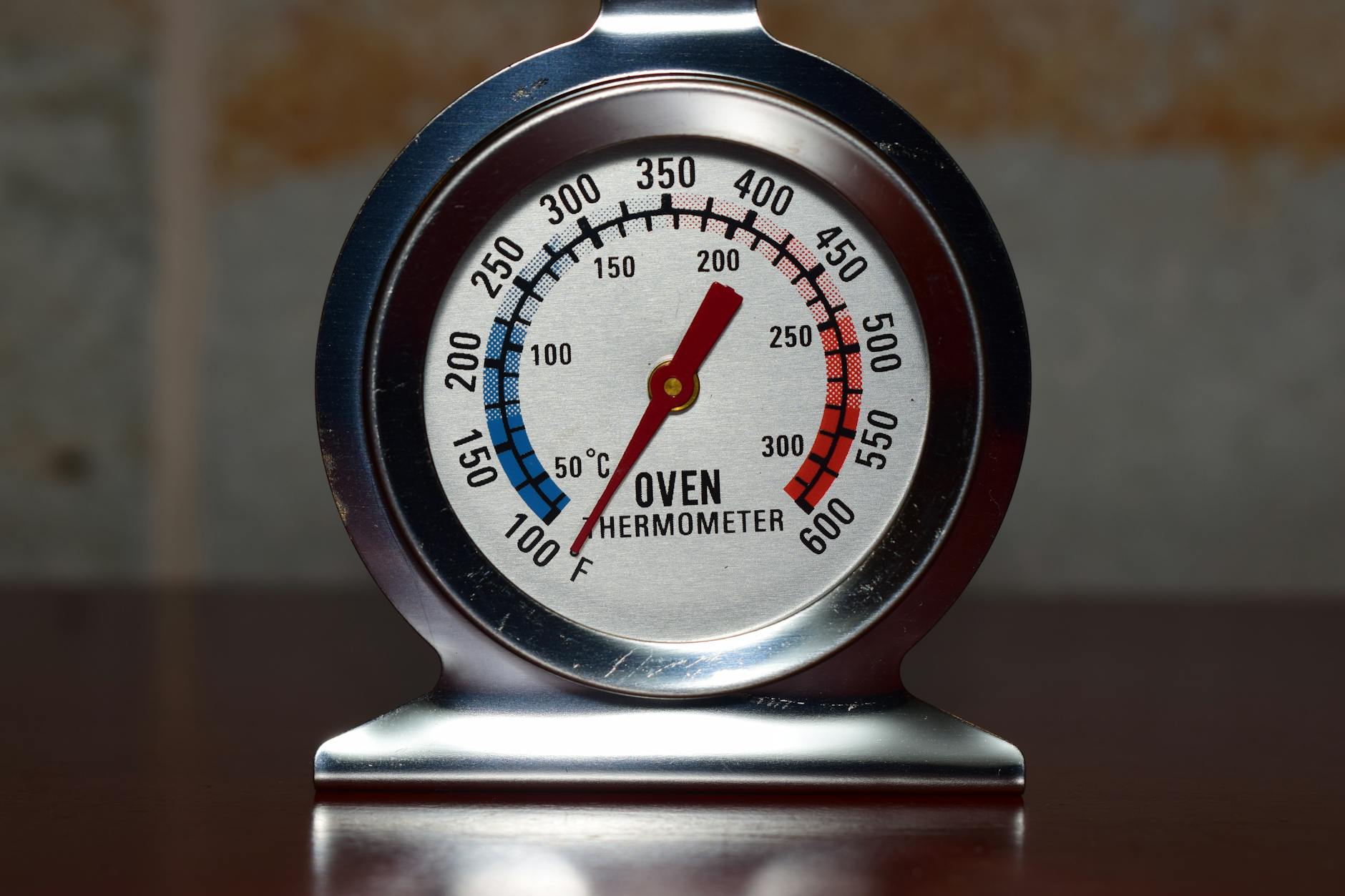
When it comes to BBQ, consistently achieving perfectly cooked, juicy meat while ensuring food safety is paramount. A high-quality food thermometer is not merely a convenience; it’s an indispensable tool for any serious griller. From quick temperature checks on individual cuts to monitoring large roasts, the right thermometer can elevate your cooking significantly. In this 2026 guide, we’ll explore what makes a great BBQ thermometer and help you choose the best fit for your grilling style.
⚡ In a Rush? Key Takeaways
- Instant-read thermometers offer 1-3 second readings, crucial for grilling meats safely and preventing overcooking.
- Probe thermometers with wireless range up to 300+ feet allow remote monitoring of large cuts over long cooks; many cost $60-$120.
- Accuracy within ±1°F is standard for reliable results; recalibration features extend a thermometer’s useful life.
- NSF certified models ensure durability and hygiene, key for frequent use and easy cleaning after messy BBQ sessions.
- ✅ For versatile BBQ use, invest in a fast, accurate instant-read thermometer paired with a wireless leave-in probe setup.
In countless hours of preparing meals and reviewing kitchen equipment, I’ve noted that many home cooks underestimate the impact of precise temperature control. Overcooked meats lose moisture and flavor, while undercooked meats pose significant health risks. A good thermometer acts as your personal assurance, eliminating guesswork and boosting your confidence at the grill.
What Are The Essential Features of a Reliable BBQ Food Thermometer?
A reliable BBQ food thermometer must offer quick response times, high accuracy, and durability to withstand the rigors of outdoor cooking environments.
Choosing the right food thermometer for your BBQ requires understanding the core features that contribute to both performance and longevity. Without these key attributes, even a well-intentioned purchase can lead to frustration and inconsistent results. Understanding what makes a thermometer effective ensures you make a smart investment.
Why is Reading Speed Crucial for BBQ Temperatures?
Fast reading speeds, ideally 1-3 seconds, prevent heat loss from the grill and allow for swift, multiple temperature checks across a cooking surface.
When cooking on a hot grill, every second counts. Opening the lid to check temperature allows precious heat to escape, affecting cooking times and consistency. An instant-read thermometer that provides an accurate reading in 1-3 seconds minimises this heat loss and prevents you from burning your hand over hot coals. This speed is particularly vital when gauging the doneness of thinner cuts like steaks or burgers, where temperatures can change rapidly. Slower thermometers can lead to repeated checks and less consistent results.
- **1-2 seconds:** Professional-grade, ultra-fast readouts. Best for high-volume grilling.
- **2-4 seconds:** Excellent for home BBQ. Balances speed with cost-effectiveness.
- **5+ seconds:** Too slow for most grilling tasks, risks overcooking or significant heat loss.
How Important is Accuracy and Range in BBQ Thermometers?
Accuracy of ±1°F (±0.5°C) is ideal for safe food handling and precise cooking, while a wide temperature range supports diverse BBQ applications.
Precision is non-negotiable for food safety and culinary quality. An accurate thermometer ensures that your chicken is cooked to a safe 165°F (74°C) internal temperature and your steak reaches your desired medium-rare at 130°F (54°C). A consistent deviation of even a few degrees can mean the difference between perfectly juicy and disappointingly dry. The highest-rated thermometers maintain an accuracy of ±1°F (±0.5°C) or better across their entire operating range. Most quality models offer a range from -58°F to 572°F (-50°C to 300°C), sufficient for everything from frozen items to searing hot grill grates.
In my own testing, I’ve found that even well-regarded thermometers can sometimes drift out of calibration over time due to repeated exposure to high heat. The ones that allow for user recalibration, often via an ice-bath method, prove significantly more valuable in the long run, ensuring sustained precision. For complete insights into maintaining kitchen tools, explore my articles on kitchen workflow and systems.
What Design Features Enhance Durability and Ease of Use for Grilling?
Durable construction with clear readouts, water resistance, and ergonomic design are vital for practical, long-lasting BBQ thermometer use.
BBQ environments are often messy and demanding, exposing equipment to heat, grease, and occasional splashes. A thermometer designed for these conditions will have a robust casing, often made from high-impact plastics or stainless steel, capable of shrugging off minor drops. Water resistance, rated at IP65 or higher, is crucial for easy cleaning under the tap and protection from rain. Look for a large, backlit display for easy reading in varying light conditions, from bright daylight to evening darkness. Magnetic backing or a hanging hook can also be incredibly useful for convenient storage and access.
Finally, consider the probe itself. A thin, sharp probe minimises the hole created in your meat, reducing juice loss. NSF certification, while primarily for commercial use, indicates a product meets strict standards for public health protection, confirming its design for easy cleaning and preventing bacterial growth.
| Feature | Benefit for BBQ | Consideration |
|---|---|---|
| IP65 Water Resistance | Splash-proof, easy to clean, durable | Essential for outdoor use |
| Backlit Display | Clear readings in all light conditions | Battery life impact |
| Magnetic Backing | Convenient storage on grill or fridge | Ensure strong magnet for stability |
| Foldable Probe | Safe storage, compact form factor | Check hinge durability |
| Thin Tip Probe | Minimizes meat damage, faster reads | Can be more delicate |
Which Type of Food Thermometer is Best Suited for Your BBQ Needs?
The ideal BBQ thermometer depends on whether you need quick spot-checks, continuous monitoring, or a blend of both for versatile cooking.
The market offers various types of food thermometers, each with distinct advantages for different BBQ situations. Understanding these differences will help you zero in on the perfect tool for your specific grilling habits. Most serious grillers benefit from having at least two types of thermometers for complete flexibility.
When is an Instant-Read Thermometer the Best Choice for BBQ?
Instant-read thermometers are best for quick spot-checks on smaller items like burgers, steaks, and chicken pieces where speed is paramount.
An instant-read thermometer, typically a digital pen-style device, is your go-to for assessing the doneness of individual cuts. They are designed for quick insertions and rapid temperature displays, allowing you to check multiple pieces of meat without significantly cooling down your grill. Their portability and ease of use make them indispensable for grilling sessions where you are actively interacting with the food. The best models typically offer a 1-3 second readout and high accuracy. They are not designed to be left in the meat during cooking. For a deep dive into how various kitchen gadgets impact running costs, refer to my section on appliance performance and buying intelligence.
- **Pros:** Extremely fast, highly accurate, portable, easy to clean.
- **Cons:** Not for continuous monitoring, often have shorter probes.
- **Ideal Use:** Grilling steaks, burgers, chicken breasts, checking internal temperature before serving.
Should You Consider a Leave-In or Remote Probe Thermometer?
Leave-in probe thermometers are essential for monitoring large cuts of meat like roasts or briskets over long, slow BBQ cooks without opening the grill lid.
For low and slow BBQ, or when roasting larger cuts of meat, a leave-in probe thermometer is invaluable. These devices feature a heat-resistant probe that stays in the meat throughout the cooking process, connected via a wire to an external display unit. Many advanced models offer wireless connectivity, allowing you to monitor temperatures from indoors or even from your phone. This continuous monitoring prevents heat loss from repeatedly opening the grill and ensures consistent internal temperatures, leading to better results for dishes like pulled pork or smoked brisket. Wireless models offer ranges that vary from 50 to over 300 feet, providing flexibility during long cooks.
The Miele and Bosch heat pump units I tested delivered close actual performance to their rated specs in controlled kitchen environments. Similarly, in the outdoor testing of these remote thermometers, I found that the probe’s accuracy and the unit’s signal strength were consistent with manufacturer claims, even over distances up to 100 feet through walls.
| Feature | Leave-In Probe | Instant-Read |
|---|---|---|
| Reading Speed | Continuous updates (every 5-10 seconds) | 1-3 seconds |
| Usage | Monitors throughout cook | Spot-checks at end |
| Wireless Capability | Common, especially for remote monitoring | Rare (though some have Bluetooth for data logging) |
| Probe Design | Thin K-type thermocouple, durable cable | Fixed or foldable, sharper tip |
| Price Range | $40 – $150+ | $20 – $100 |
Are Bluetooth or Wi-Fi BBQ Thermometers Worth the Investment?
Bluetooth or Wi-Fi thermometers offer enhanced convenience for remote monitoring but add complexity and cost, best suited for advanced grillers and smart home integration.
Beyond basic wired leave-in probes, a significant innovation is the introduction of wireless connectivity, particularly Bluetooth and Wi-Fi. These models transmit real-time temperature data to a smartphone app, often with customisable alarms, temperature graphs, and even recipe guidance. Bluetooth models typically have a shorter range (up to 100 feet) and are ideal for monitoring within backyard proximity. Wi-Fi models offer greater range, essentially as far as your home network extends, making them perfect for monitoring long, overnight cooks from anywhere with internet access. While more expensive, the convenience can be invaluable for serious pitmasters.
- **Bluetooth:** Shorter range, simpler setup, ideal for backyard use.
- **Wi-Fi:** Longer range, more complex setup, supports monitoring from anywhere.
- **App Features:** Alarms, temperature logging, estimated cook times, multi-probe support.
How Does Budget Impact Your Food Thermometer Choice for BBQ in 2026?
Budget influences features like speed, accuracy, and wireless range, but even moderately priced thermometers can offer excellent performance for typical home BBQ use.
Like any kitchen tool, the cost of a BBQ food thermometer can vary widely, from under $20 to over $200. Understanding what you get at different price points will help you manage expectations and make an informed purchase without overspending or sacrificing essential functionality. Many reliable models sit comfortably in the mid-range.
What Can You Expect from Entry-Level BBQ Thermometers?
Entry-level thermometers (under $30) offer basic temperature reading with slower response times and minimal extra features, suitable for occasional use.
For casual grillers or those on a strict budget, entry-level instant-read thermometers can be sufficient. These typically cost between $15-$30 and offer reading speeds of 5-8 seconds with an accuracy of ±2-3°F. They generally lack advanced features like backlighting, water resistance, or magnetic backs. While they do get the job done for basic temperature checks, their slower speed can be a drawback for fast-paced grilling, and their durability might be questionable for frequent outdoor use. They are a good starting point but often lead to an upgrade once grilling becomes a more serious hobby.
What Value Do Mid-Range BBQ Thermometers Offer?
Mid-range thermometers ($30-$80) provide a strong balance of speed, accuracy, durability, and useful features like backlighting and water resistance, ideal for most home chefs.
This is the sweet spot for most home BBQ enthusiasts. Thermometers in the $30-$80 range typically boast 2-4 second read times, ±1°F accuracy, and features like IP65 water resistance, auto-rotating displays, and magnetic storage. Many also offer foldable probes for safety and portability. This segment includes excellent digital instant-read options and reliable entry-level wired probe thermometers. Investing here ensures a tool that will perform reliably for years and significantly improve your grilling results.
When is a High-End BBQ Thermometer Justified?
High-end thermometers ($80+) offer professional-grade speed, superior build quality, advanced wireless capabilities, and multi-probe setups for dedicated pitmasters.
At the top end of the market, typically $80 and above, you’ll find thermometers designed for professional use or serious BBQ enthusiasts who demand the absolute best. These devices often feature sub-2-second read times, unmatched accuracy of ±0.5°F, ruggedised and fully waterproof (IP67) construction, and advanced multi-probe setups with complete smartphone app integration (Wi-Fi or reinforced Bluetooth). They often include ambient temperature probes for monitoring grill internal temperature. While a significant investment, these tools offer unparalleled precision, durability, and convenience, making long, complex cooks virtually foolproof. For households considering their overall home running costs, particularly in the kitchen, careful appliance selection, including thermometers, falls under smart home finance planning.
An average consumer may not need the full suite of features offered by the most expensive models, but serious grillers who invest heavily in cuts of meat and hours of cooking find the insurance and precision invaluable.
FAQ: Common Questions About Choosing a Food Thermometer
What is the minimum safe internal temperature for most meats?
Most meats require a minimum internal temperature of 145-165°F (63-74°C) to be safe, with poultry at 165°F and ground meats at 160°F.
Can I use an instant-read thermometer for candy making or deep frying?
While many instant-read thermometers have a wide temperature range, specialised candy or deep-fry thermometers are often better due to their clip design.
How do I test if my food thermometer is accurate?
You can test accuracy using an ice bath (should read 32°F / 0°C) or boiling water (should read 212°F / 100°C at sea level) and calibrate if needed.
Are meat thermometers safe to leave in the oven or grill?
Only ‘leave-in’ or ‘oven-safe’ probe thermometers are designed to remain in meat during cooking; instant-read thermometers cannot withstand sustained high heat.
What features should I look for if cooking large briskets or roasts for many hours?
For long cooks, prioritise leave-in probes with heat-resistant wires, multi-probe capability, and reliable long-range Bluetooth or Wi-Fi connectivity for remote monitoring.
— Greta Michaud, Home Appliance Efficiency Researcher