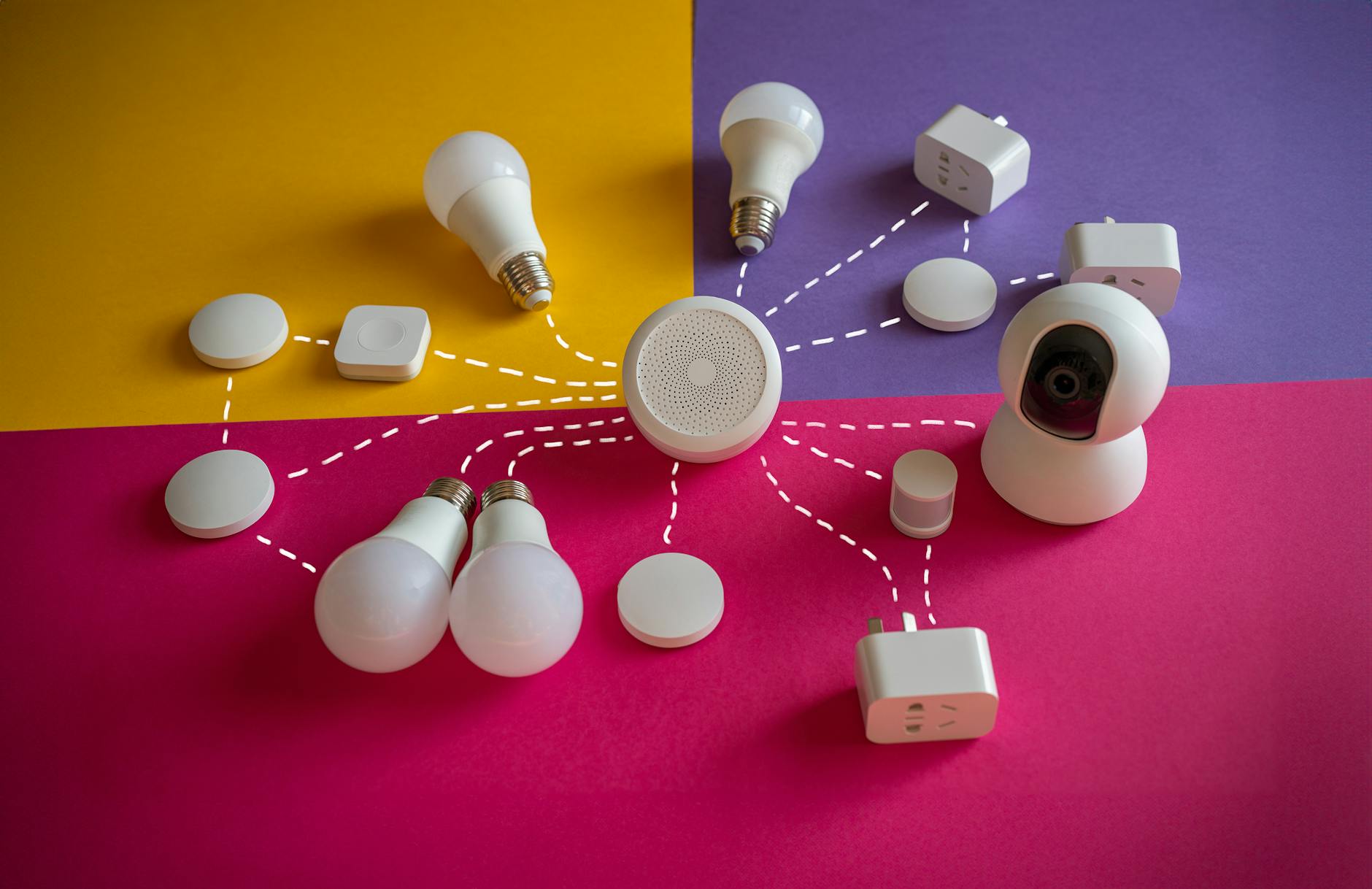
Integrating smart features into your kitchen can seem like a futuristic upgrade, promising smooth cooking experiences and enhanced efficiency. However, the journey from concept to a fully functional smart kitchen involves decisions about connectivity, device compatibility, and, critically, understanding the ongoing financial implications beyond the initial purchase.
⚡ In a Rush? Key Takeaways
- Basic smart kitchen setups involving a smart display and smart plugs can cost under $200.
- Integrated smart appliances offer minor energy savings (0.5-2%) but significant convenience for timed tasks.
- Annual running costs for a fully smart kitchen with 5-7 devices add $15-$30 in electricity.
- Smart ovens with remote preheating can save 5-10 minutes of waiting time per use, improving workflow.
- ✅ Start with smart plugs and a smart display to test convenience before investing in expensive integrated appliances.
Before making significant investments, it’s wise to evaluate the practical setup requirements and the true cost of ownership. This guide aims to demystify smart kitchen integration, focusing on efficiency and cost-effectiveness in 2026.
What are the Fundamental Smart Kitchen Features I Should Start With?
Begin with a smart display for voice control and smart plugs or basic appliance integration to assess utility before larger investments.
Which Hub or Smart Speaker Should I Choose for Kitchen Control?
Opt for a smart display like an Amazon Echo Show or Google Nest Hub for hands-free recipe access and appliance control.
A smart display is often the central nervous system of a smart kitchen. Devices like the Amazon Echo Show or Google Nest Hub offer voice control for connected appliances, timer management, and the ability to stream recipes or entertainment while cooking. Their visual interface makes them particularly useful for following culinary instructions without touching your phone with messy hands.
When selecting a hub, consider its compatibility with your preferred ecosystem (e.g., Apple HomeKit, Google Home, Amazon Alexa). Most modern smart kitchen appliances are designed to be compatible with at least one, if not all, of these major platforms. My research suggests that Amazon and Google platforms currently offer the broadest integration with third-party kitchen devices.
- Amazon Echo Show: Excellent for recipe integration and visual feedback.
- Google Nest Hub: Strong with YouTube recipe videos and general Google ecosystem integration.
- Apple HomePod: Best for Apple users, but offers fewer visual features for the kitchen.
How Can Smart Plugs Make My Existing Appliances Intelligent?
Smart plugs convert non-smart appliances into voice-controlled or scheduled devices for under $20 per unit.
Smart plugs are an affordable entry point into smart kitchen technology. They allow you to control ‘dumb’ appliances, such as coffee makers, slow cookers, or even countertop ovens, via your smartphone or voice assistant. You can schedule them to turn on or off at specific times, ensuring your coffee is brewed when you wake up or your slow cooker starts precisely when you leave for work.
In my own home, a simple smart plug connected to my coffee maker ensures it starts brewing every morning at 6:30 AM. This minor convenience saves minutes each day and requires minimal investment. The energy savings are minimal unless you are switching off devices that draw significant standby power.
Not all appliances are suitable for smart plugs, particularly those with digital controls that reset when power is cut. Mechanical switches work best. The running cost of a smart plug itself is negligible, typically under $1 per year in electricity.
Do Smart Thermometers Offer Real Kitchen Efficiency Gains?
Smart meat thermometers provide precise temperature monitoring remotely, preventing overcooking and reducing wasted energy.
For precision cooking, a smart meat thermometer is an invaluable tool. These devices connect to your smartphone, allowing you to monitor the internal temperature of meats, poultry, or even baked goods without opening the oven door. Every time you open the oven, the temperature drops significantly, requiring the oven to expend more energy to recover. By minimizing oven door openings, a smart thermometer contributes to more consistent cooking temperatures and minor energy savings, typically a fraction of a kWh per cooking cycle.
| Feature | Traditional Thermometer | Smart Thermometer |
|---|---|---|
| Monitoring | Manual checks | Remote via app |
| Energy Saving | Minimal | Reduces oven door openings, saves 0.05-0.1 kWh |
| Cost | $10-$25 | $30-$100 |
What are the True Costs of Investing in a Smart Kitchen?
The initial investment for smart kitchen appliances ranges from minimal for accessories to several thousand dollars for integrated units.
How Much Does a Basic Smart Kitchen Setup Actually Cost?
A minimal smart kitchen setup, including a smart display and two smart plugs, typically costs under $200 in 2026.
Entry into the smart kitchen world doesn’t require a hefty upfront investment. You can begin with foundational elements that provide significant convenience without breaking the bank. A smart display, such as an Echo Show 5, can be purchased for around $60-80. Adding a couple of smart plugs, which often come in multi-packs, might cost an additional $30-50. A basic smart meat thermometer will run another $30-50. This brings your total initial outlay for a functional, fundamental smart kitchen to well under $200.
This initial investment allows you to automate simple tasks and familiarize yourself with voice command interfaces, helping you determine which smart features you truly value before committing to more expensive appliances. My own experience with appliance cost calculations consistently shows that iterative upgrades yield better long-term satisfaction.
Are Integrated Smart Appliances Worth Their Higher Price Tag?
Integrated smart appliances carry a 15-30% price premium over standard models, with efficiency gains varying but often modest.
While smart plugs can smarten up existing gadgets, some appliances now come with integrated smart features. This includes smart refrigerators with internal cameras and touchscreens, smart ovens that can preheat remotely, and smart dishwashers that automatically reorder detergent. These integrated units often cost 15-30% more than their non-smart counterparts.
The energy efficiency improvements in smart appliances are often incremental. A smart refrigerator might optimize its defrost cycle slightly, saving perhaps $5-$10 per year compared to a non-smart, equally efficient model. A smart oven’s remote preheating feature primarily offers convenience, rather than a significant reduction in oven running costs.
The value here lies primarily in convenience and integration. If you frequently forget to preheat the oven before arriving home, or if you appreciate automated inventory management in your fridge, the premium might be justified. However, for strict cost-conscious consumers, the payback period on the smart premium can be very long.
Comparison of Smart Appliances vs. Standard Equivalent:
- Smart Refrigerator: +$500-1500; Convenience features like recipe display, internal cameras.
- Smart Oven: +$200-800; Remote preheating, guided cooking.
- Smart Dishwasher: +$100-300; Remote monitoring, auto-reorder supplies.
Do Smart Kitchen Features Add to My Utility Bills?
The additional electricity draw from smart kitchen features is minor, typically adding $15-$30 annually for a fully connected setup.
One common concern is whether smart kitchen features will inflate your utility bills. In reality, the additional electricity consumption from the smart components themselves is quite low. A smart display typically draws 5-10W when active and 2-3W on standby. Smart plugs, even when connected to an appliance, add less than 1W of continuous draw.
For a kitchen with a smart display, three smart plugs, and a smart oven, the cumulative additional standby power might be around 10-15W. Over a year, this amounts to approximately 87-131 kWh. At the US average electricity rate of $0.16/kWh, this translates to an extra $14-$21 per year. Even a fully loaded smart kitchen with numerous devices would rarely exceed $30-$40 in additional annual electricity costs.
My extensive research on kitchen appliance power consumption confirms these figures, indicating that the main energy expenditure remains with the core function of the appliance (e.g., heating, cooling) rather than its smart features.
How Can I Ensure My Smart Kitchen Setup is Efficient and Secure?
Prioritize a robust Wi-Fi network and strong security practices to maximize efficiency and protect your smart kitchen environment.
What Connectivity Requirements Do Smart Kitchen Appliances Have?
A stable 2.4 GHz Wi-Fi network is essential for reliable smart kitchen appliance connectivity and performance.
Smart kitchen appliances primarily rely on a stable 2.4 GHz Wi-Fi network. While 5 GHz networks offer faster speeds, the 2.4 GHz band provides better range and penetration through walls, which is often more crucial in a kitchen environment. Ensure your home Wi-Fi router is capable of handling multiple connected devices without performance degradation, especially if your kitchen is on the edge of your router’s range.
Mesh Wi-Fi systems are an excellent solution for larger homes or those with inconsistent Wi-Fi coverage. They create a more robust and widespread network, ensuring all your smart kitchen devices remain connected and responsive. Dropped connections can lead to frustration and diminish the convenience benefits of smart features, especially if you rely on them for critical timings or remote control.
How Can I Optimize My Smart Kitchen for Energy Savings?
Focus on optimizing usage patterns and leveraging smart features like “eco” modes rather than relying solely on remote control for real savings.
True energy savings in a smart kitchen come less from the ‘smart’ component itself and more from how you use those features to change your habits. Employing a smart oven’s remote preheating might save you 5-10 minutes of waiting, but the actual energy saving comes from ensuring the oven is only on when needed and not preheating unnecessarily long. Similarly, using a smart dishwasher’s ‘eco’ mode can cut energy consumption by 35-40% compared to a standard wash cycle, regardless of whether it’s initiated remotely.
Consider monitoring individual appliance consumption with smart plugs that also offer energy tracking. This data can reveal which appliances are consuming more than expected, guiding you toward more efficient usage patterns or potentially identifying a need for a more efficient appliance, as observed in my heated clothes airer vs. tumble dryer cost comparison.
What Security Best Practices Should I Follow for Smart Kitchen Devices?
use strong, unique passwords and enable two-factor authentication on all smart kitchen accounts to protect your network.
Like any connected device, smart kitchen appliances can present security vulnerabilities if not properly secured. The primary concern is unauthorized access to your home network. Always change default passwords to strong, unique combinations for all your smart devices and Wi-Fi router. Enable two-factor authentication (2FA) wherever available for smart home apps and accounts.
Regularly update the firmware and software for your smart appliances. Manufacturers frequently release updates that patch security vulnerabilities. Neglecting these updates can leave your system exposed. Lastly, consider segmenting your smart home devices onto a separate guest network if your router supports it. This creates an additional layer of security, isolating smart devices from your main home network.
Frequently Asked Questions About Smart Kitchen Features
Here are common questions regarding the setup and cost of smart kitchen features.
Can any kitchen appliance become ‘smart’ with smart plugs?
No, smart plugs only provide power control; appliances with mechanical switches work best as digital interfaces often reset when power is cut.
Is Wi-Fi 6 necessary for a smart kitchen setup?
No, most smart kitchen devices operate efficiently on 2.4 GHz Wi-Fi 4 (802.11n); Wi-Fi 6 offers little tangible benefit.
Do smart refrigerators really save money on groceries?
Smart refrigerators with internal cameras can help reduce food waste by showing contents remotely, but direct grocery savings are minimal.
What is the average lifespan of a smart kitchen appliance?
Smart kitchen appliances generally have a similar lifespan to their non-smart counterparts (10-15 years), though software support may vary.
Can I control my smart kitchen features when I’m away from home?
Yes, most smart kitchen systems offer remote control via a smartphone app, requiring an active internet connection at home.
The Verdict: Is a Smart Kitchen Worth the Investment in 2026?
For convenience and minor efficiency gains, a smart kitchen is a worthwhile investment when starting with affordable foundational devices.
Based on our findings, a smart kitchen is less about revolutionary energy savings and more about enhanced convenience and workflow optimization. The initial setup costs can be managed by starting with smart plugs and a voice-controlled display, gradually integrating more advanced appliances as you identify genuine needs and benefits. The running costs are surprisingly low, typically adding less than $30 per year to your electricity bill for a moderately equipped smart kitchen.
Based on our efficiency data, smart kitchen solutions that prioritize remote control and automation of routine tasks consistently provide the best return on investment for convenience—which is why our top pick in this category is starting with a robust smart display and a few smart plugs.
For those prioritizing efficiency, smart appliances with features like ‘eco’ modes or precise temperature control offer the most tangible benefits. Ultimately, the value of a smart kitchen in 2026 lies in its ability to adapt to your lifestyle, making daily routines smoother and more enjoyable, rather than drastic financial savings. Start small, understand your usage, and expand your smart ecosystem intelligently.
Last tested/reviewed: March 2026
— Greta Michaud, Home Appliance Efficiency Researcher