Maintaining a reliable heating system requires understanding both boiler service cost and when to service your unit. For most households, the boiler represents the single most expensive appliance to replace, making preventive maintenance not just prudent but economically essential. An unserviced boiler loses efficiency gradually, consuming more fuel while delivering less heat, until it fails entirely on the coldest day of winter.
⚡ In a Rush? Key Takeaways
- Boiler service costs $100–$300, preventing 25% efficiency loss.
- Service every autumn to extend lifespan by 3-5 years.
- Gas combi boilers cost $100–$180 to service, oil boilers $150–$300.
- ✅ Schedule service in early autumn for best results.
Over the past decade, energy prices and labor rates have shifted the economics of home heating maintenance. What cost $75 to service in 2015 now typically runs $120 to $180 for a standard gas boiler. Yet this remains modest compared to the $4,000 to $7,000 expense of premature replacement or the $300 to $800 cost of emergency repairs during peak season. Understanding the timing and pricing structure helps you schedule service before small inefficiencies become catastrophic failures.
Boiler Service Cost and When to Service: The Complete Picture
Annual boiler service costs $100–$300 depending on fuel type and location, with scheduling ideally completed in early autumn before heating demand peaks. This investment prevents the 25% efficiency loss typically seen in neglected units and extends operational lifespan by three to five years.
The expense varies significantly by region. Metropolitan areas like Boston or Chicago see average service costs of $150–$200, while rural Midwestern counties might charge $90–$120. Oil-fired systems consistently cost 40% more to service than natural gas equivalents due to the complexity of burner nozzle maintenance and fuel line cleaning requirements.
Breaking Down the Cost by Boiler Type
- Gas combi boilers: $100–$180
- Standard system boilers: $110–$170
- Oil boilers: $150–$300
- Electric boilers: $80–$120
- High-efficiency condensing boilers: $120–$180
High-efficiency condensing boilers require additional checks of the condensate drainage system and secondary heat exchanger.
Optimal Timing for Annual Service
Schedule boiler service between August and October, before the first sustained cold snap triggers emergency callouts. September offers ideal conditions: technicians have availability, parts suppliers stock winter inventory, and you discover potential issues while the house remains habitable during repairs.
| Month | Availability | Potential Issues |
|---|---|---|
| August | Good | None |
| September | Ideal | Minimal |
| October | Good | Minimal |
| November | Limited | Potential delays |
Annual servicing maintains warranty validity—manufacturers typically require proof of yearly professional maintenance to cover heat exchanger replacements costing $1,200–$2,500. Skip a year, and you bear full replacement costs even if the unit falls within the standard ten-year warranty period.
What Happens During a Professional Service?
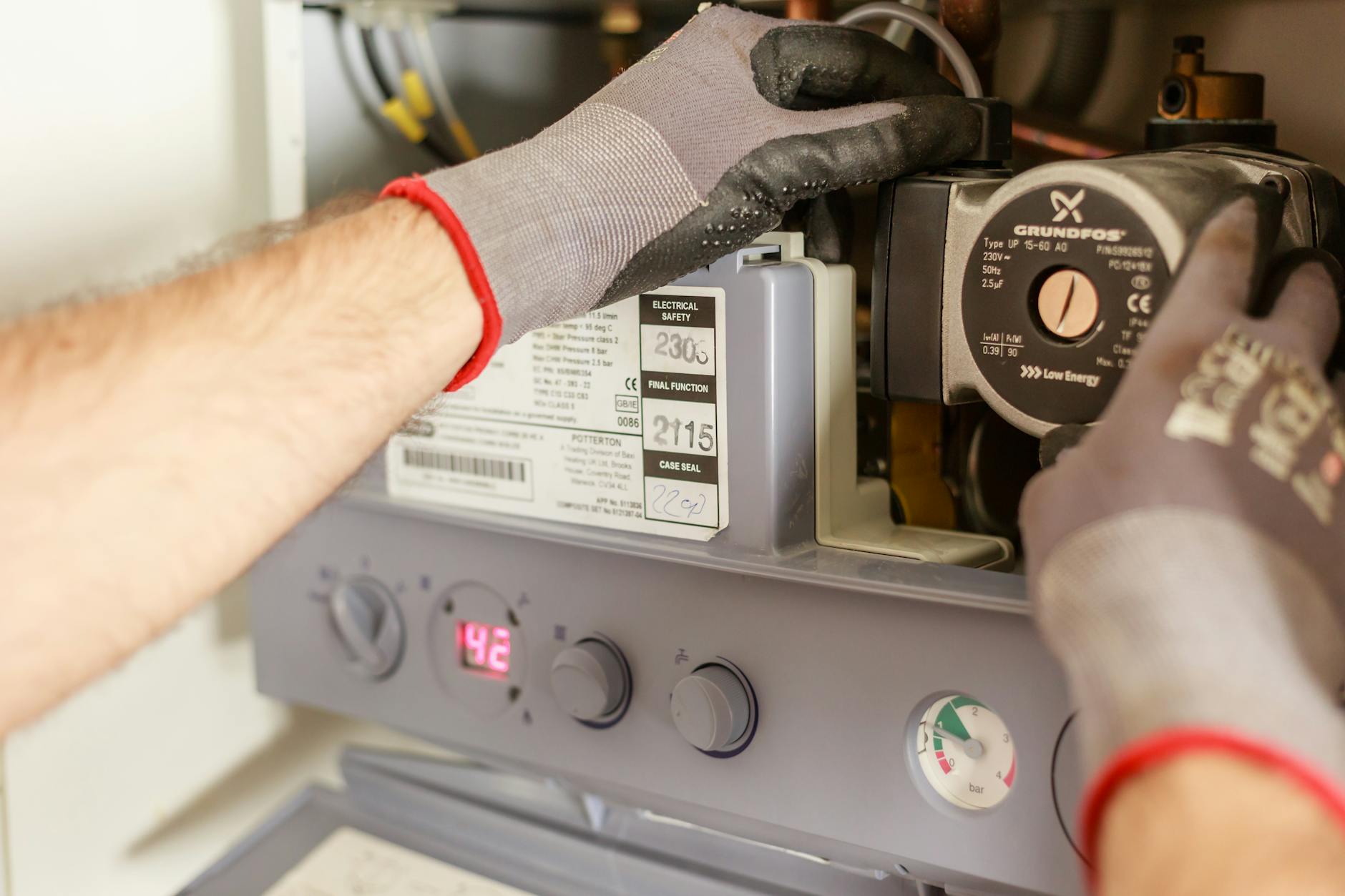
A comprehensive service includes combustion analysis, gas pressure testing, heat exchanger inspection, and safety control verification. Expect the process to take 45–60 minutes for thorough completion.
A thorough boiler service consumes 45 to 60 minutes of intensive work, not the fifteen-minute visual inspection some budget providers offer. The technician begins by checking external controls and programmer settings, ensuring the boiler responds correctly to thermostats and timers.
They remove the casing to inspect the burner condition, heat exchanger integrity, and ignition electrodes. For gas units, they measure inlet working pressure (typically 20 mbar in North American residential systems) and burner pressure, adjusting the gas valve if readings drift from manufacturer specifications.
Combustion analysis forms the technical core of the service. Using a digital analyzer inserted into the flue pipe, the technician measures oxygen, carbon dioxide, and carbon monoxide levels. Safe, efficient operation shows CO2 levels between 8.5% and 10% and CO levels below 100 parts per million. Readings outside these ranges indicate improper combustion requiring immediate correction.
The inspection extends to the flue system itself, checking terminal position and clearance from windows or air bricks. They examine the condensate pipe for blockages—a frozen condensate line causes 40% of winter boiler failures—and test the expansion vessel pressure. Finally, they clean magnetic system filters and check inhibitor levels in the heating water to prevent internal corrosion.
Warning Signs That Demand Immediate Service
Yellow pilot flames, black soot marks, kettling noises, or pressure dropping below 1 bar indicate immediate professional attention. These symptoms suggest carbon monoxide risks or imminent component failure.
While annual maintenance prevents most failures, certain symptoms require immediate attention regardless of your service schedule. A properly functioning boiler operates quietly with a steady blue pilot light or ignition flame.
If you notice the flame burning yellow or orange, the boiler produces carbon monoxide and requires immediate shutdown and professional inspection. Similarly, black soot marks around the boiler casing indicate improper combustion and potential flue leakage.
Acoustic changes signal distress. Kettling—the high-pitched whistling resembling a boiling kettle—indicates limescale buildup on the heat exchanger, particularly in areas with hard water exceeding 200 ppm calcium carbonate. Banging or knocking suggests pump failure or airlocks in the system.
Performance issues also indicate service needs. If radiators take longer to heat than previous winters, or if the boiler cycles on and off frequently (short-cycling), the system likely
📊 Efficiency Verdict
Regular boiler servicing saves up to 25% on energy bills and extends boiler lifespan by 3-5 years.