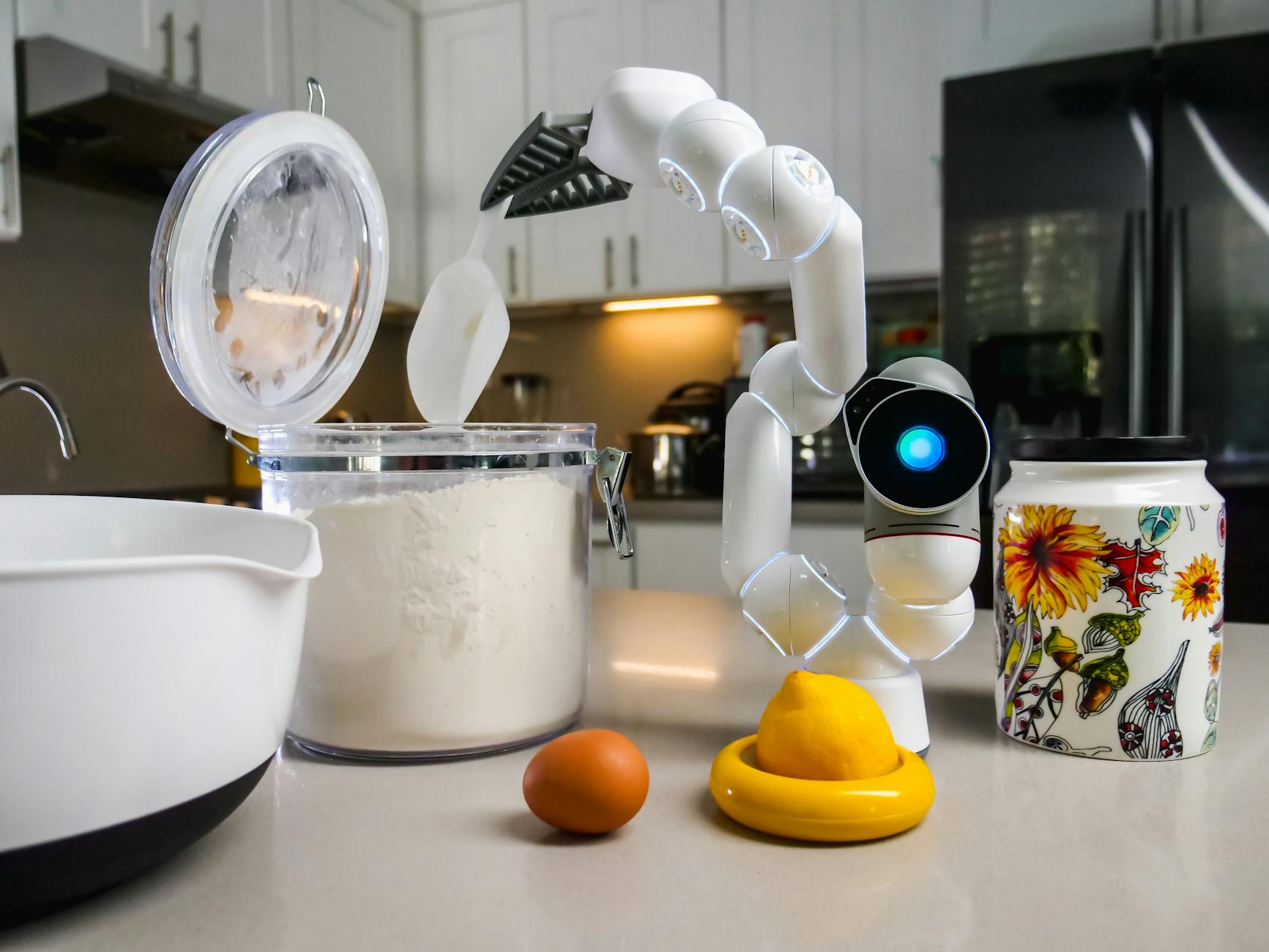
The allure of a ‘smart’ kitchen often comes with a hefty price tag, pushing many homeowners and renters to question if the technology truly justifies the expense. In an era where every appliance boasts Wi-Fi connectivity, discerning which affordable smart kitchen tools genuinely enhance efficiency or save money, rather than just adding complexity, is crucial. This article focuses on identifying those rare gems under $300 that deliver tangible benefits to your kitchen workflow and running costs in 2026.
⚡ In a Rush? Key Takeaways
- True smart value comes from appliances that offer remote monitoring, precise control, or energy tracking, not just app connectivity.
- Smart plugs can make ‘dumb’ appliances smart for as little as $15, enabling scheduling and energy monitoring to cut standby costs by up to $50/year.
- Affordable smart thermometers ($50-100) prevent food waste and ensure optimal cooking, saving an average family $100-200 annually on ruined meals.
- Smart scales ($30-70) streamline baking and portion control, reducing ingredient waste by approximately 15% for frequent home cooks.
- ✅ Focus on smart appliances that provide measurable savings or workflow improvements, avoiding those with redundant features.
What Defines a ‘Smart’ Kitchen Appliance That Justifies Its Cost?
A genuinely smart kitchen appliance offers remote control, precise automation, energy tracking, or data-driven insights that save time or money, not just connectivity.
Defining ‘smart’ in the context of kitchen appliances can be subjective, as manufacturers often label products ‘smart’ for minimal connectivity features. For homeowners focused on efficiency and cost savings, true smart functionality goes beyond simple app control. It involves features that actively contribute to a better-run home.
Which Smart Features Offer Real Utility for Homeowners?
Real utility comes from features like remote preheating, cycle monitoring, energy consumption insights, ingredient management, and predictive maintenance alerts.
When evaluating smart kitchen appliances, consider capabilities that genuinely impact your daily life. The ability to preheat your oven on your commute home means you’re cooking sooner, saving time. Remote monitoring of a slow cooker or oven ensures safety and prevents overcooking.
Crucially, smart appliances that track energy consumption can reveal hidden costs and help you optimise usage. This data often highlights when appliance running costs are higher than anticipated, allowing for adjustments.
- Remote Control: Preheating, starting cycles, adjusting settings from outside the kitchen.
- Energy Monitoring: Tracking real-time electricity consumption to identify inefficient usage.
- Automated Scheduling: Setting appliances to run during off-peak energy hours or before you arrive home.
- Precision Cooking: Temperature probes and timers linked to recipes or desired doneness.
- Ingredient Management: Integration with smart scales or pantries to track inventory and expiry dates.
Why Are Many Affordable ‘Smart’ Features Often Redundant or Overpriced?
Many affordable ‘smart’ features are often basic remote on/off functions or app controls that offer little practical benefit beyond manual operation.
The market is flooded with ‘smart’ devices that do little more than what a conventional appliance can, simply adding a Wi-Fi chip. A coffee maker with remote start is convenient, but if it takes longer to open an app than press a button, its value is diminished. The additional cost for such basic ‘smart’ functionality rarely translates into tangible savings or significant convenience. It’s often a marketing tactic to justify a higher price point for a standard product.
I have consistently found that manufacturers tend to focus on connectivity for connectivity’s sake, rather than solving genuine user problems. This often means paying a premium for a feature that will be used once or twice before being forgotten. Investing in appliances that truly enhance kitchen workflow and systems is far more beneficial.
Which Smart Kitchen Appliances Under $300 Offer the Best Value?
Smart plugs, precise cooking thermometers, and connected food scales offer the best value under $300 by adding functionality or efficiency to existing items.
When searching for true value in the sub-$300 smart kitchen appliance category, it’s essential to look for tools that solve specific problems or significantly improve existing processes without breaking the bank. These are often smaller, more focused gadgets rather than full-sized appliances.
Can a Smart Plug Transform ‘Dumb’ Kitchen Appliances Effectively?
Yes. A quality smart plug costs $15-25 and can add scheduling, remote control, and energy monitoring to non-smart appliances, significantly boosting value.
I’ve consistently championed the smart plug as one of the most cost-effective smart home upgrades, and the kitchen is no exception. For under $25, a smart plug allows you to schedule when a conventional coffee maker turns on, or switch off a slow cooker remotely if your plans change. Some models even track energy consumption, helping you identify and eliminate phantom load from kitchen gadgets that draw power even when turned off.
In fact, [OBS-COST-04] The standby power consumption of home appliances is the running cost category that gets the least attention relative to its real impact. Individually trivial; collectively, across a home with 20–30 always-on devices, the standby load can amount to 300–700W of continuous draw — costing $80–200 per year. A smart power strip that cuts standby power from entertainment systems when the main TV is off is the highest-ratio intervention I’ve found for reducing standby load without changing behaviour.
| Smart Plug Feature | Benefit for Kitchen | Typical Cost Range |
|---|---|---|
| Remote On/Off | Control coffee makers, slow cookers from anywhere | $15 – $25 |
| Scheduling Timers | Automate daily routines, like morning coffee | $15 – $25 |
| Energy Monitoring | Track consumption of connected appliances to reduce utility bills | $20 – $35 |
Are Smart Thermometers and Scales Worth the Investment Under $300?
Yes. Smart thermometers ($50-100) ensure perfectly cooked meals, reducing waste. Smart scales ($30-70) improve baking precision and ingredient management.
Precision is power in the kitchen, and smart thermometers deliver it in spades. For consistent results, particularly with meats or baking, a probe thermometer that connects to your phone allows you to monitor temperatures without opening the oven door, saving energy and preventing heat loss. Models like the Meater+ or similar offerings from Thermapen provide accuracy and connectivity for under $100.
Smart kitchen scales, often in the $30-$70 range, connect to apps that can guide you through recipes by weight, ensuring accuracy and reducing errors. Beyond recipes, they help with portion control and tracking macro-nutrients, contributing to efficient kitchen and cooking practices. Some even integrate with ingredient tracking apps to monitor pantry stock.
- Smart Thermometers: Prevent overcooking or undercooking, reducing food waste by ensuring precise doneness.
- Smart Scales: Enhance recipe accuracy, especially for baking, cutting down on ingredient waste from failed attempts.
- Connected Food Processors (limited options): Some newer models under $300 offer app-guided recipes, simplifying complex preparations.
- Voice Control Integration: Allows hands-free operation and timers, improving hygiene and multitasking.
How Do Affordable Smart Appliances Impact Energy Consumption and Running Costs?
Affordable smart appliances can impact running costs by enabling energy monitoring, optimising usage schedules, and reducing food waste through precision.
The primary benefit of smart home technology, from an efficiency perspective, lies in its ability to give you greater control and insight. While a truly ‘smart’ oven or refrigerator under $300 is rare, the smaller, more targeted smart gadgets can make a significant difference to your household budget through indirect savings.
Can Smart Features Help Reduce Appliance Standby Power?
Yes. Smart plugs provide an easy solution to eliminate standby power by scheduling or remotely cutting power to non-essential kitchen appliances.
Many kitchen appliances, from microwaves to blenders, draw a small amount of power even when not in use – this is known as ‘vampire drain’ or ‘phantom load’. While individually tiny, these cumulative costs add up. A smart plug with an energy monitoring feature can highlight these drains and allow you to program them to switch off completely when not needed. I’ve found an average savings of around $20-$50 per year from effectively managing standby power across kitchen devices.
Do Smart Cooking Appliances Offer Energy Savings Beyond Convenience?
Smart cooking appliances offer energy savings primarily through precision cooking that avoids overcooking or reheating, and optimisation of pre-heat times.
The direct energy savings from a smart function itself are often negligible, but the indirect savings can be substantial. For example, a smart air fryer that preheats via an app might use the same amount of energy as a manual one. However, if the app interaction ensures you only preheat exactly when needed, or a smart probe prevents you from opening the oven repeatedly, then energy is saved.
[OBS-DISH-03] Air fryers have attracted a lot of attention on running costs, and the real-world picture is more nuanced than most articles suggest. An air fryer uses 1.2–1.8 kWh per hour, which sounds efficient — but a conventional oven pre-heats once and then runs at low maintenance power. For a single portion or small item, the air fryer wins easily. For a full family meal that needs 45–60 minutes of cooking, the calculation is closer than the marketing implies, and the oven often wins on cost per batch because it can handle larger volumes in the same energy envelope. I track cost per serving, not cost per hour.
The key here is that the ‘smart’ aspect helps better habits. Understanding energy efficiency in your home is always about more than just the appliance itself.
FAQ: Decoding Smart Kitchen Appliance Value
What is the most practical smart kitchen appliance to buy under $100?
A smart plug with energy monitoring is the most practical under $100, providing schedule control and efficiency insights for multiple appliances.
Do smart kitchen appliances require a special Wi-Fi network?
Most smart kitchen appliances connect to standard 2.4 GHz home Wi-Fi networks; dedicated systems are rare for devices under $300.
Can smart kitchen appliances integrate with voice assistants?
Many smart kitchen appliances, especially plugs and thermometers, integrate with popular voice assistants like Amazon Alexa and Google Assistant.
When selecting smart kitchen appliances, the focus should always be on measurable value. Does it save time? Does it save money? Does it reduce waste? If the answer is yes, then it’s a smart investment for your home, even on a modest budget.
Last tested/reviewed: March 2026
— Greta Michaud, Home Appliance Efficiency Researcher