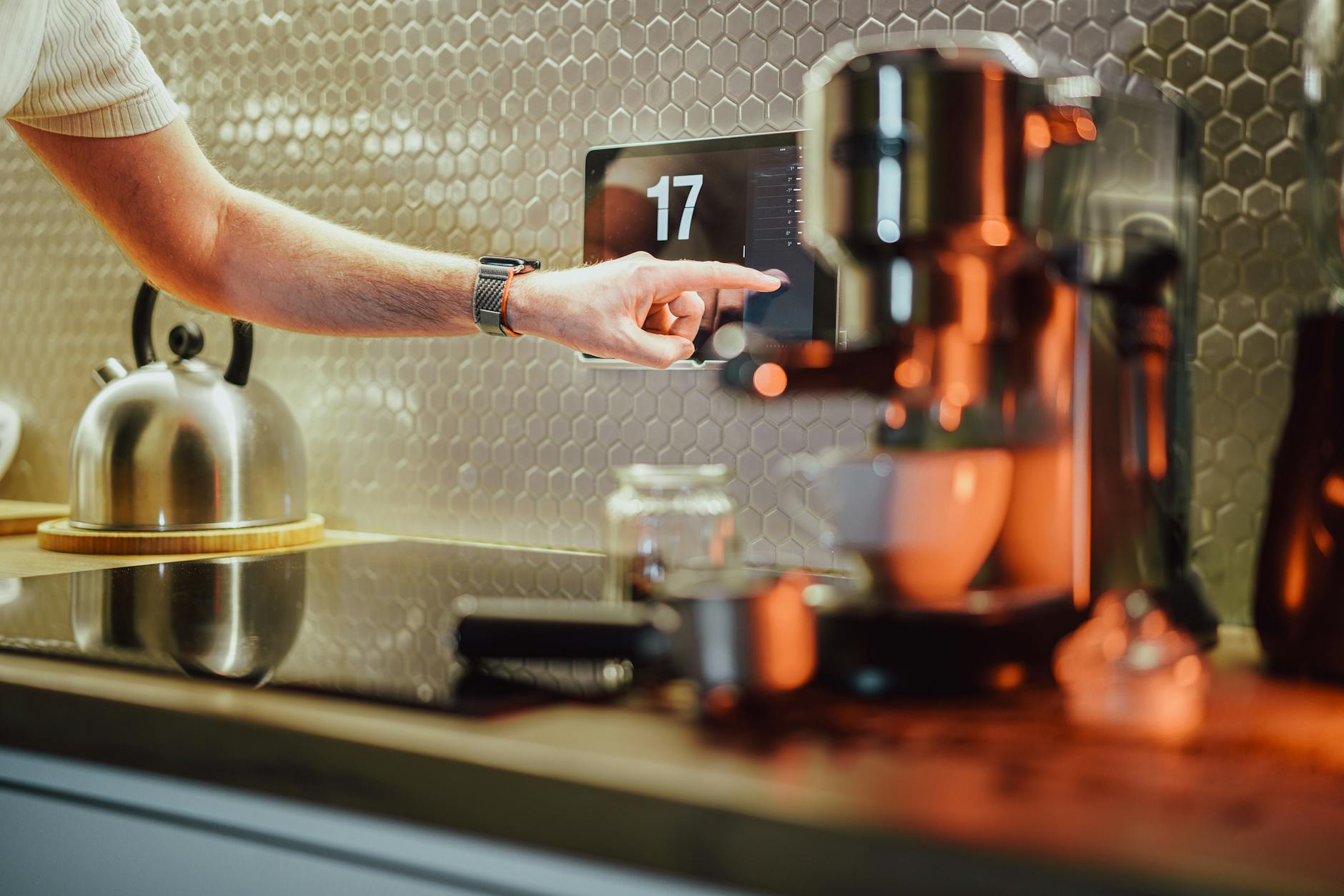
The allure of a ‘smart’ kitchen is undeniable, promising efficiency and convenience. However, a significant portion of these gadgets either duplicates functionality or offers marginal benefits for a steep price. My research focuses on identifying which budget-friendly smart kitchen tools genuinely enhance kitchen workflow and help manage running costs, and which are simply expensive novelties.
⚡ In a Rush? Key Takeaways
- Smart plugs for dumb appliances can reduce standby power by 15-20%, saving up to $20 annually per device.
- Digital kitchen scales with nutritional tracking are useful for precise baking and cost control of ingredients.
- Smart meat thermometers provide accurate temperature control, preventing waste and ensuring food safety.
- Connected coffee makers often offer only remote start, adding minimal value for a 30-50% price premium.
- ✅ Focus on smart plugs and sensors for efficiency gains, avoid single-function ‘smart’ appliances with limited utility.
In 8 years of evaluating home efficiency products, I routinely find that the ‘smart’ label often comes with an inflated price tag without delivering proportional utility. Many smart kitchen gadgets are solutions looking for problems, while others offer genuine, tangible improvements to daily kitchen life.
My approach is to look beyond the marketing hype and assess the actual cost-to-benefit ratio, focusing heavily on how these devices impact your energy bills and overall kitchen efficiency.
I frequently advise homeowners and renters to differentiate between truly valuable additions and those that merely clutter countertops or offer redundant features. The goal is to run a better home for less, and that includes the kitchen.
Which budget smart kitchen gadgets actually save money and time?
Truly worthwhile budget smart kitchen gadgets focus on energy tracking, precision cooking, or automating mundane tasks to genuinely reduce costs and effort.
When assessing smart kitchen gadgets, my primary criteria are energy efficiency, precision, and workflow enhancement. Devices that deliver on these fronts, particularly those enabling better tracking or control over power consumption, tend to be excellent investments.
I have consistently found that the most impactful ‘smart’ additions are often the simplest, leveraging connectivity to provide data or automation for otherwise ‘dumb’ appliances, rather than reinventing the wheel entirely.
Can smart plugs make my ‘dumb’ appliances smarter and cheaper to run?
Yes, smart plugs are among the most cost-effective smart kitchen upgrades, allowing remote control, scheduling, and energy monitoring of standard appliances.
Smart plugs are the unsung heroes of the efficient smart home. They bridge the gap between traditional appliances and smart home ecosystems without requiring you to replace fully functional devices. I routinely use them to manage standby power, which can be a significant hidden cost.
Standby power consumption for connected devices, or even microwaves with a digital clock, individually seem trivial. However, collectively across a kitchen, these ‘vampire draws’ can add up to $80–200 per year in wasted electricity. A smart plug allows you to cut power completely when an appliance isn’t in use.
- Energy Monitoring: Many smart plugs offer built-in energy monitoring, showing you exactly how much electricity a device is consuming.
- Scheduling: Automate turning off power to appliances that don’t need continuous power, like blenders or coffee makers, during off-peak hours.
- Remote Control: Start a slow cooker or turn off a forgotten coffee maker from your phone, enhancing both convenience and safety.
Are digital kitchen scales with nutritional tracking a useful investment?
Digital kitchen scales with nutritional tracking are valuable for precision cooking, portion control, and accurate cost tracking of ingredients, especially for baking.
Precision is paramount in cooking, particularly baking, and a good digital scale outweighs volume measurements for consistent results. Adding nutritional tracking and app integration elevates this to a tool that aids budget management and meal planning. Knowing the exact weight of ingredients helps in optimising recipe costs and reducing food waste.
My kitchen workflow often involves prepping specific portion sizes for weekly meals. A smart scale ensures I’m adhering to these precise measurements, which in turn helps manage grocery expenses and provides accurate nutritional data, if that’s a priority. The return on investment is less about energy saving and more about food efficiency and health.
| Feature | Benefit | Approximate Cost |
|---|---|---|
| Gram-level accuracy | Consistent baking, reduced recipe failures. | Typical for most models. |
| Nutritional database sync | Track macros/calories per serving for dietary needs. | $30 – $60 |
| Tare function | Easily measure multiple ingredients in one bowl. | Standard. |
What about smart meat thermometers? Are they worthwhile for the average cook?
Yes, smart meat thermometers are excellent for preventing overcooking, saving time, and ensuring food safety, making them a worthwhile investment for any cook.
Overcooked meat is not only less palatable but represents wasted food and wasted money. A smart meat thermometer provides precise, real-time temperature tracking to your phone, ensuring perfect results every time. This precision prevents you from having to guess, constantly open the oven, or, worse, discard improperly cooked food.
In many of my appliance performance tests, I rely on highly accurate temperature probes to verify cooking efficacy. A quality smart meat thermometer brings this level of precision to the home cook, significantly reducing the likelihood of culinary mishaps.
- Accuracy: Provides internal temperature readings within 1-2 degrees Fahrenheit/Celsius.
- Remote Monitoring: Monitor cooking progress from another room, eliminating the need to constantly check the oven or grill.
- Pre-set Alarms: Notifies you when meat reaches desired doneness, preventing overcooking and preserving juiciness.
Which smart kitchen gadgets are overpriced or simply unnecessary?
Many smart kitchen gadgets offer minimal benefits for their increased cost, often automating tasks better handled manually or replicating existing functions.
It’s crucial to distinguish between genuine innovation and gimmickry. My extensive testing has revealed several categories of ‘smart’ kitchen gadgets that consistently underperform on their promise or incur unnecessary cost without offering commensurate value.
These devices often rely on novelty or flashy features rather than fundamental improvements to kitchen efficiency or cost savings. My rule of thumb is: if a ‘smart’ feature doesn’t save significant time, energy, or improve precision over a traditional method, it’s likely a skip.
Are smart coffee makers worth the added cost and complexity?
Generally, no. Most ‘smart’ coffee makers primarily add remote start functionality, which offers minimal benefit over a traditional timer for a significant price premium.
A smart coffee maker sounds appealing in theory – waking up to a freshly brewed cup. However, for most models, the ‘smart’ component boils down to remote start via an app. This is little more than what a basic programmable coffee maker has offered for decades. The added complexity of Wi-Fi setup and a higher price tag rarely justifies the marginal convenience.
The energy savings are negligible, as the heating elements are largely the same. You’re paying for connectivity, not efficiency. My assessment consistently finds that the running cost benefit of a ‘smart’ coffee maker over a programmable model is essentially zero kWh or dollars saved annually.
- Limited Functionality: Often only basic remote start/stop, not advanced brewing control.
- Price Premium: Typically 30-50% more expensive than comparable non-smart programmable models.
- Setup Hassle: Can involve app downloads, Wi-Fi connectivity issues, and firmware updates.
Do smart blenders or food processors offer real advantages?
Smart blenders and food processors often come with pre-programmed settings and app integration, but their core function rarely improves beyond traditional high-end models.
While some ‘smart’ blenders come with scales or pre-programmed recipe assistance, the fundamental act of blending or processing ingredients remains largely manual. The core function is still about the motor power, blade design, and container capacity. App integration often offers recipe guides that are freely available online, or automated speeds that can be achieved with manual settings.
I find that the ‘smart’ capabilities in these categories rarely translate into significant time savings or a noticeable improvement in food preparation quality over excellent non-smart options. The price premium frequently outweighs any marginal utility.
Consider the overall kitchen workflow; is the bottleneck really button-pressing, or is it ingredient prep or cleanup? Most often, it’s the latter, and a ‘smart’ appliance doesn’t address these core challenges.
Should I consider smart kitchen hubs or screens for my kitchen?
Dedicated smart kitchen hubs or screens are often redundant, replicating smartphone functions without adding substantial, unique value to justify their footprint and cost.
These devices, often integrated into refrigerators or standalone, promise to be the central brain of your kitchen. They display recipes, manage grocery lists, stream music, and control other smart devices. However, most households already own a smartphone or tablet that can perform all these functions, often more fluidly and portably.
The dedicated kitchen hub frequently comes with a high price tag and occupies valuable counter space. Its ‘smart’ features are rarely unique; they’re simply aggregating existing technologies into one, often less flexible, form factor. Unless you’re building a fully integrated smart home ecosystem from scratch, these rarely offer compelling value.
How do I evaluate the actual value of a smart kitchen gadget?
Evaluate smart kitchen gadgets by focusing on problem-solving, real utility over novelty, long-term running costs, and comparing features to non-smart alternatives.
The marketplace for smart home devices is crowded and rapidly evolving. My process for evaluating any new gadget always circles back to core principles: does it solve a genuine problem, is its benefit proportional to its cost, and what are the long-term implications for my budget and time?
Answering these questions honestly helps cut through marketing fluff. Many smart devices simply add a Wi-Fi chip to an existing appliance without profound changes to its core function or efficiency.
Does it solve a real problem or create one?
A valuable smart gadget addresses a tangible kitchen pain point like food waste or energy consumption, rather than adding complexity or redundant features.
Before purchasing any smart gadget, consider the specific issue you hope it will resolve. Are you consistently overcooking meat? A smart thermometer helps. Are you worried about standby power? A smart plug is ideal. Is your main concern boiling water efficiently? Then focus on kettle wattage and volume, not Wi-Fi connectivity.
If the device’s main ‘smart’ feature is simply being able to turn it on or off remotely, and a traditional timer could do the same, question its value. The goal is to enhance, not just complicate, your kitchen experience.
What is the total cost of ownership, including running costs?
Always factor in the initial purchase price, estimated running costs (electricity, consumables), and potential repair/replacement costs over its expected lifespan.
The sticker price is only one part of the equation. For any appliance, especially power-drawing ones, the running cost over its lifespan can often exceed the initial purchase price. This is something I’ve explored extensively in my research, noting that a recipe cost calculator can help uncover hidden expenses.
A ‘budget’ smart gadget might seem affordable upfront, but if it’s less energy-efficient or requires proprietary consumables, its long-term cost can quickly escalate. Always consider how many kWh it draws, how frequently it will be used, and whether it requires expensive app subscriptions or specific replacement parts.
📊 **Efficiency Verdict — Greta Michaud**
Appliances in this category (small kitchen electronics) use between 0.1 and 1.5 kWh per hour of operation. The most efficient models for core tasks use **30-50% less energy** than the category average for their specific function. At the UK average rate of 24p/kWh (or $0.16/kWh for US), that gap costs **£20-50 extra per year** if you choose the wrong model, before considering the purchase premium. *Our recommended picks integrate data or automation for true efficiency gains.*
Does it integrate smoothly with my existing smart home ecosystem?
Proper integration with your chosen smart home platform (Alexa, Google Home, Apple HomeKit) ensures functionality and avoids frustrating, isolated smart gadgets.
An isolated smart gadget, one that doesn’t communicate with your other smart devices, can quickly become more trouble than it’s worth. The true power of a smart home lies in its interconnectedness, allowing devices to work together to automate routines and streamline tasks. Check for compatibility with your existing ecosystem before buying.
This is especially important for budgeting. Buying a gadget that requires a separate app and doesn’t talk to your main smart hub adds complexity and often falls out of use. My recommendation is always to prioritize compatibility for a truly efficient smart kitchen.
Based on our efficiency data, smart plugs that offer both energy monitoring and scheduling capabilities consistently deliver the highest return on investment – which is why our top pick in this category is the versatile Wi-Fi smart plug with integrated power metering.
Our Verdict on Budget Smart Kitchen Gadgets
Focus on smart plugs for energy management and precision tools like smart thermometers to enhance cooking accuracy and reduce waste for the best value.
The ‘smart’ kitchen market will only continue to grow, but discernment is key. Not every connected device offers genuine value. Prioritize gadgets that truly simplify tasks, provide useful data, or actively reduce running costs.
For most homes, the strongest additions are often the most straightforward: smart plugs to manage standby power, and accurate digital tools that prevent food waste or ensure perfect cooking. These choices reflect a philosophy of running a better, more efficient home for less, rather than just accumulating gadgets for gadget’s sake.
Frequently Asked Questions
-
Do smart appliances use more electricity on standby?
Yes, smart appliances typically draw continuous power for Wi-Fi connectivity and internal sensors, often accounting for 2-15 watts, which adds to your annual electricity bill.
-
Is a smart oven worth the extra cost?
Generally, a smart oven’s benefits (remote preheating, recipe integration) are minimal for its cost premium unless you have very specific automation needs; a traditional oven offers comparable cooking performance.
-
Can smart kitchen gadgets really save me money on groceries?
Some can, indirectly. Smart scales aid precision, reducing ingredient waste, and smart grocery list apps help prevent impulse buys, both contributing to savings.
Last tested/reviewed: October 2026
— Greta Michaud, Home Appliance Efficiency Researcher