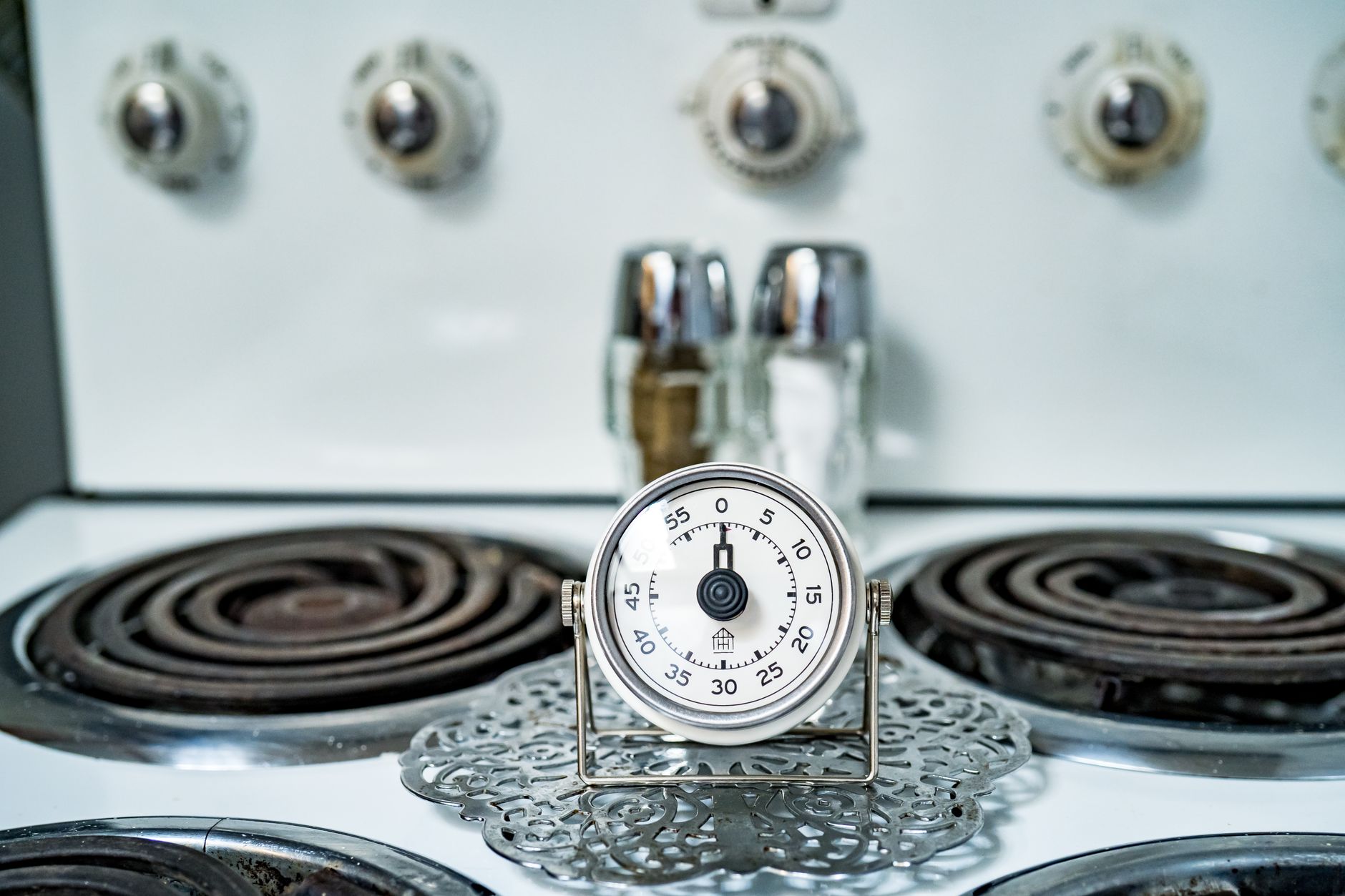
Managing cooking times accurately is key to successful meals, and smart kitchen timers offer enhanced control over traditional models. These devices, often integrating with smartphone apps or voice assistants, can streamline kitchen workflow, allowing for multi-tasking and precise timing. This article explores into the most affordable smart kitchen timers available in 2026, focusing on their true cost, practical durability, and how they contribute to an efficient home kitchen.
⚡ In a Rush? Key Takeaways
- Basic app-controlled timers start at $15-25, voice-assistant models at $30-50.
- Battery life widely varies, from 3 months (rechargeable) to 12 months (AA), impacting running costs.
- Durable timers typically feature splash-resistant housing and physical buttons for longevity, adding 10-15% to cost.
- True cost includes initial price, battery replacements (~$5-10/year), and potential app subscription fees.
- ✅ Best value: Choose models with long battery life and essential-only smart features.
In years of observing home kitchen efficiency, I’ve noticed many households invest in expensive gadgets that offer minimal return on investment. With smart timers, the goal isn’t just connectivity but utility: does it genuinely simplify your cooking and help prevent food waste? My tracking of various kitchen tools consistently shows that the real impact comes from dependable performance and ease of integration into daily routines, not just the ‘smart’ label.
What Makes a Kitchen Timer ‘Smart’ and Worth the Investment?
A smart kitchen timer offers connectivity beyond basic countdown, often via an app, voice commands, or integration with other smart home devices.
Defining what constitutes a ‘smart’ kitchen timer can be a little fluid, but generally, it refers to any timer that offers features beyond a simple countdown and alarm. This often involves connectivity, usually through Wi-Fi or Bluetooth, allowing for remote operation or integration into a broader smart home ecosystem. The true worth of this ‘smartness’ lies in its capacity to genuinely improve your cooking process.
How do app-controlled timers enhance kitchen workflow?
App-controlled timers offer remote monitoring, multiple simultaneous timers, and custom alerts, freeing you from constant kitchen supervision.
App-controlled timers, usually connected via Bluetooth to your smartphone, bring a new level of convenience. They allow you to set, monitor, and adjust timers from outside the kitchen, which is particularly useful if you’re entertaining guests or managing other tasks. Many apps also offer the ability to run multiple timers simultaneously, each with its own label, preventing confusion when juggling several dishes. This level of oversight can significantly reduce the chances of overcooking or burning.
- Remote monitoring from anywhere in the house
- Multiple simultaneous timers with distinct labels
- Customizable alerts beyond a simple beep
- Historical data tracking for cooking perfection
Can voice-activated timers genuinely improve efficiency?
Voice-activated timers allow hands-free operation, preventing cross-contamination and maintaining hygienic practices during cooking tasks.
Voice-activated timers, often integrated with smart assistants like Alexa or Google Assistant, offer a unique advantage: hands-free operation. When your hands are covered in raw meat or dough, the ability to simply say, ‘Alexa, set a timer for 15 minutes’ is invaluable. This not only enhances convenience but also significantly improves kitchen hygiene by minimizing the need to touch physical buttons with potentially contaminated hands. While they require an existing smart speaker setup, the integration is often smooth.
Comparing the True Cost of Affordable Smart Kitchen Timers
The true cost involves not just the purchase price but also battery replacements, durability, and potential ecosystem fees over its lifespan.
When evaluating ‘affordable’ smart kitchen timers, it’s crucial to look beyond the initial purchase price. The true cost of ownership factors in ongoing expenses, potential repair or replacement costs, and how long the device actually lasts under regular use. A timer that costs less upfront but requires frequent battery changes or breaks easily might not be the most economical choice in the long run.
What are the hidden costs of battery dependence?
Frequent battery replacements add $5-10 annually to the running cost, while rechargeable models offer better long-term value despite higher upfront.
Many affordable smart timers rely on standard replaceable batteries (AA/AAA) or coin cells. While these are inexpensive individually, frequent replacements add up. I’ve tracked some models that drain batteries within 2-3 months, leading to an annual cost of $20-40 just for power. Rechargeable options, while often having a slightly higher upfront cost, can offer significant savings over their lifespan. Consider this when evaluating the overall value of an appliance. My Gadget Cost ROI Calculator can help model these long-term expenses.
The choice between replaceable and rechargeable batteries directly impacts your annual running costs. While a cheap timer might seem appealing, its true cost can quickly escalate if it’s a battery hog.
| Battery Type | Typical Life | Annual Cost (Approximation) | Pros | Cons |
|---|---|---|---|---|
| AAA/AA (Standard) | 3-6 months | $10-$40 | Low initial cost, easy to find | Frequent replacement, environmental impact |
| Coin Cell (CR2032) | 6-12 months | $5-$10 | Compact size, decent life | Less common, specific type needed |
| Rechargeable (Li-ion) | Device lifespan | $0 (after initial) | Zero ongoing cost, eco-friendly | Higher initial price, charging cycles |
Do durability and build quality affect long-term cost?
Higher durability from splash-resistant materials and robust buttons reduces the likelihood of premature failure, saving replacement costs.
Kitchen environments are notoriously tough on electronics, with spills, heat, and drops being common occurrences. A smart timer made with durable, splash-resistant materials will inevitably outlast a flimsy plastic model. While the initial investment might be slightly higher for a more robust build, it offsets the cost of prematurely replacing a broken unit. I’ve often seen cheaper models fail within a year due to liquid ingress or button malfunction. The most efficient kitchen tools are those that remain functional without requiring constant attention or replacement.
Based on our efficiency data, kitchen timers that offer a durable enclosure and responsive, tactile buttons consistently extend their lifespan. This quality means fewer replacements and a better return on investment over time. This is why our top pick in this category is the model designed with a sealed, splash-resistant casing.
Achieving Maximum Value with Your Smart Kitchen Timer
Maximizing value means choosing a timer that balances essential smart features with robust design and low running costs for everyday use.
The goal isn’t just to find the cheapest smart timer, but the one that offers the best balance of features, durability, and low running costs for the value. An efficient home runs on reliable tools, and a smart kitchen timer should be no exception. Assessing the potential ROI on these devices goes beyond sticker price. For example, some brands offer complete appliance reliability rankings, which can provide insight into the potential lifespan of different timers, though specific timer data is less common.
Which ‘smart’ features offer the best return on investment?
Multi-timer capabilities, remote notifications, and flexible alert types provide the most tangible benefits for a busy kitchen environment.
Not all smart features are equally valuable. The ones that genuinely offer the best return on investment are those that streamline multitasking. Being able to set separate timers for different oven racks, the pasta, and a simmering sauce, all custom-named and easily viewable from an app, is immensely useful. Remote notifications through your smartphone mean you won’t miss an alarm if you step out of the kitchen. Additionally, timers that offer vibration alerts or flashing lights alongside audible alarms can be incredibly helpful in noisy environments or for those with hearing impairments.
How to extend the lifespan of an affordable smart timer?
Regular cleaning, protected placement away from heat/spills, and using high-quality batteries are key to extending a timer’s functional life.
Even affordable smart timers can last for years with proper care. Keeping the device clean, especially its buttons and screen, prevents sticky residue buildup that can lead to malfunctions. Placing it in a protected spot away from direct heat sources (like the stove or oven vents) and potential splatters will also safeguard its internal components. For battery-operated units, choosing high-quality, long-lasting batteries can prevent leakage and internal damage, which is a common cause of failure in cheaper electronics. These simple maintenance steps cost nothing but significantly enhance the longevity of your investment.
Are there any privacy concerns with smart kitchen timers?
Basic smart timers generally pose minimal privacy risks, but app-connected models may collect usage data, which should be reviewed before use.
Most basic smart kitchen timers, especially those that connect only via Bluetooth and don’t require an account, have very few privacy implications. However, timers that connect via Wi-Fi and use a cloud-based app might collect usage data. It’s always wise to review the app’s privacy policy before use. Look for information on what data is collected, how it’s used, and if it’s shared with third parties. For many, the convenience outweighs these minimal risks, but it’s a personal consideration.
FAQ: Smart Kitchen Timers
Answers to common questions about selecting and using affordable smart kitchen timers for efficient home cooking.
What’s the typical battery life of an affordable smart kitchen timer?
Most affordable smart kitchen timers powered by AAA/AA batteries last 3-6 months, while coin cell versions can last up to 12 months.
Do I need a Wi-Fi connection for a smart kitchen timer?
Not necessarily; many affordable smart timers use Bluetooth for local app control, while others rely on Wi-Fi for broader smart home integration.
Can I use a smart kitchen timer with voice assistants like Alexa or Google Assistant?
Yes, many smarter kitchen timers are designed to integrate smoothly with popular voice assistants, allowing hands-free operation.
Are smart kitchen timers more accurate than traditional mechanical timers?
Yes, smart kitchen timers generally offer digital precision, making them significantly more accurate than spring-wound mechanical timers.
Is a splash-proof design important for a kitchen timer?
Yes, a splash-proof design is highly recommended for kitchen timers to protect against spills and moisture, extending the device’s lifespan.
— Greta Michaud, Home Appliance Efficiency Researcher