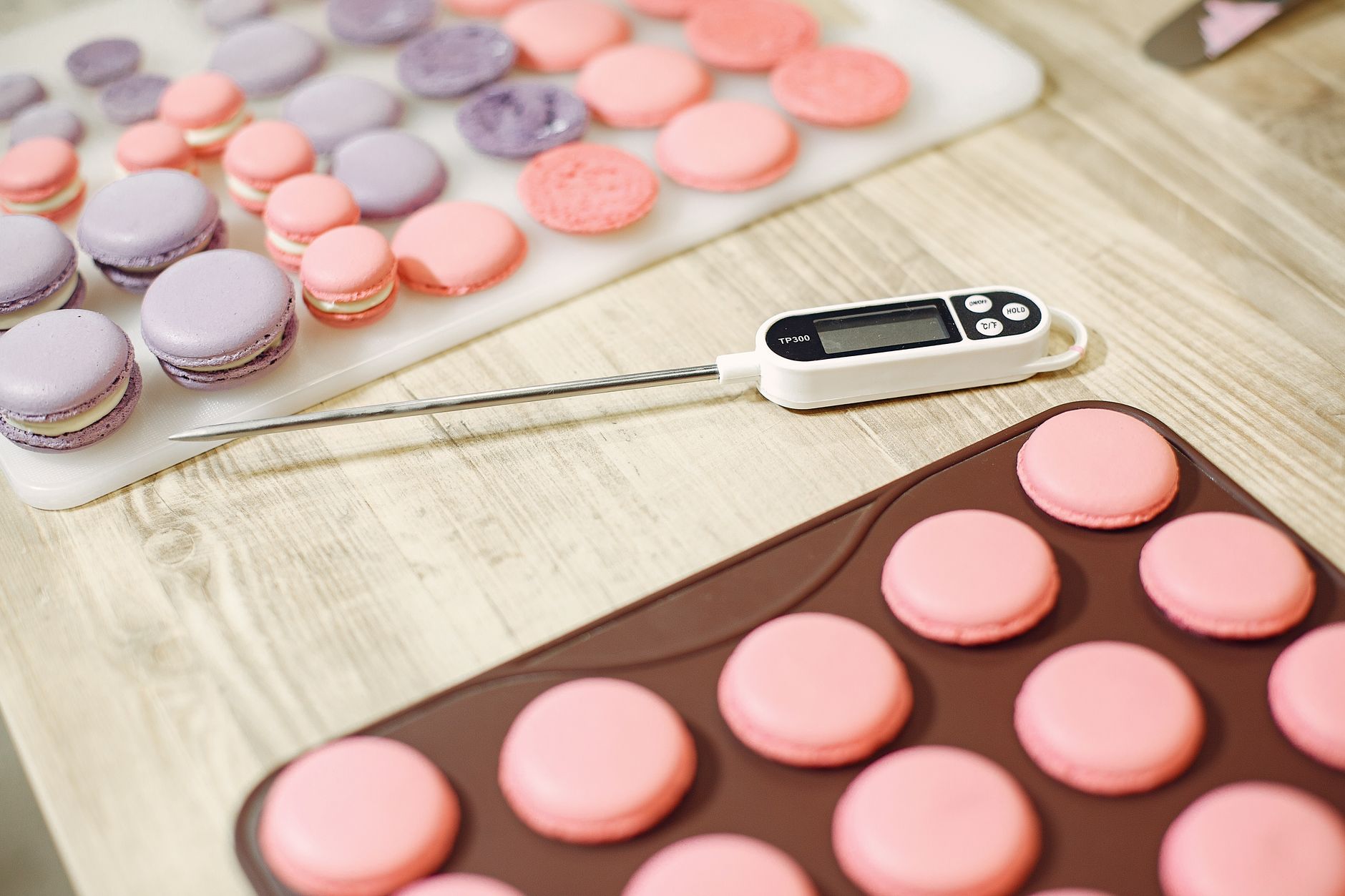
Finding a reliable food thermometer is essential for safe and perfectly cooked meals, yet the market is crowded with gadgets that promise precision. A mis‑reading can turn a juicy roast into a dry disappointment or, worse, leave harmful bacteria unchecked.
In the next few minutes you’ll learn which thermometer type truly delivers consistency, how to verify accuracy at home, and which features actually matter for everyday cooking. You’ll also discover a few hidden details that most retailers gloss over, so you can invest wisely.
⚡ In a Rush? Key Takeaways
- Thermometer accuracy typically ranges ±1‑2 °F (±0.5‑1 °C) for digital probes.
- Instant‑read models reach target temperature in 2‑5 seconds, saving up to 30 seconds per reading.
- Resolution of 0.1 °F (0.05 °C) lets you hit precise doneness points for steak and candy.
- Calibration knobs or detachable probes add about 15 minutes of yearly maintenance.
- ✅ Best overall pick: a probe‑type digital thermometer with 0.1 °F resolution, 2‑second response, and a built‑in calibration feature.
How do the main types of food thermometers differ in accuracy and usability?
Probe, infrared, and dial thermometers vary; probe models usually achieve ±1‑2 °F accuracy, infrared ±2‑3 °F, dial ±3‑5 °F.
Understanding the three most common categories helps you match a tool to your cooking routine. Each type has a distinct workflow, power requirement, and durability profile that can influence how often you actually reach for it.
What makes probe thermometers the most accurate choice for cooks?
Probe thermometers embed a sensor tip, delivering consistent ±1‑2 °F accuracy when calibrated regularly.
Probes insert directly into meat, liquids, or batter, providing a true internal temperature reading. Because the sensor sits at the core of the food, it reflects the heat that matters most for safety and texture.
- Typical response time: 2‑5 seconds.
- Resolution often 0.1 °F (0.05 °C), essential for delicate items.
- Most models include a calibration screw for field checks.
For home chefs who grill, roast, or candy, a probe offers the most reliable data. Even seasoned bakers appreciate the quick, repeatable reads when testing batter temperature for eclairs or soufflés.
Why might an infrared thermometer be useful despite lower accuracy?
Infrared thermometers measure surface temperature without contact, useful for grill grates and pan tops.
They excel when you need a quick glance at a surface that’s hard to probe, such as a scorching cast‑iron skillet or a charcoal grill where inserting a probe would be unsafe.
- Accuracy range: ±2‑3 °F.
- Instant read – sub‑second response.
- Best for checking pan heat before searing.
Remember, they cannot gauge internal doneness, so they complement—not replace—probe units. Pairing the two lets you confirm that a grill is hot enough before you even touch the meat.
When is a traditional dial (bimetal) thermometer still a viable option?
Dial thermometers use a bimetal coil, offering durability with ±3‑5 °F accuracy and no batteries.
They’re sturdy, inexpensive, and work well for high‑heat environments like ovens or deep‑fat fryers. Their simplicity makes them a favorite for campers and those who prefer a tool that never needs charging.
- Response time: 10‑15 seconds.
- No electronic components, so they survive drops.
- Often lack calibration, limiting long‑term precision.
If you value ruggedness over pinpoint accuracy, a dial model fits the bill. Just keep realistic expectations about the margin of error.
Can I rely on battery‑powered thermometers for long‑term use?
Modern lithium‑ion cells last 1‑2 years in constant‑use models, but battery life can vary with probe heating cycles.
Most digital probes consume power only when the sensor is active, so occasional use stretches the battery life considerably. However, a thermometer that sits in a drawer and is used daily will need a fresh battery roughly every 12‑18 months.
- CR2032 coin cells are common and inexpensive (< $1 each).
- Some high‑end models feature USB‑rechargeable packs lasting up to 500 reads.
- Battery‑low alerts are useful but add a small cost to the overall price.
Plan for a yearly battery check; a dead sensor mid‑cook can be avoided with a quick swap.
What material should the probe tip be made of for accurate, safe readings?
Stainless‑steel (18/8) tips resist corrosion and provide consistent heat transfer, while silicone‑coated tips protect delicate foods.
A solid stainless‑steel tip ensures the sensor quickly equilibrates with the food, giving you that 2‑second response time. Silicone or ribbed coatings are handy for candy work because they reduce sticking and make cleaning easier.
- Food‑grade stainless‑steel meets NSF standards for kitchen use.
- Avoid low‑grade alloys that can leach metals at high temperatures.
- Removable tips allow switching between metal and silicone depending on the task.
Choosing a tip that matches your typical cooking style can extend the probe’s lifespan and keep readings trustworthy.
How can I test and calibrate a food thermometer to ensure reliable readings?
Use the ice‑water method (0 °F/32 °C) and boiling water (212 °F/100 °C) to verify accuracy and adjust via the calibration knob.
Even the best thermometer drifts over time. Regular checks keep it honest, and a small calibration routine can prevent costly cooking errors.
What is the ice‑water test and how often should I perform it?
Fill a glass with ice, add water, stir, and insert the probe; the reading should be 32 °F (0 °C).
Do this quarterly for daily‑use probes. If the reading deviates more than 1 °F, adjust the calibration screw until it falls within the acceptable range.
- Use a clean glass to avoid residue.
- Ensure the ice is fully crushed for uniform temperature.
- Record the result in a kitchen log for trends.
How does the boiling water method work at sea level versus higher altitudes?
At sea level, boiling water reads 212 °F (100 °C); at altitude, subtract ~1 °F per 500 ft.
Because most users live below 2,000 ft, the 212 °F benchmark remains a practical check. Adjustments become more important for mountain‑side homes or high‑rise apartments.
| Altitude | Expected Boiling Point |
|---|---|
| Sea level (0 ft) | 212 °F (100 °C) |
| 1,000 ft | 209 °F (98 °C) |
| 2,000 ft | 206 °F (96 °C) |
Adjust the calibration knob until the probe reads within ±1 °F of the expected value. Re‑test after any major impact or battery change.
What tools help maintain calibration without a built‑in adjustment screw?
External calibration kits—usually a small digital handheld with a reference sensor—provide a workaround for fixed‑dial models.
These kits cost $20‑$35 and let you compare the dial reading against a verified reference. While they won’t let you fine‑tune a dial thermometer, they give you a clear indication when replacement is warranted.
- Place the reference sensor in ice‑water.
- Note the dial reading; if off, consider replacing the thermometer.
- Keep the kit handy for seasonal checks.
How to use a digital reference thermometer for cross‑checking?
A secondary digital probe with known accuracy (±0.5 °F) serves as a benchmark for any primary device.
Run both thermometers side‑by‑side in ice‑water and boiling water. Record any variance; if the primary deviates by more than 1 °F, recalibrate or replace it. This method works for any probe‑type meter, regardless of built‑in adjustment features.
- Choose a reference thermometer that advertises NIST‑traceable certification.
- Perform the cross‑check at the same ambient temperature to avoid thermal drift.
- Document results in a spreadsheet to spot long‑term trends.
Which features truly affect cost‑effectiveness and long‑term value?
Resolution, response time, and waterproof rating drive value; extra bells like Bluetooth add cost but limited utility.
Focusing on core performance metrics saves money and simplifies use. Features that sound high‑tech often provide marginal benefit for the average home cook.
How does resolution influence cooking precision?
Resolution of 0.1 °F (0.05 °C) lets you hit exact doneness points, crucial for steak (130‑135 °F) and candy (238‑250 °F).
Thermometers with 1 °F steps may force you to over‑ or under‑cook by several degrees, which can mean the difference between a melt‑in‑your‑mouth custard and a grainy failure.
- Steak: 130 °F medium‑rare; 0.1 °F resolution reduces margin of error.
- Candy: 240 °F critical; 0.1 °F helps avoid a ruined batch.
- Eggs: 150 °F poached; precision ensures texture.
Why does response time matter for efficiency?
A 2‑second response saves roughly 30 seconds per read when checking multiple spots during a roast.
Over a 4‑hour roast, that adds up to nearly three minutes—time you could spend prepping side dishes or simply relaxing while the oven does the work.
| Thermometer Type | Avg. Response Time | Typical Cost |
|---|---|---|
| Probe (high‑end) | 2‑3 seconds | $70‑$110 |
| Probe (budget) | 4‑5 seconds | $30‑$50 |
| Infrared | Instant | $30‑$80 |
Are Bluetooth‑enabled thermometers worth the premium?
Bluetooth adds $20‑$40 but mainly offers remote alerts; it does not improve accuracy or speed.
If you frequently grill outside and want temperature notifications on a phone, it may be helpful, otherwise it’s an unnecessary expense.
- Battery life drops to 6‑8 months with constant BT use.
- App calibration features are rarely more precise than manual screws.
- Extra fees for premium app subscriptions can add $5‑$10 per month.
Does a magnetic back matter for convenience?
A magnetic backing lets you snap the probe onto stainless‑steel surfaces, freeing up counter space.
While it doesn’t affect measurement, the convenience of a quick‑store spot can reduce the chance of misplacing the device, especially in busy kitchens.
- Works on most refrigerator doors and oven doors.
- Magnet strength varies; test on a scrap piece of metal before relying on it.
- Some models integrate a belt clip as an alternative.
FAQ
What temperature range should I look for in a versatile kitchen thermometer?
A range of 0‑500 °F (‑18‑260 °C) covers most cooking, from frozen foods to deep‑fried items.
Can I use the same thermometer for meat and candy?
Yes, provided the device offers at least 0.1 °F resolution and a 500 °F upper limit.
How often should I replace my food thermometer?
Replace every 5‑7 years or when calibration drift exceeds ±2 °F after regular checks.
Is a dishwasher‑safe probe important?
Dishwasher‑safe probes simplify cleaning and maintain sensor integrity, extending lifespan by 2‑3 years.
Do I need a waterproof probe for oven use?
Water‑resistant (IPX5) probes tolerate occasional splashes and are safe for oven roasts with moisture.
— Greta Michaud, Home Appliance Efficiency Researcher
Last reviewed: August 2026