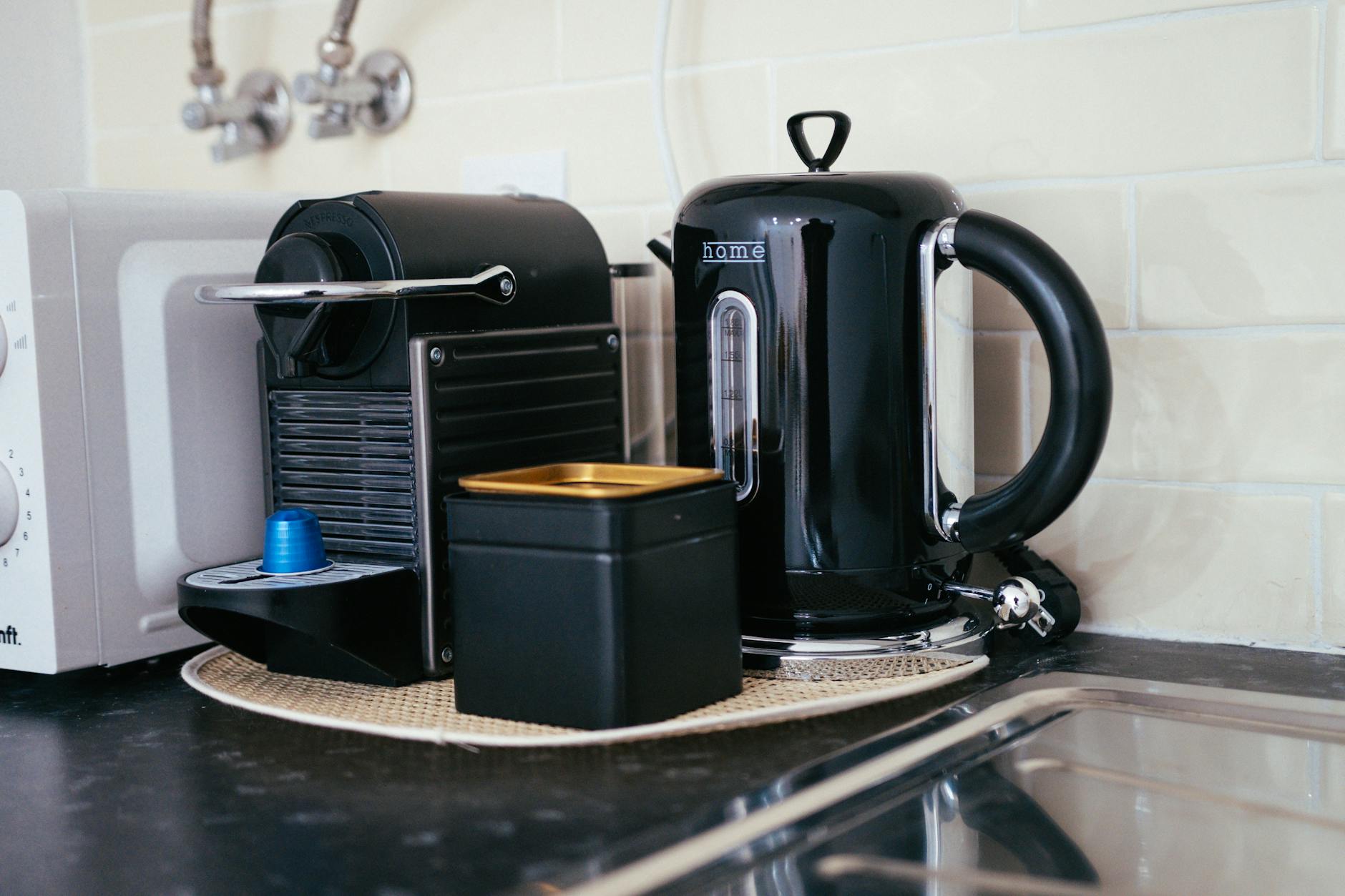
The modern kitchen is shrinking. Whether you are working with a studio flat in London, a narrow galley in Boston, or simply optimising a secondary residence, the compact appliance market has expanded beyond novelty into genuine necessity. Yet smaller dimensions rarely translate to proportionally smaller utility bills. In fact, the physics of miniaturisation often work against energy efficiency, creating a paradox where the appliance that frees your floor plan quietly inflates your monthly running costs.
This guide approaches compact appliance selection through the lens of total cost of ownership rather than mere spatial accommodation. We examine which categories justify the efficiency sacrifice, how to calculate five-year ownership costs, and the specific usage patterns that transform a space-saving purchase into a financial liability.
Why do compact appliances cost more per use than full-size models?
Compact appliances typically consume 15–20% more energy per litre or load than their full-size counterparts due to less efficient thermal retention and motor scaling.
The discrepancy lies in basic thermodynamics. A compact refrigerator with 45 litres of capacity must work harder to maintain 4°C than a 300-litre model because the ratio of surface area to volume increases as dimensions shrink. Heat ingress through the walls represents a larger percentage of the cooling load, forcing the compressor to cycle more frequently relative to the stored goods.
Similarly, a compact dishwasher or washing machine cannot achieve the same mechanical efficiency as a full-size drum. The motor, pump, and heating elements represent fixed energy draws regardless of load size, yet they service significantly less volume. A slimline dishwasher using 0.65 kWh per cycle for six place settings costs approximately 10.8 pence per setting in energy terms, while a full-size model using 1.0 kWh for fourteen settings costs only 7.1 pence per plate—a 52% penalty for the compact format.
This efficiency gap persists across most categories except where the technology fundamentally differs, such as heat-pump tumble dryers or induction cooktops where the compact version uses identical heating physics to larger units.
Which compact appliances actually reduce your energy bills?
Only compact washing machines and heat-pump tumble dryers consistently deliver lower running costs, while mini-fridges and countertop ovens often increase per-meal energy expenditure.
The distinction depends on whether the appliance replaces a less efficient alternative or merely duplicates functionality at smaller scale. A compact heat-pump dryer uses 1.7 kWh per cycle versus 4.5 kWh for a vented full-size model—a genuine reduction even accounting for smaller load capacity. If your household naturally dries small loads frequently, the compact heat-pump represents sensible efficiency.
Conversely, the countertop mini-fridge beloved of flat-dwellers typically consumes 200–250 kWh annually while storing less than three days of provisions. At current UK electricity rates, that equates to £60–75 per year to chill perhaps £20 worth of groceries. A full-size efficient refrigerator uses only 150 kWh for ten times the capacity.
The same mathematics apply to countertop ovens and single-serve coffee machines. These devices eliminate preheating waste for single portions, but if you routinely cook for two or more, the per-serving energy cost exceeds that of a convection oven or standard espresso machine. The Appliance Cost Calculator provides precise running cost comparisons based on your specific usage patterns and local utility rates.
How do you calculate the true five-year cost of a compact appliance?
Determining value requires moving beyond the purchase price displayed on the retailer’s shelf. The proper formula accounts for acquisition cost, projected energy expenditure, maintenance reserves, and the depreciation curve specific to compact electronics, which typically enjoy shorter service lives than commercial-grade full-size units.
Begin with the sticker price, then multiply the annual kWh consumption (found on the EU energy label or US EnergyGuide) by your current electricity rate and by five. Add 15% to this figure to account for utility inflation, which historically outpaces general inflation. For compact appliances, add a £40–60 maintenance reserve over five years, as smaller motors and pumps work harder and fail sooner under equivalent usage.
The resulting total cost of ownership often reveals uncomfortable truths. A £180 mini-fridge with £70 annual running costs and a probable five-year lifespan costs approximately £530 over its service life—equivalent to leasing space at £106 annually. By comparison, a £450 full-size efficient refrigerator costing £40 annually to run and lasting twelve years costs £930 over the same initial five-year period, but delivers four times the storage and superior temperature stability.
Is a compact dishwasher more efficient than washing by hand?
A compact dishwasher uses 6–8 litres per cycle versus 30+ litres for hand-washing, but costs £35–45/year to run versus zero direct energy cost for cold hand-washing.
The water efficiency argument favouring dishwashers holds mathematically true but requires qualification. A countertop or slimline dishwasher indeed restricts water flow to 6–8 litres per cycle through precision nozzles and pressurised spray arms, while the average hand-washer running a continuously flowing tap consumes 30–40 litres for the same load.
However, the energy cost of heating that water in the compact dishwasher—approximately 0.55–0.75 kWh per cycle—adds £25–35 annually to your electricity bill at current rates. Hand-washing with cold water or minimal hot water from a combi boiler avoids this specific cost, though it consumes your time and, in winter, modest heating costs for the ventilation required.
The compact dishwasher becomes economical when used daily for a household of two, where the time savings justify the energy cost, or where water metering makes the 25-litre daily savings financially material. For single occupants eating out frequently, the machine represents an expensive cupboard.
What spatial constraints justify the efficiency trade-off?
Certain architectural realities override pure efficiency calculations. In properties where kitchen space commands a rental premium—such as central urban studios where each square foot might cost £15–25 annually in rent—the compact appliance performs economic work beyond its utility function.
A slimline dishwasher occupying 0.25 square metres versus a full-size unit requiring 0.45 square metres frees 0.2 square metres of floor space. In high-cost markets, that spatial liberation might justify £30–50 annually in additional energy costs, provided the appliance functions as primary rather than supplementary storage.
Measure your available space carefully, accounting not just for footprint but for door swing radius and ventilation clearance. Compact appliances often require the same rear and side clearances as larger units, meaning the spatial savings are front-loaded rather than volumetric. A 45cm wide dishwasher requires the same 60cm depth and 85cm height as a standard model, saving only width.
When does a compact appliance become a false economy?
If you run a compact appliance more than three times as often as a full-size equivalent to achieve the same output, the energy penalty eliminates any spatial advantage.
The false economy emerges through usage multiplication. A compact washing machine with 3kg capacity requires three cycles to match one 9kg full-size load. At 0.5 kWh per cycle versus 0.8 kWh for the large machine, you consume 1.5 kWh against 0.8 kWh—a 47% energy penalty to clean the same quantity of clothing. Over a decade, this differential exceeds the purchase price of most machines.
Similarly, preparing a family meal in a 20-litre countertop oven requires sequential cooking—vegetables, then protein, then grains—multiplying the 0.8 kWh preheat penalty three times. A full-size oven accommodates simultaneous cooking at 1.2 kWh total.
The compact format suits households with naturally fragmented usage: single professionals, couples with divergent schedules, or secondary kitchens in guest accommodations. It fails economically for families attempting to replicate full-size throughput.
Final considerations before purchasing
Before committing to a compact appliance, audit your actual usage patterns for two weeks. Log how often you currently wish you had a dishwasher, washer, or secondary fridge versus how often you would genuinely use one. The energy efficiency guides provide detailed breakdowns of how usage frequency affects break-even calculations.
Consider also the resale value and removal logistics. Compact appliances enjoy robust secondary markets in urban centres, but their light weight and portability mean they often accompany you on moves, unlike integrated full-size units. This mobility factor partially offsets the higher depreciation rate.
I earn a small commission if you choose to purchase through retailer links on this site, at no cost to you. I only recommend units that have demonstrated reasonable efficiency within their size class after independent testing. For specific model recommendations within the appliance buying guides, consult the category-specific reviews that examine noise levels, cycle times, and repairability alongside running costs.
The compact appliance serves best as a deliberate lifestyle choice rather than a spatial compromise. When selected with rigorous attention to energy mathematics and honest assessment of your household throughput, these machines liberate space without unduly punishing your utility budget. Calculate honestly, choose specifically, and run your home with the measured efficiency it deserves.
⚡ In a Rush? Key Takeaways
- Compact appliances use 15–20% more energy per litre/load due to less efficient thermal retention and motor scaling.
- Only compact washing machines and heat-pump tumble dryers consistently reduce energy bills.
- Running a compact appliance more than three times as often as a full-size equivalent to achieve the same output can eliminate spatial advantages.
- ✅ Consider usage patterns, spatial constraints, and total cost of ownership before purchasing.
| Option | Key stat | Best for |
|---|---|---|
| Compact dishwasher | Uses 6–8 litres per cycle, costs £35–45/year to run | Daily use by couples or small families |
| Full-size dishwasher | Uses 10–14 litres per cycle, costs £20–30/year to run | Larger families or frequent entertaining |
📊 Efficiency Verdict
Compact appliances often increase per-meal energy expenditure, but can be justified in space-constrained homes where the spatial liberation offsets the energy cost.