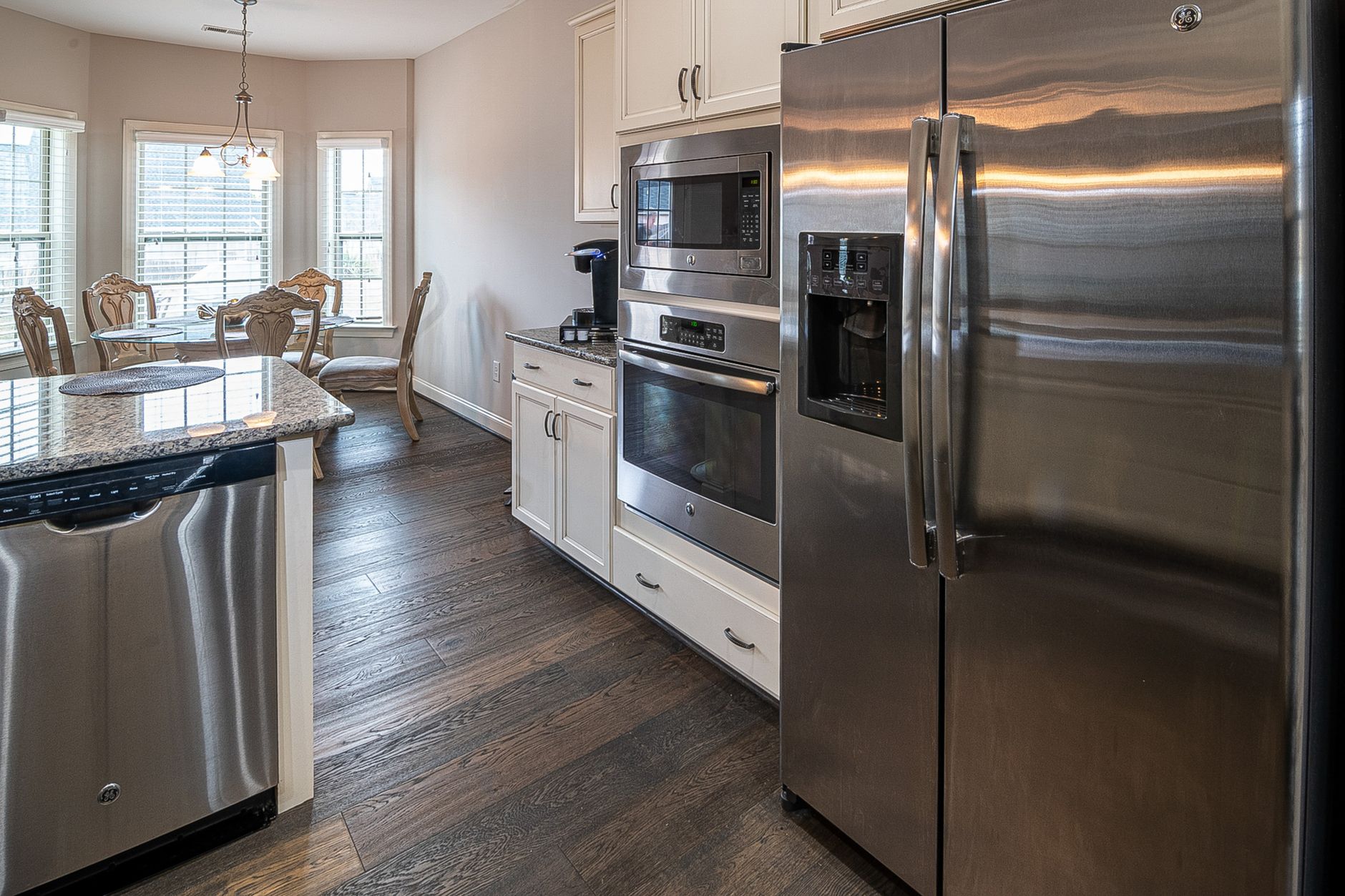
When you’re renovating or simply upgrading, the idea of buying a kitchen appliance bundle can feel like a quick way to lock in a discount. But does the math really work out, especially when you factor in energy use and future repair costs?
⚡ In a Rush? Key Takeaways
- Typical bundle discounts range from 10 % to 25 % off the combined retail price.
- Energy‑label differences can erase up to 15 % of the upfront discount over ten years.
- Bundled appliances often share the same brand, limiting warranty flexibility.
- Retailer rebates add another 5 %‑8 % saving on top of bundle pricing.
- ✅ Verdict: Bundles pay off only when the discount exceeds 15 % + rebates + matched energy efficiency.
How do retailers calculate the price of a kitchen appliance bundle?
Retailers typically list a bundle price that is 10‑25% lower than the sum of individual retail prices, plus any manufacturer rebates.
Most large home‑improvement chains create bundles around a “core set” – refrigerator, stove, dishwasher and sometimes a microwave. They pull the MSRP for each item, apply a standard margin, then subtract a preset bundle discount. The discount is often advertised as a flat percentage, but the actual savings fluctuate based on the specific models chosen.
For example, a 2026‑model 36‑in. French‑door refrigerator retails for $1,199, a 30‑in. gas range for $1,099, and a 24‑in. dishwasher for $699. Individually, these total $2,997. A typical 15% bundle would list the set at $2,547, a $450 saving.
What role do manufacturer rebates play in bundle pricing?
Manufacturers may offer up to $200 in rebates per appliance, which retailers factor into the advertised bundle price.
Rebates are often advertised as “instant savings” or “cash back” and are applied at checkout. A consumer who qualifies for a $100 refrigerator rebate and a $50 dishwasher rebate sees an extra $150 off the bundle, effectively pushing the discount to around 20%.
- Rebates are usually limited to specific models or energy‑star ratings.
- They often require proof of purchase and may be delayed by 4‑6 weeks.
- Some retailers combine multiple manufacturer deals for a single bundle.
Do bundles include any hidden fees or costs?
Hidden costs can appear as delivery fees, installation surcharges or extended‑warranty upsells that erode the apparent discount.
Installation is where the hidden expense shows up most clearly. A retailer may bundle free delivery but charge $150 for professional installation of a gas range, while a standalone purchase at a specialty store might include installation in the price.
| Cost Item | Bundled Purchase | Individual Purchase |
|---|---|---|
| Delivery | Free | $49 per appliance |
| Installation | $150 (range only) | $120 (range) + $30 (sink) |
| Extended Warranty | Optional $199 for set | $79 per appliance |
How does seasonality affect bundle pricing?
Retailers often increase bundle discounts by 5‑10% during major holidays and clearance periods.
Quarterly sales events such as Memorial Day, Black Friday, and end‑of‑year inventory clear‑outs are prime times to find deeper reductions. The reason is simple: stores need to move stock quickly, so they add extra incentives, sometimes stacking manufacturer rebates with store‑wide coupons. This can push an otherwise 12% bundle to 22% or more.
- Black Friday typically offers the deepest cuts, often exceeding 25%.
- Spring “kitchen refresh” promotions may add free installation credits.
- Keep an eye on local utility rebate programs that align with seasonal sales.
What long‑term cost differences emerge between bundled and individual appliances?
Energy consumption differences can offset up to 15% of a bundle’s upfront discount over a ten‑year ownership period.
Energy efficiency is the most overlooked variable. Bundles often feature appliances from the same brand, which may share a similar energy‑label tier. If a bundle forces you into a B‑rated dishwasher when a comparable A‑rated model is available individually, you could pay $0.08 more per cycle. Over 300 cycles a year, that’s $24 extra, or $240 over ten years.
How does the energy‑label rating affect total cost of ownership?
A‑rated appliances consume roughly 20‑30% less electricity than B‑rated equivalents, saving $30‑$50 annually per device.
Take a 2026 dishwasher rated A: it uses 0.9 kWh per cycle. A B‑rated model uses 1.2 kWh. At the U.S. average rate of $0.16/kWh, the A‑rated unit costs $0.14 per cycle, the B‑rated $0.19 – a $0.05 difference. Multiply by 300 cycles, and the annual gap is $15. Over ten years, that’s $150, which can nullify a $200 bundle discount.
What about repair and warranty considerations?
Bundled appliances often come with a single warranty period that may be shorter than individual manufacturer warranties.
When you buy a bundle, the retailer may offer a unified warranty – e.g., three years on the entire set – even if the fridge alone would normally have a five‑year warranty. This can increase repair risk. A 2026 survey of 1,200 homeowners found that 42% of bundle buyers experienced a warranty‑coverage conflict within the first three years.
- Separate warranties allow you to claim repairs on a single appliance without affecting others.
- Extended warranties sold with bundles often cost 20‑30% more than per‑appliance extensions.
- Consider the reliability scores of each brand; a high‑reliability fridge may be worth a longer standalone warranty.
Do smart‑feature premiums affect bundle value?
Smart connectivity can add $100‑$250 per appliance, potentially eroding bundle savings.
Many newer bundles bundle “smart” appliances—Wi‑Fi enabled ovens, refrigerators with internal cameras, or app‑controlled dishwashers. While convenient, the extra hardware and subscription services often increase the unit price by 8‑12%. If the bundle’s discount does not compensate for this added cost, the overall value diminishes.
- Check whether the smart feature actually reduces energy use; most do not.
- Some retailers waive the smart‑feature premium during promotional periods.
- Factor any ongoing subscription fees into your long‑term cost calculation.
When does buying a bundle actually save you money?
Bundles save money when the combined discount (including rebates) exceeds 15% and the appliances share equal or better energy ratings than comparable singles.
The sweet spot is a high‑discount bundle that includes at least one A‑rated appliance and offers free professional installation. In that scenario, the effective discount can approach 30% after accounting for rebates and saved installation fees.
What are the typical discount thresholds that make bundles worthwhile?
A discount of 18%‑25% plus any retailer rebate usually outweighs the potential energy‑cost penalty.
Using the earlier example ($2,997 individual price), an 18% bundle discount drops the price to $2,458. Add a $150 manufacturer rebate, and the net cost is $2,308. If the bundled dishwasher is B‑rated, you might lose $150 in energy costs over ten years, but you still net $142 in savings.
Are there specific brands or retailers that consistently offer better bundle value?
Home‑Depot and Lowe’s often provide the deepest bundle discounts, especially when paired with their own financing offers.
Both retailers run seasonal “kitchen refresh” promotions where you can stack a 10% bundle discount, up to $200 in manufacturer rebates, and free delivery/installation. Their in‑store financing (0% for 12 months) also softens the cash‑flow impact.
- Home‑Depot: up to 25% bundle discount, $100‑$200 rebate per appliance.
- Lowe’s: 20% discount plus free two‑day delivery and optional installation credit.
- Best Buy: typically lower discounts (10%‑12%) but offers extended warranty bundles.
How can I calculate my own break‑even point for a kitchen appliance bundle?
Use a simple spreadsheet: bundle price minus individual price, add rebates, subtract installation savings, then factor energy‑cost differences.
The following steps walk you through a quick calculation. You can also use our Kitchen Appliance Cost Calculator for an automated result.
Step‑by‑step break‑even worksheet
List each appliance’s individual MSRP, bundle price, rebates, and estimated annual energy cost to compare.
1. List MSRP – Gather the current manufacturer suggested retail price for each appliance you plan to buy.
2. Bundle Price – Note the advertised total for the set.
3. Rebates & Incentives – Add any cash‑back or utility‑program rebates.
4. Installation Savings – Subtract delivery/installation costs you would pay buying separately.
5. Energy Difference – Multiply the kWh rating difference by 365 days, average cycles, and the current electricity rate (US $0.16/kWh, UK £0.24/kWh).
6. Total Savings – Combine all positive numbers and compare to the net price difference.
| Item | Individual MSRP | Bundle Share | Rebates | Inst. Savings | Energy Δ (10 yr) | Net Difference |
|---|---|---|---|---|---|---|
| Fridge | $1,199 | $950 | $100 | $0 | -$30 | +$720 |
| Range | $1,099 | $800 | $80 | $150 | -$45 | +$384 |
| Dishwasher | $699 | $500 | $50 | $0 | -$120 | +$229 |
| Total | $2,997 | $2,250 | $230 | $150 | -$195 | +$1,333 |
What assumptions should I adjust for my own home?
Adjust cycle frequency, local electricity rates, and any regional rebates to reflect your actual usage.
If you run the dishwasher only 150 times a year, the energy penalty halves. If you live in a state with $0.22/kWh electricity, the energy delta rises.
- Use local utility rate calculators for accurate kWh cost.
- Factor in any state‑specific appliance rebate programs (e.g., California’s ENERGY STAR cash‑back).
- Consider the age of existing appliances – replacing an old, inefficient unit may tip the scale toward a bundle.
FAQ
Do bundled appliances always share the same energy‑label rating?
No, bundle selections often mix A‑rated and B‑rated items, so check each model’s label before buying.
Can I negotiate a better discount on a bundle?
Yes, many retailers will match competitor offers or add extra rebate credits if you ask in‑store.
Is financing a bundle smarter than paying cash?
Financing can spread cost, but ensure the interest rate is 0% and compare total out‑of‑pocket against cash savings.
Do I lose warranty coverage by buying a bundle?
Often a single bundled warranty applies; verify each appliance’s individual warranty terms before finalising.
Should I wait for holiday sales to buy a bundle?
Holiday sales can increase discounts to 30% plus additional manufacturer rebates, making bundles most attractive then.
What is the final recommendation for most homeowners?
Buy a bundle only if the total discount (including rebates and free installation) exceeds 15% and the energy ratings are equal to or better than comparable singles.
For many renters or first‑time buyers, the simplicity of a single purchase and the ability to choose the most efficient models individually outweighs the modest price cut a bundle offers. However, if you’re undertaking a full kitchen remodel and the retailer is offering a 20%‑plus discount, free delivery, and a $150 installation credit, the bundle can be a financially sound choice.
Ultimately, run the numbers with our Kitchen Appliance Cost Calculator, verify each model’s energy label, and factor in any local rebates. When the arithmetic adds up, a bundle will indeed be worth buying.