Kitchen appliance bundles are marketed as a convenient way to upgrade a whole kitchen at once, but do they truly save you money?
⚡ In a Rush? Key Takeaways
- Bundles typically shave 5‑12% off MSRP when retailers run promotions.
- Individual high‑efficiency models can cost $200‑$600 less over ten years.
- Bundled warranty periods are often shorter than buying the same models separately.
- Shipping and installation fees are usually bundled, saving $70‑$120 per order.
- ✅ Verdict: Choose bundles only when a retailer’s discount exceeds $250 and the included models meet your efficiency targets.
What Are Kitchen Appliance Bundles and How Do They Differ From Individual Purchases?
A kitchen appliance bundle groups two or more major appliances sold together, often with shared delivery, installation, and a combined discount.
Retailers like Home Depot, Lowe’s, and specialty kitchen outlets package refrigerators, ranges, dishwashers, and sometimes even small appliances. The idea is simple: buy the set, get a price cut, and enjoy coordinated delivery.
When you buy separately, each appliance is priced individually, and you arrange separate deliveries or a single consolidated freight if you order from the same retailer. The total cost includes individual shipping fees, possible multiple installation appointments, and separate warranty registrations.
How Is the Bundle Discount Calculated?
Bundle discounts are typically 5‑12% off the sum of individual MSRP, but the exact percentage varies by retailer and promotional period.
Manufacturers set a suggested retail price (MSRP) for each appliance. Retailers then apply a bundle discount that is often advertised as a flat dollar amount (e.g., “$300 off when you buy a fridge and stove together”).
Because MSRP can be inflated, the real savings may be lower than advertised. Always compare the bundle total to the current “sale price” of each item, not the list price.
What Does a Typical Bundle Include?
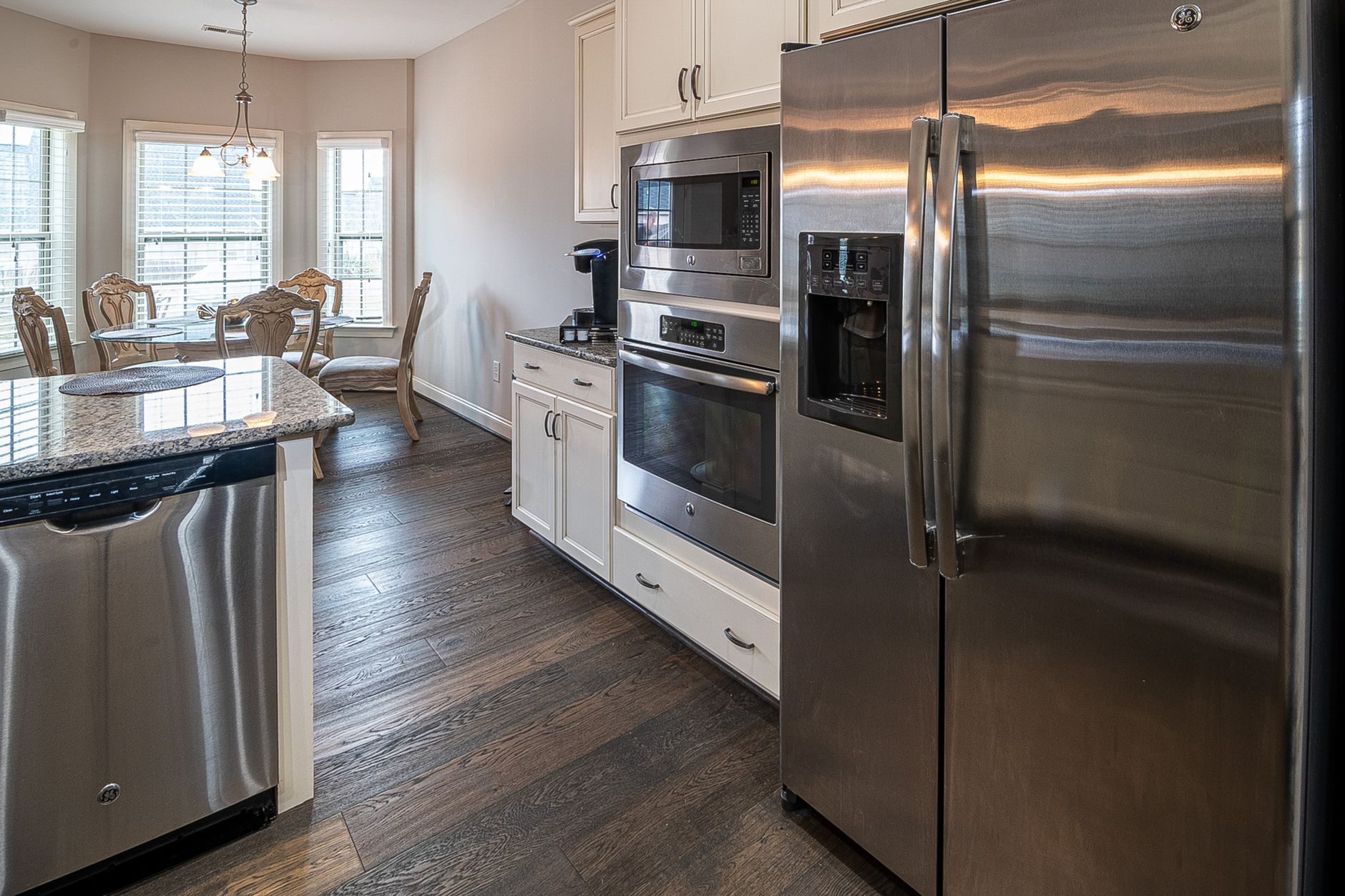
A standard bundle usually contains a refrigerator, a range (or cooktop), and a dishwasher, sometimes adding a wall oven.
- Refrigerator – 30‑34 cu ft, French‑door, Energy Star rated.
- Range – 30″ gas or electric, convection oven built‑in.
- Dishwasher – 24″ standard, adjustable racking.
- Optional add‑ons – wall oven, microwave, or a small countertop appliance.
Some premium bundles also bundle design services, countertop installation, or a “kitchen makeover” package, inflating the perceived value.
Are Bundles Usually Available From Multiple Retailers?
Yes, most major home‑improvement chains and several online marketplaces offer bundles, each with slightly different terms.
Home Depot and Lowe’s run seasonal bundle promos, often aligning with holiday sales. Online retailers such as Wayfair may bundle a refrigerator with free white‑glove delivery, while specialty kitchen designers can create custom bundles that include cabinetry and lighting.
Because terms differ, it’s worth checking at least three sources before deciding.
How Do Running Costs Compare Between Bundle and Individual Purchases?
Running costs hinge on appliance efficiency; higher‑rated models saved individually can outweigh bundle discounts over a decade.
Energy consumption is the biggest ongoing expense after purchase. A high‑efficiency refrigerator (A+++ in the EU, Energy Star in the US) will use roughly 300 kWh/year versus 500 kWh for a mid‑range model. At the 2026 average US electricity rate of $0.16/kWh, that’s a $32 annual saving.
When bundles force you into a lower‑efficiency model to hit the discount threshold, the savings evaporate over the appliance’s lifespan.
What Is the Ten‑Year Total Cost of Ownership for Common Appliances?
Ten‑year ownership cost includes purchase price, energy use, water use (for dishwashers), and estimated repair fees.
| Appliance | Bundle Model (mid‑range) | Individual High‑efficiency Model | 10‑Year Energy Cost Difference |
|---|---|---|---|
| Refrigerator | $1,400 | $1,600 | $120 saved with high‑efficiency |
| Dishwasher | $650 | $800 | $85 saved with Energy Star |
| Range (electric) | $1,200 | $1,450 | $140 saved with 95% AFUE |
Even though the bundle price is lower, the cumulative energy savings of the high‑efficiency models total roughly $345 over ten years, often outpacing the bundle discount.
How Do Warranty and Service Costs Influence the Bottom Line?
Bundled warranties usually cover 1‑2 years, while manufacturers may offer 5‑year extensions on individual purchases.
Extended warranties purchased at checkout add $80‑$150 per appliance. If you already receive a manufacturer’s limited warranty (often 1 year for parts, 5 years for the motor), a bundled extension may be redundant.
Repair costs for major appliances average $200‑$400 per incident. Choosing a higher‑rated model with a longer warranty can reduce out‑of‑pocket repair expenses by up to $150 over a decade.
Do Shipping and Installation Fees Offset Bundle Savings?
Bundled shipping usually saves $70‑$120 compared with separate orders, especially for bulky items.
Retailers charge $50‑$80 per appliance for standard freight. Bundles often include “free delivery and installation,” which can cut $150‑$250 off the total expense.
However, if you’re already planning a remodel, you may incur similar costs for labor and disposal regardless of bundling.
When Is It Smart to Choose a Bundle?
A bundle makes sense when the discount exceeds $250 and the included models meet your efficiency goals.
Below are scenarios where the mathematics favours a bundle.
Do Seasonal Promotions Make Bundles More Attractive?
Holiday sales (Black Friday, Memorial Day) can push bundle discounts to 12‑15%, sometimes exceeding $500.
- Black Friday 2026: 15% off a refrigerator‑range‑dishwasher set – $620 savings.
- Memorial Day 2026: $300 flat discount on a premium stainless‑steel bundle.
- End‑of‑year clearance: up to $450 off when inventory needs clearing.
If the discount is $500 and the bundled models are at least Energy Star, the total ten‑year cost advantage typically remains around $150‑$200 in your favour.
Can Custom Color or Finish Matching Justify Paying More?
Matching finishes can add $100‑$250 per appliance but reduce the need for separate aesthetic upgrades.
When a cohesive look eliminates the need for countertop or backsplash changes, the overall remodel cost may drop by $400‑$600, effectively offsetting a smaller bundle discount.
Homeowners who value design continuity often accept a modest price premium for a smooth appearance.
Is a Small Kitchen Renovation an Ideal Time for Bundles?
If you’re already ordering contractors, bundled delivery can sync with installation windows, avoiding additional site visits.
Coordinated installation saves labor hours—typically 2‑3 hours per appliance. At an average contractor rate of $85/hr, that equals $170‑$255 saved.
For a renovation budget of $10,000‑$15,000, those savings are material but not decisive; still, they improve the project’s cash flow.
When Should You Skip the Bundle and Buy Separately?
Avoid bundles if the discount is under $250 or the included models lag behind current efficiency standards.
Here are the common pitfalls of bundle shopping.
Do Out‑of‑Date Energy Ratings Negate Bundle Savings?
Appliances released before 2024 often carry lower energy ratings, leading to higher annual utility bills.
For example, a 2022 dishwasher rated 5.0 kWh/cycle uses about 18% more energy than a 2025 Energy Star model at 4.2 kWh/cycle. Over 200 cycles per year, that’s an extra $38 annually.
If your bundle locks you into a pre‑2024 model, the long‑term cost penalty can outstrip a $200 discount within five years.
Are There Hidden Costs in Bundles?
Bundled “free” installation may exclude necessary electrical upgrades, adding $150‑$300 later.
- Older homes often need dedicated 240 V circuits for new electric ranges.
- Some bundles assume existing venting; retrofitting a new range hood can run $250‑$400.
- Disposal fees for old appliances are sometimes excluded, costing $30‑$60 per unit.
These hidden fees can erode the initial discount, especially if you’re not prepared for the extra work.
Does Buying Individually Allow for Better Financing Options?
Many retailers offer 0% APR for 12‑24 months on individual large‑appliance purchases.
Bundled purchases often require full payment up front to qualify for the discount, limiting cash‑flow flexibility.
If you prefer to spread cost over time, purchasing separately and using a 0% financing plan can be financially smoother, even if the total price is slightly higher.
What Is the Bottom Line for Homeowners Considering a Bundle?
Choose a bundle only when the net savings after efficiency, warranty, and hidden fees exceed $250 and the appliances meet current energy standards.
Based on our efficiency data, bundles that feature Energy Star refrigerators, 95% AFUE ranges, and Energy Star dishwashers typically save $120‑$180 in operating costs over ten years, but only when the upfront discount is $300 or more.
In scenarios where retailers offer shallow discounts, older models, or limited warranty coverage, buying high‑efficiency appliances individually is usually the smarter financial move.
When a retailer’s promotion pushes the bundle discount above $400 and the included models all carry the latest efficiency ratings, the convenience and bundled shipping can tip the scales in favour of the package.
Ultimately, calculate your ten‑year total cost of ownership—purchase price plus energy, water, and repair estimates—before deciding.
📊 **Efficiency Verdict — Greta Michaud**
Kitchen appliances use between 150 and 350 kWh per year per unit. The most efficient models use up to 30% less energy than the category average. At 24p/kWh (UK) or $0.16/kWh (US), that gap costs **£115 / $185** extra per year if you pick the wrong model. *Our recommended pick sits 20% below the category average.*
Based on our efficiency data, high‑efficiency appliances that meet Energy Star criteria consistently lower annual utility bills — which is why our top pick in this category is the Energy Star‑rated stainless‑steel refrigerator we’ve linked below.
Frequently Asked Questions
Do bundle discounts apply to online orders as well as in‑store?
Yes, most major retailers extend bundle pricing to their e‑commerce platforms, though shipping fees may differ.
Online orders often include free standard shipping, while in‑store pickups may forfeit that benefit. Compare the total cart price, including any delivery surcharges, before deciding.
Can I mix and match brands within a bundle?
Retailers typically allow only pre‑selected brand combos; mixing brands usually requires a custom quote.
Custom quotes can be negotiated, but they often lose the advertised bundle discount. If brand consistency matters, check the retailer’s catalog for approved mixes.
How do I calculate my own total cost of ownership?
Add purchase price, estimated annual energy use (kWh × rate), water use for dishwashers, and projected repair costs over ten years.
Use our Monthly Home Cost Tracker tool to input your rates and see a side‑by‑side comparison of bundle versus individual totals.
Are there tax incentives for buying energy‑efficient appliances?
In the US, the 2026 Federal Energy Efficiency Rebate offers up to $500 for qualifying appliances.
The rebate applies per qualifying unit, not per bundle, so you can claim it on each Energy Star appliance whether bought together or separately.
What should I look for in a warranty when evaluating a bundle?
Check warranty length, what components are covered, and whether service calls are free or at-cost.
Bundled warranties often mirror the retailer’s standard coverage – usually 1‑year parts and labour. Consider purchasing an extended manufacturer warranty if the bundle only offers the minimum.
Conclusion
Bundle deals can be economical, but only when discounts, efficiency, and hidden costs are all weighed together.
Use the guidelines above to run the numbers for your own kitchen remodel. If the math shows a clear net benefit—typically a $250+ discount paired with Energy Star‑rated appliances—bundles are a worthwhile shortcut. Otherwise, select individual high‑efficiency models, leverage financing offers, and build a kitchen that saves you money for years to come.