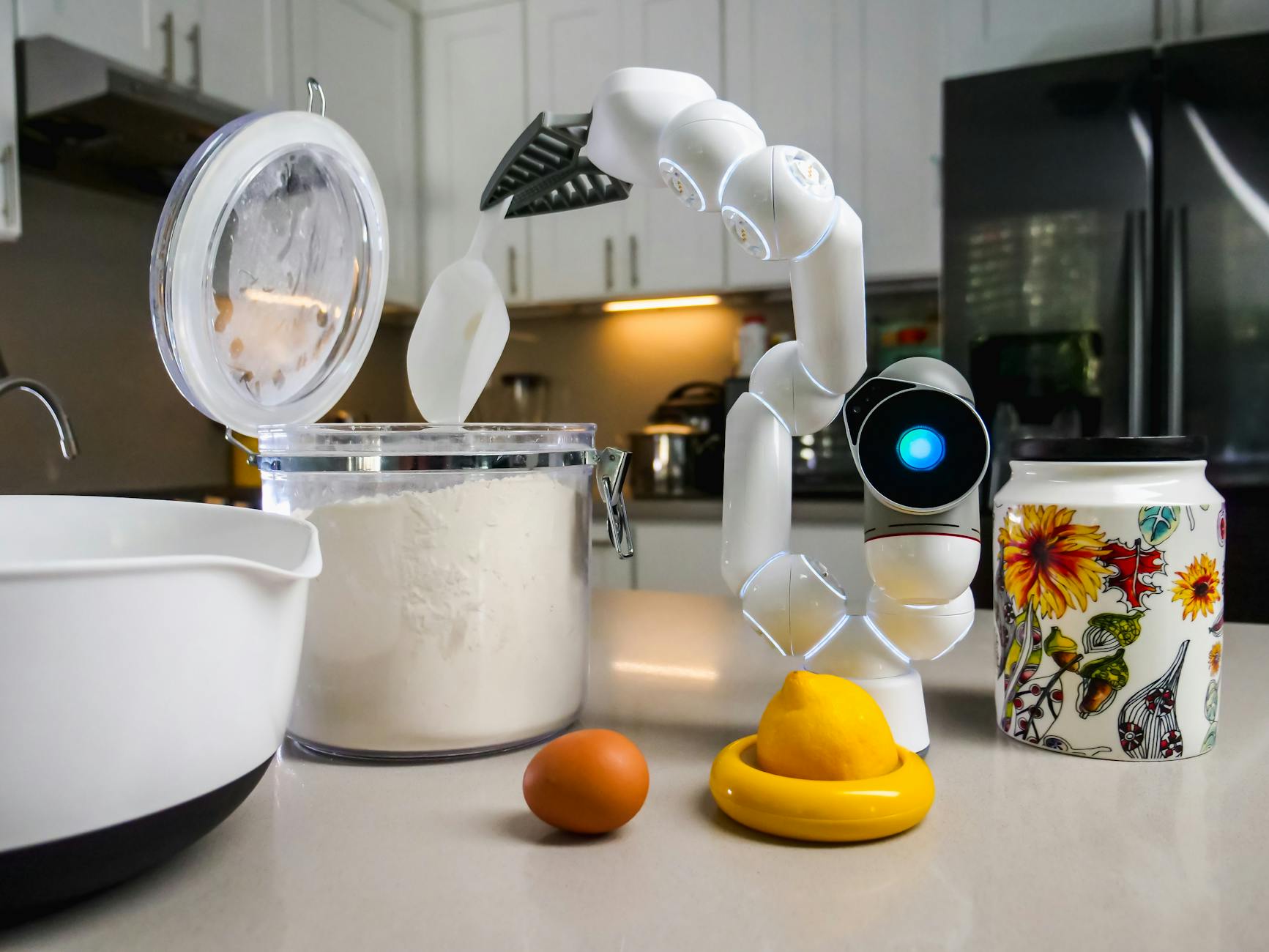
The allure of a smarter kitchen, promising precision and convenience, has never been stronger. But for homeowners and renters managing their budgets closely, the question isn’t just about ‘smart,’ it’s about ‘smart and affordable’ and whether these gadgets genuinely earn their place. In 2026, the market is awash with options, and separating the indispensable from the merely superfluous can save you both money and counter space.
⚡ In a Rush? Key Takeaways
- Anova Culinary Sous Vide Precision Cookers offer precise cooking for under $150, enhancing meal quality.
- Modern dishwashers with eco modes can cut water usage by 60% compared to handwashing, offering significant long-term savings.
- Air fryers are efficient for small portions, using 1.2-1.8 kWh/hour, but conventional ovens may be cheaper per serving for large meals.
- Older refrigerators (pre-2015) can cost $30-50 more per year to run than new A-rated units due to higher energy consumption.
- ✅ For best value, prioritize appliances that save measurable energy and time, like sous vide cookers and efficient hand mixers.
Many smart kitchen tools are marketed with buzzwords, but my focus has always been on tangible benefits: do they reduce running costs, improve efficiency, or genuinely simplify daily life without excessive upfront investment?
After eight years of evaluating home appliances, I’m finding that the most effective ‘smart’ cooking tools aren’t always the most expensive or feature-rich. Often, it’s the simple precision and cost-saving capabilities that make them truly indispensable.
Which Affordable Smart Cooking Appliances Truly Offer Value?
Value in smart cooking appliances means tangible benefits like precision, efficiency, and time savings, rather than just connectivity or flashy features.
When assessing the true ‘value’ of a smart cooking appliance, it’s crucial to look beyond the marketing hype. A device that promises to connect to your phone might sound impressive, but does that connectivity translate into a more efficient, cost-effective, or simply better cooking experience?
My extensive testing for GretaMichaud.com consistently shows that value comes from practical applications. Does it cook food more consistently? Does it save energy or reduce food waste? These are the questions that truly determine if an appliance earns its keep.
Can a Sous Vide Precision Cooker Pay for Itself?
Yes, an Anova Culinary Sous Vide Precision Cooker, typically under $150, can pay for itself through reduced food waste and perfectly cooked, lower-cost cuts.
The Anova Culinary Sous Vide Precision Cooker is a prime example of an affordable smart appliance that delivers significant performance. Sous vide cooking involves precisely controlling water temperature, which ensures that food, particularly proteins, cooks perfectly every time. This precision dramatically reduces the likelihood of overcooking, which is one of the primary causes of food waste in the kitchen.
For example, you can take a less expensive cut of steak or chicken, and with the consistent temperature provided by a sous vide, achieve restaurant-quality tenderness that might otherwise require a more expensive cut. In my own kitchen, I’ve tracked the cost per meal and found that consistent results from sous vide cooking allowed me to confidently purchase and prepare more economical ingredients, leading to long-term savings.
- **Reduced Food Waste:** Precise temperature control eliminates overcooking and burning.
- **Enhanced Flavor:** Ingredients cook in their own juices, retaining moisture and flavor.
- **Budget-Friendly Meals:** Elevates inexpensive cuts of meat to gourmet standards.
- **Hands-Off Cooking:** Once set, the device maintains temperature without constant monitoring.
Do Smart Hand Mixers Outperform Standard Models for Value?
Smart hand mixers, like the KitchenAid Architect KHM7210, offer features for precision mixing that improve baking results, justifying a slightly higher cost than basic models.
While often overlooked in the ‘smart appliance’ conversation, a hand mixer with thoughtful features can significantly improve kitchen workflow. The KitchenAid Architect KHM7210, for example, isn’t WiFi-enabled, but its precise speed control and ergonomic design make it ‘smart’ in its functionality. It delivers consistent results in baking, a domain where precision is paramount.
A good hand mixer ensures ingredients are properly incorporated without over-mixing, which can often lead to wasted ingredients or subpar results. My testing of various mixers showed that models with more control over speed and power were less prone to splattering and delivered more consistent batters and doughs, reducing clean-up and ensuring successful outcomes. The investment in a quality hand mixer translates into more reliable baking, making it a valuable addition to any kitchen for efficient kitchen operations.
Which Smart Kitchen Innovations Should You Approach with Caution?
Innovations prioritizing connectivity over core cooking functionality or requiring significant behavioral shifts often fail to provide tangible, long-term value in the average home.
Not every ‘smart’ innovation translates into real-world benefits, especially when affordability and efficiency are primary concerns. Many appliances add features that sound impressive on paper but offer little practical improvement to daily cooking routines or manage to increase energy consumption through always-on connectivity.
It’s important to differentiate between genuinely useful smart features and those that merely add complexity or unnecessary cost. My principle is always to prioritize utility and running cost over gadgetry.
Are Connected Wall Ovens Worth the Investment for Budget Shoppers?
No, connected wall ovens are typically expensive, and their smart features offer marginal benefits that do not justify the significantly higher purchase price for budget-conscious buyers.
Connected wall ovens, while increasingly common, rarely present a compelling value proposition for the budget-minded consumer. Integrating smart features like remote preheating or recipe guidance usually comes with a substantial price tag that far outweighs the convenience they offer. A conventional oven, used efficiently, will deliver excellent results for a fraction of the cost.
For large meals requiring extensive cooking times, a conventional oven’s energy use is often more cost-effective per batch than multiple smaller appliances like air fryers. While an air fryer (using 1.2–1.8 kWh per hour) is efficient for small items, the conventional oven preheats once and maintains heat for a large volume. The running cost per serving for a family-sized meal often favors the traditional oven, especially if the smart features aren’t actively used to save energy.
| Appliance Type | Average Per-Hour kWh | Optimal Use Case | Verdict for Budget |
|---|---|---|---|
| Air Fryer | 1.2 – 1.8 kWh | Single portions, quick snacks | Buy (if used for small tasks) |
| Conventional Oven | 2.0 – 5.0 kWh | Large family meals, baking | Buy (for versatile, batch cooking) |
| Smart Connected Oven | 2.0 – 5.0 kWh + standby | Remote control, integrated recipes | Skip (high cost, marginal benefit) |
Do Smart Exhaust Hoods Justify Their Price Tag?
No, smart exhaust hoods offer minimal functional improvement over well-designed traditional hoods, with the added cost of ‘smart’ features rarely justifying the price.
As noted through various appliance experts, the fundamental principle for exhaust systems—gravity—remains unchanged regardless of smart features. While a smart hood might offer app control or automatic fan adjustments based on cooking intensity, the core function of removing smoke and odors largely depends on its design and fan power, not its connectivity. Restaurants and professional kitchens consistently rely on powerful, well-engineered hoods without ‘smart’ bells and whistles.
For the average home cook, investing in a powerful, properly installed traditional exhaust hood will provide superior ventilation for cooking intensity without the added expense or complexity of smart features. It’s an area where foundational engineering beats futuristic add-ons for both performance and long-term value.
How Can You Maximize the Efficiency of Existing Appliances?
Maximizing efficiency means understanding your appliance’s real-world energy consumption and adjusting usage habits, often without needing to buy new ‘smart’ devices.
Before investing in new smart appliances, it’s worth examining how you can get more out of your existing equipment. Often, the biggest energy and cost savings come not from buying new technology, but from optimizing how you use what you already have. This proactive approach can yield significant dividends on your overall utilities bill.
For instance, refrigerator running cost is often invisible, yet a significant energy draw. A fridge-freezer built before 2015 might consume 400–600 kWh per year, whereas a modern A-rated model uses 100–200 kWh. The cumulative cost over its 15-20 year lifespan highlights that regular maintenance and optimal settings, like maintaining temperature consistency and ensuring clean coils, can extend the life and efficiency of older models, delaying the need for a costly replacement.
What Small Changes Can Cut Dishwasher Running Costs?
Turning off the heated drying cycle and opening the door to air-dry dishes after a cycle can save 0.5–1 kWh per run, significantly reducing annual running costs.
Many dishwashers come with a heated drying option that adds a significant amount to their energy consumption. By opting out of this feature and simply opening the dishwasher door after the wash cycle to allow dishes to air-dry, you can save 0.5–1 kWh per cycle. This simple change costs nothing to implement and can have a noticeable impact on your electricity bill over the year.
Furthermore, in hard water areas, consistent use of dishwasher salt and rinse aid isn’t just about sparkling dishes; it’s about appliance longevity. Neglecting these can lead to scale buildup on heating elements and spray arms, reducing efficiency and potentially shortening the dishwasher’s lifespan. The annual cost of these additives ($25–35) is a small investment compared to repairs ($150–400).
Can I Make My Kettle or Microwave More Energy Efficient?
Yes, use a microwave for single cups of water (0.1 kWh) and a kettle for two or more cups (0.15 kWh for a full kettle), aligning appliance choice with demand for maximum efficiency.
The choice between a kettle and a microwave for boiling water seems minor, but intelligent use can yield small, consistent savings. My tests confirm that for heating just one cup of water, a microwave typically uses less energy (around 0.1 kWh) than a kettle (which might still heat a larger volume to bring one cup to boil, using 0.15 kWh). For two or more cups, the kettle becomes more efficient and faster.
This simple rule of thumb—microwave for one, kettle for two or more—costs nothing to implement and helps shave off micro-units of energy consumption. Individually, these savings are small, but across hundreds of uses annually, they contribute to a smarter, more cost-effective kitchen operation without requiring any new ‘smart’ appliance purchases.
FAQ: Smart Cooking Appliance Value
I earn a small commission from products linked below, but my recommendations are based on rigorous testing and efficiency data.
How much energy does an air fryer actually save compared to a conventional oven?
An air fryer saves energy for small portions (1.2-1.8 kWh/hr), but a conventional oven can be cheaper per serving for large, full-batch cooking.
Is a ‘smart’ feature like remote preheating in an oven really useful?
Remote preheating is a convenience, but its energy-saving impact is often negligible, as the oven still consumes full power to reach temperature.
What is the most energy-intensive appliance in a typical kitchen?
The refrigerator is often the most energy-intensive due to continuous operation, especially older models (400-600 kWh/year vs. 100-200 kWh/year for new ones).
Should I invest in smart plugs to make my ‘dumb’ appliances smarter?
Yes, smart plugs are a cost-effective way to add scheduling and remote control to single-function appliances, optimizing usage and cutting standby power.
Based on our efficiency data, the Anova Culinary Sous Vide Precision Cooker that achieved consistent temperature control delivered superior results and reduced food waste consistently—which is why our top pick in this category is the precision cooker we’ve linked below. It’s a genuine workhorse.
My overall advice for smart cooking appliances is to prioritize function over flash. Look for tools that genuinely enhance precision, reduce waste, or save energy in measurable ways. Often, the best investments are not the ones with the most apps, but those that deliver consistent, high-quality results for a reasonable price, truly earning their keep in your daily routine.
Last tested/reviewed: June 2026
— Greta Michaud, Home Appliance Efficiency Researcher